Our Location
1250 Beacon Street
Brookline, MA 02446
Struggling with vacuum cleaner low suction? Learn to fix air leaks and clean your hose and cyclone filter for improved performance.
It’s interesting that over 40% of weak vacuum complaints are due to airflow issues, not because the motor has failed.
When we say a vacuum has “low suction,” we mean it’s not picking up dust and dirt like it should. This problem can be caused by several things. For example, there might be a blockage, air might be leaking, or the filters could be clogged.
Knowing if the issue is with the motor or airflow is key for fixing a vacuum with low suction. Many solutions are straightforward. For instance, you might just need to clean a filter or fix a leak to get it working right again.
But, some problems might need new parts or help from an expert. This is often true for issues with impellers or complicated cyclone systems. Our guide will help you figure out what’s wrong and whether you can fix it yourself or should get professional help. It offers tips for dealing with air leaks, hose issues, and cyclone problems.
Many homeowners realize their vacuum’s suction is weak before they find why. Low suction might come from normal wear or design issues in parts like hoses and cyclones. This guide points out usual problems and offers solutions to fix low suction, saving time and money.
Air leaks cause air to skip the intended path, reducing nozzle speed. If seals around cyclone lids or dust buckets fail, air escapes instead of removing dust. This makes the dust enter the bag and filter, worsening low suction issues in vacuum cleaners.
Leaks often lead to dusty bags and weak pickup. Tight seals are crucial for creating a strong swirl to filter out particles. To fix this, replace old gaskets and check the fit of lid fittings as practical solutions.
The design of a hose greatly affects airflow. Long hoses, sharp bends, and several 90° turns can greatly reduce suction. Tests have shown that three 90° bends in a hose can greatly drop airflow. Hoses that are rigid or fit badly at connections also lower a vacuum’s performance.
When adding accessories, it’s important they fit well. Certain tools don’t work well with specific hose sizes. Picking a hose that’s smooth inside and has fewer bends helps improve suction and cleaning.
Cyclone separators need the right speed, inlet angle, and size to work well. Bad design or leaks allow dust to bypass and clog filters. Experiments have shown that some cyclone designs don’t stop dust as they should, letting it get into the vacuum.
Not all cyclones work the same. Some models do a better job at keeping dust out than others. Choosing a good cyclone and keeping filters clean helps keep your vacuum sucking strongly and makes filters last longer.
| Cause | How It Lowers Suction | Practical Fixes |
|---|---|---|
| Air leaks (lids, seals, fittings) | Air bypass reduces nozzle velocity and weakens cyclone action | Inspect seals, replace gaskets, tighten clamps, test under load |
| Inefficient hose design | Bends, kinks, and porous material cut airflow and pressure | Use shorter runs, reduce 90° turns, choose smooth, flexible hoses |
| Clogged or poor cyclone | Fine dust bypasses separator and clogs filters faster | Clean cyclone, confirm inlet orientation, replace worn parts |
| Central vacuum pipe clogs | Blockages in runs or elbows cause localized low suction | Inspect inlets, clear pipe runs, use a plumber’s snake if needed |
Air leaks can really mess with your vacuum’s power. They happen when small openings at seals or joints let air in. This cuts down the suction. A quick check can show you where the problem starts.
Begin by looking at the canister and cyclone lid seals. Even small gaps can decrease suction. Listen for any hissing sounds or feel for air coming out around seals.
Don’t forget to check the hose connections. Also, inspect any plastic parts for leaks. You can use soap and water to find air escaping. For central vacuums, try moving a paper towel or foam ball through the system to find issues.
First, try fixing or replacing old gaskets and lids. Secure any loose hoses with clamps. If MDF and plastic don’t stick well, use the right silicone or caulk.
Make sure your bucket and lid fit well together. Seal 3D printed parts to stop leaks. For central vacuums, check that all connections are tight and leak-free.
Try these tips to fix suction issues in your vacuum. They can help you find and fix leaks, making your vacuum work like new again.
Clogged hoses can make cleaning slow and hard. This guide shows you how to check for hose problems safely. Follow these steps to find and fix blockages, and improve flow.
First, remove the hose from the vacuum and look it over carefully. Check for bends, crushed spots, holes, or wear that might let air out.
Then, shine a bright light through the hose to spot any debris inside. Move the light from one end to the other, turning the hose to see better.
For central vacuums, test each inlet by itself. Use a marked paper towel or a small foam ball to see which one gets to the unit. This helps you find where the clog is, like near a bend or the tank entry.
For handheld vacuums, take off the hose and shake it to remove dirt. You can also use a long plastic stick, a broom handle covered in cloth, or a suitable plumber’s snake to get debris out gently.
Don’t use sharp metal tools because they can damage the hose. If debris is stuck, try pushing a Free Flow Maintenance Sheet or a large paper towel through to remove it.
For built-in systems, use quick air pulses to move clogs closer to the unit. You can do this by sealing the hose end with your hand at an inlet, then letting go suddenly. Do this at various inlets.
To fetch stuck items, use an electrician’s fish tape or attach a small camera to see where the clog is. But, don’t use heavy snakes in central vac pipes as they could break them.
If a clog won’t move and you know where it is, cut the pipe there, take out the blockage, and rejoin it with a connector. This method is good for solving difficult clogs and improving suction in the system.
| Problem Area | Inspection Method | Safe Cleaning Action |
|---|---|---|
| Hose ends | Flashlight check; flex ends | Shake out; push soft rod; use maintenance sheet |
| Tool connectors | Visual and tactile fit test | Detach tools; clear with fish tape or soft brush |
| First elbow behind inlet (central) | Run numbered paper towel or ball test | Pressure pulses from multiple inlets; fish tape |
| Pipe entry to tank (central) | Camera on fish tape to locate | Cut and remove clog; reconnect with coupling |
| Pipe elbows | Flashlight and camera inspection | Use soft rods and repeated pressure pulsing |
Regularly use these tips to prevent future clogs. Simple checks and cleaning can solve low suction issues without big repair costs.
Taking care of the cyclone filter regularly ensures your vacuum works great. Small steps can prevent big problems with airflow, making the vacuum suction better over time. A clean cyclone helps collect dust and debris before they reach the finer filters.
Always empty the cyclone bucket after using it a lot to stop buildup. This buildup can push more particles into the HEPA or cartridge filters. Cleaning often means the filters work better and last longer, and it keeps the vacuum’s suction strong.
Check the cyclone’s body, lid, and seals for any dust or damage. If there are cracks or parts that don’t fit right, dust can get past the cyclone and block the filters. A well-sealed cyclone works better and doesn’t need new filters as often.
Change HEPA and fine filters based on what the maker says, or if they’re dirty or damaged. If you can wash filters, make sure they are completely dry before you put them back. This stops mold and keeps the suction strong. Change the disposable bags once you notice the suction getting worse.
Always replace broken lids, hoses, and gaskets quickly. Bad parts or cheap fittings can fail, leading to poor suction. Picking high-quality cyclones and parts from brands like Milwaukee, Festool, or Shop-Vac means less hassle.
Here’s a short checklist for upkeep:
| Task | When to Do It | Benefit |
|---|---|---|
| Empty cyclone bucket | After each heavy job or weekly | Prevents filter saturation and helps improve vacuum suction |
| Clean cyclone body and lid | Monthly or when dust builds up | Maintains separation efficiency and reduces filter load |
| Inspect seals and hoses | Every month or after impact | Stops leaks that cause low suction vacuum solutions to fail |
| Replace HEPA/fine filters | As manufacturer recommends or when dirty | Restores proper airflow and addresses vacuum cleaner low suction problems |
| Swap cracked lids or damaged fittings | When damage is found | Ensures proper fit and long-term reliability |
Keeping a vacuum in top shape means catching issues early. Simple checks can tell you a lot about its performance. Look at suction, listen for weird motor noises, and check if filters or hoses need cleaning. These steps show you how to make suction better and give tips for vacuums with weak suction.
One sign is less pickup on carpets or floors. If cleaning takes more time, you’re losing suction. Seeing dust right after cleaning means filters or parts are too full.
A louder or high-pitched motor sound means it’s under stress. Dust leaking? It could be air leaks or a bad fit. A hot motor needs a quick check.
Try taping a kitchen towel to the hose. See how well it sticks. It’s a good way to judge suction power at home.
For central vacuums, send a paper towel through the system. Each attachment should also be tested alone. This finds any accessory causing trouble.
Use a manometer to get exact suction data. Compare it with what your vacuum should do. If tools are weak but the unit is strong, look at hoses and connections.
Poor unit readings mean it’s time to check filters, motor, and inside parts. A cyclone causing dust in the bag? Check for leaks or a bad fit.
These tests help you know when to boost suction or follow certain tips. They let you figure out if you can fix it yourself or need expert help.
Choosing a vacuum with strong suction begins by looking for certain features. Look for motors with high airflow, water-lift ratings, and a sealed system to prevent leaks. Also, the diameter of the hose is important to keep air moving smoothly. This way, you won’t have issues with low suction later on.
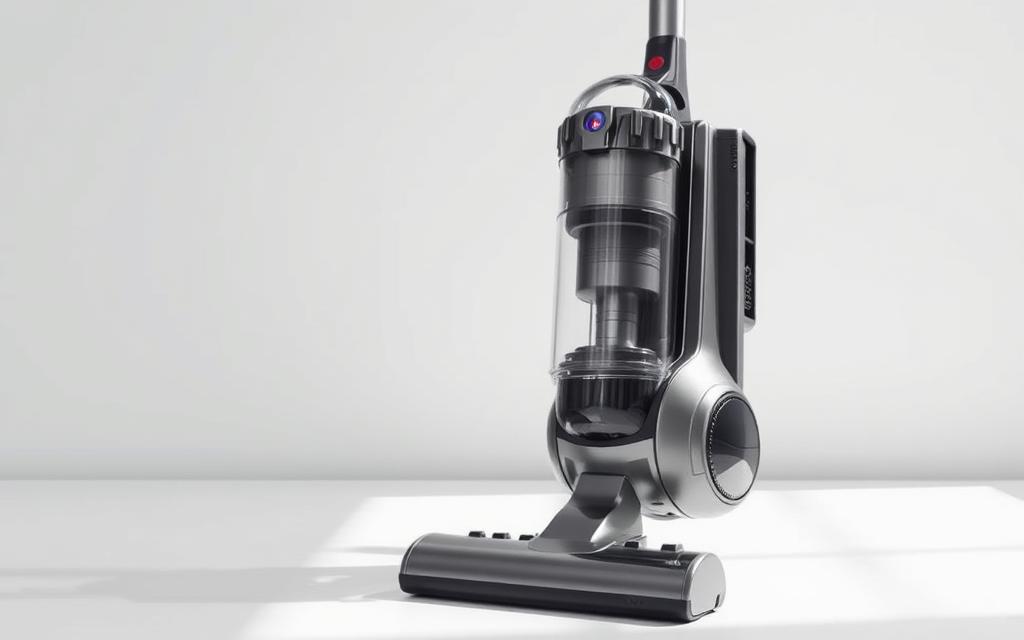
Pick a vacuum with good filtration that doesn’t restrict airflow. Multi-stage cyclones or top-quality pre-separators can keep dust from clogging the final filter. This helps maintain strong suction and keeps the motor running efficiently.
Search for vacuums with a powerful impeller, motors designed for high airflow, and lift. Features like variable-speed control let you adjust the power. This helps protect against overheating. Also, use hoses that are wide and don’t lose air. Nozzles and brushrolls that tightly seal to the floor also increase suction.
Consider construction details too. Look for secure lid clamps, tight fittings, and sturdy wheels or mounts. These elements help the system stay stable and mobile. They ensure the airflow path remains unblocked for consistent suction.
The Festool CT series and Rigid shop vacs are known for their strong performance. For cyclones and pre-separators, the Oneida Dust Deputy does a great job keeping dust from filters. Brands like ClearVue and Rockler also offer great options, though the fit and port compatibility might vary.
Think about the balance between cost and durability when you shop. The Dust Deputy offers great value and performance. If you’re setting up a central vac system, choose qualified Hide-A-Hose MD dealers or certified installers. This ensures all parts fit properly.
| Feature | Why It Matters | Recommended Example |
|---|---|---|
| High airflow & water-lift | Maintains pickup force on carpets and debris | Festool CT motor specs, many Rigid shop vac models |
| Sealed system | Prevents leaks that cause vacuum cleaner low suction | Canister models with reinforced gaskets |
| Cyclone/pre-separator | Keeps fine dust out of filters to improve vacuum suction | Oneida Dust Deputy |
| Hose diameter & material | Wide, flexible hose reduces flow restriction and kinks | 36 mm Festool-compatible hoses, heavy-duty Rigid hoses |
| Variable speed control | Makes power use efficient and reduces noise/heat | Many Amazon Basics and professional shop vac models |
| Secure fittings & portability | Prevents air leaks and improves user experience | Models with metal clamps and solid port designs |
Be careful when choosing accessories. Make sure the cyclone inlets and hoses match your vacuum ports. This will ensure you don’t have any problems with connections. That way, you’ll have the best vacuum for powerful suction without any hassles.
Small repairs can make your vacuum work like new and avoid the cost of a repair call. This guide gives you easy tools and clear steps to fix weak suction at home. Follow the checklist to get ready and work safely.
Tools you’ll need
Step-by-step repair guide
Keep track of your fixes with the checklist below. Use the recommended parts and sealants to avoid damage. Checking your vacuum often prevents problems and teaches you how to fix suction issues anytime.
| Task | Why It Helps | Estimated Time |
|---|---|---|
| Empty canister / remove bag | Makes air flow better; stops clogs | 5 minutes |
| Clean/replace filters | Better suction and cooler running | 10–20 minutes |
| Reseat/replace gaskets | Stops air leaks, boosts suction | 15 minutes |
| Clear hose blockages | Makes a clear path for air and debris | 10–30 minutes |
| Adjust cyclone inlet/curves | Keeps air moving and picking up stuff | 20–40 minutes |
| Inspect in-wall lines with camera | Finds hidden clogs for exact fix | 30–60 minutes |
| Final suction test | Checks if the fix worked | 5–10 minutes |
If basic checks and DIY attempts don’t fix the issue, you might need a pro. Weak suction even after cleaning indicates a bigger problem. If your vacuum’s motor overheats or makes weird noises, a technician can help. The same goes for problems in central vacuum systems that you can’t access.
Experts have special tools and know-how that homeowners don’t. They can find blockages with camera inspections. They also fix installation mistakes by adjusting or replacing pipes. For central systems issues, certified technicians are the go-to for safe repairs or part replacements.
Watch out for these signs:
Repair expenses differ based on the problem. Simple repairs like changing hoses or filters are usually cheap. More complex fixes can cost between $50 and $200. This might include working on pipes or replacing parts. Bigger projects, like motor rewiring, can get quite expensive, depending on what’s needed.
Think about the value of accessories before you fix your vacuum. Some attachments, like the Dust Deputy or the Rockler Vortex, can save you money on filters in the long run. Compare the cost of continuous repairs to the benefits of upgrading your system.
Need help? Ask professionals about using cameras to find problems and about certified repair services. Knowing your options helps you make informed decisions about fixing your vacuum.
Regular care keeps your vacuum’s suction strong and makes it last longer. Make sure to empty the canisters and cyclone buckets often. Also, clean or change the filters as the manufacturer suggests, and check the hoses and seals every month. These easy steps prevent blockages and keep the airflow strong, so your vacuum works well without needing expensive fixes.
Set up a cleaning routine: clear out debris before it builds up, and consider using pre-separators like the Oneida Dust Deputy. This will help your filters last longer. Also, try not to vacuum big pieces that might get stuck. For those making or using 3D-printed parts, make sure the inlets are straight to avoid airflow problems. Plus, seal any porous parts well to keep the suction steady.
Avoid making the hoses bend too much or making them too long, which can weaken suction. Make sure everything is tightly connected to stop air from leaking out. If you find any damaged hoses or gaskets, replace them right away. Using different speed settings can also protect the motor. For those with central vacuum systems, sending maintenance sheets through the system can help clear out any blockages and check if the airflow is strong.
By following these tips, you can make sure your vacuum keeps working as if it’s new. Taking these small, regular steps can help you avoid big issues later, keeping your cleaning routine efficient and effective.