Our Location
1250 Beacon Street
Brookline, MA 02446
Uncover fixes for a capsule coffee machine leaking by cleaning nozzles and checking O-rings. Say goodbye to leaks and hello to perfect brews!
Did you know many espresso problems at home come from a tiny part? Many leaking cases in capsule coffee machines are due to worn-out O-rings or blocked nozzles. These are simpler issues than big mechanical ones.
If you see your machine leaking, first, turn it off and unplug it. Clean the drip tray and capsule container. Then, put a towel under it to catch water and see where leaks start.
Leaking is a big deal. It can water down your coffee, pose electric risks, and bring mold. Plus, it speeds up damage to your machine. Dirty or damaged O-rings, blockages, a misplaced water tank, or limescale are usual culprits.
Before you think it’s the pump’s fault, there’s a quick fix to try. Fill the water tank, switch on your machine. Wait for the heating lights to stop flashing, then flush 4–6 cups of water through. This gets rid of air locks that seem like leaks and gets your machine ready.
To prevent leaks, descale every few months based on your water. Clean nozzles and O-rings often, and check the water tank is right. Taking these steps can solve and prevent leaks, keeping small fixes from becoming big repairs.
Leaks usually start at the connection points of seals and moving parts. Regular use, buildup of minerals, and seals not fitting right allow water to find its way out. Spotting leaks early in capsule coffee machines can prevent further issues.
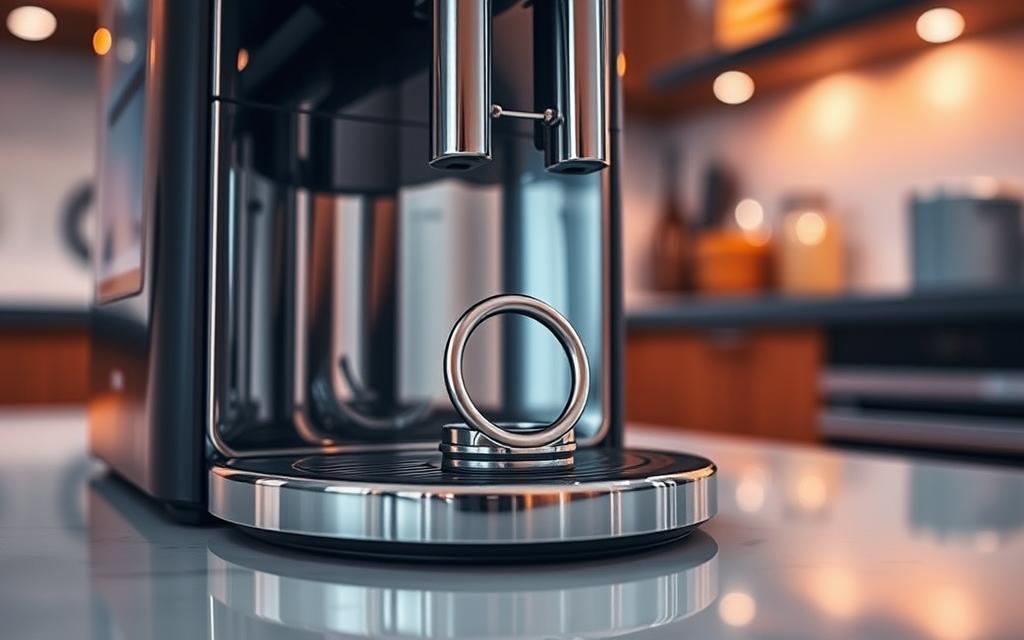
O-rings and gaskets are essential for keeping the pressure right where water goes through the capsule or steam wand. If a gasket wears out, water may leak past it, causing drips to appear. If steam nozzle seals wear out from too much cleaning, it’s important to replace them to stop leaks.
Nozzles are crucial for directing brewed coffee and hot water. Clogs in the nozzle can cause problems by pushing liquid back where it shouldn’t go. To clean a blocked nozzle, Sjöstrand suggests taking it off at a 30-degree angle. Keeping an eye on your nozzle means you can fix leaks faster and more efficiently.
Water tanks that aren’t put in correctly or air trapped inside can lead to leaks or disrupt water flow. For new or unused machines that are airlocked, Sjöstrand advises a simple de-air trick: fill and heat the machine, then flip the inlet lever until it splashes water and flow returns. Descaling every now and then, depending on how hard your water is, helps avoid blockages and leaks.
A quick check can prevent lots of headache and high repair costs. Before anything, ensure the machine is off and unplugged. Then, take out the drip tray, capsule container, and water tank. Look for watery signs, like water under the machine or damp seals.
Start by examining the black round filter where the capsule gets pierced. Any blockage, leftover grounds, or misplacement may cause leaks. Also, inspect around the capsule entry and the nozzle for any water coming from seals or screws.
By tilting the nozzle about 30 degrees, you can check inside for any scaling or coffee debris. Don’t forget to check the water tank’s seal and its positioning. A tank that’s not sitting right often leads to leaks back into the capsule area.
If you see water outside the capsule entry or near the portafilter, the gaskets might be failing. Water in the capsule area usually points to a blocked nozzle or an issue with the tank’s placement.
Notice how your machine behaves during brewing. A normal sounding machine that doesn’t dispense water, or does so weakly, might have a clog or airlock. Also, weird blinking lights, especially those that signal it’s time to descale, could mean leaks are happening.
For machines that use a traditional portafilter, needing to twist harder to lock it in can indicate worn gaskets. Recognizing these signs helps find the leak’s source before deciding to fix it yourself or call for help.
To accurately detect leaks in your capsule coffee machine, note where water shows up first and what parts seem loose. This information will help speed up any troubleshooting or repair needed by technicians.
Keeping O-rings clean is key to stopping leaks and making your machine work its best. Follow a smart cleaning routine using the right tools. This can help stop your capsule coffee machine from leaking. It also avoids the usual issues that lead to needing a repair.
Tools and cleaning materials needed
Start by getting a soft nylon brush, some mild dish soap, and warm water. You’ll also need lint-free cloths, a small hook or a flat screwdriver for easy prying, and some food-safe lubricant like food-grade petroleum jelly. Have new gaskets on hand if they’re needed.
Step-by-step O-ring cleaning process
Regular cleanups reduce residue that can cause pressure loss and leaks. A clean set of gaskets can often fix leak issues. This might save you from buying new parts or getting professional help.
| Task | Tool/Material | Time |
|---|---|---|
| Disassemble capsule area | Lint-free cloth, screwdriver | 5–10 minutes |
| Soak and clean shower screen | Warm soapy water, nylon brush | 10–15 minutes |
| Remove and inspect O-rings | Mounting hook, bright light | 5 minutes |
| Clean sealing surfaces | Soft brush, mild soap | 5–10 minutes |
| Lubricate and reassemble | Food-grade lubricant | 5 minutes |
Regular care helps keep your capsule coffee machine working well. Doing small tasks often stops bigger issues from happening. Stick to a simple maintenance schedule to avoid leaks and maintain performance.
Use descaling tabs or solution approved by the manufacturer regularly. For instance, Sjöstrand suggests mixing a descaling tab with 500 ml of warm water. Fill the tank with this solution, run the machine’s descaling routine, then flush it with fresh water until clear.
Change the descaling frequency based on your water’s hardness. If your water is very soft, descale every six months or after ~400 servings. For soft water, every four to five months (~300 servings) is good. With medium-hard water, descale every two to three months (~150–200 servings). Hard water needs it every 1.5–2 months (~100–150 servings). The very hard water requires treatment every four to six weeks (~60–100 servings).
Empty the capsule container regularly to prevent mold and bad smells. Clean the outside with gentle detergent. After cleaning, rinse and dry any parts that can be removed. Use a brush on filter plates to remove stuck residue.
When your machine is new or hasn’t been used for a while, run a de-airing routine. This helps avoid spluttering and pressure problems. Don’t use harsh cleaners on seals and O-rings to keep them elastic.
Stick to using capsules that fit, like Nespresso® Original or those the maker recommends. This reduces wear on seals and prevents misfeeds. Regularly check and clean nozzles and seals for wear or blockages.
To stop your machine from leaking, follow these easy steps. Start with regular descaling and careful cleaning of removable parts. Also, ensure you use the correct capsules.
Small nozzle troubles can ruin a perfectly good cup of coffee. This brief guide will help you recognize typical issues and clean your nozzle. By doing this, your coffee machine will start working correctly once more.
Clogged nozzles often result from coffee oils or lime scale build-up, leading to weak flow or no coffee. Blockages can cause your machine to sputter or splash coffee. A poorly fitted nozzle might misdirect the flow, causing leakage into the capsule area.
Symptoms like sputtering, foamy rinse water, or water in the capsule tray are easily noticed. If you get only water, no coffee, the nozzle might be clogged or not in place right. These issues usually come from mechanical problems or mineral build-up.
To fix it, take off the nozzle carefully. Some machines, like those from Nespresso or Keurig, might need you to pull it at a 30-degree angle. Then, soak the parts in warm soapy water.
To clean it well, use a soft brush or a pipe cleaner for the inside. Also, gently clean the front filter plate to remove any blocks. After putting it back together, run some water cycles to make sure it works fine.
If the rinse water is foamy or cloudy, you might need to descale it. Follow the maker’s instructions for this. Descaling gets rid of mineral deposits that often cause leaks. Keep rinsing until the water is clear again.
Beneath, find a table that links common symptoms with actions you can take. It’ll help you fix leaks in your coffee machine and get back to brewing as usual.
| Symptom | Likely Cause | Immediate Action |
|---|---|---|
| Sputtering or splashing | Partial nozzle blockage or misalignment | Remove nozzle, brush passages, re-seat at correct angle, run water cycle |
| No coffee, only water | Severe internal clog or broken pathway | Soak nozzle, clear with pipe cleaner, inspect filter plate, repeat rinse cycles |
| Foamy or cloudy rinse water | Scale or soap residue in channels | Descale per manufacturer, rinse until clear, avoid overheating components |
| Water pooling in capsule tray | Backflow from misfit nozzle or pressure issue | Check nozzle fitment, clean seals, test with empty cycle to confirm |
| Intermittent flow | Oils or fines partially blocking front filter plate | Brush filter plate gently, clear fines, run several rinse cycles |
Many leaks in capsule coffee machines come from worn o-rings. Look for small cracks, flattening, or hardening. If your machine leaks after cleaning, or water runs down the capsule inlet or portafilter, it’s time to replace the o-rings.
Home coffee machines need new head gaskets every 3–6 months. If you use it less, gaskets can last about a year. Steam-nozzle and small thread seals might wear out quicker because they’re cleaned often. So, they may need replacing more frequently.
Check for visible damage or hardening on the o-rings. If the portafilter or capsule inlet moves oddly or drips, the seal might be bad. Still dripping after cleaning? It’s time for new o-rings.
1. Turn off the machine and let it cool off. This makes it safer and avoids pressure problems.
2. Take off the shower screen or screw and remove the old gasket. Use a small tool for this. Be careful not to lose any small parts.
3. Clean the head and where the gasket sits with a soft brush and warm water. Removing oil and residue helps the new gasket seal right.
4. Put a little food-grade petroleum jelly on the replacement gasket. Make sure it matches the original in shape and orientation.
5. Fit the new gasket in place carefully. Press it down evenly without twisting it. You can use a portafilter or something flat to help.
6. Put the shower screen and screw back. Test the machine to see if there are any leaks around the new gasket or capsule inlet.
For steam-nozzle seals, just remove the tip, switch out the seal, and put it back together. Then, give it a test. These small seals often fix leaks quickly.
To solve leakage problems in your capsule coffee machine at home, carefully follow these steps. Also, keep extra gaskets for regular upkeep.
A clean nozzle means your coffee comes out even and reduces leaks. Follow safe, easy steps to maintain your machine. Doing this regularly prevents leaks, making repairs less needed.
Collect warm water, mild soap, descaling solution, a soft brush, pipe cleaners, lint-free cloths, a screwdriver, and food-safe lubricant. Always use products the maker approves of. The right tools prevent harm and make fixing leaks faster.
1. Unplug and cool down the machine. Take off the water tank, capsule holder, and drip tray. This avoids electric risks and exposes hidden leaks.
2. Detach the nozzle or shower component carefully. For some models, gently pull the nozzle to avoid damaging it.
3. Let the nozzle and shower screen sit in warm, soapy water or cleaner. This loosens stuck coffee oils and grime.
4. Clean the nozzle and holes gently with a brush and pipe cleaner. Avoid anything metal to not scratch or damage the parts. This is a key step to fix leaking issues.
5. Dry and put everything back tightly. Run water cycles to clean out any leftovers. Rinse until the water is clear, showing all residues are gone.
6. If there’s still mineral build-up, do a descaling cycle as recommended by the manufacturer. Descaling properly stops future leaks by clearing out build-up that affects seals and water flow paths.
| Step | Action | Why It Helps |
|---|---|---|
| 1 | Unplug and remove external parts | Prevents shocks, reveals leak locations, simplifies cleaning |
| 2 | Remove nozzle at a gentle angle | Protects clips and alignment for secure reassembly |
| 3 | Soak parts in warm soapy water or cleaner | Breaks down oils and coffee fines that cause clogs |
| 4 | Brush and pipe-clean nozzle holes | Restores spray pattern, reduces drips that trigger capsule coffee maker leak repair |
| 5 | Reassemble and run rinse cycles | Flushes residues, confirms leak fixes and shows how to stop capsule coffee machine leaks |
| 6 | Descale if needed | Removes mineral build-up that compromises seals and flow |
When facing persistent leaks in a capsule machine, stay calm and tackle the issue head-on. If simple fixes like cleaning or replacing gaskets don’t work, the leak might be hidden inside. Keeping track of your repair attempts and when leaks occur helps a technician find the problem faster.
Before reaching out for help, document everything. Note the leak’s timing and the steps you took to handle it. Mention if the leak shows up during brewing, when placing the tank, or even at rest. Include all details like cleaning, descaling, and parts you’ve swapped out.
If leaks persist even after you’ve tried fixing gaskets or nozzles, or if you see cracks, it’s time for professional help. Issues like internal pump failures need expert repair. For commercial machines, consider getting factory service.
First, see what the manufacturer’s warranty covers. It usually protects against defects but not wear from regular use, except for certain parts. Always check the brand’s service advice, like manuals and support pages, before making a warranty claim.
For repairs under warranty, use approved service centers to maintain your coverage. If your machine’s warranty has expired, weigh the repair costs against buying a new one. Home machines might need an inexpensive fix, but bigger ones could require pricier factory service.
| Issue | Likely Cause | Recommended Action |
|---|---|---|
| Leak during brewing | Worn gasket or clogged nozzle | Clean nozzle, replace O-ring, test brew cycle |
| Leak when tank is seated | Reservoir seal or misaligned tank | Inspect seal, reseat tank, replace reservoir gasket if needed |
| Continuous drip when idle | Internal valve or pump seal failure | Document symptoms and call technician for capsule coffee machine leak repair |
| Crack in housing | Impact damage or material fatigue | Seek authorized repair or replace unit depending on cost |
Many people post reviews to help others avoid common mistakes. They talk about brands like Nespresso, Keurig, and Sjöstrand. They mention how easy the machines are to clean and how certain fits can stop leaks. These suggestions help reduce repairs and keep the coffee flowing smoothly.
Nespresso is known for its strong pressure and straightforward capsule loading. Keurig fans like the variety of K-Cups and quick brewing times. However, some mention that seals may wear out. Sjöstrand appeals to those wanting a more compact machine and less leaking by using certain capsules.
Many suggest using only the capsules recommended by the machine’s brand. This can prevent leaks from happening. It means there’s less chance you’ll have to fix leak issues later on.
It’s smart to keep a maintenance kit ready. You should have extra O-rings, a soft brush, and descaler. Changing parts quickly means small leaks won’t turn into big problems.
De-airing is crucial for new or unused machines. It gets rid of air that could cause leaks. This is a simple step for keeping your machine in top shape.
Fixes shared by users are often easy to do. Keep the nozzle and seals clean. Change old O-rings and run a quick rinse. These are do-it-yourself steps for fixing leaks.
Keeping your capsule coffee machine clean improves taste and reliability. It gets rid of old coffee oils, leftover grounds, and scale. These things can sour the taste and block the machine. Taking simple steps to prevent leaks builds trust in every cup. It also reduces the risk of messes.
Old oils and buildup hide the coffee’s fresh flavors, leading to a stale or bitter taste. Cleaning parts like nozzles, seals, and brew chambers brings back the beans’ intended aroma. When everything works right, the water’s temperature and flow improve. This makes the coffee taste brighter and cleaner.
Experts say keeping temperatures stable is key. Regular cleaning helps maintain the right brewing conditions. This prevents the coffee from being too weak or too strong. It’s also a way to stop your capsule coffee machine from leaking while making better coffee.
Scale and clogs make the machine’s parts work harder, leading to breakdowns. Descale regularly and check the gaskets to reduce wear. This can save you money on repairs and keep your machine running longer without issues. It’s especially helpful for personal use and small cafés.
Regular maintenance and timely repairs are part of the solutions to stop leaks. Making sure parts fit correctly, cleaning the nozzle, and replacing old seals help. These steps keep the machine in good shape and extend its life.
When choosing a capsule brewer, it’s key to pick one that’s easy to maintain and prevents leaks. Look for a machine that lets you easily reach the nozzle and shower screen. It should have parts you can remove and clear steps for descaling. Brands like Nespresso and Keurig often offer helpful user manuals and spare parts. These are great for stopping leaks and taking care of your coffee machine.
Choose models that let you replace O-rings and have spare parts available. A water tank that fits well and comes off easily will help avoid leaks. Make sure the maker advises on which descaling products to use and how to prepare new machines for use. Doing these things makes it easier and faster to keep your machine working well.
Taking steps to prevent problems is crucial. Descaling regularly, checking O-rings and nozzles, and using the right capsules can greatly reduce leak risks. When buying a capsule coffee machine, go for models with solid warranties and support services. This will help secure your investment.