Our Location
1250 Beacon Street
Brookline, MA 02446
Discover how to prevent outlet overheating with appliances by understanding plug sizing, utilizing suitable extensions, and conducting breaker checks for safety.
Almost one-third of house fires begin with an outlet or power strip. This makes outlet overheating a serious safety concern in the U.S.
This piece talks about why outlets become hot with devices like chargers and A/C units. It also shares ways to fix this overheating right away.
An outlet shouldn’t burn your hand when touched. It’s okay if plugs feel a bit warm for certain gadgets. But, if an outlet feels hot, it’s a sign of danger. Immediate steps are needed to keep your home and loved ones safe.
We’ll talk about what causes outlet overheating, such as overloads and faulty wiring. If an outlet gets too hot, unplug things, shut off the circuit breaker, and stop using it or the appliance in question.
If overheating keeps happening or gets worse, call a licensed electrician. Many in places like Maryland or Orlando can check and fix outlets quickly. This helps make sure your outlets are safe.
The guide also includes safe tips for using appliances, how to solve outlet overheating, and advice to prevent fires and other harm.
Outlet overheating might start off not very noticeable. You could feel a warm faceplate or a plug that’s hotter than it should be. This heat comes from too much electric current, connections that aren’t good, worn-out contacts, or using equipment that doesn’t match the outlet’s rating. Chargers for phones, like those from Apple or Samsung, usually feel a bit warm and that’s typically okay.
Outlet overheating happens when the outlet, plug, or faceplate gets too hot. This could be because of too much current or wiring issues. Problems like loose screws, bad contacts, or damaged outlets can make electricity turn into heat. If you plug something that uses a lot of power, like an air conditioner, into a regular outlet, it might overheat.
Check if plugs or outlets feel warm or hot. Seeing things like discoloration, melted plates, marks from burning, or smelling something burning means there’s a problem. Appliances not working right, chargers getting too hot, or things that use a lot of electricity could be signs of overheating.
If a charger or transformer feels warm, unplug it and wait an hour. If it’s still hot, the problem might be with the outlet or circuit, not the device.
Bad connections can cause heat without tripping the breaker. This heat can ruin insulation, harm wires, and even start fires. Even if the breaker doesn’t trip right away, overheated outlets can be very dangerous.
Using things like hot tubs or old air conditioners that make the plug hot might mean they’re using too much power. If something feels very warm or hot, get a licensed electrician to check it out. It’s important to handle overheating outlets quickly to prevent any damage or danger.
It’s important to know why outlets overheat to prevent fires and damage. Small problems like a loose contact or a mismatched plug can become big dangers. This especially happens with heavy use of appliances. Here are the main reasons and the signs to look for.
When plugs and outlets don’t match in current rating, they heat up under pressure. A bad fit causes increased electrical resistance. This leads to heat at the connection, making the plug warm even if the outlet stays cooler.
Using the wrong type of plug or cable can also cause overheating. An example is a light-duty cord with a space heater. This is a typical reason for outlets to overheat.
Small or damaged extension cords tend to overheat. This happens when too many devices use one cord or power strip. It creates a big risk for outlet overheating.
If your extension cord gets hot, stop using it and switch to one that’s rated for the job. Use heavy-duty cords for temporary solutions.
Using too many high-demand appliances at once can be too much for a circuit. For example, a microwave and hair dryer on the same kitchen circuit can cause problems. It can trip breakers or make outlets hot. Circuits wired in series and hidden issues can make other outlets become unexpectedly hot.
Loose wires, worn contacts, or wrong breaker sizes can also cause outlets to overheat. If a breaker is too big or fails, it might not stop an overload. This increases fire risk. Fixing the main wiring and breaker problems is key to preventing outlet overheating.
Picking the right plug size is crucial for keeping appliances safe. Small plugs can overheat outlets, especially with high-current devices. Always follow safety tips to keep your appliances and circuits cool.
The wire gauge and plug rating decide how much current an appliance can safely handle. Thinner wires resist more, making plugs, cords, or outlets heat up. This heat might cause the outlet to fail at preventing overheating.
Devices like heaters need a lot of power. If the plug or cord is too small, it overheats, even if the wires in your wall don’t.
Ensure the cord matches the appliance’s power needs. Small gadgets need less power and can use thin cords. But kitchen gear and hair dryers need thicker wires and plugs rated for 15 to 20 amps.
Things like ovens need their own circuit. For these, choose wires between 12 and 6 AWG, and use plugs rated for 20, 30, or even 50 amps. This is based on the maker’s advice and safety codes to avoid overheating.
If a plug gets hot, try plugging the appliance into another outlet. A hot plug means there’s likely a problem with the device or cord. But if the new outlet stays cool, the first outlet might be faulty. Don’t use a hot plug until an electrician checks it.
| Appliance Type | Typical Circuit Rating | Common Wire Gauge (AWG) | Notes |
|---|---|---|---|
| Phone chargers, lamps | 5–10 A | 18–16 AWG | Low draw; standard duplex outlets are fine |
| Microwave, toaster, hair dryer | 15–20 A | 14–12 AWG | Use dedicated kitchen or bathroom circuits where required |
| Window A/C, sump pump | 20–30 A | 12–10 AWG | May need dedicated circuit; check appliance nameplate |
| Electric range, dryer, hot tub | 30–50 A | 10–6 AWG | High-current; must use properly rated receptacles and breakers |
If you’re not sure, look at the appliance manual and follow NEC rules. Hiring an electrician ensures your outlets and plugs are the right size. This is a basic safety tip all homeowners should know.
Extension cords help when an outlet is too far away. They should only be a short-term fix. If you need power in a spot often, get a pro to add more outlets. This is safer than using many cords.
Short tasks like lighting for holidays, working at a café, or cleaning a room are good times for an extension cord. Choose the right cord for your appliance. Avoid long cords to prevent heat and safety issues.
Using extension cords too much can be dangerous. A small cord can overheat. This might cause fuse problems, damage, or even fires.
A worn-out cord is risky. If a cord gets warm, stop using it. Switch to a safer option or get a circuit added.
Choose cords based on their power rating, length, and thickness. Use a thicker cord for big appliances. For outside work, get cords made for outdoors.
Don’t hide cords under carpets or where people walk. Rolling a cord with too much load can break it. This prevents it from getting too hot.
| Use Case | Recommended Gauge (AWG) | Typical Appliances | Safety Tip |
|---|---|---|---|
| Light duty, short run | 18–16 AWG | Lamps, phone chargers, small electronics | Keep under 25 feet; inspect for damage before each use |
| Medium duty, moderate run | 16–14 AWG | Toasters, TVs, power tools | Limit length to 50 feet; avoid daisy-chaining multiple cords |
| Heavy duty, long run or outdoor | 12–10 AWG | Air conditioners, space heaters, generators | Use outdoor-rated cords and dedicated circuits when possible |
| High-power appliances | 10 AWG or lower | Electric ranges, large HVAC units | Install a dedicated circuit; do not rely on extension cords |
To improve safety, use less extension cords per outlet. This will lower the risk of overheating. It makes your home safer.
Checking your breaker can prevent small electrical issues from growing into dangerous problems. Your circuit breaker protects your wiring by activating when the current is too high. It’s key to choose the right breaker size for safety and to avoid overheating outlets.
A circuit breaker stops power when there’s too much current in your electrical panel. This keeps wiring and outlets from getting too hot, which can start a fire. Make sure the breaker’s amp rating matches your circuit wire size to keep outlets safe.
Look out for breakers that either don’t trip when they should or trip too often. If a breaker is hot, won’t reset, or has burn marks or smells, it needs a quick check. These issues can lead to outlet overheating and might mean your breaker is failing.
First, turn off the breaker for any outlet that’s overheating. Wait a bit, then turn it back on. See if the outlet cools down or if the breaker trips again with normal use. Test the outlet with a multimeter or tester for voltage and continuity.
If your breaker doesn’t trip when needed or seems too hot, turn it off. Then, get a licensed electrician from a trusted company like Eaton or Siemens. They’ll make sure your breaker size is right and fix connections. This helps prevent overheating and keeps your outlets safe.
Begin by checking the outlet safely. First, unplug everything and wait for an hour. If it cools down, the issue might lie with the device or its charger. Use a simple lamp with a small bulb to test the outlet’s reaction after plugging it back and waiting another hour.
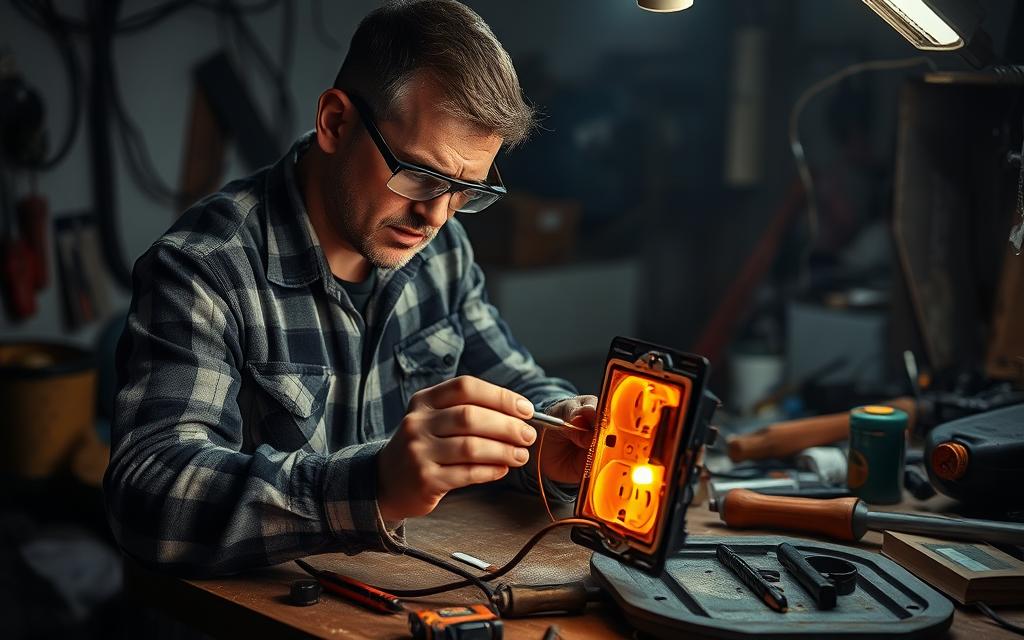
Look for clear signs of danger like discoloration, melted parts, or a burnt smell. Test the outlet’s voltage with an outlet tester or a multimeter. This can reveal wiring issues.
Examine the circuit breaker for any trips. Also, test other outlets on the same circuit. Problems with these outlets can cause overheating when using appliances on nearby plugs.
Ensure that outlets and cords are not covered by insulation or furniture. This can trap heat. Devices like transformers or items with dimmer switches need space for air. Keeping them in open areas helps vent out heat. Good airflow is key in preventing overheating, especially for tightly packed electronics.
Search for signs of damage like loose sockets or cracks. Also, listen for unusual sounds or plugs that don’t fit right. These issues can cause overheating due to increased resistance.
If an outlet remains hot without any appliances, smells burnt, or emits smoke, act quickly. Switch off the breaker and call a pro. Addressing the issue fast can stop further problems and is crucial for fixing overheating outlets effectively.
It’s vital to keep outlets cool and safe. Start today with a few wise actions. Taking care of them regularly helps keep danger away. And it makes sure things work right. Use smart ways to make your home safer by lowering risks.
Make sure to have electrical checks done often. Hire an expert from places like Square D or Schneider Electric. They can catch problems like loose wires or old outlets early. These reviews are key to stopping outlets from getting too hot.
Your electrician should also check how electricity is spread out. Plus, inspect safety features like GFCI and AFCI. Often, they can fix plugs or outlets right away. This stops small issues from becoming big problems.
Always use appliances as their labels and manuals say. Don’t plug too many powerful devices into one spot. Doing this can really help keep your home safe from fire risks.
When you’re not using them, unplug chargers and smaller gadgets. If cords get damaged, replace them with the right kind. For big appliances, set up their own circuits. Skip using too many extension cords or power strips.
Homes that are older may need new wires or outlets. You might need to switch to 20A circuits for some appliances. Putting in new outlets and the right size breakers helps. So does using AFCI/GFCI safety devices. This reduces the chance of outlets getting too hot.
Planning upgrades? Talk to a skilled electrician. They can tell when it’s time for new outlets. Or if you need a special circuit for safety. Making these changes can prevent future problems. And it keeps your appliances running safely.
If an outlet feels unusually warm and doesn’t cool down, take note. This guide will show you when to call an electrician. It also talks about the benefits of choosing a licensed professional for a safe fix.
If touching an outlet feels too hot, that’s a serious warning. If it stays hot after you unplug everything, that’s bad too. Seeing burns, melted plastic, or smelling smoke? Don’t use it and call a pro.
Sparks when plugging in or breakers that trip too often are signs of electrical problems. If outlets stop working, are loose, or heat up your plugs at multiple places, you need an expert. Trying to fix these alone could be risky.
Professional electricians check your system and find out why it’s overheating. They fix it by adding new circuits for big appliances, so you don’t have trouble again. Often, they can swap out bad outlets or breakers right away, making your home safer.
Choosing a pro makes sure your repairs are up to code. Companies like Haas and Sons Electric or Spectrum Electric Inc. can make sure your house and gadgets are safe. Picking someone licensed means safe, correct work that solves problems for good.
Keeping your home safe begins with easy, everyday steps. Look out for outlets that feel warm or hot. Unplug devices as soon as they cool down. Checking outlets with testers and using multimeters help, and try to use extension cords only for a short time. This prevents outlets from overheating and keeps them safe.
Make sure plugs and cords match the power needs of your appliances. Also, don’t overload circuits by spreading out the power usage. If you see outlets that are discolored, loose, or damaged, fix them fast. This helps stop outlet fires. Using dedicated circuits for large appliances and choosing the right plug sizes can lower risks too.
It’s good to have your electrical system checked regularly. Think about adding GFCI and AFCI protections if needed. If an outlet is too hot to touch, switch off its breaker and call an expert. By taking these steps, you can prevent overheating and make your home safer.
Don’t wait to act on this advice. Use the tips for appliance safety, follow steps for safer outlets, and focus on preventing fires. Doing so will help keep your family and home safe.