Our Location
1250 Beacon Street
Brookline, MA 02446
Banish that air conditioner smells musty issue with our step-by-step guide on AC sanitizing and filter replacement to breathe fresh, clean air at home!
It’s surprising, but a home smelling musty might mean there’s more mold. Mold levels in such homes can be up to 10 times more than in fresh-smelling ones. Often, the air system is the problem.
Is there a musty odor coming from your air conditioner? You’re not the only one. This smell usually means there’s mold, mildew, or bacteria inside. It could also be due to clogged drains or dirty filters. These problems can make the air quality worse and your AC less efficient.
A musty AC can spread bad stuff through your house. This can make allergies or asthma worse. This guide will tell you why your AC smells musty. It will talk about checking filters, drains, coils, and more. It also tells you when to get help from an HVAC expert.
A musty smell from your AC means moisture and organic stuff are building up. This smell can tell us about hidden mold, mildew, or drainage problems. Finding and fixing these issues early helps keep the air fresh and avoids costly repairs.
Mold and mildew like to grow on evaporator coils, inside the cabinet, and on the blower wheel. When air filters get dirty, they catch particles that let bacteria grow. This can lead to a bad smell. Also, dirty ductwork can spread these smells around your house. Sometimes, dead animals in ducts or refrigerant leaks, smelling sweet, can be the cause, but it’s rare.
Your air conditioner also works to take humidity out of your house as it cools. But if the drainage gets clogged or the drain pan overflows, standing water can lead to more bio-growth. If ducts leak or aren’t insulated well, they can get moist. This makes the moldy smell worse.
To avoid these problems, keep the coils clean and the drainage clear, and change your filters regularly. Doing this prevents water and organic build-up. Regular maintenance fights off musty smells and makes your unit work better. A clean system keeps your air quality high and cuts down on moldy odors.
A musty smell in HVAC systems is not just annoying. It means mold spores and bacteria are moving through your ducts and vents. These can make people’s eyes water, cause headaches, and stuffed noses for anyone in the house.
When your air conditioner starts to smell musty, tiny particles float in the air. These particles can make your skin itch and make you sneeze or wheeze. If you have asthma or allergies, you might feel even worse after being around it.
Kids, elderly folks, and those with lung issues are usually more affected. Being around a moldy smell often can make your throat sore and breathing hard.
Mold growing on equipment parts lowers the air quality and makes systems run poorly. The mold spreads spores around your place, upping allergen levels.
If you’re around certain molds too much, it might make you sick more often. Seeing mold or smelling something moldy in your air system usually means there’s a big problem. It hurts both your health and how well your HVAC works.
Get a pro HVAC person if you see mold in your unit or the airways. Still smelling mustiness after changing filters and cleaning means you need expert help.
If someone at home has bad allergies, asthma, or a weak immune system, call for a checkup fast. Issues like leaks, water damage, or funny smells like rotten eggs might mean you have refrigerant or bacteria problems. You’ll want someone skilled to take a look and maybe do some special cleaning.
| Warning Sign | Potential Cause | Recommended Action |
|---|---|---|
| Ongoing musty smell in HVAC | Hidden mold in ducts or drip pans | Schedule professional HVAC inspection and duct cleaning |
| Sharp moldy smell in air conditioner | Active mold growth on coils or blower | Shut unit if severe, arrange mold remediation |
| Air conditioner smells musty after DIY cleaning | Deep contamination or clogged drain lines | Contact certified technician for thorough assessment |
| Occupant health decline (wheezing, severe congestion) | High spore counts, compromised IAQ | Prioritize immediate professional evaluation |
A musty smell from your AC might mean there’s moisture, mold, or a blockage. Catching these signs early is key to keeping the air clean and avoiding big repair bills. This guide will help you check your system safely.
A lasting musty smell when your AC is on could mean moisture or mold is trapped inside. If the smell doesn’t fade after an hour, mold might be growing.
If you see black spots on parts like coils or filters, that’s a mold sign. Problems like a full drain pan or a blocked drain line can cause water to sit and smell.
If air flow seems lower, coils freeze, or filters stay damp, it could mean too much moisture. If you smell something like rotten eggs or chemicals, it’s time to check things out quickly.
Higher energy bills or less cooling might mean there’s a block somewhere, making odor issues worse.
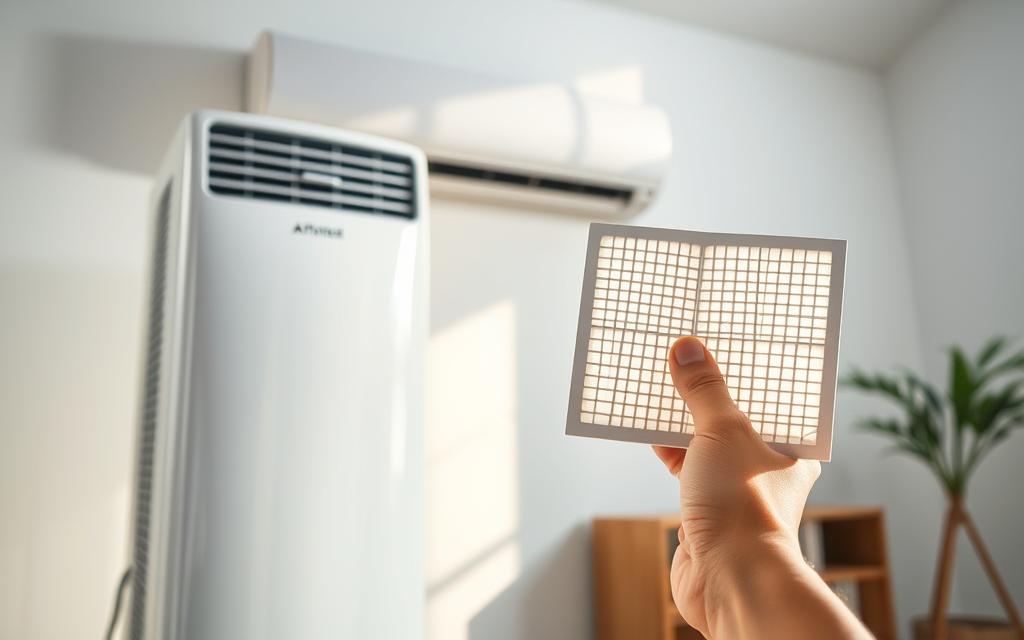
First, check and change the air filter if needed. A dirty filter can cause a musty smell. Often, this simple step can fix the problem.
Next, look at the drain pan and line for any water or blockages. Clean them out as your manual suggests.
Also, check for mold on parts like the coils or ducts. Use your unit’s manual to find and inspect these areas safely.
Check the ducts for any leaks or moisture signs. Make sure there’s no debris or water around the outside unit that might cause mold.
If the smell only happens when you first turn the AC on and goes away, it might just be dust or minor mold. But if the smell stays or comes back, you might need a thorough cleaning or a pro to check it out.
Keeping up with regular maintenance helps your air conditioner run better and safer. It stops big issues by handling small ones early. This includes fighting off musty smells before they begin.
Regular care makes the air inside your home cleaner and reduces allergens. It slows down the growth of mold and bacteria, which are the culprits of that musty smell. By keeping parts clean and in good shape, you save money on energy and make your unit last longer.
Cleaning out filters and coils cuts down on dust and pet dander at home. Making sure drains and pans are clear prevents standing water, which can cause musty smells. A well-kept blower and motor use less energy and run better.
Getting your AC checked by professionals can find issues like refrigerant leaks and worn belts sooner. This means you’re less likely to have unexpected breakdowns and expensive fixes. Brands like Trane and Carrier offer regular service plans that help catch problems early, avoiding bad odors.
To keep your AC smelling fresh and working well, follow a simple checklist. Begin with a spring check-up from a skilled technician. They’ll clean coils, check the refrigerant, and inspect electrical parts.
| Task | Frequency | Why It Matters |
|---|---|---|
| Air filter replacement | Every 1–3 months | Reduces dust, improves airflow, helps prevent musty odor from AC by trapping contaminants. |
| Spring professional tune-up | Annually | Inspects refrigerant, coils, motor, and electrical connections to avoid failures and odors. |
| Condensate drain cleaning | Every 3–12 months | Prevents standing water that leads to mold and supports eliminating musty odor from air conditioner. |
| Duct inspection and cleaning | Every 2–5 years or if mold found | Removes settled dust and visible mold that cause persistent musty odor from AC and poor air quality. |
| Outdoor unit clearing | Monthly as needed | Ensures proper airflow and prevents debris from degrading performance and creating odors. |
| Use of diagnostics/service plan | Ongoing | Offers early warnings and professional follow-up, serving as practical tips to remove musty odor from air conditioning unit issues quickly. |
Keeping your air conditioner clean is easy with the right tools and safety measures. The aim is to stop mold and get rid of dirt for cleaner air flow. Start with this quick guide, then follow the cleaning steps and product advice below.
Always turn off the power using your thermostat and circuit breaker first. This keeps you safe while you remove any musty smell from the air conditioner parts.
Change a disposable filter or clean one that you can use again. Keeping your filter clean prevents bad smells and makes air flow better, especially if your air conditioner starts smelling musty.
Look at the evaporator coils for any dust or mold. Carefully brush off the loose dirt. Then, spray on a coil cleaner or a mix of mild detergent and warm water. Let it sit, then wash off and let it dry before turning the power back on.
Next, clean the drain pan and make sure the drain line is clear. Get rid of visible dirt, and pour about a cup of white vinegar down the line. After waiting about 30 minutes, flush it with water. If the clog won’t budge, use a wet/dry vacuum to help.
If you can get to the blower wheel and its housing, vacuum and clean it. If there’s still mold, think about getting it professionally cleaned to prevent spreading spores.
Don’t forget to clean both the supply registers and return vents. Use a vacuum for any duct openings you can reach and look out for mold. This helps prevent musty smells from coming back.
For evaporator coils, use coil cleaners that are safe for HVAC systems. These cleaners easily break down dirt without damaging the coils.
White vinegar is good for keeping the condensate line clean. You can use diluted bleach too, but only if the manufacturer says it’s okay.
There are antimicrobial products designed for HVACs when mold is found. A professional’s help is often the best way to get rid of musty smells from your system.
Always read and follow the instructions on cleaning products. Wear gloves and safety glasses, and if you can’t reach some parts or if there’s a lot of mold, call a professional HVAC technician. This reduces risks and keeps the air in your home clean while you get rid of musty smells from your air conditioner.
| Task | Tool/Cleaner | Time | When to Hire a Pro |
|---|---|---|---|
| Power off unit | Thermostat, circuit breaker | 1–2 minutes | Never skip; required for safety |
| Filter replace or clean | Disposable filters or mild soap | 10–20 minutes | If ducts are dirty or filter inaccessible |
| Evaporator coil cleaning | HVAC coil cleaner or mild detergent | 20–40 minutes including dwell time | If coils show heavy mold or bent fins |
| Condensate drain flush | White vinegar, water, wet/dry vacuum | 30–45 minutes | When line remains clogged after flush |
| Blower wheel and housing | Vacuum, brush, disinfectant if needed | 30–60 minutes | When bio-growth is present or unit is hard to access |
| Registers and vents | Vacuum, cloth, mild cleaner | 15–30 minutes | If mold appears inside ductwork |
Cleaning air filters helps your HVAC system run better and prevents musty smells. Knowing when to change them keeps dust away, safeguards your indoor air, and helps avoid musty odors from your air conditioner.
It’s usually clear when you need a new filter. Look for visible dirt or a lot of dust on it. If the airflow from your vents drops or if your furniture gets dusty, check it out. Filters that are wet or have dark spots might have mold. Also, if there are still strange smells after you clean your system, it’s time for a new filter.
Different air filters serve different purposes. Fiberglass disposable filters are cheap and catch big particles. Pleated filters with more MERV catch smaller dust and pollen. The best for allergies are HEPA or high-efficiency filters, but check if your HVAC supports them. Washable filters save on waste but need regular cleaning as the maker suggests.
How often you should change the filter varies. A good rule is to do it every 1-3 months for most homes. If you have pets, allergies, or lots of dust, you might need to do it monthly. Even though high-efficiency filters last longer, still check them each month for blockages. Never put in a wet filter; if it’s damp, fix the moisture problem first.
| Filter Type | Typical Lifespan | Best Use Case |
|---|---|---|
| Fiberglass disposable | 1 month | Budget-conscious homes with low dust |
| Pleated (Higher MERV) | 1–3 months | Homes that need to catch more particles |
| HEPA / High-efficiency | 2–6 months (check system compatibility) | For allergy relief and sensitive people |
| Washable reusable | Clean monthly; replace if damaged | For eco-friendly homes that keep up with maintenance |
If you smell mustiness from your AC, simple steps can help. Start by checking things safely yourself. These actions often stop the smell from spreading.
Quick checklist:
Start with the air filter. A full filter can hold moisture and smells. Changing a dirty filter out can quickly change the air’s smell.
Then, check the drain pan and line. Pour a cup of white vinegar down the drain. This helps break up buildup and fights mild mold. Let the system run to make sure water flows right.
If there’s still a musty smell, clean the vents with a damp cloth and gentle soap. Keep the HVAC off while you do this. If the smell doesn’t leave, it may be time for a professional look.
Natural solutions are good for short-term fixes. For example, baking soda can absorb smells. Just put a small open bowl near the return vent when the unit isn’t running.
Activated charcoal can also help for a longer time. Place it in a breathable container close to the air return. But remember, don’t put loose materials directly in ducts or on coils.
Using a dehumidifier helps control humidity and reduce bio-growth chances. When it’s less humid, mold and algae struggle to grow in your system.
| DIY Action | What It Does | When to Call a Pro |
|---|---|---|
| Replace or clean air filter | Gets rid of dust and moisture, making air flow better | Smell returns quickly after changing the filter |
| Vinegar flush of condensate line | Destroys mild mold and clears the way for drainage | Drain doesn’t clear, or water gathers in the pan |
| Clean registers and outdoor unit | Takes away stuff causing bad air and smells | You see mold in ducts or the smell stays |
| Baking soda or activated charcoal nearby | Temporarily takes away odors | The smell is strong, keeps spreading, or gets worse |
| Use a dehumidifier | Helps stop mold by reducing moisture | Humidity is still high with dehumidifier on |
DIY tips work well for small problems. If they don’t solve your musty AC smell, or you see mold, get a professional HVAC check. Some jobs need experts with the right chemicals and tools for a safe, effective clean.
If you can’t get rid of a bad smell, it’s time to call an expert. Musty smells in your HVAC could mean mold, blockages, or broken parts. Early help from pros can keep the air safe and stop small problems from getting big and expensive.
Get help when a musty smell comes back after you’ve cleaned and changed filters. If you see mold, have clogs often, see water marks, or find leaks, you need a pro.
If your air vents smell moldy or like rotten eggs or chemicals, call someone. If you notice ice on coils or think there might be a leak, call for help. This is especially important for people with asthma, allergies, or weak immune systems.
A trained tech will check how well your system works. They’ll look at coils, the blower, the drain pan and line, ducts, refrigerant, and wires.
You’ll get a clear plan for fixing problems. This might include cleaning, unclogging, mold clean-up, duct cleaning, sealing, or replacing parts if needed.
They might suggest special cleaners, germ-killing treatments, or UV lights to keep smells away. You’ll get a quote, safety info, and options for regular checks or monitoring.
Keeping the air fresh inside starts with simple habits. These small steps reduce mold risk and stop musty smells from your AC from ever beginning. Regular upkeep also keeps your home comfortable and healthy.
Tips for maintaining indoor air quality
Change your filters every 1–3 months. When possible, use filters rated MERV or HEPA. These catch dust and spores, cutting down musty smells from your AC.
Keep drains and pans clean. Use vinegar or get a pro cleaning to avoid water that can grow mold. Think about using extra drain lines or condensate pumps for areas that often have problems.
Ensure airflow isn’t blocked. Keep vents open, take care of return air paths, and seal any duct leaks. This stops moist outside air from coming in. Good airflow fights against musty smells from AC systems.
Keep humidity between 30–50% using dehumidifiers. This limits mold growth and fights musty smells in your AC.
Get your AC checked every year by trusted companies like Trane or Carrier. If your ducts might be dirty, ask about cleaning from a NADCA-certified company. Regular checks can find issues early and help keep the air quality good over the long term.
Keep things clean around the outside unit. Leave about two feet of space around it for airflow. Taking care of the outside part can lessen stress on the system and lower the chance of musty smells from the AC.
Innovations in air conditioning technology
UV-C lights by the coils or in the ducts can stop mold from growing. Together with regular upkeep, these lights minimize sources of musty smells from your AC.
Smart systems from the maker and smart thermostats warn you about issues like leaks or odd humidity levels. These warnings can get repairs done faster and help stop musty smells from AC units.
Improve your filtration if you can. High-efficiency MERV or HEPA filters catch smaller particles for better air quality. Adding whole-house purifiers and dehumidifiers gives extra protection.
Think about using devices for treating condensate, like biocide dispensers or extra drain options. These help with drainage and reduce the chances of ongoing musty smells from the AC.
A dehumidifier helps keep indoor humidity in check, complementing air conditioners. It works with your AC to maintain humidity between 30–50%. This reduces coil and duct condensation, preventing mildew smells and other odors.
Air conditioners cool the air and remove some moisture in the process. But in very humid areas or when drainage isn’t great, moisture may still hang around. That’s where a good dehumidifier comes in. It pulls out excess water vapor, helping surfaces to dry quicker.
Dehumidifiers for the whole house work with your main HVAC. They help control moisture everywhere. Portable ones focus on areas like basements or laundry spaces. The right type stops that musty HVAC smell by keeping mold’s favorite wet spots dry.
Pick a dehumidifier based on the size of your space and local moisture levels. Smaller homes need lower capacity than damp places like New Orleans. Check the capacity in pints per day that matches your area’s square footage and humidity.
Go for Energy Star models to save on bills. Look for features like auto-shutoff, built-in pumps, and ways for continuous water drainage. For big systems, get an expert to install it. This ensures it syncs well with your home’s heating and cooling.
Indoor air gets better when you pair dehumidifying with good air filtering, sealed ducts, and regular upkeep. This mix reduces the risk of your air conditioner getting musty or that mildew smell coming back.
Maintaining fresh air indoors requires regular, easy actions. Make sure to check and change air filters every 1–3 months. Also, look over and clean out condensate drain lines and pans, and wipe down evaporator coils. Keeping registers and ducts clean reduces musty smells from the AC and boosts its efficiency.
To control humidity, use a stand-alone dehumidifier, seal the ductwork, and keep the air moving to stop moisture buildup. This helps prevent mold and mildew. Add in yearly check-ups from professionals and call a technician if you have ongoing problems or see mold. These steps are key to getting rid of musty scents in air conditioners.
Enhance these methods with good filtration and humidity management along with new HVAC technologies like UV lights and smart diagnostics. These tips will help remove musty smells from your air conditioning, keep the air clean, and make your system last longer. If smells persist after trying these steps, get a pro to check and fix the issue to ensure the air stays safe and fresh.