Our Location
1250 Beacon Street
Brookline, MA 02446
Troubleshoot and fix your gas stove igniter not working issue with our easy-to-follow guide. Learn to replace your igniter at home safely and quickly.
Did you know over 60% of American homes love gas stoves for their cooking accuracy? But, if your gas stove igniter stops working, it can ruin your cooking fun. Luckily, fixing this common issue is often easy for many homeowners. It’s important to understand how your gas stove igniter works and know when it’s failing. This guide will help you find and fix problems, replace electric igniters, and keep your kitchen ready for cooking.
A gas stove’s igniter is key for lighting the cooking flame. It ignites the gas from the burners. If you know how it works, you can fix problems faster. There are many kinds of igniters, each with its own role.
A gas stove igniter creates a spark to light the gas from the burner. This spark starts the flame for cooking. A working igniter makes cooking smooth. But if it breaks, it can slow down meal prep.
Electric igniters make a spark with a spark module when you turn on the burner. This spark lights the gas, making cooking easy. Electric igniters are reliable and simple to use.
Knowing the different igniters helps fix them quicker. Some common ones are:
| Type of Igniter | Description | Common Issues |
|---|---|---|
| Pilot Light Igniter | Maintains a small, steady flame that ignites the gas when turned on. | May go out, resulting in a gas stove igniter not working. |
| Hot Surface Igniter | Heats up quickly to ignite the gas as it flows. | Can wear out over time, requiring gas burner igniter repair. |
| Intermittent Pilot Igniter | Only lights when the burner is activated. | Issues with the sensor may prevent ignition. |
Knowing when your igniter is failing can help avoid kitchen troubles. If your gas stove won’t light or acts oddly, it’s vital to find out why. Here are some signs that your igniter might need a check.
If there’s no clicking sound when you try to light the burner, there might be an issue. A healthy igniter makes a clicking noise to start the ignition. No sound could mean no cooking, leaving you in a bind.
Hearing constant clicking but seeing no flame suggests the igniter is trying but failing. This could be because the burner is blocked or the igniter is faulty. It’s annoying and worrisome when there’s clicking but no flame.
A weak or absent flame might mean the gas flow is blocked. This could be due to a dirty burner or an igniter issue. Without effective sparking, the gas won’t light, and cooking is disrupted.
Having trouble with your gas stove igniter can be annoying. A step-by-step way to figure out problems helps solve them quickly and well. Start by checking for simple things that might be wrong.
To start fixing your gas stove igniter, make sure it’s plugged into a working outlet. Make sure the power cord is in tight. Also, look at the circuit breaker to see if it turned off. Having power is a must for the igniter to work right.
After you check the power, look at the igniter and its wires. Keep an eye out for signs of damage, like worn-out wires or connections that aren’t tight. These problems could stop electricity from getting to the igniter, leading to ignition troubles. Fixing any loose connections might get it working again.
Dirt or grease on the igniter surface can also cause troubles. Cleaning the igniter gently might make it work better. Take off any food, water, or grease to help it perform its best. A clean igniter often works like it’s supposed to.
Your gas stove igniter is key for a reliable stove. Knowing when to replace it can save you hassle and money. It’s important to recognize signs that show whether you need a new electric igniter or a repair for your gas burner igniter.
Igniters generally last about ten years. If yours is that old, think about getting a new one to avoid problems. An old igniter can be less reliable, showing signs that it’s time to replace it.
Visible damage means you should replace the igniter. Look for cracks, rust, or wear on the igniter parts. Damage like this can make the igniter work poorly and be unsafe. You should replace damaged igniters quickly to keep your stove safe and working well.
Needing to fix your igniter a lot can mean there’s a bigger problem. Constant repairs can get expensive. Often, buying a new igniter is smarter than fixing an old one that keeps breaking.
When you need to change an electric igniter, it’s key to have the right tools and supplies. This will make the job smoother. Making sure you have everything helps when fixing a gas stove igniter that’s not sparking right.
Changing a broken gas stove igniter might look hard, but it’s doable if you know how. Just follow these steps to fix the gas burner igniter. Make sure everything is safe first, then take off and put on the igniter.
First, make sure to unplug the stove. You can do this by pulling the plug or turning off the breaker. This will keep you safe while you work on replacing the igniter.
After the power is off, take off the grates and burner caps. This will let you see the igniter under the burner. Then carefully disconnect the old igniter, being careful not to break the wires.
Now, put in the new igniter. Make sure to follow the instructions that came with it. Connect it to the wires and put everything back in place. Turn the power back on to check if the igniter works right.
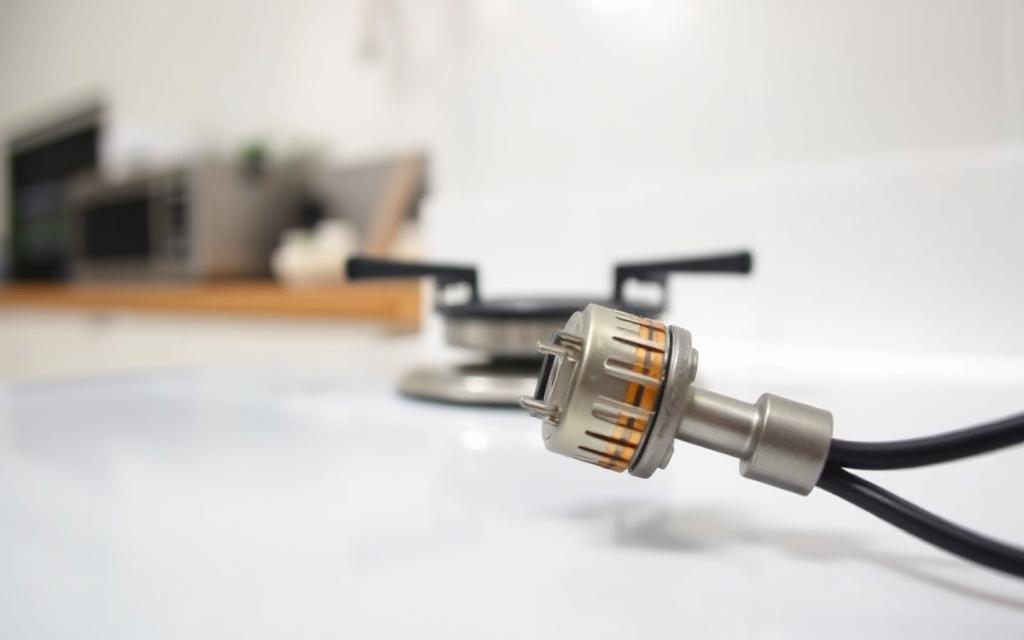
By following these steps, you’ll learn more about your gas stove. Plus, you’ll keep it working well by installing a new igniter.
After you replace your gas stove’s igniter, testing it is a must. This avoids any problems when starting it up. First, reconnect the power and make sure the gas is on. Then, light the burner to see if the igniter sparks and lights the gas.
Before turning the power back on, check all connections are tight. Make sure the gas line is hooked up right and there are no leaks. Safety first! Then, turn on the stove to start it up.
Watch the igniter when you turn on the burner. A good igniter will make a steady spark and light up the gas. This should give you a stable blue flame. A yellow or shaky flame means there’s a problem to fix.
If the igniter doesn’t work right at first, check all connections and wires. Make sure they’re not loose or damaged. Also, the burner should be clean of any dirt that might block the spark. Keep testing and fixing issues one by one to find what’s wrong.
Maintaining your gas stove igniter is key for a reliable cook. Steps to take care of your range extend its life and keep it running well, reducing the risk of issues when you need it. These practices help avoid ignition troubles and ensure your stove works smoothly.
Cleaning the igniter often boosts its efficiency. Just wiping the surface with a soft cloth removes grease and bits of food. If needed, use a mild cleaning solution, but be careful around electrical parts. This easy routine helps keep your gas range in good shape.
Having enough air while cooking is key. Make sure your kitchen is well-aired to stop overheating. Good airflow also reduces moisture that might cause igniter electrical issues. These steps can help stop problems that come from the environment.
Even with regular cleaning and good ventilation, getting a pro to check your stove is smart. They can spot hidden problems that may affect your igniter. Early detection helps avoid big repairs and keeps your igniter lasting longer.
Fixing a gas stove igniter by yourself has many pluses. It doesn’t just fix the problem right away. Doing it yourself saves money and teaches you how your appliance works. This experience makes you better at fixing things at home, making future repairs less daunting.
Choosing to replace an igniter on your own can save a lot of money. Getting a pro can be costly due to their fees and the price of parts. Doing the job yourself means you only pay for parts and use tools you already have. This not only keeps your wallet happy today but also in the future, letting you spend that saved money on other things.
Tackling a DIY project like this teaches you a lot about your gas stove. You’ll get to know how each part, including the igniter, works. This understanding is handy for fixing problems or doing regular maintenance, helping your stove last longer.
Getting an igniter replaced successfully by yourself feels awesome. It means you’re getting better at fixing things around the house. Every project gives you new insights and skills for future use. This builds up your ability to take on different problems, making you more independent.
Sometimes, fixing your gas stove igniter is easy to do on your own. But, there are times you should get professional help. If you’ve tried fixing it and it still doesn’t work, you might have a bigger issue. Issues could be a bad spark module or a thermocouple problem. Knowing when to call a technician can save you time and keep you safe.
If you hear weird sparking sounds or the igniter isn’t working right even after you’ve tried to fix it, get help. Also, if you see damaged wires, it’s time to call in an expert. When your DIY fix doesn’t solve the problem, a professional can take a closer look and figure out what’s wrong.
Expect a pro to really check your gas stove’s parts when you hire them. They’ll measure and test to find the root of the problem. Then, they might replace parts or adjust things to make your stove work safely and well.
Looking for dependable repair services? Start by reading online reviews or asking people you know for suggestions. Make sure the technicians are licensed and insured. Doing this helps you find good service and gives you peace of mind while fixing your gas stove igniter.