Our Location
1250 Beacon Street
Brookline, MA 02446
Discover the ideal compact ovens for small kitchens, maximizing your space without sacrificing quality. Bake, roast, and toast with ease in tight spaces!
If you live in a small space, like an apartment or RV, a big oven is not needed. Compact ovens are perfect for baking, roasting, and toasting without using too much room.
This guide focuses on countertop compact ovens and other small kitchen appliances. You’ll see reviews of Breville, Cuisinart, Panasonic, and OXO models. It also offers buying tips, installation advice, care instructions, and future trends.
Expect to see comparisons of mini ovens for small spaces and their uses. They’re great for entertaining, when a full oven is not practical, or for seasonal cooking. Compact ovens save space, use less energy, preheat faster, and recover temperature quickly.
Keep reading to find out which countertop compact ovens are right for your kitchen. Learn how to measure and install them. Also, discover how to care for your new appliance to ensure it works well for years.
Compact ovens pack big cooking power into small spaces. They’re perfect for apartments, dorms, or narrow kitchens. They let you bake and roast without needing a full-size oven. This section will tell you what compact ovens are, why people choose them, and if they fit your cooking style.
A compact oven is a smaller electric oven that sits on your countertop or fits in tight spaces. You can find countertop toaster-style ovens, built-in compact wall ovens, and convection toaster ovens. Countertop models usually range from 0.5 to 1.5 cubic feet. Some can fit a 9×13 pan, while others are small enough for just a baking sheet.
Mini convection units are fast and fit in a toaster-oven body. Built-in compact wall ovens are like full-size models but take up less space. You can find a model that fits your needs and space.
Space-saving design is the biggest plus. Compact ovens take up much less space than standard ovens. This frees up room on your counter or in your cabinets.
They’re also energy-efficient. Smaller cavities heat up faster and use less electricity. This means shorter preheat times and lower bills compared to big ovens.
Versatility is another key benefit. Many compact ovens can bake, broil, toast, convection cook, and even air-fry. You can roast a chicken, bake cookies, reheat pizza, and crisp fries all in one appliance.
Lastly, they save money. Buying a compact oven is cheaper than a full-size one, and they use less energy. This makes them a great choice for your primary oven or a second appliance for big meals.
Think about how often you cook for groups and what you cook. If you often bake big cakes or roast turkeys, a standard oven might be better.
But if you’re single, a couple, a student, or live in an apartment, a compact oven is a great choice. They’re perfect for quick, efficient meals in small spaces.
If you mostly cook for one or two, enjoy prepping meals in advance, or need a second oven for cooking multiple dishes at once, a compact oven is ideal. Go for a larger built-in model if you need to cook big pans.
Choosing the right compact oven is all about finding the right balance. You need to think about size, function, efficiency, and how easy it is to use. Your choice should fit your cooking style, the space on your countertop, and how you like to clean.
When looking at compact ovens, check the internal cubic-foot capacity and dimensions. Most are between 0.5 to 1.2 cu ft. A good size for a 9×13 baking pan is about 11–13″ deep and 14–16″ wide.
To fit a standard 12″ pizza, look for an oven with an internal diameter or width of 13–14″.
The size of the oven on the outside is also important. Slim models with 16–18″ widths save space. If you have built-in space, larger 24″ compact wall ovens can offer more capacity.
Most compact ovens can bake, broil, and toast. But, higher-end models also have convection bake, air fry, slow cook, and rotisserie. These features use circulating hot air to cook food faster and more evenly.
Look for ovens with programmable presets and a wide temperature range. Many go from 200–450°F. Presets for pizza, bake, and roast make meal prep easier and reduce guesswork, which is great for small kitchens.
Countertop ovens usually use 800–1800W. This is less energy than full-size electric ranges for small batches because they preheat faster and heat less air. Look for low-wattage models with good insulation, even if they don’t have an ENERGY STAR label.
Estimate energy use by looking at wattage and typical run time. Faster preheat times mean less energy used. So, efficient insulation and smaller cavities often save power, which is good for compact ovens in small kitchens.
Controls are important. Knobs are simple to use, while digital touchpads offer precise timers and multi-step programs. Auto-shutoff and countdown timers add safety for busy homes.
For cleaning, look for ovens with removable crumb trays and nonstick interiors. Stainless steel is durable but shows fingerprints. Enamel interiors resist stains. Some models have steam or self-clean features to make cleaning faster.
Included accessories add value. Look for racks that adjust to multiple heights, a 9×13 pan for baking, crumb trays, and rotisserie spits. Extras that fit your needs reduce the need to buy add-ons, making compact kitchen appliances more practical.
| Feature | Why It Matters | What to Look For |
|---|---|---|
| Internal Capacity | Determines what you can bake or roast inside | 0.8–1.2 cu ft for a 9×13 pan; 13–14″ interior for 12″ pizza |
| External Footprint | Impacts counter space and placement | Slim 16–18″ widths for tight counters; 24″ for built-in options |
| Cooking Modes | Expands meal types you can prepare | Bake, broil, convection, air fry, rotisserie, presets |
| Wattage | Relates to energy use and heat-up time | 800–1800W; lower wattage with good insulation for efficiency |
| Controls | Affects ease of programming and reliability | Knobs for simplicity, touchpads for precision and presets |
| Cleaning Features | Reduces maintenance time and prolongs life | Removable crumb trays, nonstick/enamel interiors, self-clean options |
| Included Accessories | Boosts out-of-box value and utility | Adjustable racks, baking pans, trays, rotisserie spit if offered |
Choosing the right compact oven is about size, power, and features. You’ll find options for every budget and need. Whether you’re looking for quick meals or serious baking, there’s a perfect fit for you.
Breville Smart Oven is a top choice for serious bakers. It has even heat thanks to Element IQ technology. It also has preset modes for consistent results. Some models can fit a 9×13 pan, perfect for big casseroles.
Users love its quality, accuracy, and reliability. It’s great for those who bake a lot.
Cuisinart TOB-260N is a solid midrange option. It offers good capacity and various functions, including convection and air fry. It’s less expensive than Breville but still reliable.
Durability and temperature accuracy can vary. Always check the latest reviews for comparisons.
Panasonic and Hamilton Beach are known for their small size and energy efficiency. Panasonic heats quickly and precisely, perfect for efficient cooking. Hamilton Beach is affordable and easy to use, great for small kitchens or renters.
So, who should choose what? Breville is best for frequent bakers seeking professional results. Cuisinart is a good midrange choice. Panasonic or Hamilton Beach are ideal for those with limited space and budget.
Availability and specs can change. Always check the latest reviews and manufacturer manuals before buying.
Choosing the right compact oven for your kitchen begins with a plan. Consider what you cook, how often, and the space you have. This helps narrow down options to find the perfect fit for your needs.
Make a list of your favorite dishes: full-size roasts, casseroles, pizzas, and baking-sheet cookies. If you bake large items, choose an oven that can handle them. For small pizzas, a 10–12″ pizza oven is ideal.
Think about how often you use the oven. Daily cooks need durable, feature-rich ovens with convection and sturdy racks. Those who bake less can opt for simpler mini ovens that save money and still meet basic needs.
Measure your counter’s width, depth, and height, including any overhead cabinets. Add space for ventilation and door swing. For built-in units, follow the manufacturer’s cutout dimensions carefully.
Check outlet placement and power needs. Ensure there’s enough air flow behind the appliance. These steps help avoid installation issues in tight spaces.
Decide on a budget before you start shopping. Mini ovens for tight spaces cost $40–$100. Midrange models are $100–$300. Premium options can be $300–$600 or more.
Consider what you get for your money. Longer warranties and stainless steel exteriors cost more. Cheaper plastics may dent or discolor. Better temperature control and included accessories add value and can save energy.
Focus on what’s most important to you: capacity, features, or price. Renters should look at return policies and portability. This ensures you choose an oven that fits your cooking habits, budget, and kitchen layout.
Using a compact oven can make cooking faster and more reliable. These ovens are different from full-size ranges. Learning a few simple habits can help you get great results from mini convection ovens or any compact oven in a small kitchen.
Compact ovens heat up quickly because they are smaller. You should preheat for 5–10 minutes, depending on the wattage and your target temperature. Models with higher wattage might need less time.
When you switch to convection mode, cooking time goes down by 10–20%. Start checking your dish early to avoid overbrowning. Use an oven thermometer to check internal temps instead of just the dial.
The rack you choose affects how food browns and cooks. Use the middle rack for even baking. Place pans lower for slow roasting to prevent top browning. Move to the top rack when you want to broil or crisp something.
Many mini convection ovens have only one or two rack slots. If you must, rotate pans mid-cycle for even heat. Plan your recipes around the available positions to save time and energy.
Think of a compact oven as a second oven when your range is full. Use it for side dishes, toasting, or keeping plates warm while the main oven handles larger items.
For batch cooking and reheating, choose the warm setting or a low-convection mode. This keeps food at serving temperature without drying. Countertop compact ovens are great when you need extra capacity during holidays or busy weeknights.
| Tip | Why It Helps | How to Apply |
|---|---|---|
| Preheat 5–10 minutes | Ensures stable cooking temperature | Set timer based on wattage; confirm with thermometer |
| Reduce convection time 10–20% | Prevents overbrowning and drying | Check food 5–10 minutes earlier than recipe states |
| Middle rack for baking | Provides the most even heat | Center pans and avoid crowding |
| Top rack for broiling | Creates quick browning and crisp texture | Watch closely; broil in short bursts |
| Rotate pans when needed | Balances heat in tiny cavities | Turn pans halfway through cook time |
| Use as a second oven | Expands cooking capacity | Reserve for sides, toasts, or warming trays |
| Warm or low-convection hold | Keeps food moist at serving temp | Set to 150–175°F and cover loosely |
To keep your compact oven ready for small kitchen use, follow simple habits. Regular care extends its life, ensures consistent cooking, and boosts baking reliability. A bit of effort saves time and prevents costly repairs later.
Cleaning Tips for Longevity
Wipe the oven’s exterior and door daily with a soft cloth to remove grease and fingerprints. Empty the crumb tray after each use to avoid flare-ups and bad smells. Clean the inside every few weeks with approved cleaners or a baking soda paste for enamel surfaces.
Take out the glass doors and racks and soak them in warm, soapy water. Don’t use abrasive pads that can damage nonstick coatings on racks. For countertop ovens, clean heating elements gently when cool; a soft brush removes debris without damage.
Common Issues and Troubleshooting
If food cooks unevenly, test the oven with an oven thermometer to check temperature accuracy. Uneven heating might be due to a faulty thermostat or misplaced racks. Try repositioning racks and recalibrating the thermostat if possible.
Tripped circuits or blown fuses are common in busy kitchens. Ensure the outlet is dedicated and not shared with heavy appliances. For minor issues, replace a worn crumb tray, reseat loose racks, and clear debris near vents.
When to Seek Professional Help
Call a certified appliance repair technician if you see smoke, unusual smells after cleaning, or if thermostat errors persist. Electrical faults need a professional for safety.
Before any major repair, check warranty terms and authorized service centers for brands like Breville, Cuisinart, Panasonic, and Hamilton Beach. Warranty coverage can cover parts and labor, keeping your appliances in top shape.
Choosing between compact ovens and traditional ovens depends on your space, cooking habits, and budget. Compact ovens are perfect for small kitchens, saving space and speeding up cooking. On the other hand, full-size ovens are ideal for large families, offering more room for cooking.
Size and capacity are the main differences. Compact ovens are smaller and fit in tight spaces. Traditional ovens have more room for big roasts and multiple racks.
Heating technology also varies. Both types use electric elements and convection. But full-size ovens have bigger elements for even heat. Compact ovens focus on quick preheat and cooking.
Compact ovens are energy-efficient for small meals. They are portable, affordable, and great for small kitchens. They also heat up fast and save on energy costs.
But, they have limited capacity and might not brown food evenly if overloaded. Some compact models lack advanced features found in larger ovens.
Traditional ovens are perfect for big meals and layered baking. Brands like GE, KitchenAid, and Bosch offer features for precise baking and multi-rack cooking.
But, full-size ovens use more energy for small dishes and take up more space. They are not ideal for tiny kitchens where saving space is key.
Prices vary a lot. Compact countertop ovens cost between $40 and $600 and need little to no installation. Single built-in ovens cost between $800 and $3,000 or more, depending on the brand and features.
Operating costs are lower for compact models, making them better for small households. Apartment kitchen ovens and other compact appliances can save money on energy bills compared to using a full-size oven.
| Category | Compact Ovens (Countertop) | Traditional Ovens (Built-In) |
|---|---|---|
| Typical Price Range | $40–$600 | $800–$3,000+ |
| Installation Cost | Minimal or none | Professional installation often required |
| Capacity | Small; best for trays and smaller roasts | Large; multiple racks and big roasts |
| Energy Use per Cycle | Lower for short cooks | Higher for small dishes; efficient for full loads |
| Best For | Compact ovens small kitchen spaces, apartment kitchen ovens, space-saving appliances | Full kitchens, families, serious bakers |
| Portability | High | Low |
| Feature Set | Basic to mid-range functions; fast preheat | Advanced controls, broilers, precise baking |
Installing compact ovens needs careful planning. You must choose the right spot, plan for power, and ensure good ventilation. This guide will help you set up your countertop and built-in ovens safely and efficiently. Follow the steps for plug-in units, know when to call a pro, and keep airflow clear for the best performance.
Begin by picking a level, heat-resistant surface for your countertop oven. Use materials like granite, tile, or a metal shelf that can handle heat. Make sure to leave enough space around the oven as recommended by the manufacturer. Most mini ovens need 2–4 inches at the back and sides, and extra space above if under cabinets.
Position the oven so the door swings freely and you can load trays easily. For plug-in models, plug directly into a dedicated outlet that matches the oven’s voltage and amperage. Most compact ovens run on 120V and use 800–1800W.
Avoid using extension cords and power strips as they can overheat and drop voltage. If your oven is a plug-and-install built-in model, follow the manufacturer’s cutout specs exactly. Secure the oven as instructed in the manual to prevent it from shifting during use.
Call a licensed electrician or appliance installer for hardwiring, cabinet modification, or a dedicated circuit. Built-in ovens that need 240V or changes to kitchen wiring should be handled by a pro for safety and code compliance.
Hire a professional for gas compact ovens or when you plan ventilation changes. Gas connections require certified technicians to prevent leaks and ensure proper venting. Always ask for local permits when needed in your area.
Airflow is crucial for heat dissipation and appliance longevity. Keep vents clear and avoid placing appliances against combustible surfaces. Do not tuck a mini oven into a sealed cabinet without proper venting or heat shielding.
Check the manufacturer’s ventilation requirements before installation. In tight kitchens, use a range hood or exhaust fan to remove heat and steam. Proper ventilation lowers surface temperatures and improves cooking consistency for countertop ovens.
Compact ovens are great for cooking in small kitchens. They let you roast, bake, and reheat with ease. You can make plant-based meals, gluten-free baking, and prep meals in no time.
Roasted veggies and sheet-pan meals are perfect for compact ovens. Use convection for even browning of tofu and veggies. This method gives crisp edges without long cooking times.
Choose smaller pans or silicone mats to save space and clean up. These solutions help you make plant-based casseroles and layered bakes. Remember to shift trays and rotate pans halfway for even results.
Even heat is key for gluten-free baking. Use an oven thermometer to check the temperature. With mini convection ovens, reduce the temperature by 25°F and watch closely.
To avoid soggy bottoms, preheat a baking stone or use the lower rack. Smaller pans help breads and cookies bake faster. These appliances cook quickly, so check your food a few minutes early.
Compact ovens are great for batch-roasting veggies and cooking multiple trays. Stackable pans help fit more food in small spaces. Convection mode speeds up cooking and keeps food crisp.
For reheating, use low-temperature warm modes or steam features. Mini convection ovens and other small baking solutions keep food moist and flavorful during meal prep.
Reviews of compact ovens show both good and bad points. People living in small spaces often talk about how well these ovens work. They mention size, performance, and how easy they are to use. Here’s a quick summary of what people usually say, to help you find the right oven for you.
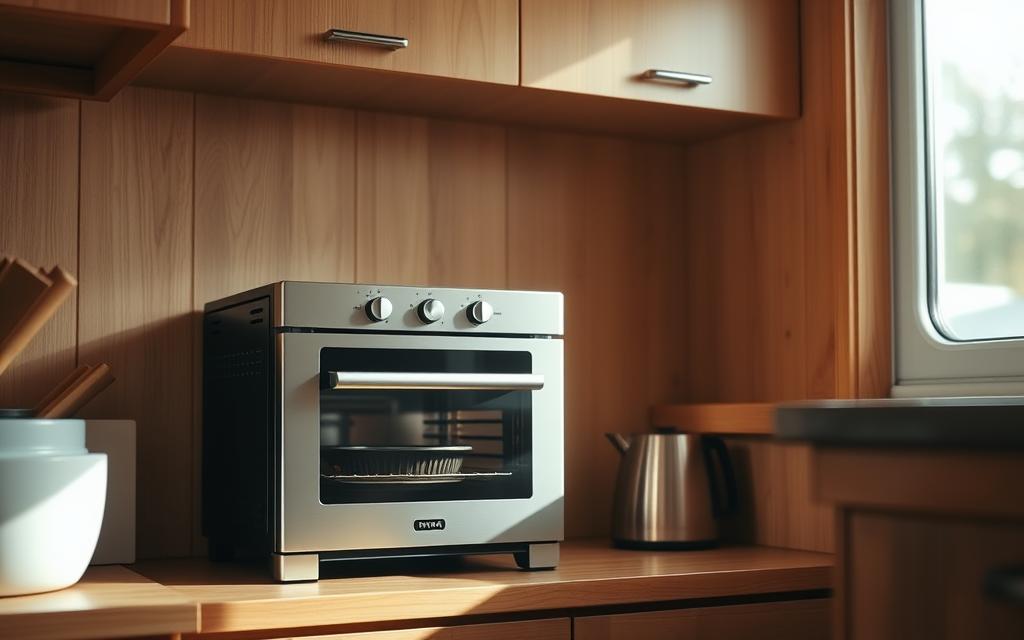
Common praise among users
Many users love how fast these ovens heat up and how well they bake. Models from Breville and Cuisinart are often praised. They say these ovens are great for toasting, baking cookies, and roasting small meats.
People also like how easy they are to clean. The removable crumb trays and simple controls make a big difference. Those who cook small meals often say these ovens use less energy than big ranges.
Notable criticisms and concerns
But, not all is good. Some users say cheaper models don’t heat evenly and can be noisy. They also mention that these ovens can’t fit big baking pans. And, some worry about the durability of very cheap ovens.
There are also mixed feelings about warranties and service. Always check recent reviews about support and repairs before you buy.
Overall ratings and recommendations
If you bake a lot, Breville models are a top choice for their reliability and quality. Cuisinart is another favorite for its good value. Hamilton Beach and Panasonic are good for those on a tight budget who need something simple.
Look at current ratings on sites like Amazon and Best Buy. Compare these with what the manufacturers say. Think about what you need: size, features, and price. Choose an oven that fits your cooking style and your kitchen’s size.
The next big thing in compact kitchen appliances is all about better performance, ease, and saving energy. You’ll find air-fry and steam-cook combos, better convection for even heat, and quicker preheat times. These changes will save you time in your tiny kitchen.
Modular accessories will turn one compact oven into many tools. This makes small kitchens more versatile and efficient.
Smart ovens are becoming more popular in tiny kitchens. They come with Wi-Fi and Bluetooth for remote control, app-based settings, and voice commands. You can even monitor your cooking from another room, thanks to built-in cameras and guided cooking modes.
Sustainability is also a key trend. Brands like Breville, Cuisinart, and Panasonic are using recyclable materials and offering longer warranties. They’re also making appliances that use less energy but still perform well. When picking compact appliances, think about their environmental impact and choose durable ones with eco-friendly manufacturing.