Electric Oven Slow to Heat: Test Resistance and Thermostat at Home

Troubleshoot your electric oven slow heating issue at home. Learn how to test heating elements and thermostat for reliable cooking performance.

Did you know that around 60% of electric oven users run into slow heating issues? This not only messes with your cooking time but can also lead to meals not being cooked right. If you’re finding your electric oven taking longer to heat, you’re in good company. Figuring out electric ovens might seem tough, but knowing what causes the issues help. We’ll show you how to check and fix problems with slow heating. We’ll focus on the heating elements and thermostats. Knowing how to handle this can save you from needing a pro.

Understanding Electric Oven Heating Mechanisms

Electric ovens are popular for their exact temperature settings and ease of use. They work thanks to electric oven heating systems, powered by a 240-volt current. This current heats elements inside, creating the heat we need for cooking food well.

How Electric Ovens Generate Heat

Electric ovens have metal elements that resist electricity to create heat. This heat spreads all over the oven, keeping cooking temps steady. Problems with oven temperature usually mean there’s something wrong with these elements. So, it’s vital to keep them working right for top-notch cooking.

Key Components That Influence Heating

Electric ovens have several parts that help them heat up. The control board sends power to the heating elements. Temperature sensors make sure the oven stays at the right heat. Checking these parts often can stop common oven issues, keeping your oven in great shape.

Comparing Electric Ovens to Gas Ovens

Electric and gas ovens have their own pros and cons. Electric ones heat more evenly and keep temperature better. Gas ovens heat up quickly and let you change the temperature fast. Knowing this helps people pick the best oven for their kitchen. Big names like GE, Samsung, and Whirlpool have made both types better and easier to use over time.

Feature Electric Ovens Gas Ovens
Heating Time Slower to preheat but maintains temperature Faster to warm up
Temperature Control More accurate and stable Less precise, more manual adjustments
Energy Source Electricity Natural gas or propane
Maintenance Usually easier with fewer moving parts Involves handling gas connections

Common Causes of Slow Heating in Electric Ovens

It’s frustrating when an electric oven heats up slowly. Knowing why this happens is key to getting your oven back to its best. Let’s look at some issues that might cause weak heating and uneven cooking.

Malfunctioning Heating Elements

A broken heating element is often to blame. If the element isn’t glowing red, it’s time for a check-up. With insufficient heat, meals take longer to cook, and food may not be properly done.

Thermostat Issues

The thermostat plays a big role in how well an oven works. A faulty thermostat means challenging meal prep. It can cause uneven cooking or longer cooking times. It’s important to check the thermostat regularly.

Insulation Problems

Bad insulation is bad news for an electric oven’s efficiency. When seals wear out, heat slips out. This leads to the oven heating up slowly and working overtime to stay hot. Fixing insulation issues will save energy and improve your oven’s performance.

How to Test the Heating Elements

Checking the heating elements in your electric oven is key if you’re having oven trouble. It helps spot temperature issues early. With simple tools and easy steps, you can find out if the elements work right.

Tools Needed for Testing

  • Multimeter
  • Screwdriver
  • Insulation Gloves
  • Flashlight

Step-by-Step Testing Procedure

To test your oven’s heating elements properly, just follow these steps:

  1. Turn Off Power: Make sure the oven is off to prevent electrical risks.
  2. Access Heating Elements: Use a screwdriver to take off the oven’s back panel. This lets you reach the elements easier.
  3. Check for Visible Damage: Look for any signs of damage like burns or discoloration on the elements. These could mean they’re not working.
  4. Testing Resistance: Switch your multimeter to measure resistance. Touch its probes to the element’s terminals.
  5. Read the Multimeter: A working element should show a resistance between 10 to 100 ohms. If the reading is off, or if there’s no continuity, you might need a new element.

Checking the Thermostat for Proper Functioning

The thermostat is key to your electric oven, keeping the right cooking temperature. It’s important to understand this to improve cooking and avoid oven problems. A faulty thermostat reduces efficiency and could be unsafe. So, checking it regularly is crucial.

Importance of an Accurate Thermostat

An accurate thermostat means your food cooks just right, not too little or too much. It helps your oven heat evenly, which is essential for baking and roasting. By regularly checking your thermostat, you can catch issues early and protect your cooking.

Testing the Thermostat at Home

Testing your thermostat is easy. Just follow these steps with some basic tools:

  1. Gather tools: You’ll need a multimeter, screwdriver, and thermometer.
  2. Access the thermostat: Open the oven to find the thermostat sensor.
  3. Check the sensor position: Make sure it’s placed right for accurate readings.
  4. Conduct resistance testing: Use your multimeter to test the thermostat’s resistance. Compare your findings to the oven manual’s standards.
  5. Verify readings: Check the oven’s temperature with your thermometer. Match it against the thermostat setting. If they don’t line up, you might need to calibrate or replace it.

By understanding the importance of your thermostat and testing it, you can keep your oven working well. Properly tested, your cooking will always be satisfying.

Signs of a Failing Electric Oven

Spotting early signs of trouble in your electric oven can save you money and hassle. Slow cooking and uneven heating are common clues. They suggest something wrong, like electrical issues. Catching these signs early can mean fixing things before they get worse.

Slow and Uneven Heating

Your oven might be failing if it cooks slowly or can’t stay at the right temperature. Uneven heating can ruin your food and make cooking take longer. If some parts of the oven feel hotter or colder, it could mean the heating elements or the oven’s insulation have problems.

Error Codes and Warning Signals

Most newer ovens have digital screens that show error codes for electrical problems. Don’t ignore these warnings. Checking your oven’s manual helps you understand these codes. Acting quickly helps stop bigger issues and keeps your oven working well.

DIY Solutions for Common Problems

Many homeowners run into problems with their electric ovens. Luckily, there are DIY solutions for this. Learning how to replace heating elements and adjust thermostats will save money on repairs. Here’s a quick guide to help you handle oven maintenance yourself.

Replacing Heating Elements

It’s pretty easy to change the heating elements in your electric oven. Just follow these simple steps:

  1. Make sure to turn off your oven’s power first for safety.
  2. Take out the oven racks to see the heating element, which is usually at the oven’s bottom or back.
  3. Use a screwdriver to remove the old heating element.
  4. Then, carefully detach the wires by loosening the clips or connectors.
  5. Put in the new heating element and screw it securely into place.
  6. Put back any parts you removed and turn the power back on.

By doing these tasks yourself, you can make your oven last longer and work better.

Adjusting the Thermostat

If your oven’s temperature seems off, you might need to adjust the thermostat. Here’s how to do it:

  1. First, turn off the oven and let it cool down.
  2. Then, take off the cover of the thermostat, which is usually located near the control panel.
  3. Adjust the calibration screw or slider according to the manufacturer’s instructions using a screwdriver.
  4. Once adjusted, put the thermostat cover back on and test the oven.

Adjusting the thermostat regularly helps your oven work efficiently. This ensures better cooking results. Mastering these DIY tasks can keep your oven in top shape.
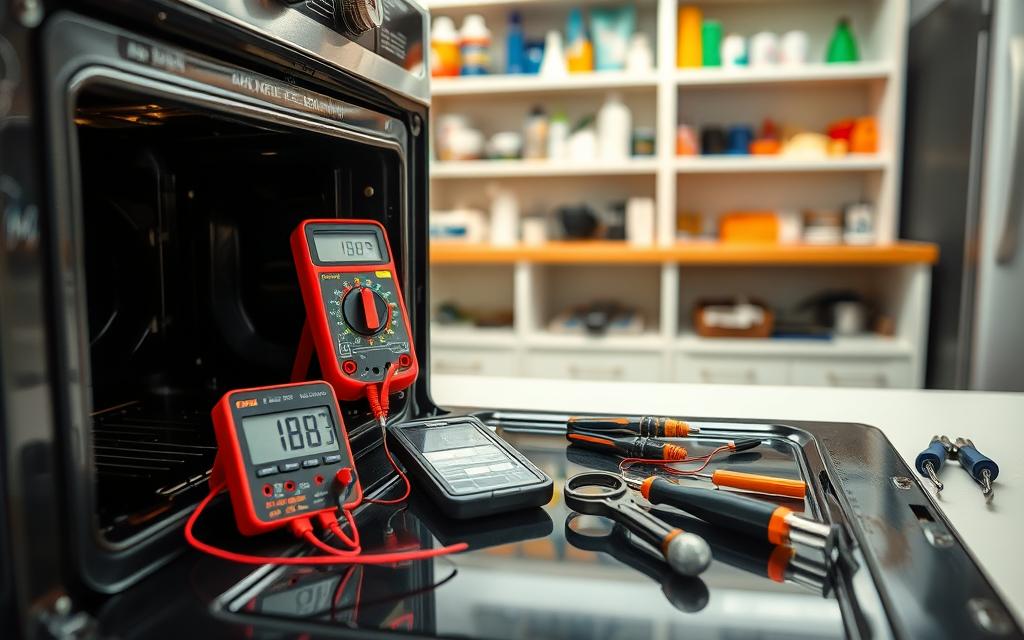
A well-lit, detailed image of a DIY electric oven repair setup. In the foreground, a partially disassembled oven with the interior components visible, showcasing a multimeter being used to test the thermostat and heating element resistance. In the middle ground, various tools and spare parts are neatly arranged, including a screwdriver, pliers, and a replacement thermostat. The background features a clean, organized workspace with shelves displaying a range of household appliance repair materials. The scene conveys a sense of problem-solving, with a focus on the technical aspects of troubleshooting and repairing a common electric oven issue.

When to Call a Professional Technician

Knowing when to call a pro can save you both time and repair costs. Some problems need a technician’s touch, especially for ongoing troubles or safety issues.

Signs That Indicate Professional Help Is Needed

Here are signs you need a technician:

  • Continued Heating Problems: If your oven heats slowly even after you try to fix it, it’s time for a pro.
  • Frequent Error Codes: Seeing many error messages means deeper issues that need an expert.
  • Unusual Noises or Smells: Odd sounds or smells mean something’s wrong. Don’t ignore these.
  • Electrical Issues: Wiring problems are serious. They need a technician’s attention right away.

Choosing the Right Appliance Repair Service

Picking a good repair service matters for the best fix. Follow these steps:

  1. Look for Certified Technicians: Make sure they have pros trained to fix electric ovens.
  2. Check for Reviews: Reading what others say helps understand their service quality.
  3. Inquire About Warranties: A trusted service offers warranties on parts and labor.
  4. Get Multiple Quotes: Compare costs from several services for the best deal.

Preventive Maintenance Tips for Electric Ovens

Keeping an electric oven in good shape is key to its lasting performance. By doing regular checks, you can avoid breakdowns and cook more efficiently. This will also keep your oven working well over time.

Regular Cleaning and Care

Cleaning your oven often is important for it to work right. It stops food buildup, which affects heating, and keeps your cooking area safe. Here are some cleaning tips:

  • Wipe down the inside after use to stop grease from building up.
  • Use a mild oven cleaner to protect the surfaces.
  • Take out and wash the racks now and then for better cleanliness.

Importance of Routine Checks

Doing routine checks on electric ovens is part of good upkeep. These checks can include:

  • Looking at heating elements for damage.
  • Ensuring the door seals properly to keep heat in.
  • Checking the thermostat for accurate temperatures.

Conclusion: Keeping Your Electric Oven in Top Shape

It’s important to keep your electric oven working well for great cooking and saving energy. Follow the right tips to make sure your oven does its job well and lasts a long time. Taking care of it regularly helps to avoid sudden problems that can mess up cooking plans.

Recap of Key Maintenance Tips

Make sure to check and test your oven’s heating parts and thermostat often. If it heats up slowly or the temperature keeps changing, fix these problems quickly. Keeping it clean and making sure it’s well insulated can also make your oven work better.

Encouraging Regular Testing and Upkeep

Staying on top of oven care helps you avoid the hassle of unexpected repairs. Regularly checking and testing key parts boosts how well your oven works and how long it lasts. A well-kept oven is key in your kitchen, letting you make tasty meals without fail.


FAQ

Why is my electric oven taking so long to preheat?

Several reasons can cause a slow preheat time. These include bad heating elements, a wrong thermostat, or lost heat due to poor insulation. Identifying and fixing the root cause is crucial.

How can I tell if my heating element is faulty?

Look for a lack of red glow when the oven is on to spot a faulty heating element. A multimeter test for continuity will also confirm its condition.

What does it mean if my electric oven is not maintaining temperature?

An oven not holding the right temperature may have issues with its thermostat or heating elements. Checking these parts is vital for consistent cooking.

How do I know if my oven’s thermostat is accurate?

Testing your oven’s thermostat accuracy is easy with an oven thermometer. Just compare its reading to the oven’s setting to spot any big differences.

What can I do if my electric range is not getting hot enough?

Check the heating elements, thermostat, and oven settings if your electric range isn’t hot enough. Also, look for any insulation leaks that could affect its performance.

Are electric ovens more efficient than gas ovens?

Electric ovens maintain heat better and are generally more efficient than gas ovens. Yet, gas ovens heat up faster. The best choice depends on what you prefer and need for cooking.

What are the common signs that my electric oven is failing?

Look out for slow and uneven heating, error messages, or not reaching the right temperature. Spotting these early can save you money on repairs or replacements.

When should I consider calling a professional for my oven?

Get professional help for ongoing heating problems, complex electrical issues, or if you’re unsure about safe repairs. A trusted service ensures good work and safety.

How can I extend the lifespan of my electric oven?

Keeping your oven in top shape means regular cleaning, checking heating elements, ensuring seals are tight, and doing routine checks. This helps it run well longer and cuts down on repair needs.
Mark Melborne
Mark Melborne

Mark Melbourne is the voice behind Mastering Money Tech. His mission is simple: make smart living accessible to everyone. Whether you’re choosing an energy-efficient cooling system, finding the perfect kitchen gadget, speeding up laundry day, or picking safer small appliances, Mark provides clear, honest, and tested guidance. He combines everyday experience with practical research so you can create a home that works smarter—not harder.