Our Location
1250 Beacon Street
Brookline, MA 02446
Struggling with a dryer not heating? Learn how to diagnose issues with the thermal fuse, heating element, and thermostat for effective solutions.
In five years, about 30% of homeowners in the U.S. face dryer heating problems. This issue turns laundry day into a long task and raises the risk of mold and wasted energy.
A dryer not heating is a common and pressing problem. It leads to wet clothes, longer drying times, and higher energy bills. Also, it may cause mildew in basements or laundry areas.
This guide aims to help by providing easy dryer troubleshooting steps. It’ll help you quickly find out why your dryer isn’t heating.
The article’s goal is to teach you how to test the three most likely issues. These are the thermal fuse, heating element, and thermostat. The steps will help U.S. homeowners and renters fix problems themselves or understand when to call an expert.
We’ll cover electric and gas dryers. You’ll need to be okay with using tools like a multimeter and a screwdriver. Remember to follow safety steps: unplug electric dryers or turn off the breaker, and close the gas valve for gas dryers. If unsure, it’s best to call a professional.
The following parts will talk about problems with ventilation, airflow, and electricity. We’ll also discuss how ductwork affects dryers, give maintenance advice, and give cost estimates for parts and repairs. This includes when you have to replace the dryer’s heating element.
Always check the manufacturer’s manual for specific instructions and the right parts. Manuals from brands like Whirlpool, LG, Samsung, Maytag, or GE are essential.
Many homeowners find their dryers stop working right, making laundry day difficult. This section explains common reasons your dryer might not heat up. You’ll also learn how to start troubleshooting the problem.
The main issues are usually simple to check. For example, a blown thermal fuse completely stops the heat. Electric dryers might face a broken heating element or a bad thermostat. For gas dryers, issues might include a faulty igniter or bad gas valve coils.
Blocked vents and ducts can also cause problems. They decrease heat and make drying take longer. Electrical issues, like a tripped breaker or a blown fuse, are also common culprits. Knowing whether your dryer is electric or gas is crucial for proper troubleshooting.
Look out for these signs. The drum might spin but without any heat. Or, the heat could be very low, making cycles longer. Sometimes, the dryer might not heat up on certain settings.
You might also notice burning smells, the dryer shutting off often, or the breakers tripping. Many symptoms can overlap. This makes careful testing important to avoid changing parts you don’t need to.
Each part of a dryer has its own function. The thermal fuse protects against overheating. Electric dryers use a heating element for warmth. Thermostats and high-limit thermostats help control the temperature.
Control boards and timers look after the cycles. Gas dryers work with an igniter, gas valve coils, and a flame sensor. The blower and motor keep air and clothes moving. The vents and ducts are there to release exhaust and impact how well the heat works.
The location of these parts can change based on the dryer’s brand and model. They might be behind the rear access panel, inside the front panel, or under the top. Getting the right diagnosis saves money and helps you avoid replacing parts you don’t need to.
| Component | Function | Common Fault Signs |
|---|---|---|
| Thermal fuse | Overheat safety cutoff | No heat, dryer tumbles |
| Heating element (electric) | Generates heat via coils | No heat or low heat, visible breaks |
| Igniter & gas valve coils (gas) | Ignite burner and control gas flow | Gas dryer not heating, no flame |
| Thermostats & high-limit | Regulate and limit temperature | Overheating or no heat, short cycles |
| Blower & drum motor | Move air and spin drum | Poor airflow, long drying times |
| Vents & ducts | Exhaust moist air outside | Reduced heat, long cycles, lint buildup |
| Timer & control board | Control cycle logic and power | Erratic cycles, failure to engage heat |
A thermal fuse stops a dryer from getting too hot. It’s a safety feature in brands like Whirlpool and Honeywell. When a dryer isn’t heating, this part is often the culprit.
This fuse breaks the circuit to prevent overheating. It’s in both electric and gas dryers for fire prevention. Regardless of the model, the goal is to melt and open the circuit if it gets too hot.
You’ll find the fuse in the exhaust path or on the blower housing. If there’s a blockage or failure, the heat can become dangerous. The fuse melts to cut power and reduce the risk of a fire.
If the thermal fuse fails, it must be replaced. Check the vents and airflow to avoid future problems. For help, seek out a certified appliance repair service to fix the issue safely.
Before you start fixing the dryer, get your tools ready and know the safety steps. Testing the thermal fuse can often solve heating issues. This guide will show you how to check the part and what to do if it’s broken.
Tools Required for Testing
Get ready a multimeter set to continuity, different screwdrivers, needle-nose pliers, gloves, and a flashlight. Having your dryer’s manual—especially if it’s from Whirlpool, LG, Samsung, or GE—makes finding the fuse easier.
Step-by-Step Testing Guide
First, turn off electric dryers at the breaker or unplug them. For gas dryers, unplug them and cut off the gas.
The thermal fuse is often near the blower or exhaust at the back. If you’re not sure, your dryer’s manual will tell you where it is.
Open the access panel and take photos of the wires before you unplug anything. This trick makes it easier to put everything back correctly.
Set your multimeter to measure continuity. Unplug the fuse’s wires and touch the terminals with the probes. A working fuse shows almost no resistance. A bad one doesn’t complete the circuit at all.
If you don’t have a multimeter, look at the fuse for any signs of burns or damage. This isn’t a sure way to tell, but it can hint at a problem.
What to Do If the Thermal Fuse Is Bad
Get a new fuse that exactly matches your model. Use the same part number to make sure it fits and works right. For example, many Whirlpool dryers use fuse part W11688555; other brands have their own numbers. Always double-check the right number for your machine.
When you’ve replaced the fuse, also clean the lint screen, housing, vent hose, and the duct outside. If you don’t, the new fuse might blow again because of bad airflow.
If the fuse keeps failing, you might have a clogged vent, a broken thermostat, or a heater that won’t turn off. Then, it’s time to call a pro to find and fix the real issue.
The heating element is vital in an electric dryer. It’s a coil that turns electricity into heat. This part is behind the dryer drum, in a special area that manages air flow and keeps the coil safe.
This element is an electrical coil that heats up during use. It’s found in brands like Whirlpool and GE, sitting inside a metal box near the drum. It comes with parts that support it and a safety feature to prevent overheating.
If the dryer drum turns but doesn’t heat, the element might be broken. You might also notice less heat, longer drying times, or uneven drying. Look for visible damage or smell burning when the dryer is on.
Partial heat can indicate a problem with the dryer’s electrical supply or the coil itself. Symptoms of weak heating but still turning are common in electric dryers. Gas dryers have different parts for heating.
Over time, the coil can wear down or break. Lint can also gather and cause hot spots, speeding up wear. A damaged coil may cause electrical issues like tripping breakers.
Blocked vents and poor airflow can overheat the element, shortening its life. Power spikes can also harm the coil or its safety features. Fixing these issues is essential to keep your dryer working well.
By understanding what leads to heating element failure, you can take steps to avoid it. Cleaning lint and making sure vents are clear can help prevent common dryer problems.
If your dryer isn’t heating, checking the heating element can help. This guide will show you how to fix it yourself safely. Remember to take pictures of the wiring, and always wear gloves and safety glasses.
You will need a multimeter set to ohms, screwdrivers, nut drivers, a camera or phone, plus protective gloves and glasses. Make sure the power is off and check for any remaining voltage before starting.
First, make sure the dryer is completely off. Then, open the rear or lower front panel as your dryer’s guide suggests. Take lots of photos to help put things back together correctly.
Look closely at the element coil for any breakage or burns. If it’s touching the metal case, it’s also a bad sign.
To check if the coil works, use a multimeter on its terminals. If it shows low resistance, it’s probably fine. No reading means the coil is broken and can’t heat.
Test for grounding by measuring resistance between the terminals and the dryer’s metal case. You want to see infinite resistance. If not, the element is grounded and needs replacing.
Buy a genuine part that fits your dryer model. Use manuals from brands like Whirlpool, LG, and Samsung to get the right part number.
Turn off the power and take off the panels. Take pictures of the wires for reference. Remove the broken element and put in the new one correctly, following your photos.
After putting everything back, clean the lint screen and vent to avoid future issues. Test the dryer with a short cycle to make sure it works. If you’re not comfortable working with high voltage or electrical parts, it’s safer to call a pro.
The thermostat is key in managing the drum’s temperature and ensuring the drying process is safe. It works by opening and closing circuits, controlling the heating element’s activity. It also serves as a safety feature by shutting off power if it gets too hot.
Thermostats help your clothes dry without harm. They monitor heat in the drum or exhaust and toggle the heater accordingly. If the dryer gets too hot, a high-limit thermostat turns it off to prevent fires and protect parts like the heating element.
Cycling thermostats keep the temperature steady by alternating the heater’s state. High-limit thermostats will step in when things get too warm, for safety. Operating thermostats manage the standard temperature for drying.
Gas dryers use sensors to control heat with flame and gas elements. You’ll find parts from brands like Whirlpool, GE, and Samsung in various models.
A stuck thermostat might cause your dryer to overheat, possibly blowing the thermal fuse. If it fails open, the heater won’t get power, leaving your dryer cold. Faulty contacts can also lead to erratic drying.
Over time, thermostats can lose accuracy, leading to inconsistent drying. It’s tricky to diagnose since these issues can look like timer or control board problems. It’s best to check the thermostat directly when troubleshooting.
| Issue | Symptom | Likely Cause | Next Step |
|---|---|---|---|
| Closed Failure | Overheating, burning smell | Stuck contacts or internal short | Measure continuity, replace if stuck |
| Open Failure | Dryer not heating, cool air | Broken internal switch or open circuit | Test with multimeter, swap thermostat |
| Intermittent Fault | Heat cycles on and off unpredictably | Corrosion, loose connectors | Clean contacts, tighten connections |
| Calibration Drift | Clothes over-dry or stay damp | Wear or sensor aging | Compare sensor reading to temp probe, replace if off |
| Control Board Mimic | Symptoms like thermostat faults | Faulty timer or electronic control | Isolate thermostat, consult appliance repair services |
Before you open a dryer, make sure power or gas is off. This guide covers the tools you’ll need, how to test, and fixes for a broken thermostat. Use it for dryer problems and regular maintenance to keep your dryer safe and working well.
Required Tools for Testing
You will need a multimeter with ohms and continuity settings.
Bring a screwdriver set that fits your dryer panels.
Wear safety gloves to avoid cuts from sharp parts.
You also need a service manual to find and test thermostats.
Step-by-Step Thermostat Testing Instructions
First, disconnect the dryer from power or gas. Safety comes first in DIY repairs.
Next, open the dryer to get to the thermostat. It’s near the blower or heating element.
Use the manual to find the thermostat. Label and disconnect wires carefully.
Set your multimeter and test the thermostat for continuity. Note the readings and check if they match the manual.
For thermostats with several terminals, test pairs as directed. Do every pair one by one to keep it clear.
If you need to check how the thermostat reacts to heat, warm it with air. Be safe and follow the maker’s instructions for this test.
Solutions for a Faulty Thermostat
To fix a bad thermostat, get a matching OEM part. Make sure it’s the right part for your dryer model.
If replacing it doesn’t fix the heat, test the thermal fuse, heater, and wires. For gas dryers with ignition issues, take safety precautions and maybe get a pro for help.
Your dryer might not heat up for many reasons besides the thermal fuse, heating element, or thermostat. Keeping your dryer well-maintained and frequently checking the vents and ducts lessen hidden issues. Here are three key areas to inspect when experiencing poor heat or longer drying times.
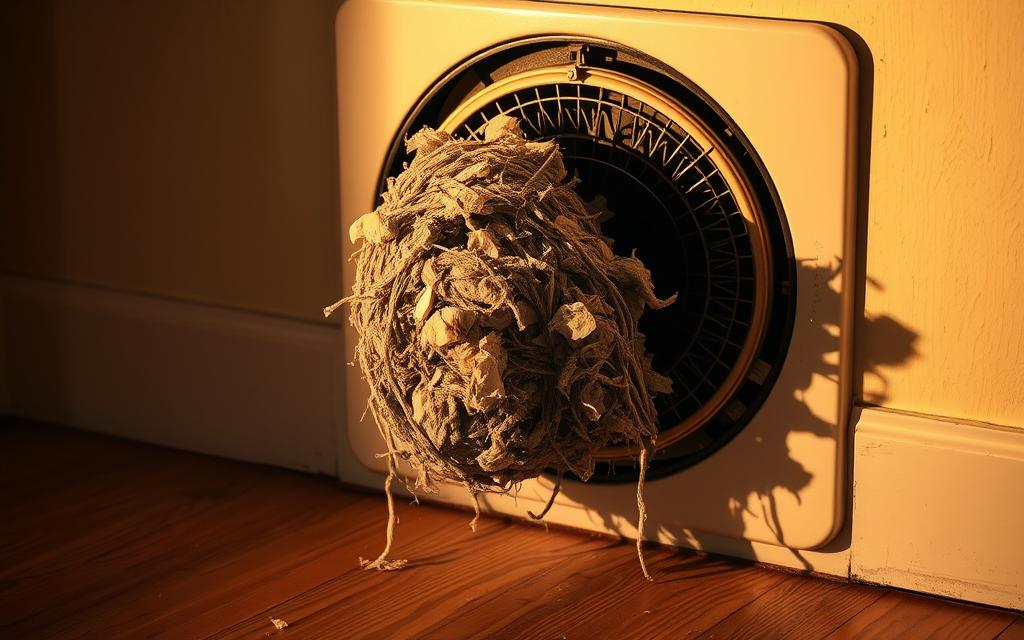
When lint accumulates in your lint trap, lint screen housing, vent hose, and exterior vent, airflow decreases. This lessened flow increases internal heat, possibly tripping thermal fuses or wearing out your heating element faster.
If your dryer takes longer to dry clothes, overheats, expels no warm air outside, shows lint at the vent, or stops too early, you might have a blockage. Always clear the lint trap after using your dryer. Also, deeply clean your vent hose and duct now and then. For tough clogs, consider getting help from a professional vent-cleaning service.
Electric dryers require a steady 240V power supply. If one “hot leg” is lost, the drum might keep turning, but there’ll be no heat. Only check your breaker panel and outlet voltage if it’s safe for you. Otherwise, it’s best to call a professional electrician.
Other issues like shared circuits, tripped breakers, loose wires, or a damaged terminal block can also hinder heating. With gas dryers, these electrical problems might stop the igniter from getting power, thus preventing the dryer from heating even though there’s gas.
Long ducts, those installed poorly, or with too many turns, can increase back pressure and lower heat efficiency. Crushed or too-small ducts reduce airflow, making drying times longer. Also, ducts in cold spots without insulation can cool down the air being vented out, forcing your dryer to work harder.
It’s optimal to use short, straight, metal ducts that match your dryer’s size recommendations. Make sure the outside vent flap opens all the way. Keep an eye on your ductwork for any signs of damage or blockage and fix or replace sections as needed to ensure good airflow.
If your dryer stops heating, it can mess up your plans. Quick checks can fix it fast. Start with easy dryer troubleshooting to spot the problem. These steps offer simple checks, show when to try fixing it yourself, and when to call in the pros.
Make sure the unit is powered. For electric dryers, check the outlet for correct voltage and the circuit breaker. For gas dryers, ensure the gas valve is open.
Clean the lint screen and look at the external vent. A dryer may not heat and dry slowly if airflow is blocked. Remove lint from the trap and vent path.
Try running the dryer empty on a timed cycle and check the vent for warmth. The drum should spin easily and quietly. Modern dryers may show error codes; use your manual to understand codes like F codes about airflow.
Sometimes, you can safely do repairs yourself. Using a multimeter, changing a thermal fuse, replacing a heating element, or thermostats are doable DIY tasks if you’re okay with tools and 240V electricity.
But, fixing gas systems needs extra care. If fixing igniters, gas valves, or complex wiring, better call licensed pros. Safety is key with possible gas leaks or dealing with high-voltage parts.
If issues don’t clear after basic checks, get professional help. Constant fuse blowouts, smelling gas, gas dryer not igniting, burning smells, or seeing sparks need urgent service.
Choose technicians with the right certifications and good reviews. For gas work, pick someone certified in fixing gas appliances for a safe, correct fix.
| Issue | Quick DIY Check | When to Call Pros |
|---|---|---|
| Dryer not heating | Check power supply, clean lint trap, test vent output | Persistent lack of heat, repeated fuse failure, gas ignition problems |
| Weak heat or long cycles | Clear venting, inspect drum for friction, test thermostats | Control board faults, complex airflow diagnostics |
| Burning smell | Stop unit, check lint buildup, inspect belt and motor area | Visible sparking, electrical burning, gas odor |
| Error codes displayed | Consult manual, reset power, clear vents | Repeated errors after resets, control board replacement needed |
Keeping a dryer in top shape prevents minor issues from getting worse. Regular care reduces energy use and the risk of fires from lint. It also extends the life of key parts like the heating element and thermostat. If your dryer isn’t heating, staying on top of maintenance makes fixing it easier.
Vents clogged with lint make dryers work harder and can lead to overheating. The National Fire Protection Association warns that this can cause house fires. By keeping your dryer clean, it will work better, dry your clothes quicker, and breakdown less often.
Following these steps ensures steady performance. Regular maintenance decreases the chances of unexpected issues and simplifies any needed repairs.
Fixing or replacing a dryer involves considering both cost and safety. Short checks and easy repairs can help save cash. But major parts and the work to replace them can make repair costs rise. It’s helpful to know the usual prices to set your budget right.
Parts for dryers have a wide range of prices in the U.S. A thermal fuse might cost between $10 and $30. You could pay $40 to $200 for heating elements, depending on the dryer’s make and model. Thermostats are priced around $15 to $75. For those with gas dryers, igniters and gas valve coils could be $40 to $150.
Service charges for fixing appliances usually range from $80 to $150 per hour. This could also include a base fee for the visit. A single repair might total between $120 and $300. This depends on how complex the job is and how long it takes.
OEM parts are pricier but might last longer and ensure a good fit. Aftermarket parts can be cheaper upfront. But make sure they fit your dryer and check their warranties.
Begin with simple checks. Cleaning out lint and making sure the dryer is plugged in can fix it without big costs. Clearing blockages often solves heating issues.
Get repair quotes from a few services. Ask about guarantees on their work and parts. This can help avoid surprise fees and find trustworthy repair people.
You could also save by buying parts yourself, if you’re up for installing them. Make sure to get the right part. This can prevent needing more repairs later.
Think about getting a new dryer if repair costs are high. An old machine, especially one over 10 years old with many issues, might be more expensive to fix than to replace.
Newer dryers are more energy-efficient and have better features. With gas dryers, safety comes first. If you keep having problems with ignition or gas, it might be safer to replace it.
| Item | Typical Part Price (U.S.) | Labor Estimate | Notes |
|---|---|---|---|
| Thermal Fuse | $10–$30 | Included in small repairs; technician visit $80–$150/hr | Low-cost fix if accessible |
| Heating Element Assembly | $40–$200 | 1–2 hours typical; total repair $120–$300 | Common cause of dryer not heating; OEM pricier |
| Thermostat | $15–$75 | Short job; combined with other parts may raise labor | Multiple thermostats may be used in one dryer |
| Igniter / Gas Valve Coil | $40–$150 | Gas repairs require experienced techs; safety checks | Gas dryer issues often need professional service |
| Full Repair Job | Parts + Labor | $120–$300 typical | Depends on diagnosis, part cost, and time on site |
| New Dryer | $400–$1,200+ | Delivery and installation may add cost | Modern units more energy efficient; long-term savings |
When your dryer isn’t heating, start by doing some simple checks. Make sure it has power or gas and that the lint screen and vent are clean. Then, check the thermal fuse, heating element, and thermostats for problems. For gas dryers, also look at the igniter and gas valve parts.
Many dryer repairs are easy and safe to do yourself with a few tools and a multimeter. Just remember to use the correct parts and follow the maker’s guide. This ensures your warranty stays valid and everything fits right.
Always put safety first. Turn off electricity or gas before you start working on the dryer. If you’re not sure about something, better call a pro. Safe practices prevent accidents and keep your appliance working well for longer.
If you keep having troubles or worry about safety, get in touch with expert repair services or the dryer’s support team. They can guide you to the best help. Keeping your dryer in good shape means your clothes stay nice, you save on energy, and your dryer lasts longer.