Our Location
1250 Beacon Street
Brookline, MA 02446
Explore the balance between DIY vs warranty repair for home appliances and learn which options safeguard your warranty and save you money.
About 70% of American homeowners start a do-it-yourself project each year. They get inspired by shows such as This Old House and Fixer to Fabulous. This fact makes choosing between DIY or warranty repair important when fixing things like a fridge, washer, or oven.
DIY work can make you feel proud and save money, but fixing appliances is not the same as painting or hanging shelves. A wrong step could end your warranty, create dangers, or turn a small issue into a big expense.
Think about how well you understand wiring diagrams, how to identify parts, and troubleshooting basics before starting. If you’re unsure or don’t have the tools, calling a pro, like Appliance Rescue Service, could be cheaper and faster.
When choosing between DIY and expert help, consider safety, warranty details, costs, time, and the appliance’s age and value. Look for trusted info on the manufacturer’s website or RepairClinic. This way, you make choices based on good info, not incomplete videos or blocked websites.
DIY appliance repair teaches you how to handle basic upkeep and easy repairs. It includes changing light bulbs, attaching clamps, cleaning out lint, and fixing clogs. Doing these tasks yourself saves time when simple solutions work.
Start by looking at guides from big brands like Samsung and LG. Check RepairClinic for parts and use YouTube for repair steps. This helps you find the right way to fix things.
DIY projects save you money because you don’t pay for a pro’s time. When a kitchen or laundry device needs a quick fix, you do it and avoid waiting.
Fixing things yourself also teaches you valuable skills. Getting a repair right boosts your confidence. It makes you feel good about what you’ve achieved.
Some people think electrical or gas work is easy, but it’s actually dangerous. Don’t try these repairs without the right skills.
Using the wrong parts or not having the needed tools can make problems worse. Always double-check part numbers on the brand’s website to avoid mistakes.
Trusting just one online guide is risky. Sometimes, steps are skipped or advice is old. Be sure by looking at different trusted sources and official manuals first.
Appliance warranties are important for covering costs if your appliances break. Always read both the manufacturer’s guide and any extended warranty details before deciding on repairs. Knowing what your warranty covers can save money and ensure you choose the safest repair option.
Appliances come with a basic warranty from the maker to cover material and work flaws for a limited time. Stores like Best Buy and Home Depot may offer extra warranties that extend coverage or include home visits.
Extended warranties and service deals often have separate rules from the standard warranty. They might only cover labor or both parts and labor. Also, they could limit you to specific repair services that the warranty approves.
Be wary of terms needing repairs by approved technicians with official parts, and getting okay for repairs ahead. Not following these rules could mean your warranty won’t cover the repairs.
It’s smart to keep all your receipts, warranty cards, and records of repairs. You may need them to make a warranty claim. Companies like Samsung or GE will help confirm what’s covered and where you can get authorized repairs.
Thinking about fixing it yourself? Check if your warranty requires getting permission first. Even easy fixes could become expensive mistakes if they’re not pre-approved under your warranty.
Trying to save money by fixing appliances like dishwashers and fridges is common. But, know your warranty details before starting. Small DIY fixes might seem okay, but they can limit your warranty if not done by authorized people.
Always check what could void your appliance’s warranty. Brands like Whirlpool and Samsung have different rules. Even a simple repair or looking inside without permission could mean big repair bills later.
Unauthorized Repairs
Getting help from someone not approved or using the wrong parts risks your warranty. Not following the rules could lead to denied future repair claims. Companies can refuse to fix your appliance if they spot unapproved changes.
Additional Fees and Charges
DIY repairs might add extra costs later when you need official service. You might face fees for fixing past mistakes or for non-approved parts used. The parts seller or maker could also charge for their time and replacing unapproved components.
Think carefully before choosing DIY over a warranty fix. Saving now might mean more costs later. Always ask the manufacturer first if your DIY plan is safe for your warranty.
Facing home repairs yourself can make you feel strong. But, some repairs come with risks. Think about safety and the possibility of turning a small mistake into a big issue.
Common risks include electrical shocks, gas leaks, and fire dangers. A wrong wire or gas leak can hurt you or damage your property. Touching refrigerant is bad for your health and the planet if done wrong.
Handling big machines like fridges can cause injuries. Things that move can pinch or cut you. Sometimes, you need a pro to meet local rules. Companies like Whirlpool follow these rules to keep you safe.
Online guides might not tell you everything. Ads might block parts of the guide. Or, the steps are old and missing important safety info. Always check the maker’s guide from Samsung or LG before you try fixing anything.
Trying to fix something over and over can make it worse. If you guess the problem wrong, you might break parts or lose them. A simple fix could turn into needing a new part.
The cost of fixing mistakes can add up. You might end up paying more for parts and labor than if you had called for help at the start. Asking a pro early can save you from bigger issues.
When you decide to fix something, start easy and use the right tools. If it involves gas or electricity, or if it’s something sealed, call a pro. This is the best way to keep you and your house safe.
Starting a warranty service claim can seem tricky. But knowing the right steps can make it simpler. It also helps you make sure your warranty stays valid. Just follow a few easy steps to solve your problem with less worry.
Before you call, get your documents ready. Find your product’s model and serial numbers, your purchase receipt, and your warranty documents. Also, check the manufacturer’s website. Look for contacts for authorized service. Companies like Whirlpool, Samsung, and GE have support lines and directories of official service centers.
First, look over your warranty. Make sure your situation is covered and check if there’s a deadline. If you bought an extra warranty, contact that provider, not the store.
Next, reach out to the manufacturer. Use their support number or online claim site. If online doesn’t work, call them and have your documents ready. Make sure to get an authorization number and save a screenshot or write it down.
Then, set up a time for a tech to come over. Some companies will send their own people. Others will tell you to go to a service center they approve of. Be clear about what repairs you might need and ask how long it will take.
An expert will check your product and may charge if it’s not a warranty issue. If it is, those charges often go away. They’ll use parts directly from the maker.
The technician will stick to the maker’s guidelines and give you a report of the repair. How long the repair takes can change, depending on if they have the parts. Authorized centers usually get parts faster than other shops.
Hang onto all the papers from the visit. Things like the authorization, receipts, and list of parts help if there’s a problem later. If they can’t fix it, ask what else you can do. This lets you figure out costs and what’s most convenient.
| Step | What to Prepare | Expected Outcome |
|---|---|---|
| Check Coverage | Warranty terms, purchase receipt, model/serial number | Confirm if issue qualifies for warranty service |
| Contact Support | Manufacturer support line or online portal, authorization request | Receive authorization number and schedule service |
| Technician Visit | Provide access, show paperwork, note symptoms | Diagnostic performed, estimate and repair options given |
| Repair Completion | Receive repair report, parts list, and invoice | Unit repaired with genuine parts or next steps if parts delayed |
| Record Keeping | Store authorization, receipts, and technician notes | Proof for future warranty service or disputes |
Should you fix it yourself or call for help? This choice begins with a question: Is the job small, safe, and can you undo it? Home repairs can be as simple as changing a light bulb or as complex as fixing a fridge. Start with easy tasks to grow your skills and confidence before tackling bigger projects.
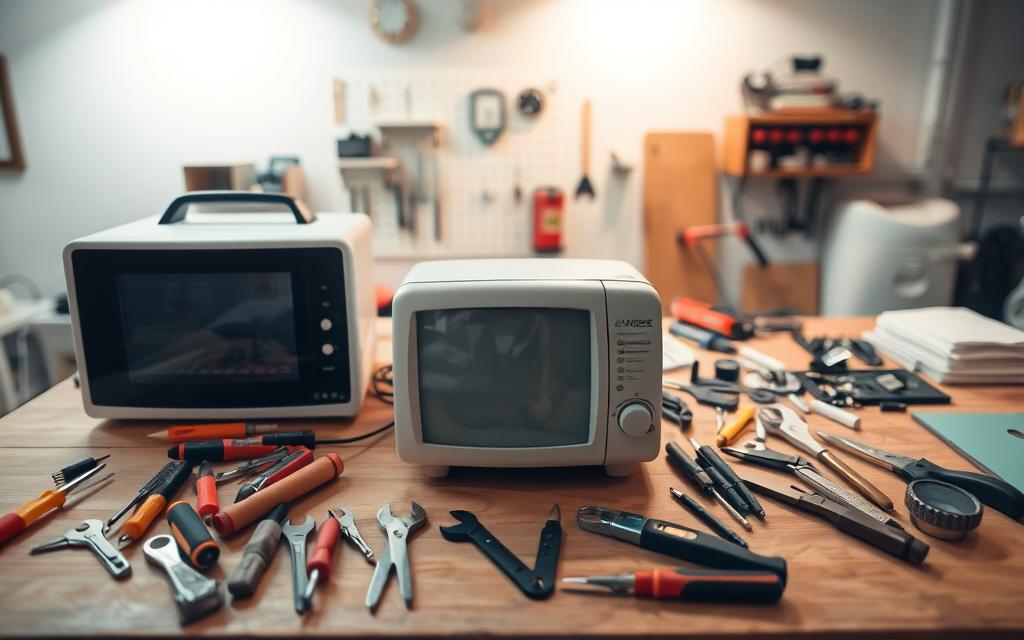
Simple repairs that are safe to DIY
Some repairs are perfect for DIY. This includes tasks away from live wires, gas, or fridge systems. Think of changing light bulbs, replacing hose clamps, clearing out dryer lint ducts, and fixing clogs in filters. These tasks let you practice fixing things safely and might not void warranties.
Factors to consider before DIY
If you start doubting, it’s time to pause. Stop if you can’t put things back together or if the problem doesn’t go away after a few tries. At that point, it may be wiser to consult a pro rather than choosing between DIY and warranty service. This can save you from bigger issues later on.
Choosing between DIY or a warranty service involves weighing repair options against your needs at home. Small repairs can save cash and are quickly done. For big problems or appliances under warranty, professional technicians are often the best choice. They keep your warranty intact and ensure safety.
Here are some points to help make that choice. Consider the immediate and future costs, and how long you’ll be without the appliance. This mix really shows if you’re saving money, not just the upfront cost.
Doing it yourself saves on paying for someone’s work for easy tasks, like changing filters. But, remember to count the cost of parts, any tools, and the chance of making things worse. Messing up a DIY repair could mean losing your warranty and paying more later when a pro has to fix the original issue plus any new damage.
Using a pro through the manufacturer might get you cheaper parts and a guarantee on the work. When getting quotes, consider diagnostic fees and how long parts take to arrive. Quick checklist: cost of parts, estimate of labor, risk to warranty, and how long the repair should last.
Time and convenience are key if the appliance is essential, like a fridge or washing machine. DIY lets you skip waiting for an appointment and feels rewarding. But, be ready for a learning curve and possibly long troubleshooting that could turn a quick fix into a long project.
Choosing warranty repair means getting a fixed appointment and faster service for tricky problems from certified techs. If you can’t fix it with online guides, lost time is a real issue. This may lead you to contact the manufacturer or a local expert.
Below is a table to help you compare repair choices. It shows usual costs, how long repairs take, and the risk to your warranty. This way, you can make a choice that fits your situation best.
| Repair Option | Typical Outlay | Average Time | Warranty Risk | Best For |
|---|---|---|---|---|
| DIY small fix (filters, knobs) | Low parts cost; no labor | 30 minutes to 2 hours | Minimal if instructions followed | Simple, low-risk tasks |
| DIY complex fix (motor, control board) | Moderate to high; tools add cost | Several hours to days | High; may void warranty | Experienced DIYers only |
| Authorized warranty repair | Often free or low cost under coverage | 1 to 7 business days depending on parts | None when done by OEM techs | Critical appliances; safety-sensitive jobs |
| Independent professional repair | Labor plus parts; varies by shop | Same-day to a few days | Possible if not OEM-authorized | Out-of-warranty units; quick service |
To keep your warranty valid, start with easy daily habits. Make sure to follow the owner’s manual and do what the manufacturer suggests for upkeep. This can help avoid common mistakes. Taking small steps now can prevent issues with claims later and keep your warranty coverage.
Regular maintenance practices
It’s important to clean lint traps, switch out filters, and check seals, hoses, and vents often. Make a note of each maintenance task and when it was done. This shows technicians you’ve taken good care of the item. Using the right parts and following the maintenance schedule lessen the risk of warranty issues.
Keeping documentation and receipts
Always save your purchase receipt, the item’s serial and model numbers, and any service receipts. If a repair needs approval first, make sure to get it in writing. Keep this information with your other documents. For extended warranties, keep the agreement and contact info handy. This proves you have coverage if needed.
When getting service, ask for a thorough report and keep the receipts for parts. If you can’t register online, do it over the phone or by mail. Make sure to save a printed proof. These records are important for claim processes. They also help explain rules about doing it yourself versus using the warranty for repairs.
| Action | Why it matters | Result for warranty coverage |
|---|---|---|
| Follow owner’s manual | Shows adherence to manufacturer guidance | Strengthens claim validity |
| Use authorized parts/technicians | Prevents damage from incompatible components | Maintains full warranty coverage |
| Keep receipts and service reports | Provides proof of maintenance and repairs | Makes claims easier to process |
| Register by phone/mail if needed | Ensures warranty activation when web forms fail | Secures start date and documentation |
| Document routine checks | Demonstrates regular care and prevention | Reduces disputes over neglect |
Deciding between DIY and warranty repair weighs on risk, cost, and self-assurance. Doing simple tasks like changing filters or securing loose panels can be cost-effective. Yet, for complicated issues with electricity, gas, or smart tech, it’s safer to call an expert. This also helps keep the warranty valid.
Think about the appliance’s age, worth, and warranty condition first. If it’s new or pricey and under warranty, using authorized service is smart. For older or less pricey items with simple fixes, going DIY could work. This is true if you’ve got the tools and know-how.
If it’s about wiring, gas, leaks, heavy items, or ongoing issues after trying to fix it yourself, get a pro. Unclear online guides or warranty details mean it’s time to call support. They’ll make sure you’re doing it right without risking the warranty. Always stop and get help if you feel unsure or if it seems unsafe.