Our Location
1250 Beacon Street
Brookline, MA 02446
Struggling with an air conditioner dripping water inside? Learn how to fix a clogged drain and prevent mold growth with our handy guide.
It’s surprising but true: over 30% of calls to HVAC experts are about water leaks. Many people find their air conditioner leaking water inside even though it seems fine.
An AC leaking water inside is a big problem. We expect a little water, but leaks or puddles show something’s wrong.
This guide looks at the issue quickly. Common causes include clogged drains, dirty filters, rusty pans, broken pumps, frozen coils, low refrigerant, and bad installation.
The damage can be bad. It can hurt your floors and walls, ruin insulation, cause electrical risks, up your energy costs, shorten your AC’s life, and lead to mold. This mold can harm the air you breathe and your health.
To fix an HVAC water leak, you need to identify the issue, clear the drain, take quick action, and try some DIY solutions. Also, know when it’s time to call an expert.
An air conditioner dripping water inside usually points to a mechanical or maintenance problem. Several common issues can cause the condensate to not follow its intended path. Spotting these early can help avoid stains, mold, and expensive repairs.
A blocked condensate drain line is a main reason. Dust, mold, and other debris can clog it. This forces water to spill out of the drain pan.
Dirty air filters can lead to reduced airflow. This might make the evaporator coils freeze. Once the ice melts, it can flood the drain pan, causing water to pool around the AC unit.
Rusted or cracked drain pans can’t hold condensate, leading to leaks. Even small rust patches can grow into big leaks over time.
Low refrigerant and blocked airflow might freeze the coils. As they thaw, they create more water than the system can handle quickly.
When condensate pumps break or float switches fail, water removal stops. This causes visible pooling and occasional dripping.
Bad installation or a loose drain line can cause drainage problems. An air handler not set correctly can mess up water runoff, causing issues.
Condensation can also build up in ducts lacking insulation or in high humidity. This “duct sweating” causes drips away from the air handler, which can be mistaken for other leaks.
Water near the air handler or the condensate outlet points to a blockage.
Gurgling sounds or bubbling indicates trapped air, showing slow drainage.
A musty smell from the vents suggests moisture and possible microbial growth inside.
Some AC systems stop working if the float switch is tripped, but others keep running and dripping. Regular clogs often mean not enough maintenance or that there’s ongoing biological growth in humid areas.
| Cause | Visible Sign | Immediate Check |
|---|---|---|
| Clogged condensate drain line | Water pooling near the handler, gurgling sounds | Inspect PVC drain near the air handler for blockage |
| Dirty air filter | Reduced airflow, ice on coils | Remove and inspect filter, replace if dirty |
| Rusted or cracked drain pan | Steady dripping, visible corrosion | Check pan under evaporator coil for holes |
| Low refrigerant / frozen coils | Ice on coils, sudden wetting when thawing | Look for frost on lines and call HVAC if needed |
| Broken condensate pump | Pooling in systems with no gravity drain | Test pump and float switch for operation |
| Poor installation or disconnected drain | Water trails, misrouted piping | Trace the PVC drain from the unit to outlet |
| Condensation in ducts | Drips away from handler, damp duct insulation | Check duct insulation and attic humidity |
Regular maintenance keeps your cooling system working smoothly. It stops small issues from becoming big problems like an HVAC water leak. It also keeps your system energy efficient, prevents water problems inside, and fights against mold by stopping moisture buildup.
Planned checkups find worn parts before they fail and become expensive to fix. During these visits, technicians from companies like Carrier or Trane check refrigerant levels. They also test the drainage to prevent HVAC water leaks before they cause harm.
Having your AC serviced regularly maintains its cooling ability and helps keep energy costs down. It also boosts indoor air quality and lowers the risk of mold by preventing water issues.
It’s vital to change or clean air filters every 1–3 months. If you have reusable filters, wash, dry, and put them back. A clean filter improves air flow and reduces stress on the system.
Monthly, flush the condensate drain line to stop algae and mold growth. Use either distilled white vinegar or a mild bleach solution as your unit’s manual suggests. Never mix bleach and vinegar.
Each season, check and clean your evaporator and condenser coils. Clean coils ensure good heat transfer and prevent moisture buildup in areas prone to water trapping.
Look at the drain pans for rust or cracks, replacing any that are damaged. Make sure the new pan fits well to prevent water pooling and overflow.
Check condensate pumps and float switches to ensure they’re not failing. A not working pump can lead to indoor water issues. Replace any broken pumps quickly.
If your cooling seems less effective, have a licensed HVAC technician check the refrigerant. Low refrigerant levels can lead to too much condensation and increase the risk of a water leak.
Keep the area around your outdoor condenser clear of leaves, debris, and plants. This maintains airflow and proper drainage. A simple clean-up each season can stop many common drainage issues.
Do simple maintenance tasks monthly and schedule professional tune-ups yearly. An annual check can uncover leaks, coil problems, and drainage issues that might cause moisture buildup in AC unit parts.
First, always think about safety. Before doing anything, switch off the power at the breaker. This step avoids shocks and keeps the equipment safe during inspection. You’ll be checking for water signs dripping from the air handler.
Start by looking at the drain pan under the evaporator coil. Shine a light to spot rust, cracks, or standing water. Try pouring some water into the pan to see if it flows well towards the drain. A damaged pan can lead to water pooling underneath your unit.
Then, take a look at the drain line’s access point. Take off the cap to look for debris or a slimy coating. Notice any musty smells as they can signal growth inside the line. Listen for odd sounds when the AC is on, which could mean a clog.
When it’s safe, use a wet/dry vacuum on the drain line’s end. This will check if it can suck up debris and fix the flow. If this works, watch to see if the pan drains well afterward. Repeated clogs might mean there’s a deeper issue or the pan is broken.
Now, check the evaporator coils for any frost or ice buildup. If you find frost, feel warm air, or hear hissing, it might mean the refrigerant is low. These issues are for licensed pros to fix, as handling refrigerant needs special certification.
If you find the coils are frozen, turn off the system and let it defrost completely. Next, look at the air filters and vents to ensure they’re not blocking air. Dirty filters or closed vents can freeze the coils, which, when melted, cause leaks inside.
Remember, some fixes are best left to the pros. Things like refrigerant issues are for certified HVAC technicians only. But doing visual checks, testing the pan, and using a vacuum on the drain line can show if the problem is minor or needs expert help. This way, you can avoid major water damage from your air conditioner.
If you see your AC leaking, act fast to lessen risk and damage. Begin with easy safety steps before attempting repairs. Protect people, power, and property as you figure out the next steps.
First, turn off power at the thermostat to stop the AC. Then, flip the circuit breaker or the outdoor disconnect to cut all power. If an overflow switch turned off the unit, leave it off until a pro checks it.
If there’s moisture on electrical outlets or appliances, turn off power to that area. Call a licensed electrician or an HVAC expert right away. Don’t use the AC if there’s water around to avoid electric shock and more damage.
Move your furniture, rugs, and valuable items away from any water. Use towels, buckets, or plastic to stop water from spreading. A wet/dry vacuum can quickly remove water from carpets or floors. Fans and dehumidifiers help dry areas fast and prevent mold.
If water is leaking through a ceiling or wall because of the HVAC, take photos for insurance. Call a pro right away if you see big damage or structural issues. While waiting, emptying a clogged drain pan or using a wet/dry vacuum on a blocked drain might help. Don’t run the system until it’s fully fixed to avoid more damage.
If you see your air conditioner leaking or water pooling around it, a DIY fix can help. It’s key to follow safe steps and have the right tools ready. This stops a condensation issue from getting worse.
Start by gathering your tools. The correct tools make the work quicker and lower the risk of errors.
You’ll need a wet/dry shop vacuum, a flexible wire brush or a small drain snake, and a flashlight. Don’t forget gloves, a screwdriver for panels, distilled white vinegar, a funnel, and a garden hose for flushing. Use duct tape or foam to seal the vacuum connection. Only use bleach as a last option and sparingly.
First, shut off power to the air handler at the thermostat and breaker. This is important for safety to avoid any electrical issues.
For small clogs, try a plunger or blow air through the line with an air pump. For tougher blockages, an electric snake might work. But be careful to not damage the PVC lines.
To prevent future clogs, keep up with simple maintenance. Clean the drain with vinegar regularly. Adding a trap or more access points can make cleaning easier and less intrusive later on.
If you see repeating water leaks from your HVAC or water dripping after you’ve cleaned, it’s time to call an expert. Small repairs might seem to fix it at first. But, if the problem keeps happening, it shows there’s a bigger issue that needs a trained eye to fix it right and avoid costly damage.
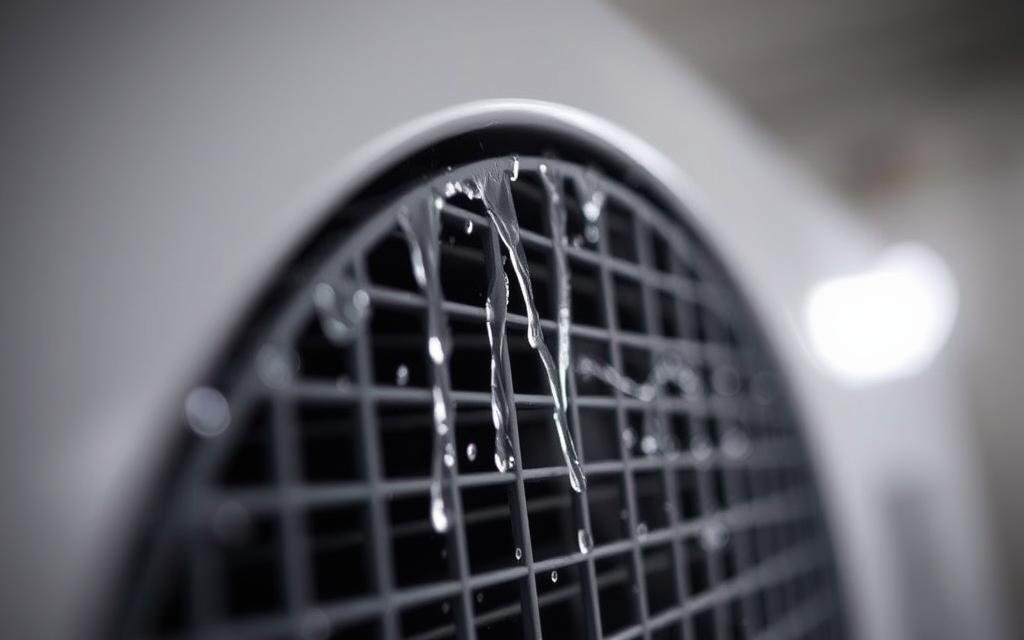
Be on the lookout for signs you need expert help. Things like severe rust on drain pans, condensate pumps not working, and ice forming on evaporator coils are bad signs. If electrical systems trip, water gets into wiring, or you see stains on walls and ceilings, get professional help fast.
When the technician arrives, they will do a complete check. They’ll look at both the inside and outside units, check the drain pan and lines, and test the pump. If there’s a problem with the refrigerant, they’ll find the leaks and fix them following EPA regulations.
Techs have tools most people don’t, like cameras for inspection, big vacuums, cleaners for coils, and tools to find leaks. They’ll find and fix any leaks, charge the system again, and suggest new parts like drain pans or pumps if needed.
Service visits usually have a fee for finding the problem and then an estimate for fixing it. Simple fixes like unclogging a drain are cheaper than fixing a coil or a compressor. If your unit is old and keeps breaking or has a lot of rust, the tech might suggest getting a new one or upgrading to avoid future problems.
Make sure you choose a licensed and insured pro. Check their reviews online and ask about guarantees on their work. Getting a written estimate and a work schedule helps you compare and keeps your home safe from more damage.
| Problem | What a Technician Checks | Likely Outcome |
|---|---|---|
| Recurring drain line clogs | Drain line cameras, vacuum clearing, pan inspection | Thorough cleaning; possible line replacement |
| Water dripping from air handler in attic or ceiling | Access inspection, pan replacement estimate, insulation check | Pan repair or replacement; drywall and insulation advice |
| Ice on coils or warm air | Refrigerant gauges, leak detection, system pressure test | Leak repair and recharge by EPA-certified tech |
| Faulty condensate pump or float switch | Electrical test, pump operation check, switch calibration | Pump replacement or switch repair |
| Electrical trips or wet electrical components | Safety isolation, wiring inspection, breaker testing | Immediate repair and safety clearance |
| Significant air conditioner water damage to structure | Damage assessment, moisture meters, repair coordination | Coordinated repairs with contractors; restoration estimate |
Water from an air conditioner dripping inside can cause mold to grow. If not stopped, moisture can move into insulation, drywall, and ductwork. Acting quickly reduces damage and helps keep people with asthma or allergies safe.
Moisture in AC units leads to mildew and mold. Signs of a problem include musty smells, visible stains, or worse allergy symptoms. Mold can spread behind walls and in ducts, making it tough to clean up.
Fix leaks as soon as possible. This might mean replacing rusty drain pans, clearing blocked drain lines, or getting a new condensate pump. Quick actions stop mold from growing.
For small mold spots, clean them with the right products and be safe. If there’s a lot of mold, get a mold cleaning expert. After cleanup, test your indoor air if someone at home is sensitive to mold.
Proper care of your AC ensures it doesn’t leak water inside. Doing regular maintenance keeps it working well and keeps your air nice and fresh.
Get your AC checked by a pro from Carrier or Trane before it gets hot. They’ll clean parts, check for leaks, and make sure everything drains properly. This helps avoid leaks.
Change or clean your AC’s filters regularly, clear vents and ducts, and use vinegar to flush the drain line. Keep the area around your outdoor unit clean and make sure it’s sitting straight to prevent water problems.
Make sure your thermostat works right. Using a programmable one like Nest or Honeywell helps cut down on humidity and running time. This lessens the chance of leaks.
For big AC systems, clean around the outdoor part and cover it loosely if suggested. This stops mold from growing in the off-season.
Before it gets cold, clean out the drains and get rid of any water in the pan or pump. This prevents freezing and mold, which can make your AC leak when you turn it back on.
For smaller units, either store them according to the maker’s advice or cover them so they stay dry but not damp. Turn the fan on now and then to keep parts dry if you live somewhere warm.
| Task | When to Do It | Why It Matters |
|---|---|---|
| Professional tune-up | Annually, before summer | Prevents clogs and refrigerant issues that lead to an air conditioner dripping water inside |
| Filter replacement/cleaning | Every 1–3 months | Improves airflow, reduces strain, lowers humidity and chance of AC leaking water |
| Condensate drain flush | Monthly during use | Removes algae and debris to prevent backups and indoor dripping |
| Outdoor unit care | Seasonal (spring and fall) | Keeps airflow clear and prevents water pooling that can cause leaks |
| Offseason water removal | Before winter or long shutdowns | Prevents freezing and biological growth in drains and pans |
If your AC often leaks, costs more to fix, or damages your home, consider an upgrade. Older ACs may have rusty drain pans, broken pumps, and parts that don’t work well. This can cause water to drip and moisture issues inside.
Energy-Efficient Models to Consider
Check out high-SEER air conditioners and heat pumps from brands like Carrier, Trane, and Lennox. Heat pumps are good for cooling and heating efficiently. They use less energy than old systems. Ductless mini-splits from Mitsubishi Electric and Daikin are great for houses without ducts. They help prevent leaks and make managing water easier. Pick ENERGY STAR certified models for lower bills and better durability.
Features to Look for in New Units
When to Move Forward and Financing Tips
Think about replacing your AC if fixing it costs as much as a new one. Or if leaks keep happening. Look for rebates on efficient systems from utilities and manufacturers. Local experts from places like ARS/Rescue Rooter can guide you on deals and financing options.
Installation Matters
Choosing a skilled HVAC contractor for installation is key. They should level the unit right, plan drainage well, and insulate everything fully. A properly installed, efficient AC minimizes water damage and leaks from the air handler.
When your air conditioner leaks water inside, it can be a hassle. But, the reasons are usually known and can be avoided. Things like blocked drain lines, dirty air filters, broken pans, ice on coils, not enough coolant, broken pumps, and bad setup or insulation lead to water problems.
Quick action helps prevent further damage. Turn off the air conditioner, clean up any water, check the drain pan and line, and use a wet/dry vacuum or vinegar to clear blockages. Keeping up with regular care like changing filters, cleaning the drains, and getting yearly check-ups can stop leaks from happening and help prevent water issues with your HVAC.
If you run into big problems with the coolant, parts breaking, pans you can’t get to, or leaks that keep coming back, get in touch with a pro in HVAC. Choosing newer, more efficient air conditioners and getting them professionally installed helps lower the chances of leaks later on. It also makes your home more comfortable and saves energy.
Be proactive: look over your system with each new season, act fast if you spot any water, and have a basic maintenance kit (a shop vacuum, vinegar, some tools) as well as a go-to HVAC expert’s contact info handy. Doing these things can help you quickly tackle an air conditioner leaking water indoors, keeping your space dry and healthy.