Our Location
1250 Beacon Street
Brookline, MA 02446
Explore the essentials of kitchen safety with GFCI Outlets 101: Why Your Kitchen Needs Them and learn simple testing tips to ensure they're functioning.
This guide offers a straightforward start to electrical safety in kitchens. It tells what ground fault circuit interrupter (GFCI) devices are. It also explains why kitchen GFCI outlets are important. Plus, it shows how they’re different from standard outlets. The content moves from basic definitions to testing, resetting, maintenance, and fixing. This helps readers keep appliances safe and lower the risks of shock or fire.
The National Electrical Code (NEC) requires GFCI protection in many kitchen spots, though local codes may differ. You should check the requirements with your town or a licensed electrician. Basic testing and resetting are safe for most, but for wiring, power must be off. This might require an electrician.
This how-to guide is all about keeping your kitchen safe with GFCI outlets. It compares them with regular outlets to show their advantages. It suggests homeowners to regularly check their kitchen’s GFCI outlets. It also advises upgrading old ones for better safety and peace of mind.
GFCI outlets keep us safe by shutting off power if a ground fault is found. They are important for protecting people and homes. This guide goes into what GFCIs do and why they’re key for safety.
GFCI means Ground Fault Circuit Interrupter. It’s a device that detects uneven electricity flow. If it finds leakage to the ground, it cuts off electricity quickly. GFCIs come in receptacles, breaker-mounted units, and as portable devices.
Inside a GFCI, electronics check the electricity flow. If there’s a small difference, it turns off in milliseconds. It has buttons to test and reset it. Some GFCIs can also protect outlets that are connected after them.
GFCIs prevent shocks and lower the chance of getting electrocuted. They can stop electrical fires by cutting off dangerous faults. Places like kitchens, bathrooms, garages, and outside need GFCIs by law. This rule has reduced electrical injuries in homes.
| Type | Where Used | Primary Benefit |
|---|---|---|
| Receptacle GFCI | Wall outlets in kitchens, bathrooms | Instant local protection with test/reset |
| Breaker-Mounted GFCI | Service panel for whole circuits | Protects entire circuit including fixed appliances |
| Portable GFCI | Extension cords, temporary tools | Mobile protection for jobsites and outdoor use |
This GFCI guide starts with the basics. It shows why GFCIs are vital and part of a bigger safety plan. Remember, GFCIs don’t take the place of breakers or fuses that protect against overloads and short circuits.
Kitchens combine water and electricity in a confined area. This increases the chance of electrical accidents. Installing GFCI outlets can make kitchens safer for everyone.
Common dangers include wet hands, spills, and appliances falling into water. GFCIs quickly cut power during a fault, reducing shock risks. Especially at risk are children and seniors, who can suffer more from shocks.
Everyday risks involve liquids spilling near electrical outlets. Wet surfaces can conduct electricity unexpectedly.
Broken appliance cords and loose plugs increase accident chances. GFCI outlets in kitchens detect leaks in current and shut it off. This helps prevent electric shocks.
GFCI outlets are designed to protect people from shock, not fires. Yet, they can stop electrical leaks that sometimes cause overheating. AFCIs target electrical arcs that could start fires.
Electrical codes aim to make homes safer. Many insurance policies and home inspections check for compliance. Having GFCI outlets in the kitchen adds an extra security layer, protects your appliances, and can ease property sales.
Putting GFCI outlets in the right spots in your kitchen keeps your appliances safe. It also lowers the chance of getting shocked. This guide will show you how to plan for installing GFCI outlets. It will make sure they meet both safety rules and everyday needs.
Install GFCI outlets near all countertop spaces next to sinks, islands, and peninsulas. You need protection for outlets within 6 feet of a sink. Countertop appliances like blenders, toasters, and coffee makers need these outlets. Dishwashers and garbage disposals often need GFCI protection. This depends on local codes or the appliance instructions.
The National Electrical Code says all countertops in kitchens must have GFCI protection. Some rules also cover dishwashers and refrigerators in certain cases. Local areas have their own rules for these. Always check the most recent local rules before installing or changing GFCI outlets.
Bathrooms, garages, and unfinished basements need GFCI outlets. The same goes for outside spaces, crawl spaces, laundry areas, and wet bars. Places near water like utility sinks also need GFCI outlets. Installing them in these areas lowers the risk of electrocution and fires.
A single GFCI outlet can protect others that are connected after it. This saves you from needing many GFCI devices. Label outlets without GFCI devices but protected by one. Residents then know these outlets are safe.
Always have a certified electrician do or check any wiring changes. They make sure your outlet installation follows local laws. This ensures everything is set up safely. It prevents dangers during and after your project.
Knowing how to spot a ground-fault circuit interrupter, or GFCI, can save time and prevent dangers. This guide shows easy signs to identify GFCIs and confirm protection. A quick look can tell if an outlet is GFCI-equipped or under protection.

GFCI outlets usually have “TEST” and “RESET” buttons, often in colors like red, black, or white. You might see a small light. If you see words like “GFCI” or “Protected,” it’s usually a safety circuit.
Most GFCI outlets look like regular ones, but they have buttons and labels. An outlet without buttons but with a “GFCI Protected” sticker is still safe.
The “TEST” button makes a small imbalance to check the device by cutting power. If pressing “TEST” stops the power, it works right. “RESET” gets the power back on.
Indicator lights tell you if it’s working. Green light means good. Red light or no light might mean a problem. No response after pressing “TEST/RESET” means it needs checking.
Portable GFCIs and breaker-mounted ones are different. Portables are small boxes on cords. Breaker GFCIs are in the electric panel. They reset at the breaker. GFCI outlets have test/reset features and labels, unlike regular ones.
To test downstream protection, check outlets in order after testing an upstream GFCI. If an outlet with no buttons trips with the upstream test, it’s also protected. For easy checking, follow the test steps in the next part of this guide.
It’s easy and safe to check a GFCI outlet yourself. This guide will show homeowners how to make sure their kitchen GFCI outlets are working correctly. Doing so ensures that appliances and loved ones are protected.
You only need a few items to test a GFCI outlet correctly. You should have a small appliance or nightlight to check if power is present, a non-contact voltage tester, or a plug-in GFCI tester. Add a screwdriver, work gloves, and safety glasses to your list if you need to remove the cover. But remember, you can test the outlet without taking off the cover or messing with wires.
Step-by-step testing procedure
What to do if it doesn’t work
If the TEST button doesn’t stop the power, the outlet may not be working right. Try the test/reset on any GFCI outlets before it in the circuit. Write down any outlets that fail the test and don’t use them until they’re fixed.
If you can’t reset the outlet or if it keeps failing the test, unplug everything and try once more. If it still won’t work, shut off the power to that circuit. Only inspect the wiring if you know how. Otherwise, it’s time to call a pro.
If your plug-in tester finds issues like no ground or wires hooked up backward, get an electrician to fix these problems. Regular checks help keep your GFCI outlets safe, matching the advice in GFCI Outlets 101 for home safety.
| Action | What to Expect | Next Step if Failure Occurs |
|---|---|---|
| Plug in appliance and confirm power | Appliance runs or nightlight glows | Proceed to press TEST |
| Press TEST button | Power cuts to the appliance | Press RESET to restore power |
| Use plug-in GFCI tester | Tester simulates fault and indicates wiring status | Call electrician if tester shows wiring faults |
| Test GFCI breaker at panel | Breaker trips when tested, then resets | Stop and call electrician if breaker fails to trip or reset |
| Document failing outlets | Record location and symptoms for the electrician | Do not use the outlet until repaired |
This short guide explains how to fix a tripped device and safely restore power. It’s a handy part of any GFCI outlet manual. It helps keep every homeowner safe.
Look for a popped-out RESET button or an indicator light that is off. You might lose power to the outlet and others downstream. Appliances that stop working suddenly might mean the device tripped. The outlet looks the same but you’ll see the reset button sticking out.
First, unplug everything from the GFCI outlet and nearby outlets. This prevents sparks. Then, inspect the outlet for damage. If you see charring, melting, or smell something burnt, don’t touch it. Call an electrician instead.
Push the RESET button hard until it clicks. Test the power with a small appliance. If power is back, you’ve fixed it. If it trips again, check for wet spots or a problem appliance. Then, stop using the outlet.
If the outlet won’t reset or keeps tripping, get an electrician involved. Call them for signs of damage or if you smell burning. They can handle complex issues to ensure your safety and meet electrical codes.
Safe kitchens matter. By performing regular maintenance, you can reduce the risk of shocks or fires. This guide will explain simple steps for GFCI outlet care, key watchpoints, and test frequency to ensure safety.
Inspect each GFCI outlet monthly. Look for signs like physical damage, loose covers, or discoloration. Also, check for odd lights. Make sure not to overload outlets with multi-plug adapters and keep cords in good shape.
Old or cracked plastic and loose faceplates indicate age. If test/reset buttons are sticky or hard to press, take note. Buzzing sounds or melted plastic mean you should replace the outlet right away.
You should test built-in TEST and RESET buttons monthly. For areas used a lot, professionals might recommend every three months. Also, a yearly check with a plug-in GFCI tester gives a deeper insight.
Replacement guidance
Replace outlets older than 10–15 years or those failing tests. Pick new ones from Leviton, Eaton, or Hubbell, adhering to UL standards. Always turn off power when working behind the outlet. Confirm with a voltage tester. For wiring, hiring a licensed electrician ensures safety.
Switching to modern GFCI outlets improves safety, functionality, and style in kitchens and wet areas. Homeowners upgrading to GFCI outlets gain peace of mind. This comes from features not found in older outlets.
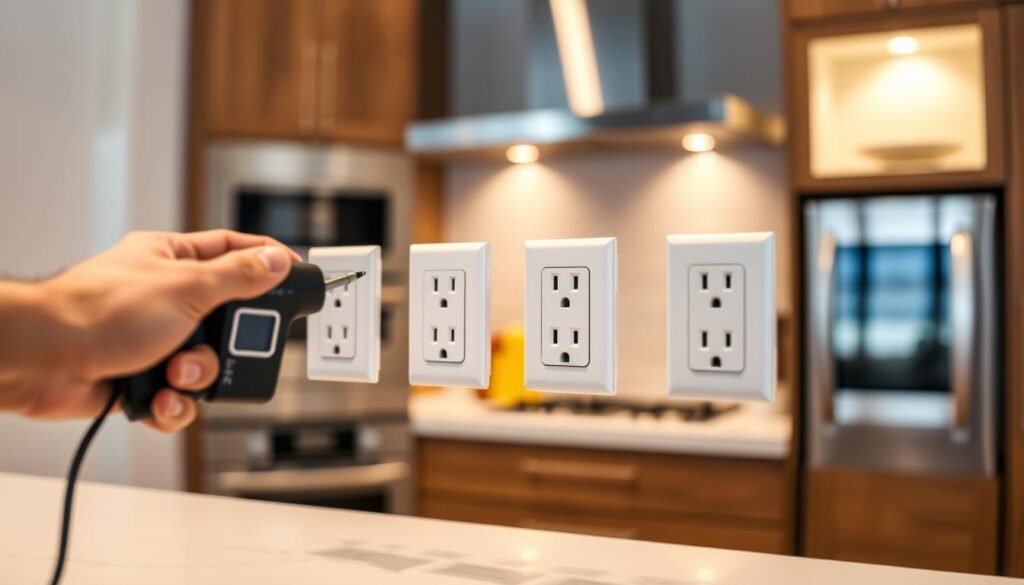
New GFCI models self-check their function and alert users when there’s a problem. They have LED indicators for easy status checks. Some even have alarms for ongoing issues.
They are tamper-resistant, meeting NEC requirements, making them safer for kids. These upgrades greatly increase kitchen safety.
Modern GFCIs can also protect against surges, useful for delicate appliances. They’re weather-resistant, good for use near water or outside.
GFCI circuit breakers provide protection for your entire circuit. Professionals should install them to ensure they match your electrical setup.
Today’s outlets come in various colors and styles to match your home. Stainless steel and designer covers keep safety stylish.
Smart GFCIs offer control via Wi-Fi or home-automation systems. Always check for UL listing and compatibility with your kitchen.
| Upgrade Benefit | Practical Effect | Consideration |
|---|---|---|
| Self-monitoring electronics | Automatic fault detection and alert | Choose UL-listed models for reliability |
| LED and audible indicators | Faster diagnosis when a device trips | Placement should keep indicators visible |
| Combined surge/GFCI units | Protects appliances and prevents shocks | Verify surge rating matches appliance needs |
| GFCI breakers | Whole-circuit protection from the panel | May simplify downstream wiring for remodels |
| Tamper-resistant outlets | Child safety and code compliance | Required for new receptacles under NEC |
| Design finishes | Seamless look with cabinetry and hardware | Match finish to kitchen fixtures for best effect |
| Smart-enabled GFCIs | Remote control and automation with protection | Confirm UL listing and kitchen suitability |
| Professional installation | Correct wiring, code compliance, safe operation | Factor labor cost into budget for GFCI outlet installation |
Consider the benefits of GFCI outlets such as improved safety and potential insurance benefits. Always use a licensed electrician for upgrades. This ensures your GFCI outlets are properly installed.
Many homeowners don’t fully understand GFCIs. Knowing the truth from myths can help you protect places like kitchens and bathrooms better. This overview will clear up the usual mistakes people make about GFCI outlets. It will also show how they add to overall safety.
Some think GFCIs stop all electrical fires. This isn’t true. GFCIs keep you safe from ground faults, not arc faults which can start fires. For arcing problems, you need AFCIs.
A common error is believing GFCIs are only for outdoor use. Actually, many indoor places need them. This includes kitchens, bathrooms, garages, and basements.
There’s a myth that if you have a ground wire, you don’t need a GFCI. Wrong. Ground wires and GFCIs protect against different dangers. A GFCI senses leaky current and shuts off to keep you safe.
Some think testing a GFCI after installing it is not needed. You should test them every month. This ensures they work well and keeps you safe.
GFCIs don’t replace fuses or circuit breakers. They turn off power during a ground fault, not for overloads or short circuits. They might not react to certain faults that don’t involve ground leaks.
Old devices with issues can wrongly trigger GFCIs. If a GFCI often turns off, it might be due to a faulty appliance. Also, wiring mistakes can stop a GFCI from working right or cause it to not trip when it should.
For the best protection, use GFCIs as one part of your safety plan. Add good grounding, right wiring, AFCI protection where needed, and regular checks. This will lower dangers in your home.
Standard outlets provide power and rely on circuit breakers or fuses for safety. GFCI devices monitor the balance of electricity and react fast if a problem occurs. This part explains how each one works and what guidelines GFCI outlet owners should follow.
A regular outlet connects your devices to your home’s electricity. It doesn’t detect if current is leaking. Only the breaker in the panel prevents overloads and short circuits.
GFCI outlets keep an eye on the flow of electricity. If it notices a difference of about 4–6 mA, it quickly stops the power. This prevents electric shocks that a regular breaker might not catch.
GFCI outlets quickly react to protect you from electrical leaks. They have test and reset buttons to check they’re working right without any tools.
They often have lights to show they’re on and shields to stop tampering. Some are also made to last outdoors or near electronics. A well-connected GFCI can guard other outlets too.
Put GFCI outlets in your kitchen and near any water sources. Avoid using standard outlets in places that get wet or are risky, like basements or outdoors.
If you need power outside, use extension cords with GFCI or a portable GFCI device. Match GFCIs with AFCIs to meet safety codes and cover all hazards.
Switching a standard outlet for a GFCI? Make sure to connect wires correctly to keep protection. These easy steps boost safety and show the real-life benefits of choosing a GFCI outlet over a standard one.
It’s really annoying and even risky when a GFCI outlet keeps tripping. Start with easy steps to find out why it’s happening. Figuring out the issue involves a clear, step-by-step method, so you don’t have to mess with wiring or replace things right away.
First, unplug everything from the circuit and hit the reset button. If the outlet resets and stays that way, plug in each appliance one by one. This is to see if one causes problems. Often, kitchen appliances like dishwashers or microwaves make GFCI outlets trip due to a bad cord or another fault.
Look for any wet spots near outlets, under sinks, or behind your fridge. Dry out any moist areas and try the reset button again. Water getting where it shouldn’t can cause ground faults, making the outlet trip often.
Examine cords and plugs for wear and tear or if they’re coming loose. Test other outlets connected to it, to figure out what’s causing the issue. It could be an appliance or part of the electrical circuit.
Tripping might be because of faulty appliances or electrical issues like bad wiring. Sometimes, the problems are more hidden and complicated, like with shared neutrals in multi-wire circuits. These can cause unpredictable faults that are hard to catch just by testing around your house.
An old or faulty GFCI device itself might be the problem. Things like corrosion, damage from rodents, or water getting inside the wall are also troublesome. For issues with the electrical panel or GFCI breakers, you need to check things out more carefully.
If your outlet keeps tripping after you’ve checked the appliances, it’s time to call in an expert. Watch out for warning signs like a burning smell, heat at the outlet, or visible damage. If a tester shows problems with the wiring that won’t go away, you definitely need professional help.
For tricky issues like shared circuits or problems with your electrical panel, an experienced electrician is needed. Keep track of what you’ve tested and what you found. This will help the electrician understand the problem faster and fix your issue without any danger.
| Problem | Quick Check | When to Call an Electrician |
|---|---|---|
| Outlet trips only with one appliance | Unplug appliance and test on another circuit | Appliance trips other circuits or shows damage |
| Outlet trips with no appliances | Dry area, reset, test downstream outlets | Trips persist after drying and isolation |
| Intermittent tripping | Inspect cords, plugs, and connections | Loose neutrals, reversed wiring, or shared neutral |
| Visible damage or burning smell | Shut off circuit and avoid use | Immediate electrician visit required |
| Panel or breaker issues | Note trip patterns and affected circuits | Panel diagnosis, GFCI breaker replacement |
GFCI Outlets 101 teaches us these devices spot ground faults and shut off power quickly. This prevents electrical shocks. They’re vital for kitchen safety and must be placed as the National Electrical Code demands. Always test GFCI outlets often and change any that fail or look worn out.
GFCIs are just one part of keeping safe. Good grounding and using arc-fault circuit interrupters (AFCIs) are important too. Regular checks and hiring a pro for wiring boost safety. All these steps lower the risks of shocks and fires, protecting families and homes.
Here’s what you can do: check and test your kitchen’s GFCI outlets this month. If they’re old or not working right, replace them. And if appliances are broken, unplug them right away. If you need repairs or new setups, call a licensed electrician. This ensures everything meets code and is safe. Keep a checklist: test GFCIs monthly, mark where they are and what they protect, unplug faulty appliances, and get a pro for wiring worries.