Our Location
1250 Beacon Street
Brookline, MA 02446
Discover why your blender smells like burning plastic and learn effective troubleshooting tips to fix and prevent this common issue.
A burning plastic smell in your blender is a common issue in the U.S. It often means there’s overheating, electrical problems, motor stress, or even melted parts. These issues can happen with brands like Ninja, Vitamix, KitchenAid, or Oster. If your blender starts smelling like hot plastic, it’s time to take action.
Ignoring a persistent smell of burning plastic in your blender can shorten its lifespan. It can also pose health risks from breathing in fumes, or even lead to a fire. That’s why it’s crucial to act fast. This guide will explain the reasons behind the odor, how to spot the source, and what steps to take next.
We’ll go over the causes and how to troubleshoot your blender safely. You’ll learn to fix the burnt plastic smell, how to clean and deodorize, and maintenance tips. Often, the problem comes from blending hot stuff, overloading it, using an old motor, or having faulty wiring or bearings.
The advice here is both friendly and useful for those needing immediate help with blender problems. Should you catch a whiff of burning plastic, it’s wise to read through the entire guide before using your blender again.
When your blender smells like burning plastic, it’s a sign something’s wrong. This intro explains the possible reasons for this smell. It also shows how to find what’s causing it and offers clear steps to fix it quickly.
Motor overheating is often the problem. It happens when blending thick mixtures or ice, making the motor’s windings too hot. This heat releases a sharp, chemical smell.
Worn bearings and couplings can also cause trouble. They increase friction, which smells like burnt metal or grease, and can lead to damage.
Sometimes, plastic parts melt or get scorched. If the jar, lid, or base gets too hot, it emits a chemical smell.
Burned wiring makes an acrid smell too. This can happen from electrical issues, leading to a buzzing sound or visible damage.
Leftover food on the blades or pitcher can burn and smell. This happens when oils or sticky foods get too hot, giving off a sweet burnt scent.
First, always be safe. Before looking for the problem, unplug your blender. Check for any signs of damage or melting on the blender’s parts.
Smelling around the blender can point you in the right direction. If the bottom smells bad, it might be the electrical parts or the motor. If the top smells, it could be food residue or melted plastic.
Try running the blender empty in a safe place, like outside. Only use a little water and pulse briefly. Notice if the smell returns and where it’s coming from.
Listening helps too. Any unusual sounds could mean there’s a problem with the blender’s mechanics or electrical parts.
Remember to note when the smell happens and look for any damage. Knowing the type of smell can help decide what to do next. Avoid using your blender until you figure it out.
It’s easy to tell when a blender is starting to fail. Noticing the signs of overheating early can save your blender and keep your kitchen safe. Here are the common signs and some simple steps to take before checking your blender further.
Important safety precautions
If you run into problems, here’s what to do: stop using the blender at the first problem sign. Write down what’s wrong, and look at the manual or contact the maker for help. If your blender often stops for overheating, it might be overloaded or need professional fixing.
When a blender starts to smell sharp and acrid, think electrical problem first. Small issues in wiring or parts can lead to heat and nasty smells before it stops working. Knowing these signs helps owners reduce risk and decide if they should fix or replace it.
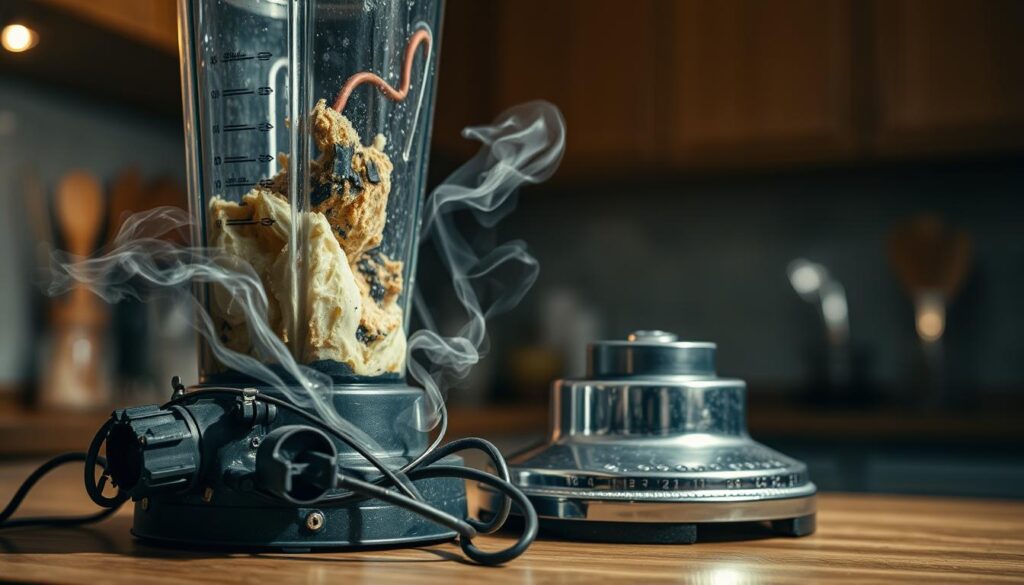
Signs of electrical trouble are usually clear. You may smell something like burning plastic near the plug or base. There might be unintentional power interruptions, sparks when connecting, or breakers that trip during use. Scorch marks on the cord or plug are dangerous signs. These hints are all part of keeping safe and taking fast steps to solve blender issues.
If you’re okay with basic tools, you can unplug and check inside after opening the base. Look for wires that turned black, melted bits, or burnt circuit boards. These signs often mean the inside parts have shorted or are failing. If you’re not sure, it’s safer to call a pro. This keeps you safe and protects the warranty, especially with brands like Vitamix, Blendtec, or KitchenAid.
Checking the outside can reveal problems early. Look closely at the cord for any damage or areas that seem melted. The plug’s prongs shouldn’t be discolored from too much heat. A multimeter can test if the cord and switches still work correctly. If the motor’s wires don’t pass the test, have a repair expert look at it.
Here’s a brief list of blender troubleshooting steps and what to watch for to stay safe.
| Symptom | What it suggests | Recommended action |
|---|---|---|
| Sharp, acrid burning odor | Overheated wiring or motor windings | Unplug immediately; do not run. Inspect cord and base; consult service if found |
| Visible scorch marks on plug or cord | High heat at connection point; possible loose contact | Stop using; replace cord or seek professional repair |
| Sparks when plugging in | Short circuit or loose wiring | Do not use outlet; test with a different appliance; call electrician or repair shop |
| Intermittent power or tripped breakers | Overload, short, or failing motor components | Try lower speed settings; if issue persists, have a technician test motor and wiring |
| Blackened wires or melted connectors inside base | Severe internal damage from overheating | Do not attempt DIY mains repairs; contact manufacturer service or certified repair |
Blenders wear out over time. Everyday use affects consumer models faster than commercial ones. Components like brushes and bearings get worn. This impacts the blender’s sound and function.
Old motors aren’t as strong. They struggle with tasks that were once easy, like crushing ice. They also get hotter and may shut down to prevent damage.
Worn bearings create friction and heat. This shortens the motor’s life and could lead to it burning out. Blenders become noisier and may shake when used.
A burning smell is a clear red flag. It means something is wrong inside the blender. Smoke or a sudden slowdown indicates a serious issue.
Old motors may spark. This is due to brush and commutator wear. Newer brushless models fail because of electronic issues, not brush wear.
Whether to fix or replace depends on the blender’s brand and cost. Repairing a high-end model like Vitamix might be worth it due to long warranties and part availability. Cheap blenders are usually better off replaced.
Proper maintenance helps prevent damage. Keep brushes, bearings, and loads in check to extend your blender’s life. This helps avoid the familiar burning smell.
Using your blender wrong can make it break faster. Doing things like overfilling it or using it for too long at high speeds can harm the motor. It can also mess up plastic parts. Then, you might smell that bad burning plastic smell.
Putting too much stuff in your blender, like big ice chunks or whole frozen fruits, strains it. This can make the motor and blades work too hard. This creates a lot of heat and can damage the plastic. To avoid this, split big amounts into smaller batches. This helps keep the motor safe and stops bad smells and damage.
Normal blenders aren’t made to run full speed for a long time. Doing this might make it stop working to prevent damage. It’s better to use the pulse button or do short mixes when you’re dealing with hard stuff.
Slightly defrosting frozen things and cutting them smaller helps. Also, pour liquids in first to make blending easier. Using a tamper, if your blender comes with one, also protects the motor.
Blending hot stuff in a cold blender can damage it. Not all blenders can handle hot liquids. Always check what the manufacturer says before you blend hot soups.
If it’s put together wrong or parts are damaged, the motor has to work harder. This can lead to overheating and that burnt smell. Taking good care of your blender and checking its parts regularly can prevent these issues.
For solid blender care tips: stick to what the manual says, let it cool down if needed, and don’t overdo it with tough tasks. Simple changes in how you use it can make it last longer and keep it from smelling bad.
Blades are crucial when your blender smells like burning. Damaged blades make the motor overwork, heating it up. This can cause odors that remind you of burning plastic or wires. Checking the blades early can prevent bigger problems with the bearings or motor.
If blender blades are dull, you’ll see a drop in how well it works. It takes longer to blend smoothly, and the appliance may get louder. These issues hint at worn blades, which make the blender run longer and work harder, heating up.
Jagged or bent blades can cause imbalance. This shakes the blender, putting stress on key parts. If the blade base slips or the threads are damaged, it might smell like burning plastic.
Check your blades often for any damage. Make sure the blade assembly is tight, as the manual says. If there’s visible damage, get replacements from reliable brands.
Regular blender blades can’t be sharpened. Trying it might break them. Replace the blade or the entire jar if needed. Always check part numbers to get the right parts.
To fix a smelly blender, check blades and seals first. Clean them, tighten loose parts, or replace them if needed. Taking care of your blender’s blades helps the motor last longer and keeps your blender smelling good.
Keeping your blender clean stops bad smells and keeps it working well. It’s important to clean every part carefully. This way, you avoid smells and protect the blender’s parts.
First, unplug the blender and take it apart. Rinse off any big food pieces.
Then, fill the jar with warm water, just a third full. Add a drop of dish soap. Blend on low for 30 to 60 seconds to get rid of oils and pulp. Rinse it well and check for food stuck in the gasket.
To tackle tough smells, use a mix of white vinegar and water or a baking soda paste. Blend, let it sit for 10 to 15 minutes, then rinse well. This gets rid of odors safely.
Clean seals and the blade base with a brush and soapy water. Make sure everything’s dry before putting it back together. This keeps mold and smells away.
Keep the motor base clean too. Use a brush or air to clean the vents. Be sure to never wet the motor area to avoid damage.
If smells linger, try letting the jar sit in the sun. Sunlight can naturally remove odors. This is a simple step in keeping your blender fresh.
Avoid using strong cleaners like oven cleaners, bleach on rubber, or solvents on plastic. They can damage your blender and bring back bad smells.
Check the blender’s manual to see if parts are dishwasher safe. Dishwashing can harm some blenders. Always check first to avoid damage.
After cleaning, put your blender back together with care. Doing so avoids leaks, shorts, and new odors. Regular cleaning keeps your blender smelling good and working great.
A good blender means fewer repairs, no weird smells, and lower costs over time. When shopping, consider motor strength, how it cools, what it’s made of, and service options. These factors influence how well it works, how long it lasts, and if it might emit a burning smell with hot or thick mixes.
Vitamix and Blendtec are top choices with powerful commercial motors and long lifespans. Their strong motors are paired with ventilated designs to reduce overheating. KitchenAid and Ninja offer good value with reliable performance, easy-to-find parts, and fair prices. Oster targets the budget-minded with blenders that can be rebuilt and have jars you can replace.
Choosing a top-notch blender brand decreases motor failures. They use quality plastics and seals to resist heat and reduce harmful fumes. If you blend a lot, go for a blender made for heavy use rather than a cheaper model.
Warranties show how much a maker trusts its blenders. Vitamix and Blendtec often give out seven to ten year warranties for motor or electronic failures. Blenders in the mid-range usually have one to three year warranties. A good warranty can save you a lot if the motor stops working.
Having access to customer service and being able to fix the blender are key. Brands that offer original parts and repair services keep costs down. Check if the warranty includes motor issues and if you can get it serviced nearby.
| Tier | Representative Brands | Motor Power / Cooling | Typical Warranty | Repairability |
|---|---|---|---|---|
| High-end professional | Vitamix, Blendtec | 1,200–3,000+ W; active ventilation and sealed bearings | 7–10 years | High; OEM parts widely available, authorized service centers |
| Mid-range | KitchenAid, Ninja | 600–1,200 W; decent vents, some thermal protection | 1–3 years | Moderate; common replacement parts available |
| Consumer / Budget | NutriBullet, Oster | 200–700 W; simpler cooling, rebuildable drive bases on some models | 1–3 years | Good for Oster; NutriBullet less serviceable but parts exist |
Before buying a blender, look at a guide on how to maintain it. Taking care of vents, bearings, and seals keeps it from smelling burnt. It also makes sure your blender lasts longer under warranty.
If your blender starts smelling like burnt plastic, there are a few easy steps you can try first. These tips are great for fixing many common blender issues at home. But if the smell stays or you see signs of electrical problems, it’s time to think about getting professional help.

First, unplug your blender and check the jar, lid, and gasket for any melted parts or residue. Remove and replace any damaged parts before testing your blender again.
Next, do a quick water pulse test. Just add water to the jar and pulse for a few seconds. If the base smells, immediately stop and unplug it.
Look at the power cord and plug for any melting or discoloration. Clean the vents and remove any debris with compressed air to help it cool better.
If you see any damage on the gasket or blade assembly, replace them. After the motor cools, try running it briefly. If it starts working better and doesn’t smell, use it less and blend in short bursts.
If you notice the smell is coming from the motor or electrical parts, don’t try to fix it yourself. If you see burnt wires, smoke, sparks, or if it causes electrical issues in your house, you need a pro.
For tricky problems like motor winding failures or complex issues with the inverter drive, get a certified technician. Brands like Vitamix, Blendtec, KitchenAid, and Ninja have service centers that offer help, both under warranty and paid.
Repair costs can vary a lot depending on the blender and what’s wrong with it. Sometimes, the cost to fix a motor or electrical issue can be as much as buying a new blender. Think about repair costs versus buying a new one when deciding on DIY fixes or professional repairs.
| Problem | DIY Fix | Call a Professional If |
|---|---|---|
| Melted jar or lid | Replace jar or lid; check gasket fit | Cracks extend into motor coupling |
| Burnt plastic smell from base | Clean vents; run short tests after cooling | Smell persists or base gets hot and discolored |
| Damaged power cord | Replace external cord if manufacturer supplies it | Exposed wires, burning, or breaker trips |
| Worn gasket or blade assembly | Tighten or replace gasket and blade | Repeated leaks or blade wobble after replacement |
| Motor overheating or electrical fault | Let cool and reduce workload; follow blender troubleshooting tips | Smoke, sparks, failed multimeter tests, or burnt wiring |
Good care keeps your blender in top shape and smelling great. This guide offers easy steps to maintain your blender. It covers daily cleaning, choosing the right parts, and avoiding mistakes that could harm it. Follow these tips to reduce wear and avoid costly fixes.
Clean your blender after you use it to keep it fresh. A quick rinse with warm water and soap helps prevent grime. If you use it every day, clean the seals and blades weekly to keep them working well.
Every month, check the power cord and plug for damage. Keep the air vents dust-free to help the motor stay cool. Store your blender properly to prevent mildew.
Have extra gaskets and blades ready for replacements. Bad gaskets can damage the motor. Replacing parts on time helps avoid bigger issues and keeps your blender running longer.
Stick to the recommended use times to avoid wearing your blender out. Brands like Vitamix offer guidelines to help. Use the pulse button for hard items to ease the load on the motor.
Chop tough foods before blending and add enough liquid. This keeps the motor from overworking. Keep the base uncovered to ensure good airflow.
If you use your blender a lot, get it checked by a pro once a year. They can fix small issues before they get worse. Protect your blender from the sun and clean it well after outdoor use.
| Task | Frequency | Why It Matters |
|---|---|---|
| Quick rinse with soap | After each use | Prevents residue buildup and reduces odors |
| Deep-clean seals & blades | Weekly if used daily | Removes trapped food and protects blade bearings |
| Cord and plug inspection | Monthly | Identifies frays or loose connections before failure |
| Vent and dust check | Every 3 months | Keeps cooling efficient to prevent overheating |
| Replace gaskets/blades | As wear appears | Prevents leaks and secondary motor damage |
| Professional servicing | Annually for heavy users | Extends life by addressing internal wear |
This guide shows simple ways to care for your blender. Follow these tips to keep repairs low and your blender running well. You’ll learn how to keep your appliance lasting longer with regular care.
A blender smelling like burning plastic usually means it’s overheating. Or there might be electrical issues, motor wear, or blade and gasket damage. For minor issues, cleaning can help. But electrical or motor problems might need an expert’s help. A good troubleshooting guide can show you safe steps before you think about replacing it.
If you notice an odd smell, first unplug your blender. Then check the jar and base. You can also do a simple water test to see if food is the culprit. To get rid of smells, clean the seals and container well. Make sure to air out all parts and avoid strong cleaners. Also, look for any signs of burn on cords or vents. Don’t overburden your blender before finding and fixing the problem.
Think about getting a new blender if the motor is burnt out. Or if fixing it costs more than buying a new one. Or if you see the wiring is damaged. Keeping a blender in good shape—cleaning it regularly, loading it right, and checking the blades—cuts down risks. It also makes it last longer. Don’t forget to register for the warranty. If you still have electrical issues, call the manufacturer’s customer service.
By using your blender wisely and taking care of it regularly, you can stop bad smells. You’ll keep your appliance safe and dodge expensive fixes. These tips for fixing blender problems can help you spot issues early. They keep your kitchen smelling nice and working smoothly.