Our Location
1250 Beacon Street
Brookline, MA 02446
Discover essential safety tips for leaving a slow cooker unattended and find out the best practices for overnight cooking with ease.
Slow cookers are loved in American kitchens for making dinners easy, saving energy, and softening tough meat. But, home cooks often wonder if it’s safe to leave a slow cooker on overnight. This question is important because the convenience of slow cookers comes with safety trade-offs.
The Consumer Product Safety Commission says to be careful with electrical cooking devices. The U.S. Fire Administration states that cooking is a top reason for home fires. This does not make slow cookers dangerous by default. However, it highlights the need for safety when they’re not being watched.
This guide will show how slow cookers work, what manufacturers say, and what fire and food-safety hazards to look for. It will also share tips for safe overnight cooking, ways to check on your cooker remotely, and safer options like pressure cookers and easy meal plans.
Slow cookers are popular for making cooking easy. They work great for cooking low and slow. They’re electric and sit on your counter. Think of them as Crock-Pots. A normal slow cooker has parts like a heating base, a pot you can remove, a lid, and how to control it. They come in sizes ranging from small ones for one person to big ones for families.
A slow cooker is a pot that seals and cooks with gentle heat. It has a stoneware pot that fits inside a metal base with a heater. You put in what you want to cook, set it, and leave it. It takes hours. You’ll find simple ones or fancy ones from brands like Crock-Pot, Instant Pot, and Hamilton Beach.
Slow cookers gently warm the food inside using a low-watt heater. This heat goes into the food and cooks it slowly. The lid keeps steam in. Low heat is usually between 170–200°F, and high heat goes up to 200–300°F. A warm function keeps food at a good temperature without overcooking it.
This method is great for tenderizing meat and mixing flavors together. It’s a set-it-and-forget-it way to cook. But, some wonder, can you leave it on when you’re not home?
Slow cookers have built-in safety to lower risks. They have thermostats and controls to keep the heat just right. The base spreads the heat so it cooks evenly. Handles and lids that stay cool make it safer to serve.
They also have non-slip feet to keep them steady. Many have timers and automatic shut-off. This means they can safely switch to keeping food warm after cooking. Some also have a safety feature to prevent overheating. Look for UL or ETL marks to show they meet safety standards.
Slow cookers vary from simple to smart models. Ones with digital timers and keep-warm settings are best for safety. They work well when left on their own, following safety tips.
| Feature | What It Does | Benefit for Unattended Cooking |
|---|---|---|
| Thermostat / Temp Control | Regulates internal temperature to target setting | Prevents overheating and maintains safe cooking range |
| Heat-Diffusing Base | Spreads heat evenly around the insert | Reduces hotspots and uneven cooking |
| Cool-Touch Handles & Lid | Insulated surfaces stay cooler to the touch | Lowers burn risk when removing lid or moving pot |
| Non-Slip Feet | Keeps the unit stable on counter surfaces | Prevents tipping that could spill hot food |
| Auto Shut-Off / Timer | Switches cooker to warm or off after set time | Allows safer unattended cooking and reduces overcooking |
| Overheat Protection | Cuts power if internal temp exceeds safe threshold | Stops electrical faults from causing fires |
| UL / ETL Certification | Third-party electrical safety approval | Signals product meets industry safety standards |
Leaving a slow cooker on without watching it is risky. It’s important for people to know how slow cookers can be dangerous. This helps make choices that keep their homes safe.
If a slow cooker is too close to things that burn easily, like curtains or paper, it can start a fire. Bad wiring or a worn-out power cord can cause sparks. Also, a cracked pot or covered vents might overheat and catch fire.
The National Fire Protection Association says cooking fires are common on stoves, but other appliances can catch fire too. You should place your cooker on a stable, heat-safe spot. Keep it away from anything that could catch fire to avoid accidents.
Food can become unsafe if it stays between 40–140°F for too long because bacteria grow fast. Starting with food too cold or frozen can keep it in this danger zone too long. Using hot liquids and cutting meat properly helps it warm up safely.
It’s crucial to check that food reaches safe temperatures, like 165°F for birds and 145°F for other meats. Throwing in frozen meat without thawing can cause undercooked food and bacteria problems.
Old slow cookers might have electrical issues, like frayed cords or loose connections. It’s not good to use extension cords because they might get too hot. These problems can make using an old slow cooker risky.
Electrical surges or turning on and off a lot can break the cooker’s thermostat or insulation. Checking cords and plugs often and getting rid of damaged appliances is key to safe use of slow cookers when you’re not around.
Manufacturers give clear safety tips for using slow cookers safely. They include reading the manual of your slow cooker. This could be a Crock-Pot, Hamilton Beach, Instant Pot, or Cuisinart. Manuals might differ but offer similar advice on where to place it, how to power it, and checking it.
Most suggest putting the cooker on a stable, heat-proof spot. It should be away from things that can catch fire, like cabinets and curtains. They say to keep the lid on while cooking and not to use it outside.
They caution against using cookers that are broken or with extension cords. They suggest unplugging it when done and using timers if available. There is also advice about the risks of leaving it on when nobody is home for a long time.
Make sure your home’s electrical system can support the cooker’s needs. Find the recommended distance to keep it from walls and furniture. Also, look for tips on cleaning to stop grease buildup.
The manual will guide you on how much liquid to use and which recipes are best. See if it turns off by itself or has a timer. Also, check if the warranty covers damage from leaving it on or troubleshooting advice for electrical issues.
Some high-end models, like certain Brevilles or Wi‑Fi Crock-Pots, allow for safe, longer use without being there. They can turn off by themselves according to programming.
Other brands tell you not to use their slow cookers while you’re not home or sleeping. Always follow the instructions in your manual. This will help you use your slow cooker safely, according to the maker’s rules.
| Brand / Feature | Typical Manual Advice | Notes on Unattended Use |
|---|---|---|
| Crock-Pot (Sunbeam) | Place on stable surface, keep lid on, avoid extension cords, unplug after use | Many models advise against long, unmonitored use; some Wi‑Fi models allow remote checks |
| Hamilton Beach | Use on heat-resistant surface, maintain clearance, follow cleaning schedule, use timer | Generally warns against leaving unattended for extended periods without supervision |
| Instant Pot (slow mode) | Follow rated wattage, use recommended liquid levels, do not use if damaged | Slow-cooker mode often treated like a standard slow cooker; manual cautions about long unattended runs |
| Cuisinart | Keep lid closed, avoid moisture exposure to controls, unplug when not in use | Manuals stress routine checks and advise against leaving the house for long stretches while cooking |
| Breville (higher-end) | Use specified settings, use app features if available, follow maintenance steps | Some smart features allow safer remote monitoring and timed shutoffs when used per instructions |
Slow cooking is great for both taste and ease if done right. In this part, we’ll talk about how to ready meals for slow cooking. We’ll cover the best settings, times, and a checklist before you step out. Stick to these tips for safe and yummy slow cooker meals.
Brown meat first for more flavor and less bacteria. By searing beef, pork, or lamb before slow cooking, you get a nicer crust. It also helps the meat heat up faster.
Chop everything the same size so it cooks evenly. Make sure hard veggies are a bit bigger than softer ones to keep them from getting too mushy.
Don’t fill the pot too much, just two-thirds full. This lets steam move around and helps heat build up safely. It’s also important to have enough liquid to make sure the food cooks evenly.
Always thaw meat in the fridge before it goes in the slow cooker. This is unless the maker says you can cook from frozen. Thawed meat cooks more evenly, making it safer and tastier.
For long cooks, use the low setting. This is best for stews and tougher meat cuts which cook well at low for 6–8+ hours. It makes the meat tender and the flavors rich without needing to stir much.
Use the high setting for quick meals. If you need your meal ready in 3–4 hours, high works best. Switch to warm if your slow cooker has this feature to keep food from overcooking.
Don’t use “warm” to cook your food. It’s only for keeping cooked food hot for a short time. Choose recipes meant for long cooks if you’re planning to leave it overnight. Beans need soaking or a quick pressure-cook first.
Wait to add dairy products. Milk, cream, and cheeses can curdle if cooked too long. Add them in the last 20–30 minutes to avoid this and keep meals safe.
Using these tips for your slow cooker not only makes it safer but also keeps your meals tasty. A few steps before you leave can make a big difference in safely cooking overnight.
Slow cookers make life easier for those with busy schedules. But it’s crucial to use them safely when they’re on for hours. This guide highlights safe recipes and practices for using slow cookers. It aims to lessen worries about leaving them on all night.
Pick meals that hold heat well and have plenty of liquid. Liquids help heat spread evenly, preventing hotspots. Meats rich in connective tissue are perfect for long cooking times. They become tender and delicious, making them ideal for worry-free cooking with a slow cooker.
Great choices include pot roast, bone-in pork shoulder, and braised short ribs. Hearty vegetable stews and chili with beans are good too. These dishes keep a stable temperature for 8–12 hours and rarely require stirring.
Always use recipes that suggest a low setting for many hours or a shift from high to low. Dishes that include a lot of liquid and root vegetables are best for leaving unattended.
Don’t start with milk, cream, or soft cheeses in long cooks. Dairy might curdle or spoil over low, extended heat. Instead, add them in the last hour or after you turn the slow cooker off.
Also, avoid putting large frozen cuts of meat in the pot. They can delay reaching safe temperatures, risking food safety. Be cautious with kidney beans due to their natural toxin. Always use canned beans or boil dried ones first. Early on, resist adding raw pasta as it gets mushy and add seafood last since it cooks fast and poses risks if overdone.
Before eating, always check the food’s internal temperature. Poultry needs to reach 165°F. Pork and beef roasts should be at least 145°F with some rest time. Stews should simmer and stay above 140°F to keep bacteria at bay.
For quick temperature checks, use an instant-read thermometer like those from ThermoWorks or Kizen. A leave-in probe thermometer is handy too if your slow cooker’s lid seals well and the probe matches the appliance. Keeping an eye on temperatures ensures safety and confidence in leaving your slow cooker on through the night.
Now, it’s super easy to watch your slow cookers from anywhere, thanks to modern kitchen tools. By combining Wi‑Fi gadgets, smart plugs, and thermometers, you can keep an eye on your food from afar. We’ll talk about the best gadgets, top models, and why this tech is great for cooking safely when you’re not around.
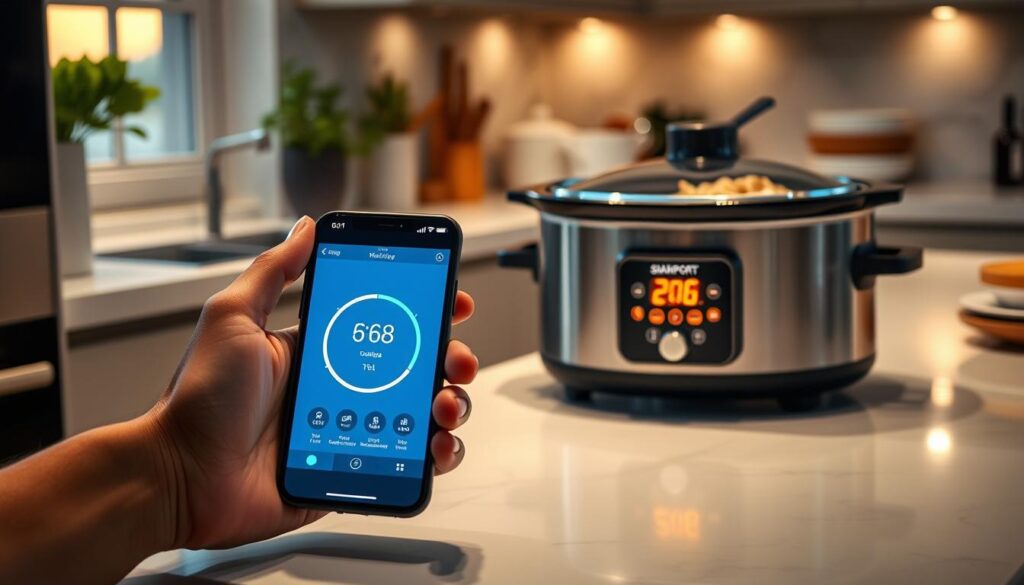
Wi‑Fi and Bluetooth-enabled slow cookers connect to apps. These apps let you check how your food’s doing and even change settings with your smartphone.
With smart plugs like those from TP‑Link Kasa and Wemo, you can control your cooker’s power from anywhere. But remember, they don’t check the food’s temperature, so you’ll still need a thermometer for that.
Then, there are probe thermometers from brands like ThermoWorks. They send temperature info to your phone or smart home system. Make sure the probes are okay to use for a long time and with your cooker covered.
Crock‑Pot and Instant Pot have Wi‑Fi models that let you control cooking from your phone. Instant Pot even has an app for scheduling and keeping an eye on your meals.
Ninja and Gourmia have smart cookers too. They let you choose settings and get updates on your phone. They’re perfect for those who love having many cooking options at their fingertips.
If you want to make sure your food is cooked perfectly, ThermoWorks has smart probes. Pairing one with your smart slow cooker means better safety and more consistent meals.
With remote monitoring, you get updates right away when your food is ready or if the temperature drops. You can even shut it off or keep it warm from anywhere, which is less stressful.
Tracking your cooking helps you make your favorite recipes just right every time. And, using these smart tools safely means keeping your software up to date and your passwords strong.
| Solution | What It Does | Best For | Limitations |
|---|---|---|---|
| Crock‑Pot Connect | Wi‑Fi control, timers, push alerts | Simple remote slow cooking | No internal‑temp probe built‑in |
| Instant Pot (smart models) | App integration, slow‑cook modes | Multi‑function cooks with remote start | Some models need adapters for probe use |
| Ninja / Gourmia smart cookers | Programmable timers, remote control | Versatile home cooks | Feature sets vary by model |
| TP‑Link Kasa / Wemo smart plugs | Power scheduling, energy monitoring | On/off control and automation | No temp or food‑safety data |
| ThermoWorks remote probes | Continuous internal‑temp monitoring, alerts | Food‑safety focused cooks | Must be used with safe probe placement and lids |
Slow cookers inspire strong opinions. Some think these devices only steer how we cook and store food. This guide debunks myths about slow cookers, shares safe usage tips, and tackles the question: can you leave a slow cooker unattended?
Some believe that leaving a slow cooker alone is risky. Modern devices like those from Crock-Pot and Hamilton Beach are designed for safety. They have thermostats and cool-touch exteriors perfect for long cooking times.
To safely leave a slow cooker unattended, place it on a stable surface. Make sure the vents aren’t covered. Doing so makes it as safe as any appliance, with fewer accidents than stoves or ovens.
Leaving a slow cooker on while you’re away is often safe. Ensure it’s in good shape, set at the correct temperature, and away from anything flammable.
Using frozen meat in a slow cooker is not advised. It can stay at unsafe temperatures too long, allowing bacteria to grow. Experts suggest thawing meat first or using a method that quickly heats it up.
Another myth is that slow cookers always cause fires. But risks come from poor maintenance, like faulty wiring or blocked vents. Proper care and safety tips can greatly lower these risks.
Slow cookers are great for one-pot meals and saving energy. They are less power-hungry than ovens, making meal prep easier and cheaper.
But, slow cookers have their limits. They can’t brown or crisp foods. Sometimes, you might need to finish sauces on the stove to get the right consistency.
| Claim | Reality | Practical Tip |
|---|---|---|
| Always unsafe unattended | Designed for long cooks when used correctly | Place on heatproof surface, clear vents, test cord regularly |
| Frozen meat is fine | Raises food-safety risk due to slow thawing | Thaw in fridge or use hot water bath before cooking |
| Uses lots of power | Consumes less energy than oven for long cooks | Use low setting for long cooks to save energy |
| Perfect for every dish | Doesn’t brown or crisp without extra tools | Sear on stove or use sear-capable models for texture |
If your slow cooker makes odd noises, smells weird, or acts up, pay attention quickly. Spotting these signs early can prevent fires and protect your food and equipment. Below, you’ll find a brief guide listing important signs and care tips to keep your slow cooker safe and working well.
If the base gets too hot or if there’s a burning smell or smoke, unplug it right away. Don’t use it after that.
Be wary of sparks from the plug, worn-out cords, and loose connections. Visible cracks in the ceramic or consistent cooking issues are bad signs. They mean something is wrong inside.
Stop using your slow cooker if you notice these problems. Have a professional check it out or think about getting a new one.
If food is cold in the middle or meat remains tough, it’s not cooking right. Raw tasting beans or sour sauces also mean there’s a problem or the food has spoiled.
Weird or bad smells, especially from fats, are a sign to throw the food away. Keep things out of the danger zone to prevent sickness.
Always clean the inserts and lids. This stops build-up that can shorten your slow cooker’s life. Avoid sudden temperature changes with your cookware.
Regularly check cords and plugs for damage. Store everything properly to avoid breaking or chipping. Replace worn-out rubber seals and follow cleaning tips from the manual.
An annual check-up is a good idea. Look out for signs of wear, loose wires, or heating problems. Sometimes, buying a new one is better than fixing the old. These tips help avoid fires and keep your slow cooker running smoothly.
Overnight cooking can be a real time saver. It makes food tender when done right. Be sure to check timing, how you layer food, and temperature to keep it safe and convenient.
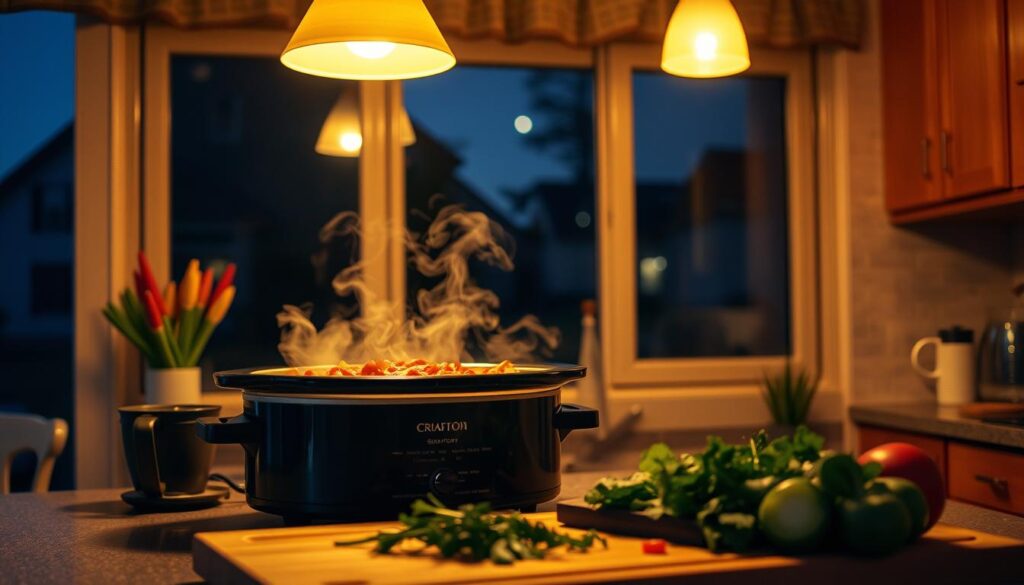
Start your slow cooker in the evening. This way, an 8–10 hour recipe will be ready in the morning. For recipes that need 10–12 hours, starting before sleeping is fine. Use a programmable slow cooker for longer times. It should switch to warm after cooking.
Think about your appliance’s cooking time. This helps avoid overcooking. It makes leaving your slow cooker on safely overnight possible.
Put root veggies like potatoes and carrots at the bottom. They need more heat. Then, add meat on top, so it flavors the veggies as it cooks. Add vegetables that cook quickly and dairy last.
Fill the pot two-thirds full. Also, add enough liquid to stop food from drying out. Follow these tips for even cooking.
Use an instant-read thermometer to check food. This makes sure meat is safe to eat before serving or storing. Keep your cooker on warm for a little while if you have to.
Put leftovers in the fridge within two hours. This is safer and stops bacteria from growing.
| Action | Why It Matters | Practical Tip |
|---|---|---|
| Start timing in the evening | Matches cook time to overnight schedule | Set an 8–10 hour window for standard recipes |
| Layer heavy items on bottom | Ensures even heat and prevents raw cores | Put potatoes and carrots directly over the heat source |
| Place meat above vegetables | Allows juices to baste and flavor the dish | Use lean cuts for long cooks to avoid excess fat |
| Add delicate ingredients late | Prevents overcooking and texture loss | Stir in dairy and quick-cook vegetables in last hour |
| Use an instant-read thermometer | Confirms food reached safe temperatures | Check poultry at 165°F and ground meats at 160°F |
| Switch to warm for short holds | Maintains safe serving temp after cook ends | Limit warm holding to manufacturer recommendations |
| Refrigerate leftovers promptly | Reduces bacterial growth | Chill within two hours of finishing |
Busy families need quick and safe cooking solutions. This guide highlights fast appliances, batch cooking, and easy methods. They help avoid the dangers of slow cooking while keeping meals delicious.
Using Instant Pots or pressure cookers
Devices like the Instant Pot speed up cooking. They’re sealed and come with multiple safety features. They also have auto pressure control and cook food faster, making meals safer.
These cookers often feature timers and preset modes for easy cooking. However, it’s best not to use the delayed start for raw meat. Always check the manual to use the timer safely.
Benefits of meal prep for the week
Cooking in batches and freezing meals reduces the need for daily cooking. Cool your food quickly, then store it in containers. This method ensures food safety and simplifies weekday dinners.
Exploring other low-fuss cooking methods
Sheet-pan meals and oven timers simplify cooking. Sous-vide cooking uses low temps for even results, but requires special bags and equipment. Convection ovens and air fryers heat up quickly and often turn off automatically.
Each method has its pros and cons regarding texture, ease, and safety. An Instant Pot alternative offers a solution to long cooking times without sacrificing taste. Always follow safety tips and best practices, even if combining cooking methods or using a slow cooker to finish cooking.
Leaving a slow cooker unattended can be safe if you follow some guidelines. Make sure it’s on a stable, heat-proof surface and use a well-kept unit. Also, only use recipes meant for slow cookers. Using timers or smart features helps too.
However, there’s always a small risk. Being careful about where and how you set it up is key. Maintenance and preparation cannot be overlooked.
Always check your slow cooker’s manual before using it overnight. Look over the cords and stay away from extension cords. Also, don’t start cooking with big frozen pieces without thawing them first.
Make sure liquids cover the harder ingredients. And always use a food thermometer to check the food is cooked safely. These steps are best for safely using your slow cooker without being around.
It’s crucial to keep smoke detectors working and get rid of old slow cookers. Making sure the lid fits snug, using the right settings, and having a steady power source prevent common issues. If your Crock-Pot or Hamilton Beach cooker stops working right, it’s time for a new one.
Slow cooking is great for easy and tasty meals. Try out safe recipes for overnight cooking. Look into smart slow cookers that you can watch from afar. Planning slow-cooker meals for the week can make your kitchen life easier and less stressful.
Paying attention to the safety tips we talked about lets you enjoy slow cooking without worry.