Our Location
1250 Beacon Street
Brookline, MA 02446
Discover if investing in smart kitchen appliances pays off in convenience and efficiency for your modern cooking needs. Explore their true value here.
Nearly 40% of U.S. homes now have at least one smart kitchen device. This indicates smart appliances are becoming more common, not just fancy gadgets. Brands like Samsung and LG have made everyday items smarter with Wi-Fi and apps.
This piece looks into if high-tech kitchen tools are truly valuable for average American homes. It’s for homeowners, renters, busy professionals, tech fans, and those looking to save energy. Especially if they’re thinking of updating their kitchens.
The guide gives steps on deciding if smart kitchen devices are right for you. It suggests checking how these tools fit with what you already have at home. And considers if the convenience is worth any possible downsides. It focuses on kitchen items like smart fridges and coffee makers, more than whole-house systems.
Today’s kitchens are smart. They mix tech and tools to make cooking simple. These appliances connect to the internet, sense things, and can be controlled by apps. They help users with cooking times, keeping the right temperature, managing food stock, and following recipes.
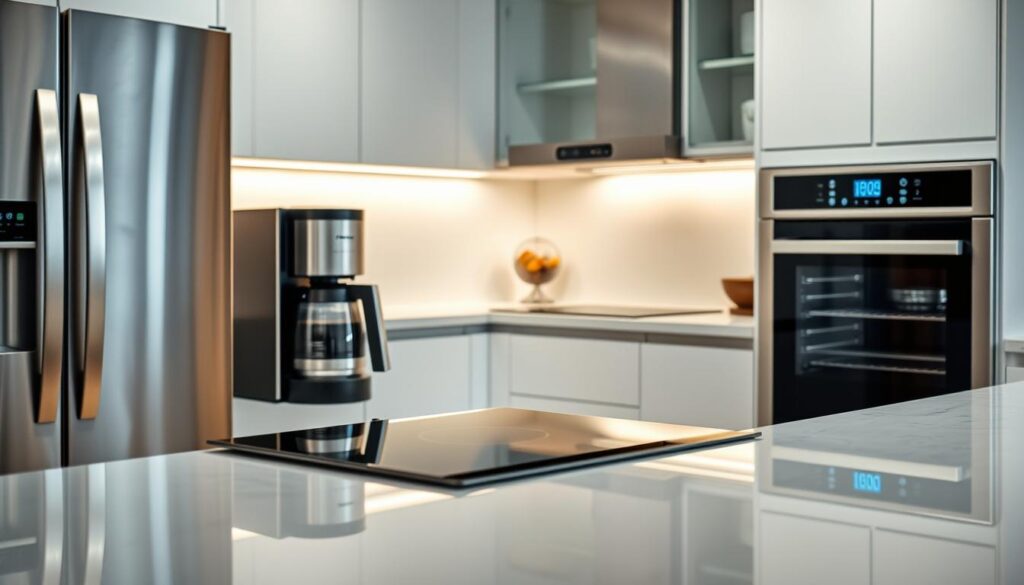
Smart appliances include things like Samsung’s smart fridges and GE’s smart ovens, as well as coffee makers from Nespresso and Breville that use apps. These items have Wi-Fi, Bluetooth, or Zigbee radios and sensors. They let you control them from afar, give updates, and even learn from your usage. You’ll find gadgets like smart refrigerators and Wi-Fi enabled ovens among these.
How they connect depends on their job. Wi-Fi connects them to the internet directly, offering cloud services. Bluetooth is for pairing nearby devices quickly. Zigbee and Z-Wave use mesh networks in smart homes. The new Matter standard is working to make these devices work better together, backed by big names like Google, Amazon, and Apple.
These appliances come with cool functions. You can control them with an app to preheat or check on your cooking without being in the kitchen. They can schedule cooking times and integrate recipes, guiding you through the cooking process. Tools like the June Oven or Anova Precision Cooker even guide you with cooking.
Safety features include temperature checks to keep food safe. You can also track how much energy you’re using. Some fridges even watch what you have and order groceries for you. They use cameras and scanning tech to see what’s inside.
Many work with voice commands through services like Amazon Alexa, Google Assistant, and Apple HomeKit. They get better over time with software updates. But, depending on cloud services can introduce privacy worries and what happens if the service stops.
It’s good to keep expectations in check. Smart kitchen tools and gadgets make cooking easier. They help with tracking what you’re doing and making sure things go smoothly. But most don’t change the basic way of cooking.
Smart kitchen appliances make our lives easier. They save time, improve accuracy, and add convenience to everyday tasks. These devices fit perfectly into modern kitchens by reducing guesswork, speeding up preparation, and helping manage groceries.
They make fast weeknight dinners possible, reduce food waste, and simplify life for busy families.
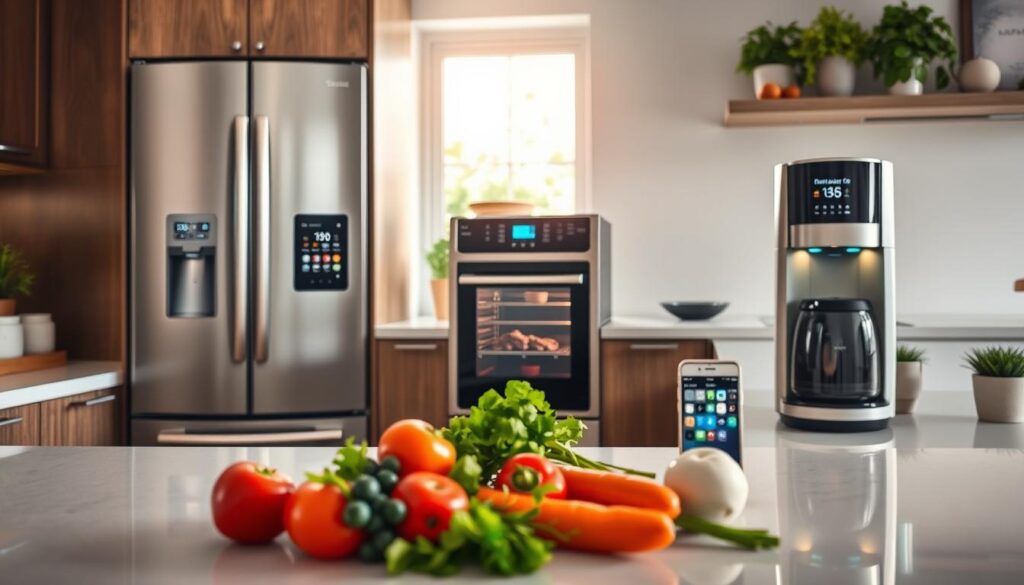
Smart ovens and sous‑vide machines offer precise temperatures and guided cooking programs. Brands like GE and Bosch feature preset modes and the ability to monitor cooking remotely. This cuts down on cooking time and mistakes.
Devices like Thermomix and modern multi-cookers combine several cooking steps. This allows users to chop, mix, and cook all in one go. It makes cooking batches of food quicker and cleaning up easier.
Refrigerators that know what’s inside and can send alerts about expiration dates keep food fresh. This reduces waste and makes planning meals easier.
You can start preheating your oven from your car, schedule your coffee maker, or check your fridge from your phone with remote control. Samsung, LG, Keurig, and Breville have apps that connect appliances to our daily lives.
You can link appliances to calendars, voice assistants, or home hubs for easy automation. An oven can start warming up when a calendar event approaches, or lights can come on when you arrive home.
Safety features like automatic shut-offs, temperature warnings, and leak detectors for dishwashers protect your home. These features prevent accidents and provide peace of mind when you’re out.
| Benefit | Example Device | Typical Gain |
|---|---|---|
| Precision cooking | Breville Smart Oven, Anova Sous‑Vide | More consistent results, fewer ruined meals |
| Time savings | Thermomix, Instant Pot | Shorter prep and combined steps for faster meals |
| Food management | Samsung Family Hub refrigerators | Reduced spoilage through inventory alerts |
| Remote control | LG ThinQ oven, Keurig K-Elite with Wi‑Fi | Start or monitor cooking from anywhere |
| Safety and alerts | Smart dishwashers, leak sensors | Fewer accidents and faster response to faults |
Kitchens are now full of smart devices that make cooking easier and bring new skills. This summary highlights three key types, how they function, and points to consider before getting the latest kitchen gadgets.
Smart refrigerators revolutionize the way we store food with automatic inventory and voice commands. Top choices like Samsung Family Hub, LG, Whirlpool, and GE Profile come with cameras inside, touchscreens, list syncing for groceries, tracking for expiration dates, and intelligent problem-solving. They connect with grocery delivery and propose meals based on fridge contents.
They help plan meals better and cut down on wasted food. The downsides are they cost more and raise privacy issues due to cameras and online connections. When buying smart kitchen tools, it’s smart to look at the brand’s support and updates.
Smart ovens improve cooking accuracy and offer automated functions. Brands like June Oven, GE Profile, and Bosch ConnectedSeries have features like starting from afar, recipe guides, precise temperature checks, combos of convection and steam, and apps. They ensure even baking and handle recipes with many steps easily.
These ovens save time and cook meals the same way every time, perfect for complicated dishes. Think about the trustworthiness of the temperature checks, app reliability, and if it cooks as well as regular ovens. Looking up tests and reviews is crucial when picking out new cooking gear.
Smart coffee makers aim at improving your daily coffee ritual. Options from Keurig, Nespresso, Breville, and some Moccamaster models offer features like setting up brewing times, control through an app or voice, syncing with your calendar, choosing the strength, and keeping favorite settings. They’re great for starting your day off right and sharing settings with others.
Their worth varies based on how much coffee you drink and how you value ease. High-end models come with a big price tag. Shoppers should align the features with their coffee habits before investing in these smart kitchen devices.
| Category | Key Features | Top Brands | Main Trade-offs |
|---|---|---|---|
| Refrigerators | Internal cameras, touchscreens, grocery sync, expiry alerts, diagnostics | Samsung, LG, Whirlpool, GE Profile | High cost, privacy concerns, subscription services |
| Ovens | Remote preheat, guided recipes, probe control, convection/steam modes | June, GE Profile, Bosch ConnectedSeries | Sensor reliability, app bugs, core cooking performance |
| Coffee Makers | Scheduled brewing, app/voice control, calendar sync, strength profiles | Keurig, Nespresso, Breville, Moccamaster | Premium price, limited value if usage is low |
Smart kitchen appliances use data and controls to reduce waste and increase efficiency. They incorporate sensors, connectivity, and software for better performance. This lets users monitor energy use and adjust habits more easily.
Bosch and Whirlpool appliances display energy use in real-time through apps. This feedback allows people to run appliances like dishwashers when energy costs are lower. Smart refrigerators and ovens adjust their functions to save power.
Induction cooktops heat up quicker and use less energy than traditional coils. They include features that lower power use when not at full heat. Smart functions also notify owners about issues like seal or filter problems early on, preventing larger energy losses.
Having these appliances always connected does use a bit of power. Yet, the total savings in energy outweigh this small usage. Picking devices with low standby energy use ensures the savings are noticeable.
Features like inventory tracking and enhanced temperature control lessen food spoilage. This leads to consistent savings over time. Early problem detection also means appliances may last longer, reducing the need for replacements.
The savings vary with how you use the appliance, local energy costs, and the appliance’s lifespan. Even if efficient appliances are pricier upfront, they save money on energy and food in the long run. Utility rebates for smart appliances can also speed up the time it takes to see these savings.
However, software becoming outdated and lack of cloud support can impact value. Picking brands with a solid update policy and compatibility with standards like Matter means your appliances remain valuable longer.
| Feature | Energy Impact | Typical Savings | Brands with Examples |
|---|---|---|---|
| Adaptive defrost | Reduces compressor runtime by matching cycles to use | 5–15% on refrigerator energy use | Whirlpool, Bosch |
| Precision oven control | Maintains temp more tightly, shortens preheat time | 10–20% on baking energy per session | GE Profile, Samsung |
| Induction cooktops | Directly heats cookware, lowers wasted heat | Up to 30% compared with standard electric | Bosch, KitchenAid |
| Energy monitoring apps | Changes user behavior and shifts usage to off-peak | Varies; can reduce monthly bills by 5–12% | Whirlpool, LG |
| Proactive diagnostics | Alerts for maintenance, preventing costly breakdowns | Extends appliance life; reduces replacement costs | Samsung, Bosch |
Linking your kitchen devices to a smart system makes life easier. You can connect ovens, refrigerators, coffee makers, and more for updates and remote control. Google Home, Amazon Alexa, Apple HomeKit, and Samsung SmartThings are popular choices.
Setting up is easy with brand apps. Then, you can control things through cloud accounts or over your network. For example, Samsung SmartThings can alert you about your oven and let you warm it up remotely. Alexa can tell you what’s in your fridge, and with a smart plug, even a basic mixer can follow commands.
Not all brands work together the same way. Some need special bridges to connect. However, new tech like Matter is making it easier to use different devices together. Always check if you need extra tools before buying.
Voice assistants make things even simpler. Just by speaking, you can start your coffee, check the oven, or update your shopping list. Set up routines like turning on lights and preheating the oven all at once.
But, it’s important to think about privacy and security. Companies like Amazon, Google, and Apple all deal with voice data differently. Make sure to check your settings and only use the cloud if you need it. Keeping data processing local can help protect your information.
Automations can also help your morning go smoother, remind you when to shop, and save energy. They prove how smart homes can add convenience while letting you stay in control.
Switching to smart kitchens has its ups and downs. Before buying, consider the price now and the benefits later. It’s important to see if new appliances will connect well with what you already have.
Smart appliances usually cost more. For example, a high-tech fridge can be hundreds to a thousand dollars pricier than basic models. These smart items might also have extra fees for special features like recipe collections or repair services.
Fixing smart appliances can be expensive. It’s harder to find parts for fancy gadgets. To decide if it’s worth the cost, think about how much you’ll use the smart features. Also, consider if you’ll save money on energy or by wasting less food.
Smart appliances often stick to one brand group. This choice can limit your future upgrade options. Some fit best with Amazon Alexa, some with Google Home, and others with Samsung SmartThings.
Old houses might have poor Wi-Fi. Thick walls or weak routers can mess with your smart kitchen’s work. Checking your Wi-Fi strength and maybe getting a mesh Wi-Fi system can solve this.
The lifespan of your appliance’s software is key. Sometimes, companies stop updating or supporting their systems. Choosing brands known for reliable support can help avoid these problems.
Smart devices can also bring security worries. To protect yourself, use strong passwords, update often, and keep appliances on a separate network.
Readers often check out user reviews before deciding on smart kitchen devices for their homes. This part shares owner feedback and typical solutions, offering a clear picture of everyday use of smart kitchen gadgets.
Pros and Cons from Owners
Owners love the convenience of controlling ovens remotely and setting coffee makers ahead of time. They value the consistent results from smart settings and saving time on tasks like preheating and making coffee.
Many users are fans of special features, like the cameras in Samsung Family Hub and Whirlpool’s recipe help. Lovers of Breville and Nespresso wireless models are happy about scheduling and automating their morning coffee.
However, some owners mention downsides. They find app reliability shaky and connectivity issues annoying. Learning complex features takes time, and fixing smart parts can be more costly than traditional ones.
At times, owners see some smart features as fun but not really necessary. They talk about slow software in smart fridges and problems linking up Bluetooth with coffee machines.
Common Issues and Solutions
Connectivity issues are common in reviews. Often, simple steps can help: restarting routers, updating gadget software, and placing devices nearer to Wi-Fi. For ongoing problems, Wi‑Fi extenders or mesh systems are suggested.
App problems and feature malfunctions are other complaints. Keeping apps current and reporting issues to brands like Samsung or Nespresso helps. Online community forums also provide quick fixes until official updates are available.
Some reviews mention incorrect sensor readings. Following calibration instructions, asking for new probes, and using manual controls for important cooking jobs can solve this.
Privacy worries about cameras and voice data are common. Turning off cameras when not needed, checking data settings, and reducing third-party app connections can protect privacy.
Dealing with warranties and repairs is often discussed. Recording serial numbers, registering purchases, and saving receipts can streamline the process for recalls, fixes, and warranty services.
Start by analyzing your daily routines and kitchen size. This ensures your smart appliance choices truly meet your needs, not just trends. A quick assessment can save time and avoid regret later.
Think about who cooks, how often, and for how many. Families cooking every night might love a smart oven that keeps temperatures just right. Solo coffee lovers would appreciate a smart coffee maker each morning.
Identify frustrating issues: food going bad, needing to watch meals cook, or meals not ready on time. Look for smart features that tackle these problems, like fridges that track what’s inside or ovens that handle complex recipes.
Measure your kitchen and check if you need special connections for gas or electricity. If you rent, consider portable or countertop options that are easy to take when you move.
Decide what features you can’t live without versus the extras. Essentials might include precise heating, saving energy, and easy manual use. These enhance everyday cooking and prevent unexpected high bills.
Make sure new devices work with systems you already use, like Amazon Alexa, Google Home, or Apple HomeKit. Choosing devices that support Matter can save you headache later and ease setup.
Opt for brands that regularly update their software and offer good customer service. Also, devices that can work without the internet keep your kitchen running smoothly. Think about getting flexible items like modular or countertop devices.
Begin with one or two key purchases, such as a capable oven or a versatile coffee maker. This step-by-step plan reduces the risk and is kinder to your wallet when updating your kitchen.
Proper care helps smart kitchen appliances last longer and work as they should. Tips can prevent common issues, protect your data, and keep features like sensors and connectivity working well.
Best practices for care and maintenance
Clean cameras, probes, and screens gently and often for better accuracy and cleanliness. Clean seals on fridges quickly after any spills and change water filters on time.
Always turn on automatic updates for firmware and apps. Updates fix security problems and bring new features to your smart kitchen tools.
Choose strong, unique passwords for all appliance accounts. Use two-factor authentication if you can, and keep your kitchen’s internet separate from the rest of your house’s to reduce risks.
Plan regular check-ups like vent cleaning, coil inspections, and door seal checks for ovens and dishwashers. Replacing parts on time reduces wear and makes devices last longer.
Customer support and warranty considerations
Look over warranty details to understand what’s covered, including electronics and sensors. Some brands like Samsung and LG offer extended warranties that cover smart features.
Choose brands known for good customer support and wide repair networks in the US. Options such as live chat, phone support, and local service centers make fixes faster.
Register new devices immediately. Keep all receipts and records of any problems. Having photos or logs of errors helps with warranty support.
Before buying, check if you can use independent repair services without losing your warranty. This is crucial for getting affordable repairs and parts for older models.
Smart kitchen appliances offer a lot: convenience, consistency in cooking, and savings on energy or food. They make meal prep easier for those with busy lives. At the same time, there are things to think about like higher costs, possible tech issues, privacy, and software being stopped.
People who love hosting, are good with technology, or want an efficient home benefit the most. Even one smart device, like a coffee maker or a cooker, can show how useful smart tech can be without spending a lot. But, those who cook occasionally or are careful with money might choose to upgrade only what they really need, picking devices that fit their daily life.
Watch for Matter for better gadget teamwork, better control at home, AI that helps with recipes, and deeper connections to groceries and supplies. As these advances and competition grow, smart kitchen gadgets should become more affordable and supported longer. This will make them more reachable for more homes.
Bottom line: pick smart kitchen devices carefully, thinking about your habits, budget, and what you already have. This way, they can truly make your life better instead of just being a fancy change.