Our Location
1250 Beacon Street
Brookline, MA 02446
Avoid common microwave mistakes with our expert guide to safe and efficient cooking. Learn best practices and safety tips for microwaving today.
More than 90% of homes in the U.S. have a microwave. Yet, many people still make simple errors that can cause burns, spoil food, or even start fires.
Fixing these common mistakes is important. Doing so can prevent injuries, make your microwave last longer, keep food safe, and even make it taste better. It also saves time and avoids expensive repairs.
This article discusses ten useful tips like reading the manual, covering food, avoiding metal, not overheating, stirring and rotating, cleaning, choosing the right containers, following safety advice, and trying new recipes. These tips help you use your microwave right and avoid common errors.
For safe appliance use, look for advice from the U.S. Consumer Product Safety Commission. For reheating food safely, see tips from the USDA Food Safety and Inspection Service. And for model-specific instructions, check manuals from brands like Panasonic, Whirlpool, GE, and Samsung.
Many people ignore the manual, thinking all microwaves are the same. This leads to errors and wrong ideas about microwaves. A quick look at the manual shows details that influence how it works, safety, and how well it cooks.
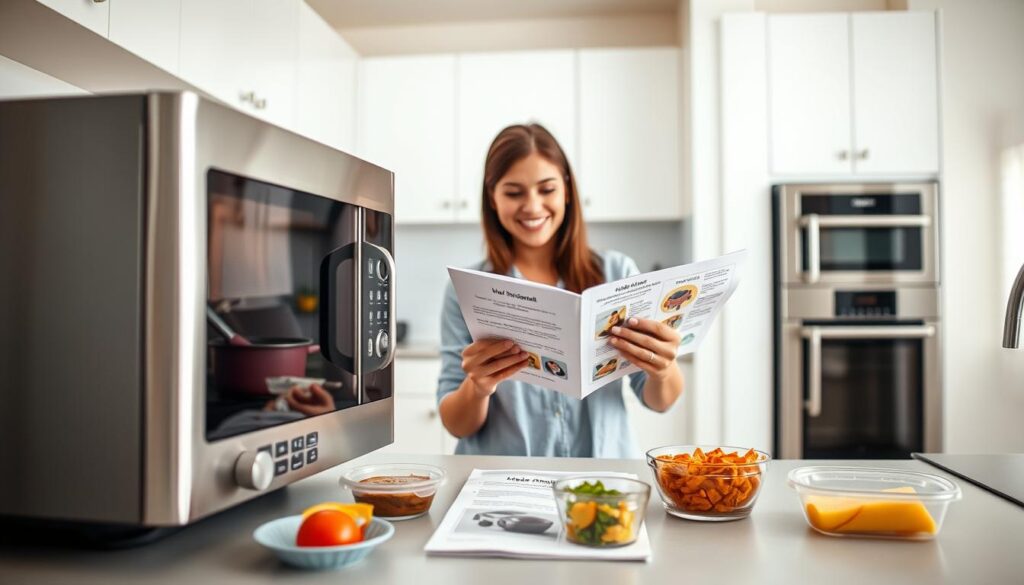
Dig out the manual from the appliance cabinet or look online with the model number. Brands like Panasonic, Samsung, and Whirlpool share info on wattage, preset functions, and safety tips. The power level changes how fast food cooks; lower wattage means slower cooking.
Sensor cook and inverter technology work smarter, not like basic timers. Repair guides say that sensor cooking adjusts itself for the best results. Skipping these options can lead to food being not cooked right.
Manuals also cover important safety tips like child locks and when to replace door seals. The U.S. Consumer Product Safety Commission suggests getting new doors and seals to keep safe.
Look at presets for popcorn, defrost, and sensor cook. Then turn them on or off depending on what you’re making. Notice how the turntable works. The design, like rotating trays or flatbeds, impacts how evenly your food heats up.
To fix cooking times due to different wattages, do this math: multiply the recipe time by (standard wattage ÷ your microwave’s wattage). This helps avoid mistakes and makes cooking smoother.
Don’t just rely on any recipe you find online. Recipes might not work the same in every microwave. Reading your manual helps you use it right. This avoids surprises when you’re trying to get a meal ready.
Not covering food in the microwave is a mistake. It affects how the food feels, its safety, and how easy it is to clean the microwave. Putting a loose lid on keeps moisture in, heats food evenly, and stops greasy splashes.
These steps also reduce reheating time and lower burn risks from hot splatters.
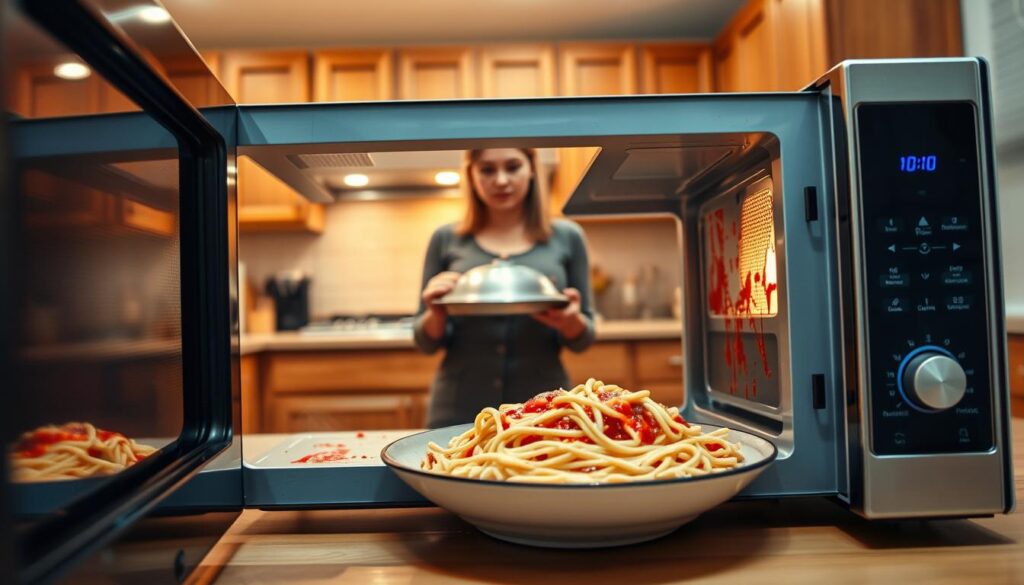
The USDA says to loosely cover food when reheating for safety. It ensures even heat throughout and lowers the risk of germs. Samsung and Whirlpool recommend covers to trap steam. This speeds thawing and steams vegetables without drying them.
Covering food keeps it moist and tender. It also heats food evenly, getting rid of cold spots. And, it stops splatters, keeping your microwave clean and smell-free.
This also means food cooks faster. The steam trapped inside boosts humidity. This allows quicker heating with less energy.
Use lids that say they’re safe for the microwave. Reusable vented covers in plastic or silicone are good choices. Glass lids are great for bigger dishes like casseroles.
Paper towels work for light coverings. But avoid sealed plastic wrap unless you make a small opening. Never use covers with metal or foil; they can spark and are big no-nos in microwave cooking.
Using these tips avoids microwave errors and keeps meals from getting ruined. A little change in covering food improves safety, speeds up cooking, and makes cleaning easier.
Many cooks think any dish is safe to use in microwaves. But microwaves use waves that make metal objects spark. This can break the microwave or even start a fire. The Consumer Product Safety Commission and brands like GE and Whirlpool say not to use metal in microwaves, unless it says it’s safe for that model.
Thin metals like crumpled foil are very risky. The foil can spark when it touches the oven walls. Sometimes, this has caused fires inside the microwave. It’s best not to use foil to avoid these dangers.
Some microwaves, especially ones with a convection feature, can use metal safely. Before you try it, you should look at the manual. This keeps your microwave working right and safe.
Glass, ceramic, and silicone that are microwave-safe are good choices. Microwave-safe plastics are also good for reheating. For a crispy finish, use microwave dishes made for browning instead of foil. Using a regular oven or toaster oven is safer when a recipe asks for foil.
To stay safe, read the manual, don’t use metal dishes, and keep metal out of the microwave. Remove any metal from food packages before heating. Following these tips can help you avoid accidents and use your microwave safely.
Using a microwave too much can mess up your food’s taste, look, and safety. If you want to avoid microwave cooking mistakes, learn the early signs of overheating. Also, use easy methods to keep your food’s quality. This can help you steer clear of common microwave errors when warming up food.
If your soup or sauce spills over, it’s too hot in one spot. Food getting dry, hard, rubbery, or burnt means it was in the microwave too long or at too high power. Getting burned when touching containers means there was uneven heating.
Sometimes liquids look fine but boil over when you stir them. This can happen because water got hotter than its boiling point without showing bubbles. Stirring can suddenly turn it into steam and burn you.
Warm up leftovers at 50–70% power in short bursts. For each burst, use 30–60 seconds, mix, or let the dish cool down a bit. A microwave-safe thermometer is good for making sure the inside temperature is at least 165°F, as the USDA recommends.
To keep vegetables moist, steam them at medium power and cover them. Defrost meats at 30% power or use the microwave’s defrost setting. Check often to prevent cooking the edges. Lower settings help avoid overheating and keep the texture right, say Consumer Reports and cooking guides.
When heating drinks, put something like a wooden stick in the cup. It stops sudden boiling overs. Let hot drinks sit for 20–30 seconds after heating. This lets the drink’s temperature become even.
| Item | Power Setting | Technique | Why it Works |
|---|---|---|---|
| Leftovers (stews, casseroles) | 50–70% | Short bursts, stir, rest 1–2 min | Reduces hotspots, ensures even reheating to 165°F |
| Vegetables (steamed) | 60–70% | Covered, check after 1–2 min, shake or stir | Retains moisture, prevents drying and scorched edges |
| Meat (defrosting) | 30% or defrost cycle | Rotate, thaw in short intervals, finish at low power | Prevents partial cooking and uneven temperature zones |
| Hot beverages | High but brief | Place wooden stir stick, heat in short bursts, stand time | Stops superheating and sudden eruptions when stirred |
| Sauces and soups | 50–70% | Cover partially, stir every 30–45 sec | Prevents boiling over and maintains smooth texture |
By following these tips, you can make fewer microwave mistakes. They help keep your food safe and tasty. And they prevent the microwave accidents that can spoil your meal or burn you.
Microwave cooking is quick. But it can leave your food unevenly cooked. This happens because people don’t stir or rotate their food. Here, we will explain why it’s important to do these small steps. We also give easy tips for properly using your microwave.
Microwaves don’t heat food evenly. Brands like Panasonic and Samsung have turntables to help, but some cold spots may remain. Studies have found that even with these features, not all parts of the food get hot.
Heating food unevenly can be unsafe and ruin its texture. The USDA recommends stirring to make sure everything cooks evenly. Manuals from GE, Whirlpool, and Sharp also suggest stirring thick foods to avoid raw centers.
To get better results, stir or rearrange your food halfway through cooking. This helps spread the heat evenly. If you took out the turntable, put it back in. Or, rotate the dish yourself every so often.
By following these steps, you can fix common mistakes. This way, you won’t have to change how you use your microwave much. These are trusted tips to heat your food right.
| Problem | Action | Expected Result |
|---|---|---|
| Cold pockets in soups | Stir midway, then heat in 30-second intervals | Uniform temperature; safer to eat |
| Uneven casserole heating | Use turntable and stir; cover loosely to retain moisture | Even texture and consistent doneness |
| Large dense pieces | Cut into uniform sizes; rotate dish manually if needed | Reduced undercooked centers |
| Reheating leftovers | Lower power, extend time, check with thermometer | Preserved texture and safe temperature |
Forgetting to clean your microwave can make it smelly, stained, and unsafe. It becomes a breeding ground for bacteria and mold because of old food and spills. This mess can make the appliance less efficient and could lead to it breaking down sooner.
Food left in the microwave can start to smell bad and ruin new meals. Experts say these old bits of food can grow bacteria and mold, which could contaminate other foods.
When your microwave is dirty, it won’t work as well. For example, brands like LG or Samsung have sensors that get messed up by grime. This can make food heat unevenly, causing a lot of microwave errors.
If there’s a lot of grease, it could even start a fire. Plus, the inside coating might get damaged by too much dirt, leaving marks that shorten the microwave’s life.
To get rid of grime easily, use steam. Put a bowl of water with two tablespoons of vinegar inside the microwave. Heat it up for 3-5 minutes, then let the steam work for a minute. After that, open it and clean the inside with a soft sponge.
Take out the turntable and any racks to wash them separately. Use a gentle soap and make sure to dry them well before you put them back. This stops mold from growing.
To keep your microwave in top shape, quickly wipe up spills when they happen. Don’t use harsh cleaners or rough pads that could damage it. And always unplug it before deep cleaning to stay safe.
By following these safety and cleaning tips, you can keep your microwave working right. This avoids common microwave errors and stops you from needing expensive repairs.
Picking the right size dish is key for safe, even reheating. Missteps in microwave use often come from choosing containers that are too big, too small, or shaped wrong for the food. If a dish is too crowded, it won’t heat evenly. Empty spaces waste energy and affect the microwave’s function. Using a bowl that’s too small can cause spills, leading to a mess or even electrical issues.
The appliance manual will tell you that the size of your dish matters. A plate or bowl that lets the turntable spin freely gets better heating. Experts suggest using shallow, wide dishes for casseroles and leftovers for quicker heating. But be careful with tall, narrow containers for liquids to avoid overflow.
Smaller, dense meals heat more evenly than crowded ones. Make sure there’s enough space for steam and air to move around. For reheating, using a dish that covers half the microwave space helps food heat well. Use a bigger dish for defrosting meat to catch drips and avoid contamination.
The type of material you use matters a lot. Glass and ceramic are good at spreading heat and won’t warp. Microwave-safe plastics are okay if they’re labeled and BPA-free. Silicone is versatile and withstands heat well for many uses.
Avoid styrofoam, plastics not made for microwaves, and metal. Metal can cause sparks, and the wrong plastics might melt and put chemicals in your food. These mistakes can ruin your microwave and are not safe for your food.
| Food Type | Recommended Container | Why It Works |
|---|---|---|
| Leftovers, casseroles | Shallow, wide glass or ceramic dish | Promotes even heating across a broad surface; reduces cold spots |
| Soups, sauces | Narrow, tall microwave-safe bowl with vented cover | Concentrates heat for liquids; use lower power and stir to prevent eruptions |
| Frozen meats (defrost) | Large, rimmed glass or ceramic tray | Catches juices, prevents cross-contamination, allows even thawing |
| Single portions | Small plate or bowl that leaves room for rotation | Speeds heating, uses less energy, reduces uneven warming |
| Quick snacks | Microwave-safe silicone or labeled plastic | Flexible, heat-resistant, and convenient for short bursts |
Reduce microwave mistakes by following these tips. Always check dish labels, do short trial runs with new dishes, and move food around if needed. Small decisions about dish size and material can solve many issues and enhance your microwave experience.
Many people see the microwave as just a quick way to cook and skip basic checks. These checks help avoid accidents. Simple habits can significantly change how safe your kitchen is. Inspecting your microwave often and using it correctly can prevent mistakes. This reduces the chance of fires or burns in the kitchen.
Some common safety errors include using the microwave when it’s empty or if it has a damaged door or seal. Also, don’t block the vents or heat up things that can catch fire easily, like oily paper towels. Leaving the microwave on without watching it, especially on high heat, is risky. And kids should never use the microwave without an adult around.
To stay safe, check your microwave often. Look at the door seals, hinges, and latches. If the door doesn’t shut right, don’t use it. Keep the vents open so the microwave can cool down. Always follow the instructions for how long and at what power to cook food. Don’t microwave sealed containers, eggs in their shell, or whole fruits without piercing them first.
If you see sparks or smoke, turn off the microwave right away. Unplug it safely if you can. For small fires inside, keep the door shut to put the flames out and call 911 if it gets worse. It’s good to have a smoke detector in the kitchen and a fire extinguisher for kitchen fires close by.
The list below shows steps to take to lower risks and help you avoid problems with your microwave.
| Risk | What to Do | Why It Matters |
|---|---|---|
| Dented door or broken seal | Inspect monthly, stop use if damaged, contact Samsung, GE, or Panasonic service | Prevents radiation leakage and ensures safe operation |
| Blocked vents | Keep vents clear of clutter and clean dust buildup | Allows cooling, reduces overheating and fire risk |
| Running empty | Avoid starting the microwave empty; add water or food when testing | Protects the magnetron and prevents sparks |
| Flammable materials | Do not use paper towels with grease or plastic not labeled microwave-safe | Prevents ignition and smoke |
| Unsupervised children | Teach safe use, enable child lock, allow only older children with training | Reduces burn and misuse incidents |
| Extended cooking unattended | Use a timer, stay nearby, and monitor food during high-heat cycles | Quick response limits damage if something goes wrong |
Many only use the microwave for warming up food, missing out on its full potential. Trying new things safely can help you avoid mistakes and make cooking easier. Companies like Panasonic and Sharp offer guidelines for their products. Following these tips, along with food safety rules, ensures great results.
Adding a little water and covering it lets you steam veggies in minutes. Wrapping fish in parchment cooks it gently, preserving its flavor. Melting chocolate and rising dough quickly are other things you can try. These tricks save you time and use less energy.
Start with easy recipes like a quick 2-minute brownie or scrambled eggs. Scramble eggs on medium for short bursts, or try a microwave omelet. Put paper towels under pizza to keep its crust crispy. For potatoes, microwave on medium and flip them for even cooking.
Create a record of the settings you use and adjust based on your microwave. Always poke holes in food, crack lids, and use the right containers. Following these microwave tips and suggestions makes trying new things both safe and enjoyable.