Our Location
1250 Beacon Street
Brookline, MA 02446
Discover the key differences in mini fridge vs full size options. Compare capacity, energy use, cost, and space requirements to choose the best refrigerator for your needs.
Did you know that the average American household spends approximately $150 annually on refrigerator electricity costs? Choosing between a mini fridge vs full-size refrigerator can significantly impact your energy expenses and living space efficiency.
Selecting the right refrigerator involves careful consideration of multiple factors. The refrigerator size comparison isn’t just about dimensions—it’s about matching your specific lifestyle, living situation, and practical needs.
Whether you’re a college student in a dorm room, a professional with a home office, or managing a family kitchen, understanding the nuanced differences between mini fridges and full-size refrigerators can help you make a smart, cost-effective decision.
This comprehensive guide will walk you through key aspects of each refrigerator type. From storage capacity and energy efficiency to cost considerations and design preferences, you’ll gain insights to choose the perfect cooling solution for your unique requirements.
Our goal is to provide practical, unbiased information that empowers you to select a refrigerator that not only meets your immediate needs but also aligns with your long-term budget and lifestyle goals.
Refrigerators stand as the unsung heroes of modern kitchens, silently protecting our food and ensuring our family’s health. When choosing the right refrigerator, understanding its fundamental role becomes crucial for making an informed decision.
Kitchen appliances have revolutionized how we store, prepare, and preserve food. The refrigerator represents a pinnacle of technological innovation, transforming our ability to keep ingredients fresh and safe for consumption.
Modern kitchens rely on a sophisticated ecosystem of appliances. The refrigerator plays a central role in this landscape, offering critical functions that go beyond simple food storage:
Refrigeration is not just about keeping food cold—it’s a scientific process of protecting public health. Proper temperature control between 35-38°F prevents dangerous bacterial multiplication, extending food freshness and safeguarding consumer wellness.
The right refrigerator isn’t just an appliance—it’s a health guardian for your household.
By understanding the profound importance of refrigeration, consumers can make more strategic choices when selecting their ideal cooling solution. Choosing the right refrigerator means balancing functionality, efficiency, and specific household needs.
A mini fridge represents a compact refrigeration solution perfect for various living and working spaces. These small appliances have revolutionized portable cooling, offering convenient storage for beverages, snacks, and personal items in tight quarters.
The best mini fridge models provide versatile cooling options for different environments, making them an essential appliance for many consumers seeking space-efficient refrigeration.
Mini fridges serve numerous practical purposes across multiple settings:
When conducting a compact refrigerator comparison, several brands stand out for quality and performance:
Mini fridges typically range between 17-33 inches tall, with interior capacities from 1.7 to 4.5 cubic feet. Compact refrigerator comparison reveals diverse options to suit different spatial requirements.
Standard dimensions usually include:
Potential buyers should carefully measure available space and consider internal configuration before selecting their ideal mini fridge model.
Full-size refrigerators represent the cornerstone of modern kitchen appliances, offering substantial storage and advanced features for households. These essential kitchen companions typically range from 18 to 26 cubic feet, providing ample space for families and food preservation.
Full-size refrigerator features have dramatically evolved, transforming from simple cooling units to sophisticated food management systems. Modern designs integrate cutting-edge technologies to enhance user experience and food preservation.
Contemporary full-size refrigerator features include:
Refrigerator configurations have expanded to meet diverse consumer needs. Popular styles include:
Leading manufacturers offer full-size refrigerator features across various price points:
| Brand | Market Position | Key Features |
|---|---|---|
| Whirlpool | Mid-range | Reliable performance |
| Samsung | Premium | Smart technology |
| LG | High-end | Advanced cooling systems |
| Frigidaire | Budget-friendly | Essential features |
Selecting the right full-size refrigerator depends on individual household needs, budget, and desired full-size refrigerator features.
Choosing the right refrigerator involves carefully evaluating your available space. Mini fridge space saving solutions offer incredible flexibility for various living environments, from compact apartments to home offices.
Understanding spatial requirements can help you make the most intelligent appliance decision for your specific needs.
Mini fridges excel in space-constrained settings. Their compact design enables creative placement options:
When implementing mini fridge space saving strategies, remember to leave 2-3 inches of ventilation space around the unit. This prevents overheating and ensures optimal performance.
Standard refrigerators demand more strategic planning. Key considerations include:
Pro tip: Always measure twice and plan your refrigerator placement carefully to avoid costly delivery or installation challenges.
Selecting the right refrigerator involves balancing space constraints with functional requirements.
Choosing between a mini fridge and a full-size refrigerator involves understanding their energy consumption patterns. The mini fridge vs full size debate becomes particularly interesting when examining energy efficiency and electricity costs.
Energy ratings provide crucial insights into appliance performance. When comparing mini fridge vs full size refrigerators, consumers should pay attention to the following key factors:
Electricity costs can significantly impact long-term expenses for refrigerators. Let’s break down the typical energy consumption and costs:
| Refrigerator Type | Annual Energy Consumption | Estimated Annual Cost |
|---|---|---|
| Mini Fridge | 200-400 kWh | $25-$50 |
| Full-Size Refrigerator | 400-600 kWh | $50-$80 |
The mini fridge vs full size energy efficiency comparison reveals nuanced insights. While mini fridges consume less total energy, they might be less efficient per cubic foot of storage. Modern Energy Star certified models offer the best performance, regardless of size.
Factors like ambient temperature, usage patterns, and maintenance can dramatically affect actual energy consumption. Consumers should consider their specific needs when selecting between a mini fridge and a full-size refrigerator.
Choosing between a small vs large refrigerator involves more than just initial purchase price. The financial considerations extend beyond the sticker price, encompassing long-term utility expenses and maintenance costs.
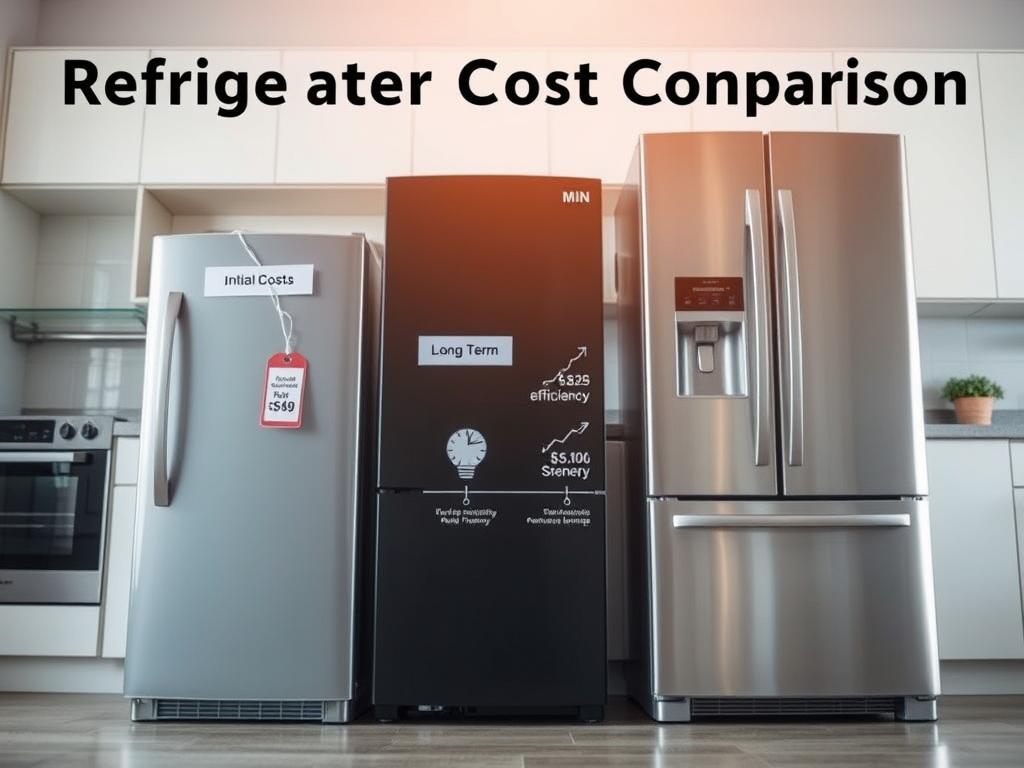
When comparing small vs large refrigerator options, consumers should evaluate several key financial aspects:
Beyond the purchase price, consider these additional expenses:
While mini fridges offer a lower upfront cost, large refrigerators provide better value per cubic foot of storage. The right choice depends on your specific needs, budget, and long-term usage plans.
Choosing the right refrigerator involves understanding storage capacity and how it matches your lifestyle. A refrigerator size comparison reveals significant differences between mini fridges and full-size models that can impact your daily food storage and organization.
Mini fridges offer compact storage solutions for specific needs. Their storage capacities typically range from 1.7 to 4.5 cubic feet, providing versatile options for different scenarios:
Full-size refrigerators offer substantial storage for families and households with diverse food storage requirements. The refrigerator size comparison reveals different capacity ranges:
| Refrigerator Size | Household Capacity | Typical Space Allocation |
|---|---|---|
| 18-20 cubic feet | 2-3 people | 15 cubic feet refrigerator, 5 cubic feet freezer |
| 21-25 cubic feet | 4-5 people | 16-17 cubic feet refrigerator, 6-7 cubic feet freezer |
| 26+ cubic feet | Large families | 18-20 cubic feet refrigerator, 7-8 cubic feet freezer |
The right refrigerator depends on your specific storage needs, household size, and food purchasing habits. Consider your lifestyle when making a refrigerator size comparison to ensure optimal storage and convenience.
Mini fridges represent a game-changing solution for individuals seeking versatile refrigeration options. Their compact design and lightweight construction unlock unique mini fridge benefits that traditional refrigerators simply cannot match.
The incredible portability of mini fridges makes them an ideal choice for multiple living and working environments. These compact appliances can easily transform spaces by providing convenient cooling solutions.
| Feature | Mini Fridge | Full-Size Refrigerator |
|---|---|---|
| Weight | 30-60 pounds | 200-350 pounds |
| Mobility | Easy to move | Requires professional moving |
| Space Flexibility | Fits through doorways | Challenging to relocate |
Mini fridge benefits extend beyond simple transportation. These compact refrigerators offer unparalleled flexibility for users who require adaptable cooling solutions. Whether you’re a student, professional, or hobbyist, a mini fridge provides the perfect balance of convenience and functionality.
When conducting a compact refrigerator comparison, design plays a crucial role in selecting the right appliance for your space. Refrigerators are no longer just functional items but have become statement pieces that reflect personal style and interior design preferences.
Modern mini fridges offer remarkable design flexibility for various settings. They come in multiple aesthetic options that can enhance different environments:
Compact refrigerator comparison reveals that mini fridges excel in adaptable styling. Their smaller footprint allows seamless integration into:
Full-size refrigerators have evolved beyond basic functionality. Current design trends include:
Selecting the right refrigerator involves balancing aesthetic appeal with practical functionality. Whether you prefer a compact mini fridge or a full-size statement piece, design options are more diverse than ever.
When choosing the right refrigerator, noise levels play a crucial role in ensuring comfort and peace in your living space. The operational sound of a refrigerator can significantly impact your daily environment, especially in smaller homes, apartments, or open-concept living areas.
Refrigerator noise is measured in decibels (dB), with most modern appliances ranging between 32-47 dB. To put this into perspective:
The noise generation differs between mini fridges and full-size refrigerators. When choosing the right refrigerator, consider these noise characteristics:
| Refrigerator Type | Typical Noise Level | Noise Characteristics |
|---|---|---|
| Mini Fridges | 35-45 dB | Often louder relative to size due to less advanced compressor technology |
| Full-Size Refrigerators | 32-40 dB | Premium models feature better insulation and inverter compressor technology |
Pro tip: When selecting a refrigerator, check manufacturer specifications, read user reviews focusing on noise, and consider models with inverter compressors that run more smoothly and quietly.
Remember that room placement and acoustics significantly impact perceived noise levels. A refrigerator in an open kitchen might sound quieter than the same model in a small bedroom or studio apartment.
As environmental awareness grows, consumers are increasingly considering the ecological footprint of their kitchen appliances. Refrigerators play a significant role in household energy consumption, making it crucial to understand their environmental impact.
When searching for the best mini fridge, environmentally conscious consumers have several key considerations. Energy Star certification has become a critical factor in selecting eco-friendly compact refrigerators.
Top eco-friendly mini fridge brands include:
| Brand | Energy Efficiency | Eco-Friendly Features |
|---|---|---|
| Danby | Energy Star Certified | Low-emission compressor |
| Midea | High efficiency rating | Reduced power consumption |
| Antarctic Star | Energy Star Compliant | Eco-friendly refrigerant |
Full-size refrigerators have made significant strides in environmental performance. Modern models use approximately 75% less energy compared to versions from the 1970s, thanks to advanced technologies.
Key environmental improvements include:
Selecting an environmentally responsible refrigerator goes beyond energy efficiency. Consumers should consider the entire lifecycle, including manufacturing impact, refrigerant types, and potential for responsible disposal.
Selecting between a mini fridge vs full size refrigerator requires careful consideration of your unique lifestyle and space requirements. Your decision should align with personal needs, budget constraints, and practical usage scenarios.
When choosing the right refrigerator, evaluate key factors like available space, household size, and intended purpose. College students and single professionals might find mini fridges ideal, while families typically require full-size refrigerators with substantial storage capabilities.
Energy efficiency and long-term costs play crucial roles in this decision. Mini fridges offer lower initial investments and reduced electricity consumption, whereas full-size refrigerators provide comprehensive food storage solutions with enhanced organizational features.
Ultimately, understanding your specific refrigeration needs will guide you toward the most suitable appliance. Whether you prioritize compact design, portability, or maximum storage capacity, there’s a refrigeration solution perfectly matched to your lifestyle.