Our Location
1250 Beacon Street
Brookline, MA 02446
Solve your ice maker not making ice issue with our guide on water line checks and module inspections for a quick and easy fix.
About 20% of households have issues with their ice makers each year. This fact shows how common ice maker problems can be, especially during hot summer months. Knowing why these problems happen is key to fixing them quickly and effectively.
Most issues come from blocked water flow, broken modules, or uneven temperature. This guide will show you how to check and fix problems with the water line and module of your ice maker. By following these steps, you’ll be able to enjoy a constant supply of ice for your drinks once more. Let’s learn how to get your ice maker working again!
When an ice maker stops working, there are a few usual suspects. Finding out what they are helps fix the issue. Let’s look at what might stop an ice maker from making ice.
Sometimes, a clogged water line is the culprit. It can block the water needed for the ice tray. This blockage, often due to mineral or debris build-up, must be cleared swiftly.
A problem with the ice maker module can also cause trouble. This part controls the ice-making process. If it’s not working right, the ice maker won’t cycle or move, so it’s key to check this part.
Ice makers need a certain water pressure to work well. They usually need between 45-55 psi. If the pressure is too low, the ice tray won’t fill up, and less ice is made. It helps to check if the water pressure is too low.
Identifying water line problems is key when fixing ice maker issues. A good water line lets your ice maker work well. To find out what’s wrong, check these areas if your ice maker isn’t making ice.
A kinked water line can stop water flow, making the ice maker useless. Look over the hose for any kinks or twists that block the water.
The water inlet valve is crucial for water flow to the ice maker. If it’s clogged or broken, your ice maker won’t work. Check the valve for blockages and make sure it’s working right.
Your fridge needs to be connected right to the water line. Look for leaks, loose parts, or blocks in the line. A good connection fixes many ice maker issues.
| Issue | Check | Signs of Trouble |
|---|---|---|
| Kinked Hose | Examine water line for bends | Water flow issues |
| Water Inlet Valve | Inspect for clogs and functionality | Ice production stops |
| Refrigerator Connection | Verify connection and check for leaks | Water pooling around fridge |
The ice maker module is key for making ice well. It controls different tasks to keep things running smoothly. It also helps fix ice maker problems. Knowing when something’s wrong helps fix issues fast.
An ice maker module is a part that controls making ice. It works with the water supply to fill the ice tray just right. This process makes sure there’s always enough ice.
The module starts by getting a signal to fill the ice tray with water. After the water in the tray freezes, it makes the machine push the ice out into a bin. This cycle keeps going, making sure ice is always available.
Seeing problems with the ice maker module early saves trouble. Some signs to watch for include:
Looking after your ice maker module can stop many problems. This means less repair needed, making it work better for longer.
When your ice maker stops working, it might feel overwhelming. But, a step-by-step method makes it easier. First, get the tools you need. Then, check each part of the ice maker carefully.
Before you start, gather some important tools. You’ll need these to figure out what’s wrong. Here’s what you should have:
The water line is crucial for your ice maker. Start by looking for any bends or clogs in the hose. Getting rid of blockages is key. A smooth water flow can fix many problems.
Next, check the ice maker module. Use your multimeter to check if it’s working right. Finding continuity means it’s okay. If you still have trouble, look at the inlet valve and gears for more clues.
Having an ice maker that won’t make ice can be annoying. Luckily, you can fix it yourself and avoid calling a repair person. By learning a few maintenance tips, you can get your ice maker working again. This means more ice for your drinks!
Often, a dirty water line is the problem. To clean it, you need to get rid of minerals and junk blocking the water. Mix some vinegar with warm water for a good clean. Make sure to rinse well so it’s all set to use again.
If a clean doesn’t fix it, you might need a new water inlet valve. This part is key for water to get into your ice maker. Luckily, swapping it out is pretty easy and doesn’t need many tools. It’s a doable project if you’re okay with small fixes.
At times, simply resetting the ice maker does the trick. Just follow what the maker’s guide says to restart it. This can often fix small tech problems fast. With this quick step, you might get it working like new again.
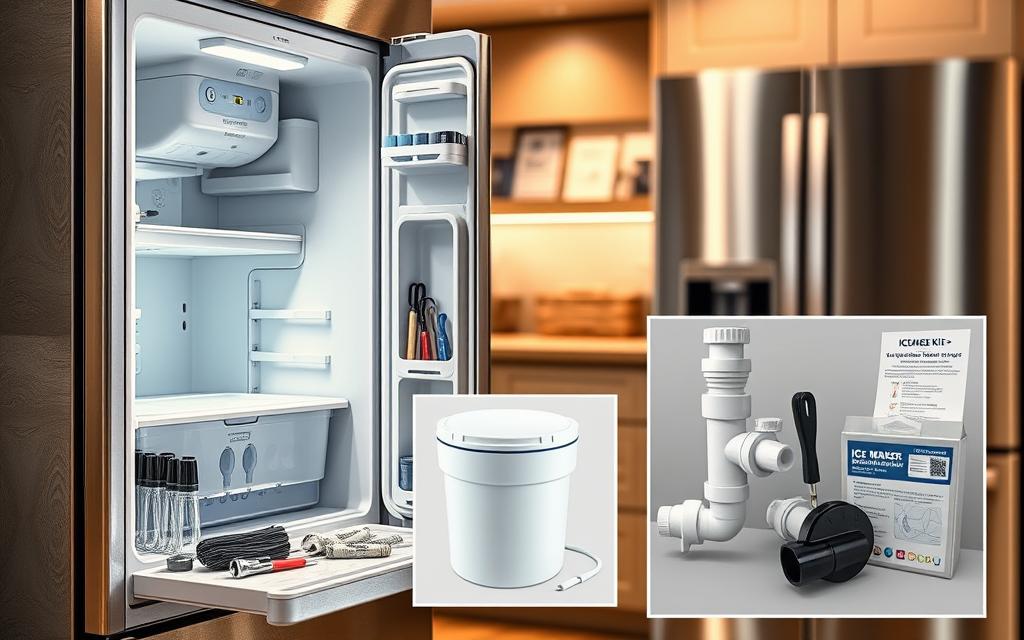
Some issues with your ice maker can’t be fixed on your own. There are clear signs that you need an expert’s help. Recognizing these signs saves time and keeps your ice maker running well.
If your ice maker stops working, watch for signs. These include making less ice, strange sounds, or stopping altogether. These problems often mean something bigger is wrong. Ignoring them could cause more trouble later.
Fixing an ice maker has its costs. The price varies with the problem’s complexity and the technician’s skills. Usually, repairs cost between $100 and $300. It’s good to know this to plan your budget.
To find a good repair person, look up skilled pros in ice maker service. Check their reviews and get recommendations. Pick someone who can fix your ice maker well. A dependable technician will give a clear diagnosis and cost estimate before starting work.
Keeping your ice maker in top shape with regular care can make it last longer and cut down on repair needs. Doing these steps helps the machine work better and makes fixing problems easier when they happen.
Cleaning your ice maker every six months is key to stop mold and mineral build-up. This keeps your machine working well and makes any needed repairs simpler.
It’s important to check the water line and its pressure often. Fixing any water flow issues early can prevent bigger problems later, making sure ice keeps coming.
Watching the freezer’s temperature is vital for making good ice. Keep it at 0°F or below for the best ice and to make sure fixes work well.
Knowing the details of your ice maker’s warranty is important. It helps you avoid paying for unexpected repairs. Warranties usually cover material defects and workmanship. This coverage may include important parts like the water inlet valve and ice maker module. Understanding your warranty can help you save money and reduce stress if your machine stops making ice.
Warranties often include key components and the labor needed for repairs. They typically cover:
Filing a warranty claim is simple. Start by getting your proof of purchase. Then, clearly explain the problems with your ice maker. Giving clear descriptions of the issues will help get quick service. Always make sure to follow the warranty’s rules when you file a claim.
It’s smart to think about warranty repairs for new, faulty appliances. If your ice maker stops working and it’s under warranty, using the coverage can save you money. Carefully checking how the appliance works during the warranty helps you make a good choice.
If your ice maker stops working, looking into other options can help. You’ll always have ice for events like barbecues or picnics. There are different choices available, each fitting different situations. They make getting ice easier and more enjoyable.
Standalone ice makers are great for when you need a lot of ice. They make more ice than the ones in fridges. So, they’re perfect for parties or restaurants. They always provide enough ice for everyone.
Portable ice makers are about easy use and moving them around. They let you make ice anywhere, ideal for camping or beach days. They are very useful when you can’t use your regular ice maker. With them, you’ll always have ice.
The kind of ice you pick can change your drink experience. Ice cubes are the classic choice for cooling drinks fast. On the other hand, nugget ice is soft and chewy, great for cocktails and sodas. Knowing what you prefer helps you choose the best machine for your needs.
First, tackle common problems to keep your ice maker working well. Check the water line and the ice maker module. Regular cleaning is also important. These steps will help you avoid trouble later.
Don’t forget about regular maintenance. Doing routine checks can make your ice maker last longer. It helps you avoid expensive repairs. Acting early keeps your appliance reliable.
By following these tips, you’ll always have ice for your drinks. Enjoy cold beverages any time of the year. Keeping your ice maker in great condition ensures fun moments with cool drinks.