Our Location
1250 Beacon Street
Brookline, MA 02446
Learn to replace an old washer belt with our step-by-step guide and get your washing machine running smoothly again. No professional needed!
Almost 40% of washer repairs stem from worn belts. Yet, many people don’t learn to replace them themselves.
Our easy-to-follow guide will help you change a washer belt by yourself. You’ll learn to spot a worn belt, gather your tools, take off the old belt, and put on a new one. You’ll also learn to reassemble your washer and run tests confidently.
Always turn off your washer’s power and water first. Wear the right safety gear. If something doesn’t feel right, don’t hesitate to call a pro. Changing a washer belt usually takes 30–90 minutes. The process is straightforward for most washers, whether they load from the top or front.
This guide will cover how belts work, what tools you’ll need, and how to access the belt. You’ll learn how to remove the old belt, pick the right new one, and install it. We’ll also show you how to put your machine back together and test it. Plus, we have tips to make your belt last longer. For specific instructions, look at your washer’s manual or online guides from brands like Samsung, Whirlpool, GE, or Maytag.
The belt might be small, but it’s crucial in how a washing machine operates. This section dives into the belt’s importance, its role in moving the drum or agitator, and when it needs checking. Learn to do simple diagnostic tests and what safety measures to take before repairing or replacing the belt.
A washer belt connects the motor to the drum or transmission. It’s made of rubber or a composite material. Companies like Whirlpool and GE use different types, such as flat, V-belts, or serpentine belts. While top-load and older machines have belts, many new front-loaders do not use belts at all.
The belt takes the motor’s turning force and moves the drum or agitator with it. This action creates the movement for washing and spinning clothes. Some washers also have tensioners to keep the belt tight and in place.
If the belt has the right tension, it works well. But if it’s too loose, it slips and the washer doesn’t work right. A good fit keeps the belt running without overheating or getting damaged.
Watch out for noise like squealing or squeaking when the washer is on. Other signs include the washer not spinning, moving oddly, or taking too long to run cycles. If you see cracks or wear on the belt, it’s time for a replacement.
Also, a burning smell, the drum moving unevenly, or the motor sounding strained are warning signs. For machines without belts, these symptoms might indicate motor or control board issues.
Checking the washer is easy with the right steps. Always unplug it first. You can look at the belt through panels, turn the drum by hand, or listen for motor problems. New washers may show error codes for motor troubles, helping you decide to fix it or call for help.
| Symptom | Likely Cause | Quick Check |
|---|---|---|
| Loud squealing | Worn or glazed belt | Inspect belt surface for shine or cracks |
| Washer won’t spin | Broken or slipped belt | Manually rotate drum with power off |
| Intermittent movement | Loose belt or failing tensioner | Check belt tension and idler pulley |
| Burning rubber smell | Belt slipping under load | Run a short spin while observing (power off before inspection) |
| No belt present | Direct drive motor design | Consult model manual for motor diagnostics |
Start by getting the right tools. This makes the job quicker and less annoying. A simple list helps locate essential items at a store or online.
Have a socket set (sizes 8–13 mm), screwdrivers (Phillips and flathead), an adjustable wrench, and needle-nose pliers ready. Include a light source like a flashlight or headlamp for dark spots. A putty knife will help with hard clips. Make sure to have the right belt for your machine.
Wear gloves to keep your hands safe from cuts. Glasses protect your eyes from lint and small objects. Shoes that don’t slip are good on wet floors. Knee pads will make working on the ground more comfortable. Always check that the power is off with a voltage tester before you start.
A multimeter finds motor problems and checks for electrical connections. Use a belt tension gauge for precise installs. A magnetic tray holds small parts. Get a service manual or parts diagram for your washer. A vacuum cleans out lint, and a rubber mallet aligns things without harm.
Tool selection tips: If you need basic tools, consider a small set from Craftsman or Stanley. Klein tools are great for electrical work. For those who don’t often do DIY, a cheap universal set does the job well. It’s a good starting point for gathering washer belt replacement tools.
Prepare your space with a clean towel for tools, have spare parts ready, and use your phone for specific instructions. This advice makes replacing a washer belt easier and is good for any guide on the topic.
Start by setting up to save time and reduce frustration. You’ll need towels, a tray for leaks, the owner’s manual, and a phone to take pictures. This preparation makes the job easier.
First, ensure safety by unplugging the washer. If it’s hardwired, turn off the circuit breaker. Always check that the power is really off with a voltage tester.
Next, shut off the hot and cold water valves. Have towels and a tray ready for any water that spills when you remove the hoses. Doing this avoids electric shocks and water damage.
Move laundry and bottles away from your washer. Make sure you have enough space to access the back by pulling the machine forward.
Put cardboard or a cloth under the washer to protect the floor. To move the washer, use sliders or get help from a friend. This keeps your work area safe.
Keep your manual or the washer’s model number close by. Put screws in a container and old parts in a trash bag. Snap pictures as you take parts apart. These steps help you replace the washer belt more easily.
Start by turning off the washer and moving it from the wall. Make sure you have good lighting and put a towel under it for any dropped screws or parts. Snap a picture of its exterior and controls to help you put things back later.
Removing the washer’s front panel
First, unplug the washer. If you have a top-load model, you might need to tilt it or remove a back plate. For front-loaders, unscrew the top or back to free the panel. Then, unclip latches and lift the panel off carefully.
For some washers, you must unlock the door latch or take part of the control console off. Check your Whirlpool or Maytag manual for where the screws are. Put all fasteners in a marked container, so you can put them back correctly.
Locating the belt in your washer model
After removing the panel, look near the drum’s lower back to find the belt. It’s usually around the motor pulley and drum or pulley. Top-loaders have the belt at the bottom, behind a panel.
Front-load washers might not have a visible belt if they use a direct motor. Check your GE, Samsung, or appliance manual to be sure of your model’s belt location. Take detailed photos of the belt and pulleys before removing anything. These photos will help when you reassemble or replace the belt.
Be careful of sharp edges and clips when working. Keep screws and clips in a box, labeled by their location. Wear gloves to protect your hands and be careful finding washer belt parts.
First, make sure to turn off the washer and unplug it. It’s smart to wear gloves to keep your hands safe from anything sharp or any old rubber. Make sure your workspace is bright and tidy to easily see and follow the steps ahead.
Start by loosening tension to remove the belt from the motor. If your washer has a tensioner pulley, push it to loosen the belt and take it off the drum pulley. For washers where the motor tension holds the belt, just loosen the motor mount bolts a bit. This lets the motor move just enough to free the belt.
If the belt is stuck or tight, turn the motor or pulley while you pull the belt off. Only use a pry tool if you really need to and be gentle. Be careful not to bend the motor shaft. Always make sure the power is off before you touch the motor or pulleys.
After removing the belt, check the motor pulley, idler pulley, drum bearings, and pulley grooves. Look for signs of wear or rust. Examine the motor mounts and shock absorbers for looseness or cracks. This is especially important for older Whirlpool and Maytag models.
Look over the belt for any oil or grease marks. Such marks could mean there’s a seal or bearing problem that needs fixing before you put on a new belt. Take pictures of any damaged parts and write down their numbers. If the bearings or seals are damaged, wait to replace the belt until after those repairs. This helps avoid more trouble soon.
You can usually throw away rubber drive belts with your regular trash, but follow your local disposal rules. If the belt has oil or other waste on it, put it in two bags before throwing it out to avoid any spills. Check if auto-parts stores or recycling centers near you take rubber belts.
Keep the old belt if you need it to measure the new one. Once you’re done with it, you can throw it away. Handling the belt with gloves can prevent any cuts from frayed edges and keep your skin from getting irritated.
| Step | What to Do | Why It Matters |
|---|---|---|
| Power Off and Protect | Unplug washer and wear gloves | Prevents electric shock and hand injuries |
| Relieve Tension | Move tensioner or loosen motor mount bolts | Makes it possible to remove belt without damaging motor |
| Remove Belt Carefully | Rotate motor or pulley and slip belt off | Avoids bending motor shafts and stretching parts |
| Inspect Components | Check pulleys, bearings, mounts, shocks | Identifies problems that cause premature belt failure |
| Document Damage | Take photos and note part numbers | Speeds repairs and ensures correct replacement parts |
| Dispose or Recycle | Double-bag contaminated belts or take to recycler | Keeps contaminants contained and follows local rules |
Choosing the right belt is crucial for an easy repair. Begin by finding your washer’s model number to ensure the replacement belt you pick fits. Some washers are direct-drive which means they don’t use belts. Check your washer’s type before making a purchase.
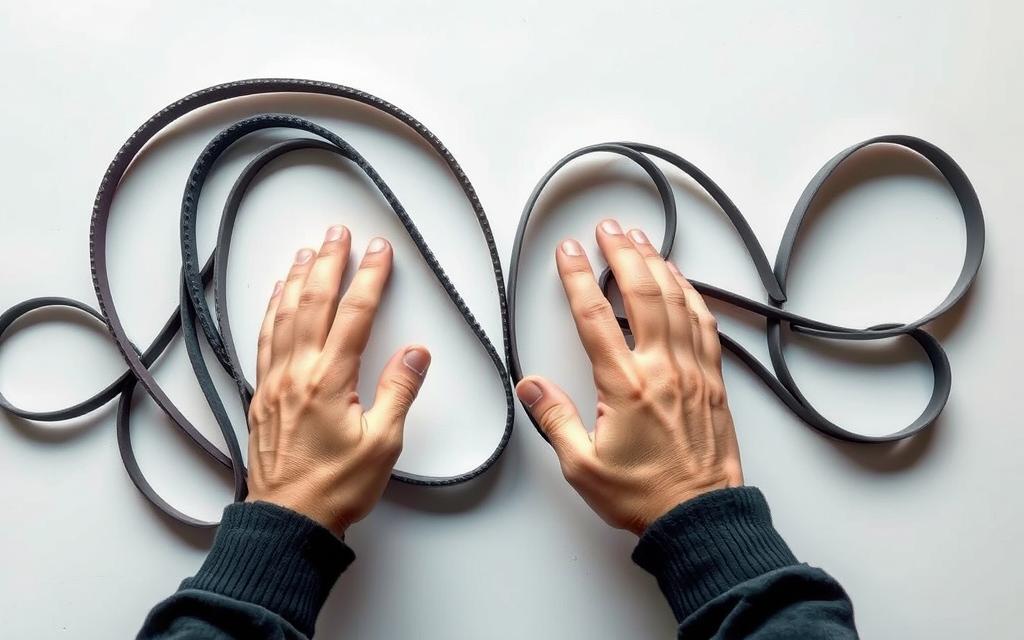
Start by using either the model number or the old belt’s part number. If the belt is gone or the numbers can’t be read, measure the old belt’s length. Also, note its width and rib count. Then, match these specs to V-belt, flat belt, or multi-rib serpentine options to fit your motor and drum pulleys correctly.
It’s important where you buy the belt for both availability and return options. Brands’ parts departments like Whirlpool Parts and GE Parts usually have OEM belts. Appliance parts stores such as RepairClinic, PartSelect, and AppliancePartsPros are trustworthy. Big stores like Home Depot and Lowe’s and online markets like Amazon offer quick delivery options.
OEM belts are typically the best choice for fit and come with guarantees. If an OEM belt isn’t available, good aftermarket options exist. Always read reviews and check the return policy before buying.
When looking at brands, consider reputable ones. We suggest OEM brands like Whirlpool, Maytag, GE, and Samsung for a perfect fit. If you’re considering aftermarket belts, Gates and Dayco are known for their quality and durability. Pick sellers that provide part lookup tools and compatibility checks.
Generally, belt prices range from $10 to $35, depending on the type and brand. Some sellers also include speedy shipping and return options. Make sure to check the warranty and if there’s a fit guarantee before you buy.
Always double-check the model number when you order. Confirm the belt’s path with photos or diagrams. Consider buying extra mounting hardware if the original pieces are rusty. These steps can help avoid another trip to the store.
First, take off the old belt and make sure the motor and drum are set. Follow these steps to put in the new parts easily and safely. Keep your hands steady and your area clean.
Place the new belt just like the old one went. Wind it around the drum and motor pulleys, and any others, in the same way. If it’s a V-belt, make sure it fits snugly in the pulleys. For ribbed belts, line up the ribs with the grooves.
If it seems tight, you can use a little dish soap to help. Wet your fingers and rub it on the belt’s edge. Only do this if the maker says it’s okay. Stay away from oil-based products as they can damage the rubber.
Loosen the motor’s bolts just enough to move it, or press the idler for slack. First, put the belt on the motor pulley. Then, guide it to the drum pulley, keeping it in the grooves.
Adjust the motor for the right tension. It should be tight but a bit flexible. You should press it halfway about 1/2 inch. Keep the motor still and tighten the bolts to keep the tension right.
Turn the drum by hand to check it spins well. Make sure the belt doesn’t touch anything it shouldn’t. Check that everything is lined up right. When you’re sure, tighten every part as the maker suggests.
Look over the wires and hoses to make sure they’re okay. If something’s too close to the belt, move it a bit.
Take pictures of how it looks when you’re done. Write down where every bolt goes. This helps if you need to fix it again or explain what you did to someone else.
After getting a new belt, plan how to put the washer back together. Keep all screws and wires in order. This will help you put it together the right way, just like it was before.
Fit the panel back onto the washer. Make sure it lines up correctly. This goes for the lid and other parts too.
Put the screws back where they came from. Connect the wires again, like the door and control panel. Gaskets and seals should fit perfectly without any open spaces.
Screw everything back tightly but carefully. Use the screws that came with it if you can. Don’t twist the plastic parts too much, or they might break.
Make sure you don’t trap any wires. Check the edges to ensure everything fits well. Doing this stops any noise when the washer spins.
Open the water valves slowly and check for leaks. The drain hose should stay in place. These final steps ensure your washer is set up right and safely.
Clean up your workspace. Throw away the old parts the right way. Vacuum and wipe the washer so it’s ready for a test run.
After replacing the belt, try a short cycle before a full load. This finds any issues early and checks the washer’s reaction. Keep the space free and stay close while it runs.
Put the washer back together and hook up the hoses. Start with no clothes and run a quick wash and spin. This helps spot problems right away.
Make sure the drum spins smoothly and stays in place. Watch for any slipping or strange noises. Testing this way helps catch issues like noise or drum problems early.
Look at how it fills and empties. Make sure there are no leaks. Pay attention to odd smells or sounds; stop if you notice smoke or a sharp odor.
1. Turn on the washer and pick a short program. Run it empty to see the belt in action.
2. Do a complete wash and spin. Check for any slipping or noises.
3. Watch the drum’s movement and listen for squeaks.
If you hear squealing, adjust the belt. Wrong belt routing can cause noise. Too much shaking might mean it’s not level or the shock absorbers are bad.
Error messages could mean motor or sensor issues. If the drum doesn’t move, check the belt and motor connections. Look for leaks if hoses were moved, checking each link well.
| Symptom | Likely Cause | Quick Check |
|---|---|---|
| Squealing during spin | Loose or misaligned belt | Inspect belt tension and routing; tighten or reseat belt |
| Drum slips or won’t turn | Improper routing or broken belt | Remove access panel and confirm belt path and condition |
| Vibration or wobble | Leveling feet, damaged shocks, or unbalanced load | Level washer and test without load; check shocks |
| Unusual noises (grinding) | Worn bearings or pulley issues | Inspect pulleys and bearings; replace if worn |
| Leaks after reassembly | Loose hose clamps or fittings | Tighten hose clamps and rerun short cycle |
If you can’t fix the problem, look in the washer manual or call a pro. For safety, unplug it right away if you smell burning or see smoke.
Testing the washer carefully helps avoid new problems and gets your washer working well again quickly.
To keep your washer running smoothly, do regular maintenance. Make a schedule for looking after the washer belt and general care. This way, small problems won’t turn into big ones. Use a simple checklist and log to keep track of everything.
Check your washer belt every 6 to 12 months, or if it starts making odd sounds. Watch out for cracks, smooth spots, frays, oil, and if it’s tight enough. Also, keep the washer area clean and dry to stop the belt from wearing out quickly.
If you smell burning or have electrical problems, it’s time to call in experts. This includes issues like a stuck motor, broken transmission, or leaks. Call a pro for tricky problems that are more than just replacing the belt. It’s best to use trained technicians or services from the maker, like Whirlpool service.
To make your washer last longer, don’t overload it. Use the right detergent in the right quantity. Make sure it’s level and clean the filters and drain pump screens often. Change out any old shock absorbers, pulleys, and belts fast. Use hot water and special cleaners like affresh or Tide Washing Machine Cleaner sometimes to keep it clean.
Go for OEM or top-quality replacement belts. Write down any changes in your log. The key to a good washer care plan includes regular checks, the correct parts, and knowing when to call a professional. Always have your washer’s model number and a list of reliable parts suppliers ready for repairs.