Our Location
1250 Beacon Street
Brookline, MA 02446
Experiencing intermittent cooling in fridge? Our guide helps you understand sensor and thermostat issues for reliable fixes.
Did you know a fridge can lose up to 20% of its cooling power if it’s dirty? This problem can quickly lead to spoiled food and high electric bills.
Refrigerators work by changing a liquid to a gas in the evaporator. This process pulls heat from the fridge. The compressor then turns the gas back into a liquid. This cycle keeps repeating.
Reading temperatures on built-in controls might not be accurate. It’s better to use a separate fridge thermometer to check the real temperature. If your fridge isn’t cool enough, try turning the thermostat down a notch. Then, wait a day to see if it helps.
Most of the cold air in a fridge starts in the freezer and goes to the fridge part. This is about an 80/20 split. Devices like dampers, thermistors, and the thermostat manage this air flow. If the fridge isn’t cooling right, it might be because of a faulty thermistor or a stuck damper.
Many fridges turn on and off as they are supposed to. This happens when the compressor works, cools the fridge, and stops once it’s cold enough. It helps keep food fresh and reduces wear on the fridge parts. However, sometimes you might notice the cooling isn’t constant.
Intermittent cooling is when a fridge turns on and off in a cycle. This is normal and helps keep the temperature just right without causing frost. If you think the temperature isn’t right, try using a separate thermometer to check. Always wait a day after changing settings to see the real effect.
Changes in fridge temperature often come from blocked airflow or control issues. If vents are blocked, some parts won’t get enough cold air. A damper that doesn’t open or close right can also cause problems.
Issues with sensors can make the fridge cool unevenly. If the coils are dirty or the fridge is too packed, it won’t cool well. Both mechanical and electronic problems can lead to uneven cooling.
Sensors act as the fridge’s eyes and ears. They send important info about temperature and pressure to the control board. This makes sure the compressor, fans, and dampers work at the perfect time. By keeping readings accurate, they stop big temperature swings and stop cooling issues.
Thermistors are seen a lot in today’s fridges. They depend on resistance and are placed near evaporators and inside compartments for fresh food. Some fridges use four thermistors to keep an eye on airflows.
Other fridges have Defrost Thermostats, pressure sensors, and sometimes digital probes. Each type picks up on different parts of how the cooling system is doing. This helps the control board even out the cooling.
Sensors guide the control board on when to kickstart the compressor and open dampers. This smart feedback makes sure the evaporator works only as needed. It stops cooling from being uneven. When sensors don’t work right, it can make the compressor and fans act up, causing cooling to be too much or too spotty.
Using a standalone thermometer, homeowners can check if sensors are accurate. If fridge and thermometer readings don’t match, a sensor might be faulty. Try adjusting the thermostat a bit and watch it for 24 hours before swapping parts.
| Sensor Type | Typical Location | Function | Common Fault Signs |
|---|---|---|---|
| Thermistor | Evaporator, airflow paths, fresh-food section | Reports temperature via resistance to the control board | Refrigerator temperature fluctuation, continuous compressor, overcooling |
| Defrost Thermostat | Near the evaporator coil | Detects coil temperature to manage defrost cycles | Ice buildup, uneven cooling, longer compressor cycles |
| Pressure Sensor | Refrigeration circuit | Monitors refrigerant pressure for safety and efficiency | System lockouts, abnormal cycling, poor cooling |
| Digital Probe | Specialty models, deli or freezer drawers | Direct digital readout for precise control | Inaccurate readings, compartment warm spots |
The thermostat is key in a fridge’s cooling process. It signals the compressor to turn on or off by checking the inside temperature and controlling the coolant flow. This helps keep the cooling consistent and avoids issues with the fridge not staying cold.
Thermostats watch the temperature and turn the compressor on or off. They call for cooling when it gets too warm inside. If the thermostat readings seem wrong, double-check with another thermometer before fixing anything. Change the settings slowly and wait a day to see the temperature change.
Mechanical thermostats work with a switch that responds to temperature changes. To test one, lower its setting while the fridge is running and listen for a click. This click means it’s working right. For a more detailed test, put its sensor in ice water and check if it keeps a steady signal with a multimeter.
Digital thermostats use special sensors and circuit boards for better control. They are more exact and can be set to specific temperatures and programs. But, they need accurate sensor readings to work right. Problems with sensors or the control board can lead to the fridge not cooling, running too much, or even freezing things it shouldn’t.
With issues like uneven cooling, start by checking the thermostat’s accuracy. Testing and small adjustments can solve simple problems. If troubles keep up, you might need to replace the thermostat or its sensor. This can help fix the fridge’s temperature problems and avoid ongoing cooling issues.
Spotting fridge cooling issues early can save food and money. Look for clear signs that repeat. Doing simple checks at home can tell if the problem is small or serious.
If the inside of your fridge feels warm but settings seem right, take notice. Food spoiling quickly is another red flag. Seeing frost or ice in weird places can mean trouble in the cooling cycle. This might be caused by a compressor issue, blocked capillary tube, or a failing condenser.
The compressor running too little or all the time is not normal. If your fridge has cold and warm areas, it might cool unevenly. Strange noises or cycling can suggest there’s a problem with sensors or controls, like a broken thermistor.
Too much freezing in the fridge area or a damp inside may indicate a damper or thermostat issue. If vents are blocked, cooling becomes uneven and airflow decreases. Intermittent cooling, switching between warm and cold, suggests a problem too.
If your fridge still has problems after these checks, call for service. A skilled technician should examine the compressor, cooling system, sensors, and controls.
Understanding the refrigeration cycle is the first step. It includes the evaporator, compressor, capillary tube, and condenser. A problem in any of these can make your fridge cool off and on or not cool properly. It’s important to check these parts to find out where the issue lies.
First, put a thermometer on a middle shelf. Leave it for 24 hours. Then, see if this matches what your fridge says. This tells you whether to fix the cooling or just adjust the settings.
Try changing the fridge’s temperature a bit and wait a day. The goal is for the fridge to stay around 37°F. If you see a lot of temperature changes, it might be time to check and possibly clean some parts.
Follow your fridge’s manual to clean the condenser coils and compressor area. When these parts get dirty, they can’t get rid of heat well. This leads to the fridge not cooling right. Always unplug the fridge before you start cleaning.
Make sure the vents and damper aren’t blocked. If air can’t move freely, the cooling will be uneven. Depending on your fridge, you might need to adjust the damper by hand or check its motor with a tool called a multimeter.
Use a multimeter to check the fridge’s sensors and thermostats. The right resistance levels can be found in the maker’s guide. If these parts aren’t working right, the fridge might turn on and off too much.
Look at the control board and wires for any signs of damage. Bad connections can make the fridge cool in fits and starts. Always make sure the power is off before you start checking the parts.
If you think there’s a big problem like a bad compressor or a leak, you should call an expert. Fixing these issues requires special training and tools.
For replacing control boards, get help from a pro. Using the wrong parts can make things worse or mess up your warranty, especially with brands like Bosch or Kenoble.
If using tools like a multimeter scares you, or if you notice any severe damage, it’s best to bring in a technician. Signs like burn marks, melted parts, or not being able to keep the fridge cool should not be ignored.
Making small changes in how your fridge works can save energy. Ensuring it cools properly and runs the compressor efficiently keeps it working well. Keeping the condenser clean and airflow clear prevents the compressor from overworking due to bad heat removal.
If your fridge turns on and off too often, it might be having trouble maintaining its cool. This often points to issues like dirty coils or a thermostat not reading temperatures right. When your fridge’s compressor runs without stopping, it’s usually because of broken sensors or jammed airflow controls.
It’s a good idea to check the fridge’s temperature with another thermometer to make sure the thermostat is accurate. An inaccurate thermostat can cause the fridge to work harder than needed, increasing your energy bills.
Keep your fridge’s temperature between 36–38°F and your freezer at 0–5°F. This keeps food safe and doesn’t use too much energy.
Make sure nothing blocks the vents or dampers for better cooling. Clean the condenser coils twice a year. If your fridge keeps having problems, you might need to replace parts like thermistors, dampers, or thermostats.
Looking for a new fridge? Pick one that has an ENERGY STAR rating. It should have modern controls and efficient compressors. These features help cut down on energy use and keep your fridge cooling properly.
| Problem | Likely Cause | Quick Fix | When to Call Tech |
|---|---|---|---|
| Short, frequent cycles | Dirty coils or thermostat misread | Clean coils; verify with thermometer | If cycles continue after cleaning |
| Long continuous run | Faulty thermistor or stuck damper | Check vents; reset power | Replace sensor or damper |
| Uneven temps between shelves | Blocked airflow or intermittent cooling in fridge | Rearrange items; clear vents | Damper or fan replacement |
| High energy bills | Poor heat rejection or aging compressor | Clean condenser; improve ventilation | Consider new energy-efficient refrigerator |
Keeping your fridge in shape requires some regular care. Doing simple things can lower the amount of energy it uses. They also stop cooling issues before they happen. Place a small thermometer inside to monitor temperatures regularly.
You should clean the condenser coils every three to six months. Dusty coils mean the compressor must work harder, reducing its efficiency. Always unplug the fridge first, then gently vacuum the coils using a soft-bristle brush, as suggested in the owner’s manual.
Make sure vents and airways aren’t blocked. If they are, airflow becomes uneven, causing temperature issues. After making any changes, wait 24 hours. This allows the temperature to stabilize, letting you accurately check if there’s an issue with fridge temperatures.
Always inspect electrical panels and wiring for issues. Look for loose connections or signs of damage. If you think there’s a problem with a component, use a multimeter to check it. Just make sure to turn off the power first. Doing this helps you find problems early on.
Door seals are crucial for keeping the cold in and the warm out. If they’re dirty or damaged, they won’t work right. This causes the compressor to run more often, using more energy.
Cleaning the seals with warm, soapy water every month is a good idea. Check the door’s gasket to make sure it’s sealing correctly. If it’s not, because of cracks or gaps, you should get a new one. This will help stop temperature problems and keep the fridge running smoothly.
Here’s a quick maintenance checklist to help you keep your fridge running well and avoid common issues.
| Task | Frequency | Why It Matters |
|---|---|---|
| Vacuum condenser coils | Every 3–6 months | Prevents compressor strain and improves cooling efficiency |
| Check internal temperature with thermometer | Monthly or after thermostat change | Detects temperature drift early so you can fix fridge temperature fluctuation |
| Clean door gaskets | Monthly | Ensures tight seal to avoid intermittent cooling in fridge and energy waste |
| Inspect vents and damper | Every 6 months | Maintains proper airflow and prevents hot spots that cause fridge cooling problems |
| Test thermistor and electrical connections | When suspecting issues | Identifies faulty sensors or loose wiring that trigger temperature swings |
Making a decision on whether to upgrade your refrigerator can be daunting. Small problems, like a fridge not cooling well, might be easy to fix. But, when big parts like the compressor start failing, repair costs go up. If your fridge keeps having big problems, it might be time to get a new one.
Signs you need a new fridge
Features to look for in modern refrigerators
Deciding when to replace your fridge often comes down to repair costs versus benefits. If fixing it doesn’t make it cool right, or if big repairs are needed, getting a new fridge might be the best choice.
Understanding how your fridge works is key, especially about compressor cycles and sensor checks. Short cycles are typically okay. But if it runs too long or in an unusual way, it might need a look. Here are some common questions with straightforward answers to help you figure things out.
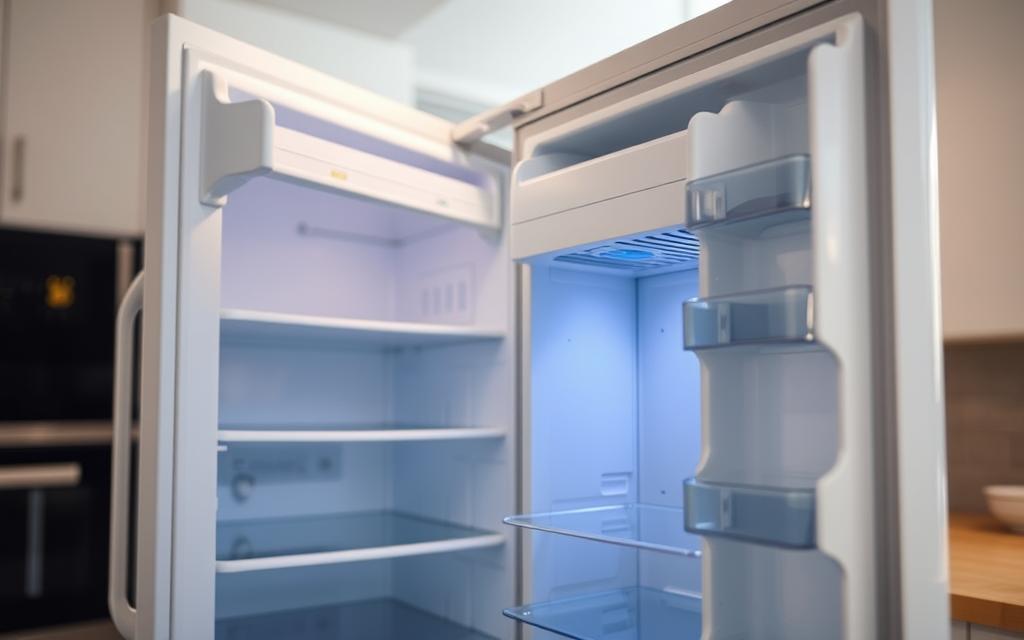
A fridge doesn’t run constantly but works in cycles. It starts, reaches the target temperature or pressure, then stops. Factors like room temperature, how much the door is used, and how well it’s insulated affect this. Most new fridges cycle between 20 and 50 minutes apart, though models vary.
To see if your fridge is acting normally, use a thermometer. Place it inside and check against the fridge’s setting. After adjusting settings, allow 24 hours for the fridge to adjust. Then you can tell if the cycle pattern is right.
It’s usual for fridges to cool in stops and starts. This keeps food at safe temperatures. We expect brief pauses between cycles as the system maintains temperatures.
However, be on the lookout for issues. If cooling’s off, if there are fast temperature changes, if temperatures consistently go above 36–38°F, or if the freezer overfreezes, you might have a problem.
If you’re unsure, log temperature readings over 24 hours with a thermometer. This information is helpful if you need to call for help or reach out to the fridge manufacturer.
Keeping your fridge running well means understanding its cycle: evaporation, compression, condensation, and flow through the tube. Regular fridge care stops cooling problems that spoil food and increase energy costs.
Use a standalone thermometer to check temperatures. Set your fridge between 36–38°F and the freezer between 0–5°F. Cleaning the coils and compressor, and keeping vents clear, help maintain efficiency. Also, regularly inspect the door seals.
To fix cooling issues, first check thermistors and thermostats with a multimeter. Follow your fridge’s tech sheet. Look for damage on control boards before swapping parts. For big problems or electrical issues, it’s smarter to hire a pro.
Small, consistent steps like replacing sensors or seals, adjusting the thermostat, and cleaning, can help avoid big repairs. These small actions will make your fridge last longer. Follow these tips to keep your food safe and your fridge in good shape.