Our Location
1250 Beacon Street
Brookline, MA 02446
Keep your dryer safe and efficient by learning to clean a lint filter clogged, and maintain your lint trap and exhaust duct.
Every year, lint buildup leads to hundreds of fires in the United States. It shows that a blocked lint filter is a serious issue. The U.S. Fire Administration and the Consumer Product Safety Commission find that clogged dryer vents cause many of these fires.
This guide offers easy dryer safety tips for everyone. You’ll learn how to clean the lint filter, tidy the lint trap, and check the exhaust duct. These steps are important for homeowners, renters, and landlords alike.
We’ll tell you how to spot a clogged dryer lint filter. You’ll also learn about tools for maintenance, when to replace filters, and when to call an expert. Following these suggestions can make your dryer safer, more efficient, and last longer.
Keeping a lint filter clean is not hard and brings big rewards. It stops fibers and debris from reaching key parts of your dryer. This keeps your dryer safe and running smoothly.
A clogged filter traps heat and lets lint collect where it shouldn’t. This lint can catch fire from the heat of the dryer. Many fires in homes start because dryers and vents weren’t cleaned.
Removing lint around the drum helps keep your dryer safe. For gas dryers, it’s also critical to avoid harmful gases.
When lint clogs the screen, the dryer works harder and takes longer. This uses more energy and can wear out parts faster.
Cleaning lint from your dryer saves on energy bills and keeps your dryer working better, longer.
When your dryer starts acting differently, it could mean airflow problems. Look out for clothes taking longer to dry, strange smells, or the dryer getting too hot. Seeing these signs early can help you fix the issue before it becomes dangerous.
Reduced drying efficiency
If your laundry is still damp after a cycle, or it takes longer to dry, your lint filter might be blocked. It’s also possible there’s an issue with the duct. Make sure you’re not overloading the dryer or using the wrong settings first. Then, check the lint screen and its housing for lint buildup.
To test your dryer, first remove the lint screen post-load to assess airflow. Feel for air coming out of the exterior vent when the dryer is on. Timing a regular load of laundry can also show if cycles are longer than before.
Unpleasant odors from the dryer
If you smell mustiness, it could be from lint trapping moisture. A sharp, burning smell may mean lint is too close to the heater or motor. This is serious; stop the dryer immediately and inspect the lint trap and drum.
Keep track of any odd smells and when they happen. This can help identify a lint clog vs. other issues.
The dryer overheating
Blocked airflow can make your dryer overheat, turn off by itself, or pop the thermal fuse. If your clothes are very hot after drying, or you get too many high-heat alerts, check the lint filter and vent.
Also, notice if there’s a lot of lint when you remove the filter, buildup inside the drum, higher bills, or problems with the vent hood outside. These could all be signs of a blocked filter or vent.
Here’s a quick guide on what to do next:
| Symptom | What to Check | Urgency |
|---|---|---|
| Longer cycles / damp clothes | Lint screen, lint trap housing, exterior vent airflow | Moderate — clean lint filter and test |
| Musty or burning smell | Lint buildup around drum, heating element area, filter housing | High — stop dryer if burning smell |
| Dryer feels hot / thermal trips | Airflow restriction, lint filter clogged, vent blockage | High — inspect and clear immediately |
| Excessive lint or visible buildup | Filter condition, trap seal, drum edges | Moderate — clean and consider replacement |
| Poor vent flap movement | Exterior vent hood, duct kinks, animal nests | Moderate to high — clear obstruction |
To keep your dryer safe and running smoothly, regular care is key. Follow these steps, tools, and timing tips. They’ll make cleaning your lint filter a quick and effective habit. This helps prevent build-up and maintains your dryer’s efficiency.
Start by gathering a soft brush or an old toothbrush. You’ll also need a vacuum with a hose attachment. Brands like Shop-Vac, Hoover, or Ridgid are good choices. Add to that a microfiber cloth, mild dish soap, warm water, and a soft-bristled lint brush. Keep compressed air close by for any stubborn fibers.
1. Turn off and unplug the dryer. If you have a gas dryer, make sure to turn off the gas supply too.
2. Take out the lint screen and remove the lint by hand. Toss it into the trash. Don’t rinse the screen if it says “no water” on it.
3. Carefully use a soft brush to get rid of fibers caught in the screen edges and mesh. Be careful not to tear the mesh.
4. Use the crevice tool on your vacuum to clean the lint trap cavity. This removes lint from deep inside. Go around the opening with your Shop-Vac or Hoover for a deep clean.
5. If you can wash your screen, do so with warm water and a bit of mild dish soap. Make sure it’s fully dry before putting it back to stop mold from forming.
6. Put the screen back in and run a short empty cycle. This checks if the airflow is good and the filter is correctly placed.
Turn lint trap cleaning into a regular job after each load. Spending a few minutes on this task will save energy and lower the risk of fire.
Clean the screen monthly or more often if you use dryer sheets or fabric softener. For pet owners and homes with lots of lint, clean it more frequently.
Every three to six months, check and clean the lint trap housing. Use your vacuum and brush to clear out any hidden lint build-up. This should be part of your routine lint filter care.
| Task | Tool | When |
|---|---|---|
| Remove visible lint | Hands or soft brush | After every load |
| Wash washable screen | Warm water, mild dish soap, microfiber cloth | Monthly or every few weeks if residue builds |
| Vacuum lint trap housing | Vacuum with crevice tool (Shop-Vac, Hoover, Ridgid) | Every 3–6 months |
| Remove stubborn fibers | Compressed air, soft-bristled lint brush | As needed |
| Check airflow after cleaning | Run empty short cycle | Each time screen is reinserted |
Dryers make life easier, but a clogged lint filter can be dangerous. The U.S. Fire Administration reports that dryer lint causes many home fires. Because lint catches fire easily, it’s risky near heat.
Fire hazards
Lint can build up in the trap, drum, or vent, causing danger. If lint touches the heating element, it might start a fire. Also, electrical problems could spark a fire in the lint. These fires can grow quickly, especially if clothes or paper are close by.
Clearing lint after each use and cleaning deep inside regularly lowers the risk. Also, check the exhaust duct yearly. Make sure the area around your dryer is free of things that could catch fire.
Increased energy consumption
When the lint filter is blocked, your dryer works harder. This means longer drying times and higher bills. Over time, this extra running wears out your dryer faster. For gas dryers, blocked vents can also pose safety risks.
Keeping gas dryers vented properly is crucial. Homes with these should have carbon monoxide detectors.
| Issue | Cause | Impact |
|---|---|---|
| Fire risk | Lint buildup near heating element or vent | House fire, property damage, injury |
| Longer drying cycles | Dryer lint filter clog reducing airflow | Higher energy bills, more wear on parts |
| Poor combustion (gas dryers) | Blocked exhaust vent | Carbon monoxide risk, reduced efficiency |
| Maintenance burden | Neglect of lint buildup removal | Frequent repairs, earlier replacement |
| Prevention | Clean filter every load and inspect vents annually | Lower fire risk, better efficiency, longer appliance life |
Keeping your dryer’s exhaust duct clean is key for your home’s safety and laundry efficiency. This duct sends hot, damp air and lint outside. But when it’s clogged, heat and moisture can build up. This not only extends drying times but can also allow mold to grow in walls or attics. Cleaning the lint trap is important, but taking care of the duct is essential for completing the task.
When vents are blocked, the quality of your indoor air drops. This can also up the chances of overheating or fires. A full dryer lint screen means it’s time to check the duct or vent hood for lint buildup. Sometimes, birds, rodents, or a jammed vent flap cause these blockages, making your dryer work harder than it should.
Using the right tools can make cleaning the dryer exhaust duct safer and quicker. A cleaning kit with flexible rods and brushes works well for most ducts. For removing loose lint, using a strong vacuum like a Shop-Vac or Ridgid, with a long hose and brush attachment, is effective.
Always wear gloves and safety glasses. Have a ladder ready if you need to reach vents on the roof or wall. To get to the lint, disconnect the duct from the dryer with a screwdriver or nut driver. For ducts that are long or complex, you might need special cameras or a professional cleaning system.
Clearing light debris can be done with a leaf blower, but be careful. The aim is to remove lint without pushing it further into the duct. Always clean the lint trap regularly along with the duct for the best safety and efficiency.
Cleaning your dryer’s exhaust duct is key to keeping your home safe and ensuring the dryer works well. It involves removing lint build-up, checking for damage, and stopping problems before they start. Doing this regularly reduces the chance of clogs and boosts airflow.
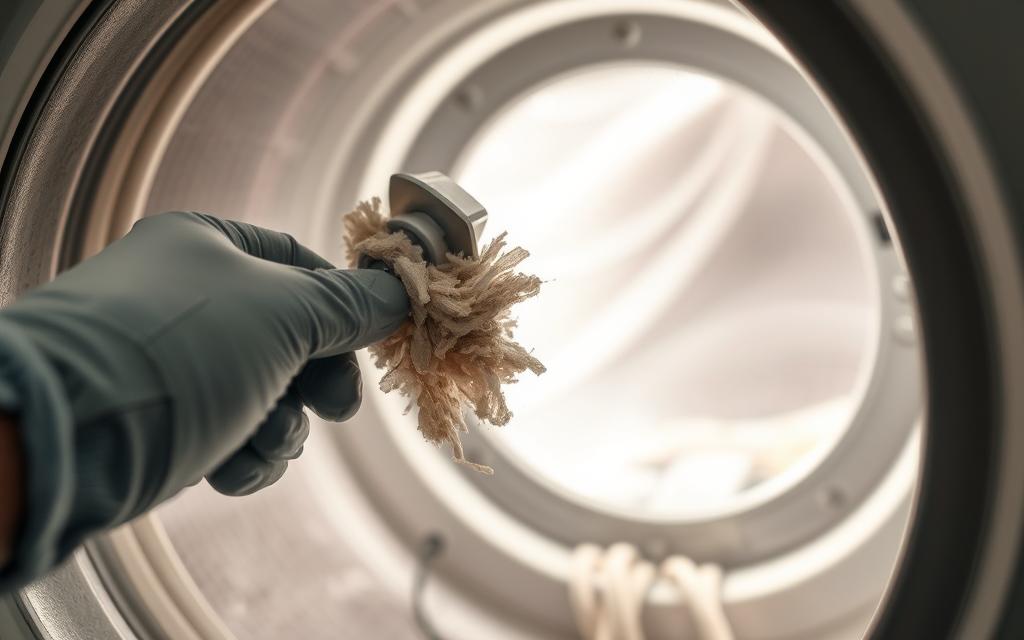
First, make sure to turn off and unplug the dryer. If it’s a gas model, turn off the gas too. This is important for your safety.
Gently move the dryer from the wall and disconnect the vent hose. Replace any flexible foil ducts with rigid or semi-rigid metal ones to follow safety standards.
Next, use a vacuum and a brush at the dryer’s back end, where the blower housing is. Take your time to avoid pushing lint further in.
Then, from outside, use a vent brush or rods in the exterior vent. Push lint out while vacuuming inside to catch any falling debris.
Don’t forget to clean the vent hood and flap outside. Ensure the flap moves freely and the screen isn’t blocked to keep airflow strong.
Put the duct back together with foil tape or metal clamps—no cloth tape. Slide the dryer back, connect everything, and run a brief cycle to check for strong airflow and to prevent clogs.
There are kits for cleaning dryer ducts that come with flexible rods and brushes. You can find these at places like Home Depot, Lowe’s, and Amazon. They’re great for most home ducts.
Move slowly and don’t force the brushes through tight spots. Let each part go through bit by bit. Vacuum out the lint as you move along.
Combining a vacuum with the brush catches more loose fibers. These kits make cleaning simpler and help stop lint clogs, especially if you clean regularly.
Call an expert if your ducts are long or tough to reach, like over 25 feet, have many bends, or go through places like attics. Also, get help for signs of fire damage, ongoing damp, or mold issues.
If you have a gas dryer and suspect a leak or still have poor airflow after cleaning, hire a professional. They have special tools like rotary brushes and cameras to find and fix any hard clogs or hidden problems.
| Situation | DIY Action | Professional Needed |
|---|---|---|
| Short duct under 25 ft with few bends | Use vent brush kit, vacuum, and clean exterior hood | No |
| Long duct over 25 ft or many bends | Attempt incremental cleaning with flexible rods | Recommended |
| Gas dryer with suspected issues | Turn off gas, inspect connections, check airflow | Yes |
| Signs of fire, melted parts, or persistent mold | Stop use immediately and do not DIY | Immediate professional service |
| Frequent dryer lint filter clog despite cleaning lint filter | Clean duct thoroughly and inspect for damage | Consider professional inspection |
Keeping your dryer safe starts with simple, daily actions. Small steps can reduce fire risks, lower your bills, and speed up your laundry. These tips focus on easy care to prevent lint clogs and extend your dryer’s life.
Best practices for dryer use
Clean the lint screen after each load to keep lint from getting into the duct. Don’t overload the drum. This way, air can move, and clothes can tumble freely. Dry heavy items like towels separately from low-lint clothes to minimize lint buildup.
Follow dryer settings recommended by brands like Whirlpool and LG to avoid too much heat. Too much heat can hurt fabrics and the lint trap. Try wool dryer balls. They reduce drying time and help avoid the residue from fabric softener sheets that affects the lint trap.
Regular maintenance tips
Wash lint screens that can be cleaned every month. This removes residue from fabric softeners and dryer sheets. Check the drum, door seal, and gasket for trapped fibers. Clear them away regularly. Use a checklist to keep up with lint filter care.
Once a year, check vent connections and clamps. Use metal ducts instead of foil or plastic for better airflow. Replace any worn parts to keep lint removal smooth and prevent breakdowns.
The importance of inspecting vents
Every month, check the outside vent hood for things like nests, leaves, or lint. Make sure the vent flap works well and the screen isn’t damaged. If the exhaust is weak, check the ducts or blower housing while the dryer is running.
Test the airflow at the outside vent when doing laundry. If it seems weak, fix duct problems fast or call a pro. Have a professional clean your ducts every 1 to 2 years. If you have a big family or pets, you might need cleaning more often. This keeps lint buildup low and makes your lint filter last longer.
A well-fitting lint screen keeps your dryer safe and efficient. Routine lint filter maintenance reduces fire risk and speeds up drying. Check for damage after cleaning that normal washing can’t fix.
Look for visible tears, holes, or mesh that’s out of shape and lets lint through. A warped frame not fitting correctly also lets lint escape into the ductwork.
If washing doesn’t remove residue or stains, the filter material might be damaged. Not catching as much lint after cleaning means it’s time for a new one.
Start with your dryer’s model number and follow the maker’s advice. Brands like Whirlpool and Samsung offer options that fit right and work well.
If you can’t find a brand-made part, get a quality generic one. It should be the right size and have a fine mesh. Choose durable and washable filters for ease and value.
Make sure the new filter fits snugly. After putting it in, test how well the dryer works for a few cycles. If problems come back fast, check for other issues like damaged ducts.
Many people think shortcuts can make a dryer safe. But, this can put families in danger. Here are some myths and reliable sources for accurate dryer care info.
Debunking misconceptions
Myth: Making holes in the lint screen boosts airflow. Reality: It can harm the screen, push lint into the duct and motor, and increase the risk of clogs.
Myth: It’s okay to clean the lint screen now and then. Reality: You should clean lint after each use and deep clean regularly to avoid clogs.
Myth: Using flexible plastic or foil ducting is fine. Reality: They can fold and catch fibers, causing faster lint buildup. It’s better to use rigid or semi-rigid metal ducts.
Myth: Electric dryers are safer than gas ones. Reality: Both types can cause fires due to lint buildup. Gas models also have a combustion risk. Cleaning the vent and lint filter helps keep dryers safe.
Reliable sources of information
For trustworthy advice, check with the U.S. Fire Administration, National Fire Protection Association, and Consumer Product Safety Commission. Manuals from Whirlpool, Maytag, LG, and Samsung give specific cleaning steps. The EPA also offers info on indoor air and dryer maintenance.
| Source | What to Expect | How It Helps |
|---|---|---|
| U.S. Fire Administration (USFA) | Fire safety advice and statistics | Shows risks from a lint filter clogged and steps to reduce fire hazards |
| National Fire Protection Association (NFPA) | Codes and safety standards | Offers venting and installation standards to prevent dryer lint filter clog |
| Consumer Product Safety Commission (CPSC) | Recall and safety notices | Alerts users to model-specific hazards and cleaning lint filter guidance |
| Appliance manufacturer manuals (Whirlpool, Maytag, LG, Samsung) | Model-specific maintenance steps | Provides exact instructions for lint trap cleaning and avoiding dryer lint filter clog |
| Environmental Protection Agency (EPA) | Indoor air and appliance information | Explains how cleaning lint filter and proper venting affect air quality |
Manufacturer instructions provide detailed advice specific to your dryer model. They aim to make your dryer both safe and efficient. Brands such as Whirlpool, LG, Samsung, and GE offer detailed owner’s manuals and online support. These resources teach about lint filter care, the right duct materials to use, and steps for safe service.
The manuals illustrate the correct way to remove and clean the lint screen. They specify how often to clean it and caution against using certain cleaning agents or vent materials. To find specific advice, use your dryer’s model number to locate a PDF manual or article online.
In the manuals, you can find information on proper vent types and the needed clearances. This advice helps prevent clogs in the dryer lint filter. It ensures your dryer works as intended. Manuals also offer advice on what to do if the lint screen clogs frequently, including troubleshooting steps or parts to replace.
Adhering to manufacturer safety steps is crucial for maintaining warranty coverage. Using parts or vents not approved by the manufacturer can void your warranty. It also increases the risk of a fire due to lint accumulation. Always disconnect your dryer’s power supply before any maintenance work, and only use approved parts and fasteners.
If you have a gas dryer, it’s recommended to install carbon monoxide detectors. Also, get your dryer inspected annually by professionals. These actions reduce risks associated with dryer lint clogs. They ensure that your duct installation is up to standard.
Need assistance? Reach out to the manufacturer’s support team. Use their website’s model lookup tool or visit an approved service center. They can offer guidance on cleaning your lint filter and other maintenance tips.
Making sure your dryer is safe and works well is about doing small things regularly. After each load, clean the lint screen. Also, clean the lint trap and vacuum any lint you see. Every so often, wash the screen to stop lint from building up. Keeping the lint filter clean, removing lint, and doing these steps can lower the chance of fires. It can also cut down on your energy bills, make drying faster, and keep appliances running longer.
To stop lint clogs, remind yourself to check things monthly and yearly. Look at the outside vent often, and clean the ducts once a year or get a pro to do it. Use original parts for replacements and follow what the maker says to keep things safe.
For safety, put smoke alarms in laundry spaces and carbon monoxide detectors by gas dryers. Use this list to help you remember: clean the lint screen every day; once a month, wash the screen and check the outside vent; every year, clean the duct or have a pro look at it; replace any worn-out filters or ducts.
Focus on taking care of the lint filter now to prevent future problems. Doing these small, regular tasks can keep your home safer, save you money, and make your dryer last longer.