Our Location
1250 Beacon Street
Brookline, MA 02446
Experiencing a burning smell in dryer? Our guide offers a quick safety checklist to troubleshoot and prevent potential fire hazards.
The U.S. Fire Administration has found hundreds of fires start with dryers each year. A burning smell is a warning sign. It means you should act immediately.
Why take quick action? Because it keeps you safe and your dryer running longer. Acting fast helps avoid fires and expensive repairs.
We’ll talk about why lint, overheating, and wiring issues cause problems. You’ll learn safety steps to take if your dryer smells like it’s burning. We also provide maintenance tips, how to clean vents, troubleshoot, and when to call for help.
In the U.S., lint or electrical issues often lead to trouble. Have this checklist ready. If you smell burning, unplug the dryer or turn off gas. Then, look at Section 7 for what to do right away.
Keeping your dryer in good shape is key to safety. It also makes your dryer last longer and prevents fires. Keep this guide close for when you need to do more detailed maintenance.
A burning smell in a dryer often starts as a slight odor. It gets stronger when the dryer is running. This guide helps you find the causes and decide if you can fix it yourself or need professional help.
Lint build-up is a top cause of dryer smells. Lint can get trapped in the trap, drum, or vent. This can scorch, creating a burnt-paper or popcorn scent. Always check the lint filter and drum edges for lint after each use.
Residues from fabric softeners, dryer sheets, or spilled chemicals can cause strong smells when heated. Things like hairpins, crayons, or pieces of rubber may melt and smell like burning plastic. Greasy spots from cooking or shop rags can smoke and make the odor worse.
When airflow is restricted, the dryer gets too hot. This can put stress on important parts. Clogged vents and a full lint trap make the dryer work harder. Over time, it can damage the heating element or thermostat. Gas dryers with ignition troubles or a bad gas valve can smell like combustion. These issues need to be handled with care.
Electrical problems often smell like hot plastic or burning insulation. The cause might be worn motor bearings, frayed wires, a rubbing belt, or overheated parts. If the smell is strong or feels electrical, turn off the dryer and unplug it at once.
Older dryers or those with DIY repairs can be riskier. Regular checks can prevent a small odor from becoming a big problem. Start with basic troubleshooting: clean the lint trap, check vents, and run the dryer empty to see if the smell comes back. If the smell doesn’t go away or you think it’s an electrical issue, call a professional technician.
| Cause | Typical Smell | First Steps | When to Call Repair |
|---|---|---|---|
| Lint buildup | Burning paper / popcorn | Clean lint trap, vacuum drum | After repeated clogs or vent access issues |
| Residue on clothes | Chemical or musty | Rewash affected items, avoid dryer sheets | If smell persists despite cleaning |
| Foreign objects | Melting plastic | Inspect drum, remove items | When items damage heater or drum |
| Overheating / element failure | Hot metal or scorched insulation | Improve vent airflow, test empty run | Persistent heat or tripping breakers |
| Electrical faults | Hot-plastic / burning insulation | Power off immediately | Immediate professional dryer repair required |
A burning smell in your dryer signals a problem you can’t ignore. It could be lint build-up, broken parts, or electrical issues. Quick action prevents dryer fires and protects your home.
Lint in the drum or vent might catch fire if it gets too hot. These kinds of fires are common in homes. If a fire starts, it can quickly move through vents to other parts of your house.
Cleaning your dryer vents reduces fire risks. Regular maintenance and inspections prevent fires. It keeps your dryer safe to use.
Burnt heating elements or wires can release harmful fumes. These fumes might contain dangerous chemicals. If you smell something, air out the area by opening windows and doors.
Feeling sick, like having headaches or coughing, means you should get out. This is especially true for people with breathing problems. Getting fresh air and seeing a doctor is important if you feel bad.
Electrical issues have clear warning signs. Look for scorch marks, melted parts, or strange colors on wires. A bad smell from an outlet is a serious warning sign.
Sounds like buzzing or crackling from your dryer are bad news. They often mean there’s an electrical problem. Watch for the dryer shutting off suddenly too.
If you notice any problems, turn off the dryer immediately. Then, call a professional to check it. This quick action could save your dryer and prevent dangerous situations.
Routine care keeps your dryer safe and reduces smoky smells. Use simple steps to ensure good airflow and component health. Doing these small things regularly protects your clothes, saves energy, and helps prevent fires.
Cleaning the lint filter properly
Clean the lint screen after each use to shorten drying times. Every few months, wash it with warm soapy water to remove any fabric softener buildup.
Remove lint from the filter area with a soft brush or a vacuum. Also, clean the duct behind the dryer at least yearly, or more for heavy use.
Inspecting the vent system
Check the outside vent and duct for any blockages. While the dryer is on, check for strong airflow outside; weak airflow might mean a clog.
Use metal ducts instead of foil or plastic, and use metal tape on seams. These changes make your dryer safer and more efficient.
The importance of professional inspections
Have a pro check your dryer every one to two years, or if something seems off. Experts from places like Whirlpool or local HVAC services can inspect important parts.
A pro should check gas dryers for carbon monoxide risks. Combined with your own maintenance, this keeps your dryer safe and long-lasting.
| Task | Frequency | Why It Matters |
|---|---|---|
| Empty lint filter | After every load | Maintains airflow and reduces fire risk |
| Wash lint filter | Every 2–3 months | Removes residue that restricts airflow |
| Inspect duct opening | Annually (or more) | Prevents buildup behind dryer |
| Check exterior vent airflow | Every 6 months | Detects obstructions early |
| Replace flexible duct with metal | One-time upgrade | Reduces lint traps and fire hazards |
| Professional inspection | Every 1–2 years | Finds hidden faults and ensures safe operation |
Maintaining your dryer keeps energy costs low and prevents fires. This guide talks about tools, steps, and cleaning frequency. Make sure to read everything before starting for a safe and successful cleaning.
Get a stiff brush or a flexible vent brush kit. Use a vacuum with a long hose or a shop vac for lint. You’ll also need a screwdriver or nut driver to detach the duct.
Wear gloves and safety glasses. Have a duct cleaning kit and replacement ducts or foil tape ready. For a lot of buildup, consider renting a rotary tool or hiring a pro with power tools.
First, focus on safety. Unplug the dryer or turn off the power. If you have a gas dryer, shut off the gas and let it cool down.
Gently pull the dryer from the wall and disconnect the duct. Clean the lint trap and vacuum inside the dryer. Brush the cabinet lint trap area and around the drum.
Use the vent brush in the duct from both ends if you can. Move slowly to push out lint and vacuum as you go. Make sure the outside vent hood is clean and opens easily.
Switch any plastic or foil ducting to metal for safety. Use foil tape for sealing, not duct tape. Test the dryer on a short cycle to see if it’s working better.
Clean your dryer vent at least once a year. This keeps lint from blocking airflow and reduces fire risks.
If your household is large, you use the dryer a lot, or the duct is long, check and clean every 3 to 6 months. Clean right away if you find lint at the outlet or vent, or if the dryer isn’t drying well.
| Situation | Recommended Interval | Reason |
|---|---|---|
| Average household | Annually | Prevents lint buildup and supports dryer maintenance tips |
| Large family or heavy use | Every 3–6 months | High lint load shortens cleaning intervals and helps prevent dryer fires |
| Long duct runs or multiple bends | Every 3–6 months | Reduced airflow increases risk; frequent dryer vent cleaning improves performance |
| Visible lint at outlet or slow drying | Immediate | Sign of blockage that requires prompt dryer cleaning to restore airflow |
| After repairs or installation | Inspect and clean | Ensure connections are tight and new ducting meets safety recommendations |
Spotting problems early can prevent bigger issues and keep laundry day safe. Look out for unusual sounds, changes in how it works, and warning lights. These hints can guide you in fixing your dryer or knowing when it’s time to seek professional help.
If your dryer is squealing or screeching, it might be due to old drum rollers or bearings. These parts, when worn out, cause friction. This friction can heat things up and lead to a burning smell.
A rattling noise might suggest something is loose or broken. Sometimes, it’s just something small stuck in the drum, or a vent blockage. Tightening things up and clearing the drum could fix it, but if rattling keeps up, you’ll need an expert’s help.
Grinding or thumping noises could be a sign of motor issues or drum support failure. These problems can make your dryer hotter and might even cause smoke or a strange smell. That’s when you know it’s time for urgent repairs.
When your dryer takes longer or clothes come out damp, it’s not working right. Clogged vents, a bad heating element, or a broken thermostat could be the cause.
Your energy bills might go up, too, if you have to run your dryer more than once. Try checking the airflow outside to see if there’s a vent blockage. If you have a gas dryer and see yellow flames or it’s slow to start, it might be time to check the burners or gas valves.
Fixing these problems early can save energy and avoid any damage. This is especially important to prevent that burning smell.
Newer dryers from brands like Whirlpool, Maytag, and GE might show codes for maintenance alerts. Always look at your manual to understand what these codes mean.
Continuous errors with temperature sensors, motor issues, or airflow problems often need a pro to diagnose them. Unusual activity from the control board or flashing lights usually means there’s an electrical issue. In such cases, fixing it fast is crucial.
If you smell burning in your dryer, act quickly but stay calm. First, turn off the dryer using its control panel, then unplug it. If it’s a gas dryer, turn off the gas supply. In case of smoke or flames, leave your home immediately and dial 911.
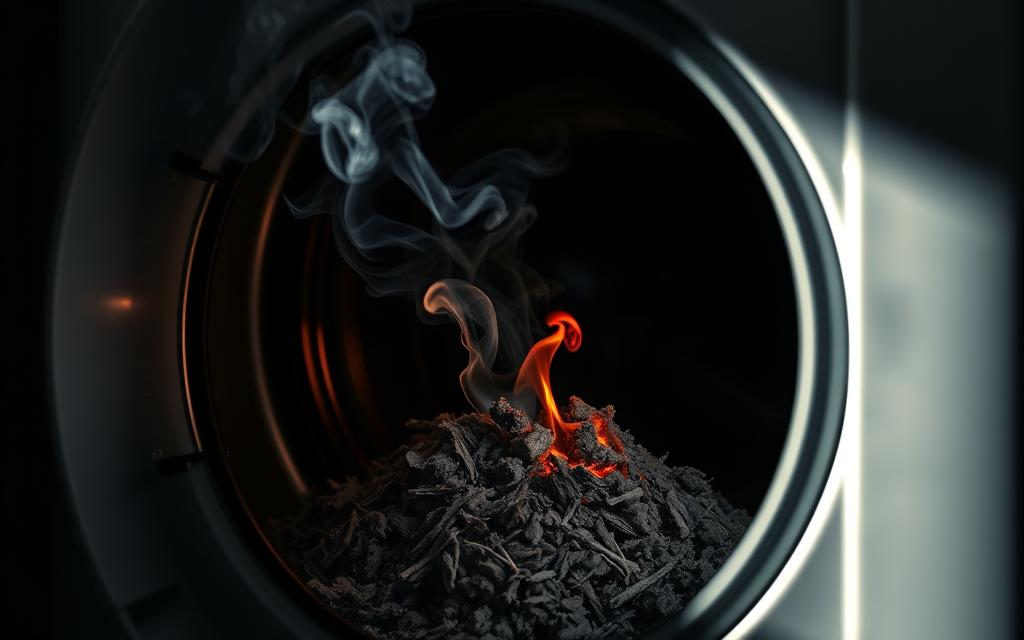
Once you’ve shut off the power and if there’s no fire, open the windows to air out the area. Wear gloves to safely remove any clothes from the dryer. Look for any signs of burning on them. Also, examine the dryer’s plug, cord, and outlet for melting or discoloration. Do not reconnect the dryer if you discover any damage.
Contacting a Professional Technician
If there’s still a risk, get in touch with a licensed appliance repair expert. They can fix your dryer and figure out what’s wrong. If vent problems are suspected, ask for a certified HVAC specialist. For gas dryer issues, a skilled gas technician is needed. These professionals will examine various parts of your dryer for safety and function.
Before they start repairs, ask them for a cost estimate and a list of parts you might need. Find out if the repair will be covered by the warranty or a service agreement. Also, if you have a gas dryer, request a carbon monoxide inspection. Always get a detailed report of the problem before agreeing to any work.
Avoiding Common DIY Mistakes
Wait for a professional’s go-ahead before using your dryer again. Refrain from using candles, hair dryers, or other heat sources to check the appliance yourself. Steer clear of foil ducting and materials that aren’t approved by UL. Only use metal ducting and foil tape designed specifically for dryer vents.
Avoid quick fixes that don’t solve the underlying issue. If the bad smell continues, there could be a deeper problem that needs expert attention. Always prioritize your dryer’s safety to protect your home and loved ones.
| Immediate Action | Who to Call | Common Risks to Check |
|---|---|---|
| Stop machine, unplug, shut gas valve | Licensed appliance repair technician | Overheated motor, scorched clothes, melted cord |
| Ventilate area if no smoke | Certified HVAC pro for vents | Clogged vent, lint buildup, reduced airflow |
| Remove clothes with gloves; inspect | Qualified gas technician or plumber | Gas leaks, faulty ignition, carbon monoxide |
| Do not re-plug if outlet is damaged | Electrician for outlet or wiring issues | Outlet discoloration, melted plug, wiring faults |
| Document damage and request estimates | Manufacturer service if under warranty | Failed safety switches, worn belts, element failure |
Finding the perfect dryer involves looking at performance, safety, and cost over time. Start by making a list of features you can’t live without. Consider where it’ll be in your laundry room. Think about matching its size with your family’s needs and making sure it’s easy to reach for cleaning.
Search for models with auto-dry sensors which stop when clothes are dry. Thermal cutoffs and lint sensors alert you to blocked airflow, lowering overheating risks.
Opt for dryers with metal drums and cabinets that resist flames. Easy-to-reach lint compartments and panels help in quick cleaning, making your dryer safer and reducing fire hazards.
Make sure the dryer has a UL listing and automatic shutoffs. Choosing designs with straightforward ducting helps avoid buildup and makes upkeep easier, a key in finding durable dryers.
ENERGY STAR certified heat pump dryers consume less power and usually work at cooler temperatures. This makes them more energy efficient and puts less strain on components.
Steam features and heat pump tech are softer on clothes and can reduce drying times. Always pair these with correct venting and proper loads. Weigh initial costs against long-term energy savings to find the best investment.
Well-known U.S. brands include Whirlpool, Maytag, LG, Samsung, GE Appliances, and Bosch. They provide models with key safety features, strong warranties, and broad service networks.
Look at Consumer Reports and read through manuals for warranty and service info. Make sure parts and repairs are easy to get locally, keeping your dryer up and running smoothly.
When your dryer isn’t working right, stay calm and tackle it step by step. Use basic steps to find the problem before calling for repairs. Note any error codes, strange smells, sounds, and how long it takes to dry clothes. This info helps the technician from Whirlpool, Samsung, LG, or GE fix it faster.
Error codes help identify dryer problems. Whirlpool might signal airflow issues, while Samsung could point to sensor troubles. LG may show motor problems, and GE might highlight control board issues. If you see codes about ventilation or overheating, check your vents and sensors.
For code meanings, check the manual or the company’s website. Keep notes of any codes, your model, and what went wrong before you call for help. This makes repair visits quicker and diagnosis easier.
If clothes are taking too long to dry, clean the lint filter and check the outside vent. Often, a clear vent and clean filter solve the issue.
If there’s no smell of burning or visible damage, try resetting the dryer. Unplugging it or flipping the circuit breaker can fix small electronic problems.
Make sure vent hoses aren’t twisted and replace any damaged ducts with sturdy metal ones to improve airflow. If it’s safe and you feel able, replace old belts or rollers. If not, it’s time to call the pros.
If you smell something burning, see smoke, or notice electrical sparks, get help right away. These are serious issues that only certified experts should handle.
Big repairs like fixing heating elements, thermostats, or motors are best left to skilled technicians. This protects your warranty and ensures safety. For big vent issues, roof-vent troubles, or gas leaks, call HVAC or plumbing experts.
| Symptom | Possible Cause | DIY Step | When to Call a Pro |
|---|---|---|---|
| Long drying cycles | Clogged vent, dirty lint filter, low airflow | Clean filter, check exterior vent, replace foil duct | If problem persists after cleaning |
| Display shows error code | Airflow sensor, temperature sensor, motor fault | Consult manual, log code, reset power if safe | If code returns or unit smells hot |
| Burning smell in dryer | Overheating, trapped lint, electrical fault | Stop use, check lint trap and vent for buildup | Any persistent burning smell or smoke |
| Strange noises | Worn rollers, damaged belt, motor issues | Inspect drum movement, tighten panels, consult manual | If noise continues or parts seem damaged |
Picking a dryer with approved safety ratings can reduce the risk of fires. Look for well-known labels and specifications before buying. It’s also crucial to read the installation guide to ensure everything fits your home’s setup.
Underwriters Laboratories checks appliances for safety against electrical fires. A UL, ETL, or CSA certification means the dryer passed these tests. Always look for these marks on the dryer’s back panel or manual, or check online before buying.
The certification focuses on the dryer’s construction and testing. However, it doesn’t include installation errors or bad upkeep. To prevent problems, follow the instructions and maintenance schedules from the manufacturer.
Safe appliances come with features to lower risks. Features like thermal fuses and sensors for the lint trap help prevent overheating. Having clear vents and using the right materials also improves air flow.
Brands like Whirlpool and GE Appliances have machines with helpful alerts. These can alert owners to issues early on. This helps avoid serious problems.
Look up safety tests and user feedback to research brands. Sites like Consumer Reports and the CPSC have info on recalls. Reviews and common issues can be found on retailer sites like Lowe’s or Best Buy.
Check ENERGY STAR and local rebates to learn about efficient, safe dryers. Remember to note down safety ratings and marks when looking at different models.
| What to Check | Why It Matters | Where to Find It |
|---|---|---|
| UL certification / ETL / CSA | Proves model passed electrical and fire safety tests | Appliance label, manual, product spec sheet |
| Built-in safety features | Prevents overheating and limits lint buildup | Manufacturer specifications, feature list |
| Diagnostic alerts | Flags maintenance needs before failure | Product demos, retailer Q&A, user reviews |
| Recall history | Shows past safety problems and fixes | CPSC database, manufacturer recall notices |
| Energy and rebate listings | Indicates efficiency and additional inspection | ENERGY STAR, local utility programs |
Keeping your dryer safe is easy with small steps. Using your dryer right and cleaning it often lowers risks and keeps it running smoothly. Follow these tips to avoid dangers and make your dryer last longer.
Don’t stuff the dryer too full. Stick to the max load size in the manual to let clothes move and air flow well. Putting in too much stuff increases heat and can damage parts.
Don’t dry clothes with flammable stains like gasoline or a lot of cooking oil unless they’re properly cleaned first. Items with these stains should air-dry to reduce fire risks.
Be careful with fabric softeners and clean off any leftover residue. Also, keep stuff that can catch fire away from the laundry area, like papers, baskets, and cleaners.
Always clean the lint filter after you dry clothes. Lint can block air and start fires. Every month, check the drum and seals for any trapped lint or fibers.
Look at the exterior vent every three to six months and check if air is flowing right when the dryer is on. Clogged vents can make the dryer too hot.
Have an expert check the dryer’s electrical parts, gas lines if you have them, and clean the vents deeply once a year. If something seems off, like a strange smell or less effectiveness, call for help immediately.
A simple checklist can help you keep up with dryer upkeep and prevent fires. Write down each cleaning and service visit. Also, jot down any fixes and the repair person’s name for the future.
| Item | Action | Frequency |
|---|---|---|
| Lint filter | Remove lint and wipe screen | After each load |
| Exterior vent flap | Inspect and remove debris | Monthly |
| Vent airflow | Run dryer and measure exhaust flow | Every 3–6 months |
| Deep vent cleaning | Professional cleaning of ductwork | Annually |
| Electrical and gas check | Inspect cords, plugs, gas connections | Annually or after issues |
| Smoke and CO alarms | Install and test devices near laundry | Test monthly |
| Area clearance | Keep space around dryer free of combustibles | Ongoing |
| Maintenance log | Record dates, services, and notes | Ongoing |
To stop dryer fires, stick to these maintenance steps. Quick checks, cleaning often, and using a clear checklist will keep your home and family safe.
A burning smell in a dryer can mean lots of issues like lint build-up or a stuck object. If you smell something burning, immediately stop the dryer, unplug it, and open windows to air out the area. Inspect it from a distance for safety. If the smell stays, you see smoke or wiring issues, call a pro right away to avoid fires.
Following routine maintenance tips helps keep your dryer safe and working right. Clean out lint after every use, have vents cleaned yearly, and use strong metal vents. Also, if your dryer acts strange or shows errors, get it checked. Keeping track of repairs and having cleaning tools ready makes maintenance easier.
Don’t ignore burning smells, weird noises, or signs of electrical problems. These could be warning you to get emergency help. Also, choosing dryers that are UL-certified and meet ENERGY STAR standards is smart. And always follow what the manufacturer says to keep your dryer safe.
Regular maintenance of your dryer doesn’t just prevent fires; it also saves energy and extends the machine’s lifespan. Refer to the quick checklist and guide here for keeping your dryer safe. Always be proactive and act immediately if you notice anything odd.