Our Location
1250 Beacon Street
Brookline, MA 02446
Struggling with a washer not draining water? Learn tips to unclog filters, pumps, and hoses to get your machine running smoothly again.
Did you know about 20% of washing machine issues are due to drainage problems? If your washer isn’t draining, you’re in good company. Many people face the same issue, leading to delays and more work.
Understanding why the washer won’t drain is crucial. Often, it’s because of clogs in the filter, pump, or hose. In this article, we’ll show you how to find and fix these problems. By following our tips, you can make sure your washer works well. You’ll also stop small problems from getting worse and help your machine last longer.
Knowing why a washer won’t drain is key to fixing it. Several issues can make this problem arise. It’s important to pinpoint the right one to fix it fast.
Often, a clogged drain filter is the culprit. Stuff like lint and small items block water flow. This leads to water staying in the washer. Cleaning the filter often helps avoid these clogs.
A blocked drain hose is another usual suspect. Kinks or built-up stuff can slow down water. This makes the washer drain poorly, messing with laundry time. Checking the hose well can reveal and fix blockages.
A bad pump can also cause trouble. If it’s noisy, it might not be working right. Without a good pump, water stays in the washer. Fixing the pump can get your washer back to normal.
Is your washer not draining water? Starting to find out why is key. Start by looking at your model’s error codes. Most washers have a digital screen that hints at the issue. The manual has code details, guiding your next steps.
Error codes can tell you why your washer isn’t draining. Look for blinking lights or display messages. They might point to pump or drain problems. These codes help you fix specific problems.
Listen for weird sounds when your washer doesn’t drain. Grinding, rattling, or humming noises mean something might block the pump or mess with the drum. Catching these sounds early helps avoid more damage and makes fixing easier.
Try a manual drain test to figure out the problem. Unhook the drain hose and see if water runs out smoothly. This shows if the hose is the issue or if it’s something inside the washer’s drain system.
When your washer won’t drain, the right tools make repairs easier. Being prepared helps avoid delays. Gather these essential tools for fixing your washer.
A reliable screwdriver is key for getting inside your washer. It lets you take off panels to check things like the drain filter and pump. This is crucial for figuring out why your washer isn’t draining.
Have towels and buckets close by before you start repairs. You might find leftover water when fixing your washer. These items help you deal with spills, keeping your space tidy and safe from water damage.
Worn-out or damaged parts can be the trouble with your washer. Keep spare parts like hoses or filters on hand. This speeds up your repair work. Having these parts ready saves time and gets your washer working again.
A clogged washer drain usually starts with the drain filter. If your washer isn’t draining right, it’s often because of this. Following these steps will get your washing machine working well again.
The drain filter is typically at the washer’s base, behind a small door. First, unplug the washer for safety. It’s important to know where this filter is to fix any drainage issues.
Open the door and gently take out the filter. You might see lint or debris clogging it. Rinse it under water to clear the buildup. A clean filter helps fight clogs and makes your washer work better.
Look for damage like cracks while cleaning it. If the filter is damaged, you should replace it. A broken filter can lead to more problems, keeping your washer from draining right.
If your washer isn’t draining right, the drain hose could be the issue. Checking this part is key. Look for kinks, bends, or blocks that stop water from flowing. Fixing the hose can sort out many draining problems.
Start by looking over the drain hose. Kinks or sharp bends block the water. If you find any, straighten them carefully. This might fix the draining issue right away.
Then, take off the hose from the washer and drain. Clean inside with a flexible brush to get rid of debris. Even small clogs can cause big problems. Wash the hose well before putting it back to ensure water flows freely.
Last, make sure the hose connects tight at both ends. It should attach firmly to the washer and drainage. Check and tighten clamps or connectors to avoid leaks. Secure connections keep the drainage working right.
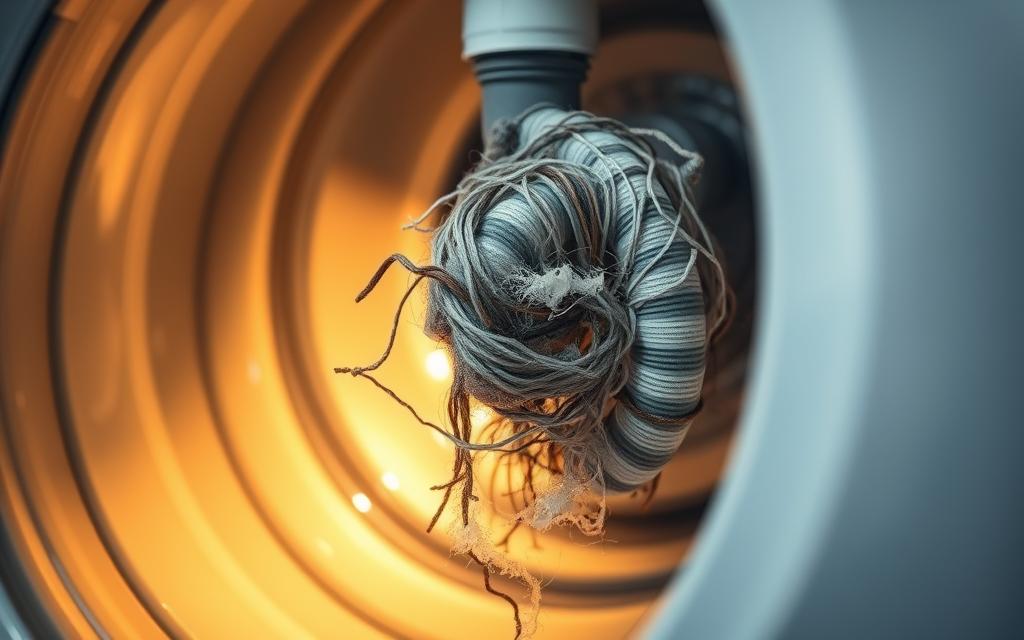
The washer pump is key for good drainage. If there’s a problem, your washer might not drain right. First, check the pump for blockages. By taking off the pump cover, you get to the filter screen where junk usually builds up.
First, look at the pump cover for blockage signs. If the filter screen is filled up, water can’t pass through well. This causes issues. Remove any junk to keep things running smoothly.
Odd noises from the washer could mean the pump is failing. Test by checking the pump’s electrical connection to ensure it’s all good. Watch to see if the pump moves easily, without any trouble.
If the pump is badly damaged, you might need a new one. Think about getting a technician to help out. They can safely swap the pump, making your washer run well again.
To keep your washing machine in top shape and solve issues like it not draining water, do regular check-ups. Simple steps can hugely lower the risk of problems. They make fixing issues easier if they happen.
Clean the drain filter every month to stop lint and debris from building up. A clean filter means water drains well, making clogs less likely. Always unplug the washer before any maintenance for your safety.
Every six months, check the drain hoses for any damage. Look out for cracks, kinks, or blockages that might cause issues. Keeping hoses in good condition can save you from expensive fixes and keep your laundry routine smooth.
It’s key to use the amount of detergent the maker suggests to avoid too many suds. Suds can block the drainage and stop the machine from draining right. Choose good detergents that match your washer’s type for the best effect.
| Maintenance Tips | Frequency | Purpose |
|---|---|---|
| Clean Drain Filter | Monthly | Prevent clogs and optimize drainage |
| Inspect Drain Hoses | Every Six Months | Check for wear and prevent leaks |
| Use Recommended Detergent | Every Wash | Avoid excessive suds and clogs |
Knowing when to call for help can save you time and avoid frustration. If your washer won’t drain and you’ve tried fixing it without luck, it’s serious. Weird noises from the pump could mean it’s broken. When DIY fixes don’t work, it’s time to get a pro involved.
Think about the cost before calling a tech. Repair prices vary based on the problem’s complexity. Spending upfront might save you money by keeping your washer working longer.
Picking a good technician is crucial. Look up reviews, ask people you know, and check if the tech is certified. A careful choice ensures top service for washer issues.
The way a washer drains is key to its function. Learning about this helps pinpoint problems, like when it doesn’t drain. The pump moves water through the hose, with gravity helping it along.
At the end of a wash, the pump turns on to push out water. It travels through the hose, falling into the home’s drains. If something blocks the water, draining stops and frustration starts.
Gravity plays a big role in draining. The hose needs to be placed right so water can leave easily. If not, the washer struggles to drain, pointing to where the problem might lie.
Many things can stop a washer from draining. Blocked hoses, broken pumps, or wrong hose setup are usual suspects. Also, home plumbing problems, like clogs, can mess with draining.
Fixing a washer that won’t drain can lead to a tough choice. Should you fix it yourself or call in a pro? Doing it yourself can save money and feel rewarding. Especially for easy issues like clearing blocked filters or hoses, many find it’s not too hard.
Yet, DIY repairs carry risks. If you mess up, you might cause more problems or even risk electrical issues. That minor annoyance could become a major expense. Think about what you’re good at before you start, especially if it looks complex.
Sometimes, calling an expert is the smarter move. If you’re unsure or the washer needs big repairs, get professional help. Balancing the benefits of DIY with the risks helps you decide how to get your washer running right again.