Our Location
1250 Beacon Street
Brookline, MA 02446
Discover how smart refrigerators compare to traditional models and learn which one can bring real savings to your home. Make an informed choice today!
Are you looking for a new fridge and wondering if a smart model is worth it? This article will help you compare smart refrigerators to traditional ones. We’ll figure out which one saves you more money in the long run.
Smart refrigerators might cost more at first. But they use less energy, help you waste less food, and save you time. Traditional fridges are often cheaper and easier to maintain. The big question is: does the extra cost of smart fridges pay off with energy savings, fewer spoiled foods, rebates, and convenience?
This guide is for U.S. homeowners and renters looking to replace their fridge or buy a new one. We’ll compare smart refrigerators based on price, energy use, annual energy cost, maintenance, lifespan, and how much food they save.
We’ll also talk about rebates and incentives, and the value of convenience and time savings. The article will explain terms, compare features and costs, look at brands and trends, calculate savings, and give you a checklist to choose the best smart refrigerator for you.
Refrigerators have changed from simple cold boxes to connected kitchen hubs. As smart home tech grows, they become central devices that talk to other appliances and apps. This change makes smart fridge technology appealing to those who want control, convenience, and ways to reduce food waste.
What is a smart refrigerator?
A smart refrigerator is an appliance that adds connectivity to its cooling functions. Brands like Samsung, LG, and GE now include Wi‑Fi, Bluetooth, internal cameras, digital displays, and apps. They use sensors and AI to track inventory, suggest recipes, and check for issues.
Typical smart fridge features
Smart fridges often have remote temperature control, energy usage monitoring, and alerts for open doors or temperature changes. They also have internal cameras you can view from your phone. Features like barcode scanning, expiration tracking, recipe suggestions, and voice assistant integration are becoming more common.
Overview of traditional refrigerators
Traditional refrigerators focus on mechanical performance, insulation, and reliable cooling without cloud connectivity. Brands like Whirlpool, Frigidaire, and GE offer a wide range of models. These include basic top-freezer models and high-end French-door units that remain non-smart.
When comparing smart vs. traditional, think about more than just novelty. Consider how features affect your daily routines, energy use, and long-term value. A detailed comparison helps you find the right fridge for your lifestyle and budget.
Smart fridges have new tech and tools that change how we store food. They have special compressors and motors that save energy. You’ll also find touchscreens, cameras, and always-on connections.
Look for Energy Star ratings and kWh/year figures when comparing models. You can estimate your yearly energy cost by multiplying kWh/year by about $0.16 per kWh. Keep in mind, energy rates vary by state.
A modern Energy Star top-freezer fridge uses about 350–450 kWh/year. Smart French-door models use 400–700+ kWh/year, depending on size and features.
Features like optimized defrost cycles and load-sensing compressors can save energy. But, screens, cameras, and always-on connections use more power when not in use.
Connectivity lets you control your fridge from your phone and sync with voice assistants. You can link it to platforms like Samsung SmartThings or LG ThinQ. This can reduce service visits with remote diagnostics and updates.
Privacy is important with cloud services and internal cameras. Check the manufacturer’s privacy settings and turn off features you don’t need to limit data sharing.
Many smart fridges have inventory tracking and barcode scanning. These features log items and expiration dates to reduce waste. Internal cameras help you see what’s inside while shopping.
Some models suggest recipes based on what you have and warn you when items expire. But, barcode and expiration tracking isn’t perfect. Many people still manage their inventory manually or with third-party apps.
| Feature Area | What to Expect | Real-World Impact |
|---|---|---|
| Energy Systems | Adaptive compressors, variable-speed motors, optimized defrost | Lower run-time; possible higher standby use from electronics |
| Energy Ratings | Energy Star label, kWh/year figures | Use kWh/year × $0.16 to estimate annual cost; compare models directly |
| Connectivity | App control, voice assistant support, SmartThings, ThinQ | Remote control, fewer service calls via diagnostics and updates |
| Privacy & Security | Cameras, cloud backups, account linking | Review privacy policies; disable unwanted features to protect data |
| Food Management | Inventory tracking, barcode scanning, internal cameras | Reduce waste, avoid duplicates, but expect imperfect automation |
| Smart Features Value | Recipe suggestions, expiration alerts, predictive maintenance | Convenience and potential savings; effectiveness varies by model |
Thinking about a smart refrigerator? Weigh the pros and cons to see if it’s right for you. This section highlights the benefits and drawbacks. You’ll learn how smart fridges compare to traditional ones and what features are most important for your home.
Smart fridges from Samsung, LG, GE, and Whirlpool save energy. They control temperature precisely and diagnose issues. This means lower bills since the compressor only runs when needed.
Internal cameras and tools help you keep track of food. You’ll get alerts for expiring items and can plan meals better. This reduces waste and makes shopping easier.
Control your fridge from your phone or with voice commands. This includes adjusting settings with Alexa and Google Assistant. Family features like notes and calendars keep everyone connected.
These fridges also offer predictive maintenance and remote diagnostics. This means early alerts for repairs, less downtime, and possibly lower service costs.
Large touchscreens add convenience. You can view recipes, stream music, and organize tasks without leaving the kitchen.
Smart fridges often cost more than basic models. If you’re watching your budget, a traditional fridge might be cheaper.
Displays, cameras, and connectivity can use more power. Check energy ratings and reviews to understand real-world usage.
Cameras and cloud features raise privacy and security concerns. Look into the reputation of brands like Samsung and LG to ensure your data is safe.
Software support can end. Features that rely on cloud services might stop working if a manufacturer stops supporting them.
Integrated electronics can make repairs more complex and expensive. You might face higher service costs for parts not found in traditional fridges.
For more insight, read smart refrigerator reviews and lists of top models. This will help you compare and choose the right balance of features and cost for your home.
Choosing between a smart refrigerator and a traditional one depends on cost and savings. Here’s a detailed comparison to guide you.
Initial Costs: Buying a Refrigerator
Basic traditional top-freezer refrigerators cost $400–$900. Midrange models, like French-door or side-by-side, are $900–$1,800.
Smart-capable refrigerators start at $1,200 and can go up to $2,500. High-end models from Samsung Family Hub or LG InstaView cost over $2,500, sometimes reaching $4,000 or more.
When comparing smart refrigerators, remember to add installation and delivery costs. Also, consider waterline hookup fees for ice and water dispensers. Optional extended warranties add to the cost. Smart features often come with higher trim levels, increasing the price.
Long-Term Savings on Energy Bills
To estimate yearly savings, compare the kWh/year difference between smart and traditional fridges. Then, multiply by your local electricity rate. A smart fridge saving 5–15% might save $10–$60 per year, based on local rates.
Energy savings alone might not quickly pay off the higher cost. Return-on-investment can take many years, unless you get rebates or choose an extremely efficient model. Compare prices with expected yearly savings to determine payback time.
Other savings can also be important. Smart diagnostics may reduce service calls. Better inventory and expiration alerts can cut food waste, saving hundreds of dollars annually. A well-supported smart model might also hold higher resale value, assuming software support continues.
Quick Comparison Table
| Cost Element | Traditional (Top Ranges) | Smart (Typical Ranges) |
|---|---|---|
| Purchase Price | $400–$1,800 | $1,200–$4,000+ |
| Installation & Delivery | $50–$250 | $50–$400 |
| Annual Energy Savings | Baseline | $10–$60 (5–15% less kWh/year) |
| Additional Long-Term Savings | Limited | Lower food waste, fewer service calls, potential resale premium |
To compare smart refrigerators, use the given price bands and energy savings example. This helps you calculate your return on investment. It’s essential to weigh the costs against yearly savings and other benefits.
You want a fridge that lasts and stays reliable. Its lifespan depends on build quality, how you use it, and how you care for it. Smart features add convenience but can change maintenance needs and repair paths.
Most modern refrigerators last 10–17 years. Premium models from Samsung, LG, and Whirlpool can last longer with proper care.
Smart-specific parts like touchscreens and Wi‑Fi modules may wear out sooner than the compressor. Firmware updates can help, but manufacturers might stop supporting older models.
Warranties usually last one year. You can get extended warranties or coverage for the compressor for more years. Register your appliance after purchase to keep warranty records handy.
Routine care keeps repair bills down. Clean condenser coils, check door seals, change water filters, and defrost when needed. These tasks are simple and reduce strain on the compressor.
Smart models need occasional firmware and app updates. Updates are usually free, but you must install them and keep apps active on your phone.
Repairs can be expensive. Compressor or sealed-system fixes often cost $400–$1,200. Replacing a broken display or camera can be costly; some manufacturers require full door-panel replacements.
Consider registering the unit, saving receipts, and evaluating extended service plans for high-end smart refrigerator brands. This keeps your repair options clear if a component fails.
Tip: Read smart refrigerator reviews and perform a smart refrigerators comparison before buying. This helps match expected lifespan and maintenance needs to your budget and usage.
Smart refrigerators add a new level to your kitchen. They come with apps, touchscreens, and voice assistants. You can check what’s inside, adjust the temperature, and manage your grocery list from anywhere. A smart refrigerators comparison can help you find the right one for you.
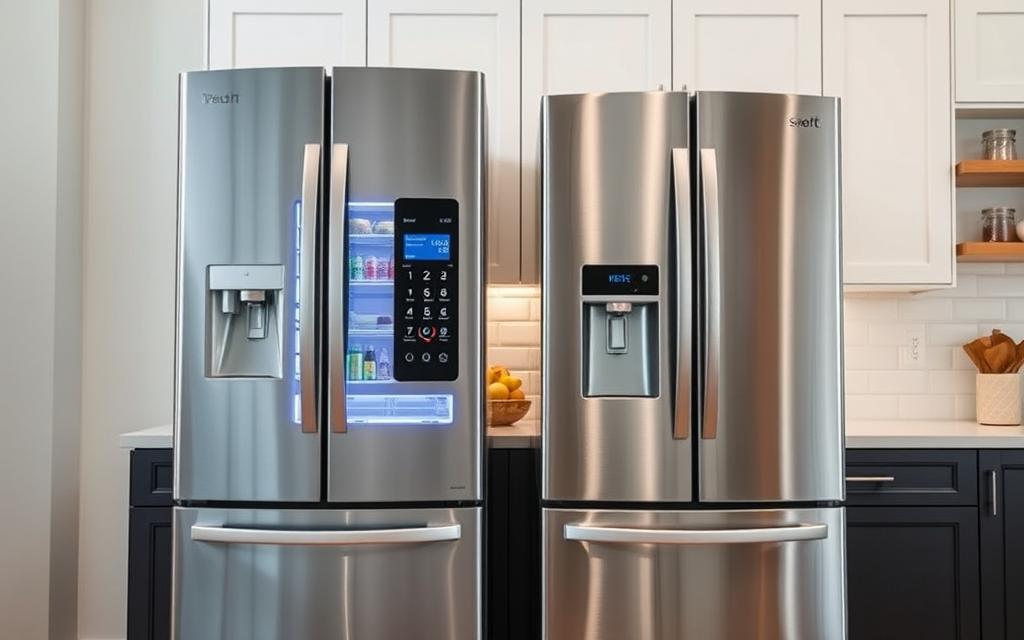
You can control Samsung, LG, or GE fridges from your phone. Many find the touchscreen easy to use for calendars and recipes. But, setting up accounts and connecting to Wi-Fi can take some time.
App reliability is key. Smart refrigerator reviews can tell you about common issues and how often updates are released. When apps work smoothly, you can monitor your fridge and adjust temperatures easily.
Voice control through Alexa or Google Assistant makes things hands-free. Large displays can act as message boards for your family. And, built-in cameras let you check what’s inside before you go shopping.
Alerts for open doors, vacation modes, and grocery-list syncing can reduce stress. Busy families or tech-savvy users often find the most value. But, single-person households or those who prefer simple appliances might prefer a traditional model.
When choosing, look at the features of top smart fridges and read smart refrigerator reviews. This way, you can find the best fit for your lifestyle.
Choosing the right fridge is more than just a logo. You need reliable performance, energy efficiency, and features that fit your lifestyle. Here’s a quick guide to help you compare smart refrigerators before you buy.
Samsung Family Hub is a top choice. It has a large touchscreen, internal cameras, and deep SmartThings integration. It’s great for those who value media and family organization.
LG’s InstaView ThinQ line has a glass panel for quick checks without opening the door. The ThinQ app offers smart diagnostics and energy monitoring. It’s perfect for tech enthusiasts.
GE Profile Smart models are known for their connectivity through Wi‑Fi Connect. They work well with Amazon Alexa and Google Assistant. These fridges also offer useful diagnostics and alerts.
Whirlpool’s smart models focus on reliability with easy app integration. They’re ideal for those who want remote control and dependable performance without too many features.
When comparing brands, look at energy ratings, customer reviews, and support policies. This helps you understand real costs and service, not just marketing claims.
Whirlpool is a top choice for its wide availability and strong service network. They offer various sizes and practical features for different budgets.
Frigidaire is a budget-friendly option with dependable basic units. It’s great for those who need a simple, effective fridge without smart features.
Maytag focuses on durability and practical features. Their models are perfect for households that value longevity and straightforward operation.
KitchenAid and Bosch target high-end buyers. They offer strong build quality and refined performance. Their traditional lines may lack advanced connectivity but deliver premium materials and finish.
When buying, compare model specs, Energy Star ratings, and local service coverage. A detailed comparison of features, warranty, and energy use will help you find the best fridge for your home.
Kitchen appliances are changing fast with smart fridge trends. New models offer practical upgrades that save money and make life easier. This short overview highlights what to watch and how these changes affect your daily routine.
Grid-aware settings will let your refrigerator adjust cooling cycles based on energy prices. This smart fridge technology can lower your bills by working with local utility signals.
Inventory recognition is getting better with improved image recognition, barcode scanning, and RFID. These smart refrigerator features automate shopping lists and cut down on wasted food by tracking what you have.
Modular hardware and standardized software ecosystems will make your fridge last longer. With easier upgrades, you won’t need a full replacement to get the latest features.
Expect tighter interoperability between appliances. Smart ovens, grocery delivery services, and voice assistants will work together. Your fridge will become a hub in a connected kitchen.
AI-driven food recognition and spoilage prediction will tell you how long food will last and suggest recipes. This smart fridge technology aims to reduce waste and save you money.
Predictive maintenance uses machine learning to forecast faults before they happen. Early alerts can prevent long repairs and preserve warranty coverage, improving total ownership cost.
Personalized energy optimization studies your door openings and stocking habits. The fridge then adapts its cooling patterns to balance energy use with food safety.
Privacy and cloud reliance remain concerns. You should weigh how much data you share and whether AI features produce measurable savings in your household when doing a smart refrigerators comparison.
Choosing between smart and traditional refrigerators involves weighing environmental trade-offs. A smart refrigerators comparison should consider more than just the price. Look at annual energy use, embodied emissions, and end-of-life options.
Traditional refrigerators use about 350–600 kWh per year, depending on size and age. Smart fridges, with their sensors, displays, and wireless radios, use more energy. They can use 10–50 kWh more per year just for standby.
Check the EnergyGuide label to compare energy use and costs. Look for Energy Star certification and DOE efficiency tiers when shopping. EnergyGuide labels show yearly energy use and estimated costs based on national averages.
Lifecycle emissions are important. Making smart components and shipping heavier glass-door units increase embodied energy. Consider installation, repairs, and disposal of electronics when assessing total footprint for smart refrigerator prices and long-term impact.
Small changes can cut energy use. Keep the fridge at 37–40°F and the freezer at 0°F. Clean coils twice a year, check door seals, avoid placing the unit next to ovens or sunlight, and steer clear of overfilling to maintain airflow.
Reduce food waste with simple routines. Use first-in/first-out rotation and clear labeling. Smart features can help by tracking expiry dates and sending reminders, but basic storage habits can also make a difference.
Dispose responsibly. Many municipalities and retailers offer appliance recycling and refrigerant recovery. Look for manufacturer take-back or haul-away programs when you replace a unit. Choosing Energy Star models and factoring longevity into smart refrigerators comparison can lower lifetime emissions despite higher upfront smart refrigerator prices.
When you look for a new fridge, you might find ways to save money. Federal, state, and local programs offer tax credits or rebates for energy-efficient appliances. Always check the current federal rules before you buy.
Government Programs Supporting Energy-Efficient Appliances
There are federal initiatives that give tax credits or grants for efficient appliances. States like California and New York have ongoing rebate programs for ENERGY STAR models. For example, California’s energy upgrade programs and New York’s NYSERDA have offered appliance rebates in past cycles.
To get a rebate, you might need to show proof of purchase and the appliance’s serial number. You also need to complete an application within a certain time. Keep your receipts and product information ready. This can help you get a rebate or miss out on it.
Utilizing Utility Company Rebates
Your utility might offer rebates for high-efficiency refrigerators. Big providers like Pacific Gas & Electric and Con Edison have programs that reward customers. Local co-ops also have seasonal or income-based offers.
Using time-of-use plans or demand response can lower your costs. Smart refrigerators that support these features are better for your wallet. This is important when comparing different models.
Here’s how to claim rebates from utilities and governments:
Below is a comparison to help you choose the right smart refrigerator. This will guide you when picking specific brands.
| Program Type | Who Offers It | Typical Requirements | How It Affects Price |
|---|---|---|---|
| Federal Incentives | U.S. government tax credits | ENERGY STAR models, proof of purchase, tax filing | Reduces net cost after filing; varies by year |
| State Rebates | State energy offices (example: NYSERDA, California programs) | Specific model lists, retailer participation, application window | Direct rebates at purchase or mail‑in credit; lowers smart refrigerator prices |
| Utility Rebates | Electric companies (example: PG&E, Con Edison, local co‑ops) | Enrollment in demand response or time‑of‑use plans, qualifying model | Instant rebate or bill credit; can cut operating costs over time |
| Retailer Promotions | Major stores and brand outlets (Samsung, LG, Whirlpool) | Purchase during promotion, trade‑in may be required | Temporary discounts that lower smart refrigerator prices at checkout |
Before buying a smart fridge, think about what you need. Consider your family size, cooking habits, and if you want cameras or a touchscreen. Also, measure your space to ensure easy installation.
Energy use is key for saving money over time. Look for EnergyGuide labels and Energy Star ratings. Compare energy use and costs to find the best deal. Also, check warranties and service options from brands like Samsung and LG.
Size and capacity are crucial. Use guidelines for cubic feet per person and check measurements for a perfect fit. If your kitchen is narrow, choose models that fit better.
Smart features and software are important. Ask about updates, subscriptions, and cloud service support. Make sure you understand how your data will be handled.
Repairability and parts are also key. Find out if parts like cameras are sold separately and what repairs cost. A good service network can save you money and time.
Read smart fridge reviews to see how they perform in real life. Look for feedback on durability, updates, and feature reliability. Balance energy savings with repair risks and software support.
Make a list of your top choices based on size, budget, and energy use. Try out the touchscreen and app in-store or through videos. Also, read comments on maintenance and updates before you decide.
Choosing between smart refrigerators and traditional models depends on what matters most to you. Smart refrigerators offer convenience, better food management, and advanced diagnostics. These features can help reduce waste and make family routines easier. But, they cost more upfront and come with software updates and privacy concerns.
Traditional refrigerators are often cheaper to buy, simpler, and more reliable over time. If you’re looking for the lowest initial cost, fewer software issues, and easy maintenance, a classic model might be best for your home.
When comparing smart refrigerators to traditional ones, consider more than just energy bills. While energy savings might not quickly offset the higher purchase price, other benefits can make a difference. These include less food waste, timely maintenance alerts, rebates, and better family coordination.
Use reviews and comparison guides to help choose. Look at EnergyGuide kWh figures and choose Energy Star-rated models. This way, you can find the best fridge for your needs and budget.
Next steps include comparing brands and models, reading recent reviews, checking warranties, and looking for rebates. Balance the features, costs, and your lifestyle to pick the fridge that saves you money and fits your home.
A smart refrigerator connects to the internet and has features like Wi‑Fi and touchscreens. It also has cameras and apps for controlling it remotely. Traditional refrigerators are simpler and don’t connect to the internet. They focus on keeping food cold and are often cheaper.
It depends on the model. Some smart fridges use less energy, but the added electronics can use more power. Check the EnergyGuide label to compare energy use. If it uses less energy, you might save money, but it’s not always enough to cover the higher cost.
Smart refrigerators can cost a lot more. Basic models start at
A smart refrigerator connects to the internet and has features like Wi‑Fi and touchscreens. It also has cameras and apps for controlling it remotely. Traditional refrigerators are simpler and don’t connect to the internet. They focus on keeping food cold and are often cheaper.
It depends on the model. Some smart fridges use less energy, but the added electronics can use more power. Check the EnergyGuide label to compare energy use. If it uses less energy, you might save money, but it’s not always enough to cover the higher cost.
Smart refrigerators can cost a lot more. Basic models start at $1,200, while high-end ones can be over $4,000. You also need to consider installation and extended warranties.
Yes, they can. Features like inventory tracking and expiration alerts help avoid waste. But, how well they work depends on the model and your habits. They can help save money, but it’s not guaranteed.
Yes, they can be. The added electronics can be costly to fix. Routine maintenance is similar, but repairs for smart fridges might be more expensive. Consider extended warranties for high-end models.
Smart fridges have cameras and microphones, which raises privacy concerns. Check the manufacturer’s privacy policy and app permissions. Disable cameras or voice features if you’re concerned. Choose reputable brands with strong security.
Some smart fridges need subscriptions for premium features. Basic features like remote control are often free. Check the model’s features to see what requires a fee.
Smart fridges generally last as long as traditional ones. But, the added electronics might not last as long. Software updates can also be a concern.
Yes, there are rebates for energy-efficient appliances. Check with your state and utility companies for offers. Save receipts and serial numbers when applying.
Brands like Samsung, LG, GE, and Whirlpool are known for their smart features. Compare EnergyGuide ratings and reviews to find the best one for you.
Think about what you want. Smart fridges offer convenience and features, but cost more. Traditional fridges are simpler and cheaper. Compare energy use and check for rebates before deciding.
AI can help with food recognition and energy use. But, it depends on the model and your habits. Consider the benefits and privacy concerns before buying.
Ask about energy use and estimated costs. Check if features require subscriptions. Also, ask about warranty terms and replacement parts. See if the model qualifies for rebates.
Choose Energy Star-certified models and compare EnergyGuide labels. Keep the fridge at the right temperature and clean the coils. Avoid overloading and use smart features to reduce waste. Recycle your old fridge and handle refrigerants properly.
,200, while high-end ones can be over ,000. You also need to consider installation and extended warranties.
Yes, they can. Features like inventory tracking and expiration alerts help avoid waste. But, how well they work depends on the model and your habits. They can help save money, but it’s not guaranteed.
Yes, they can be. The added electronics can be costly to fix. Routine maintenance is similar, but repairs for smart fridges might be more expensive. Consider extended warranties for high-end models.
Smart fridges have cameras and microphones, which raises privacy concerns. Check the manufacturer’s privacy policy and app permissions. Disable cameras or voice features if you’re concerned. Choose reputable brands with strong security.
Some smart fridges need subscriptions for premium features. Basic features like remote control are often free. Check the model’s features to see what requires a fee.
Smart fridges generally last as long as traditional ones. But, the added electronics might not last as long. Software updates can also be a concern.
Yes, there are rebates for energy-efficient appliances. Check with your state and utility companies for offers. Save receipts and serial numbers when applying.
Brands like Samsung, LG, GE, and Whirlpool are known for their smart features. Compare EnergyGuide ratings and reviews to find the best one for you.
Think about what you want. Smart fridges offer convenience and features, but cost more. Traditional fridges are simpler and cheaper. Compare energy use and check for rebates before deciding.
AI can help with food recognition and energy use. But, it depends on the model and your habits. Consider the benefits and privacy concerns before buying.
Ask about energy use and estimated costs. Check if features require subscriptions. Also, ask about warranty terms and replacement parts. See if the model qualifies for rebates.
Choose Energy Star-certified models and compare EnergyGuide labels. Keep the fridge at the right temperature and clean the coils. Avoid overloading and use smart features to reduce waste. Recycle your old fridge and handle refrigerants properly.