Our Location
1250 Beacon Street
Brookline, MA 02446
Learn the reasons behind AC evaporator freezing and discover practical tips for safely defrosting and preventing future freeze-ups at home.
About 20% of cooling system service calls deal with evaporator freezing. This issue can secretly raise your energy bills. It also risks damaging the compressor if it’s not addressed.
This guide explains why evaporator freezing occurs and how to defrost safely. It also offers steps for fixing frozen AC evaporator coils. Homeowners should know frozen coils harm cooling efficiency, boost energy costs, and might cause water leaks from melting ice.
Remember these key points: frozen coils mean low pressure and temperature, no matter the cause. Always fully thaw the coil before running any checks. To quickly defrost, turn the system off and put the thermostat fan on ON. Never operate the AC with ice still on it.
If you don’t fix evaporator freezing, you might face expensive repairs to the compressor or coils. For older systems, you may even need a replacement. This article guides you through finding causes, safe defrosting, troubleshooting, and prevention. These steps help avoid the usual troubles with frozen AC evaporator issues.
The indoor evaporator is part of the air handler or furnace. It’s where refrigerant evaporates, absorbing heat from air coming back in. Warm air moves over the coil, and the refrigerant inside turns from liquid to vapor. This process pulls heat out, cooling the air before it’s sent out.
The evaporator usually stays above freezing in common AC systems. But, if temperatures fall below 32°F, moisture in the air can freeze on the coil. This ice layer blocks air and reduces heat transfer, causing standard AC evaporator freeze-ups.
The AC evaporator coil is inside and helps take heat out of indoor air. It does this as refrigerant turns into vapor inside it. This coil, along with the expansion device and compressor, keeps pressure and temperature right in the system.
In the cooling cycle, the evaporator pulls heat from the air. Air might enter at 75°F and leave around 55°F, making rooms cooler. The evaporator works with the condenser coil to move heat outside.
A frozen evaporator suggests low pressure and temperature, no matter why it happened. By checking temperature and refrigerant levels, technicians can find out why an evaporator gets too cold, leading to freezing.
A frozen evaporator coil stops the AC from cooling. It also can harm other parts if not fixed. Know the main reasons for AC evaporator freezing. This way, you can spot problems early and fix them before costs go up.
Leaks or not enough refrigerant cut down its flow and drop coil pressure. When the coil gets colder than 32°F, moisture freezes into ice. Only a trained HVAC professional should find and fix leaks. They can also recharge the system to avoid future problems.
When airflow weakens, less heat reaches the coil. This makes the refrigerant too cold. Dirty filters, blocked vents, failing blower motors, and tight ducts cause bad airflow. Clean or replace filters every one to three months. Also, make sure vents are clear to keep air moving and prevent freezing.
Wrong thermostat use or issues can make the system run too long or at wrong temperatures. Setting the thermostat too low on damp days can freeze the evaporator. Use a programmable thermostat at 70–75°F to keep system cycles steady and reduce strain.
Other issues like blocked liquid lines, wrong equipment size, and dirty coils can also freeze the evaporator. These problems either cool down the coil too much or shorten cycles, raising the chance of ice.
To stop your AC evaporator from freezing, manage refrigerant levels, improve airflow, and use the thermostat right. Regular checks, fixing problems quickly, and general maintenance ensure smooth running. They also help avoid sudden breakdowns.
A frozen evaporator is a warning sign. Early detection of AC evaporator freeze helps avoid damage and keeps your home cozy. Watch for changes in airflow, temperature, and noises from the air handler.
When your AC runs but doesn’t cool, it may be freezing up. Warm air from the vents, despite a low thermostat setting, is a sign.
Ice forming on the coil stops heat from moving properly. This makes the AC less efficient and increases energy bills as it tries harder to cool.
Signs of trouble include frost on coils and water around the indoor drain pan. Uneven room temperatures and weak air from vents also hint at freezing.
A frozen coil often makes strange noises. Listen for sounds like gurgling or hissing, which suggest refrigerant problems or blockages.
If you hear dripping sounds, it’s probably melting ice in the drain pan. Clicking or grinding noises might mean the blower motor is overworking due to poor airflow.
Quick cycling and freezing at night could point to thermostat issues needing expert help.
Start by defrosting the coil. A frozen coil messes up your readings and hides real problems. After the coil is defrosted, use a mix of looking closely, checking temperatures, and watching how the system works.
Visual inspection
First, look carefully at the indoor coil and surrounding parts. Search for dirt, debris, frost, or oil on the coil; oil marks could mean there’s a refrigerant leak. Make sure return vents and registers aren’t blocked. Also, look at the refrigerant lines and the outdoor unit for icing or damage.
Temperature checks
Measure the air coming in and going out to find the delta T. Usually, there should be a 15°F to 20°F drop across the coil. Record suction pressure with gauges and compare saturation temperatures with what the manufacturer says. If the filter drier has a 2°F or more temperature drop, there might be a blockage in the liquid line.
System performance monitoring
Check the airflow by making sure the blower works, measuring static pressure, and making sure the ducts are balanced. Make sure the refrigerant level is right and look for leaks if the levels are off. Test the metering device to make sure it’s working. A consistent airflow also depends on the blower motor speed and fan working well.
Use this list to figure out what’s wrong and to know when you need a pro. If easy fixes like changing filters, unblocking vents, and adjusting fans don’t fix the freezes, call a certified HVAC pro for more in-depth refrigerant tests and measurements.
| Diagnostic Step | What to Check | Red Flags |
|---|---|---|
| Visual inspection | Indoor coil cleanliness, oil residue, vent blockages, outdoor unit icing | Heavy frost, oil stains, blocked returns |
| Temperature checks | Return vs supply temps, delta T, suction pressure, SST, filter drier ΔT | Delta T 2°F across filter drier |
| Airflow & performance | Blower function, static pressure, duct balance, fan speeds | Weak airflow, high static, uneven room temps |
| Refrigerant & metering | Charge level, leak signs, TXV/capillary/fixed orifice operation | Incorrect superheat/subcooling, inability to hold charge |
Ice on an evaporator coil needs careful removal. It’s important to follow safety steps to safely defrost. This will protect both your system and home.
To start, switch the AC unit off by turning the thermostat to Off from Cool. This action stops the compressor, preventing more ice from forming or causing damage.
For heat pumps, avoid using the defrost mode when the indoor coil is frozen. This mode is for the outdoor coil and could worsen indoor issues.
Shift the fan to On instead of Auto to push warm air over the coil and hasten thawing. This is a safe way to defrost without fully running the cooling system.
Make sure the area around the air handler is clear so melted water can go into the condensate pan and out the drain line. Use towels or a shallow container to catch any drips.
Keeping a good airflow helps stop moisture from building up and keeps mold at bay. Leave doors or service panels open to watch the defrosting.
Remember electrical safety is crucial. Don’t attempt electrical repairs unless you’re trained. If you need to get to inside parts, cut the power at the service panel first.
Never try to remove ice from the coil by hitting it. Using tools can damage the coil and cause expensive fixes. Gently thawing with warm air is the best approach.
| Action | Why it Matters | Quick Tip |
|---|---|---|
| Turn off AC unit | Prevents compressor damage and stops more ice from forming | Switch thermostat from Cool to Off immediately |
| Set fan to On | Circulates warm air over the coil to speed safe defrosting | Avoid running full cooling while thawing |
| Clear surrounding area | Allows melting water to drain and reduces moisture risk | Place towels or a container under the unit |
| Shut power before internal work | Reduces risk of shock and accidental damage | Turn off breaker at the service panel |
| Avoid forcing ice | Protects coil from punctures and refrigerant leaks | Use warm air circulation only |
When you see ice build-up on the evaporator, stay calm and act carefully. Focus on safe defrosting methods that keep the coils and wires safe. Always start with the simplest methods before moving to using any tools.
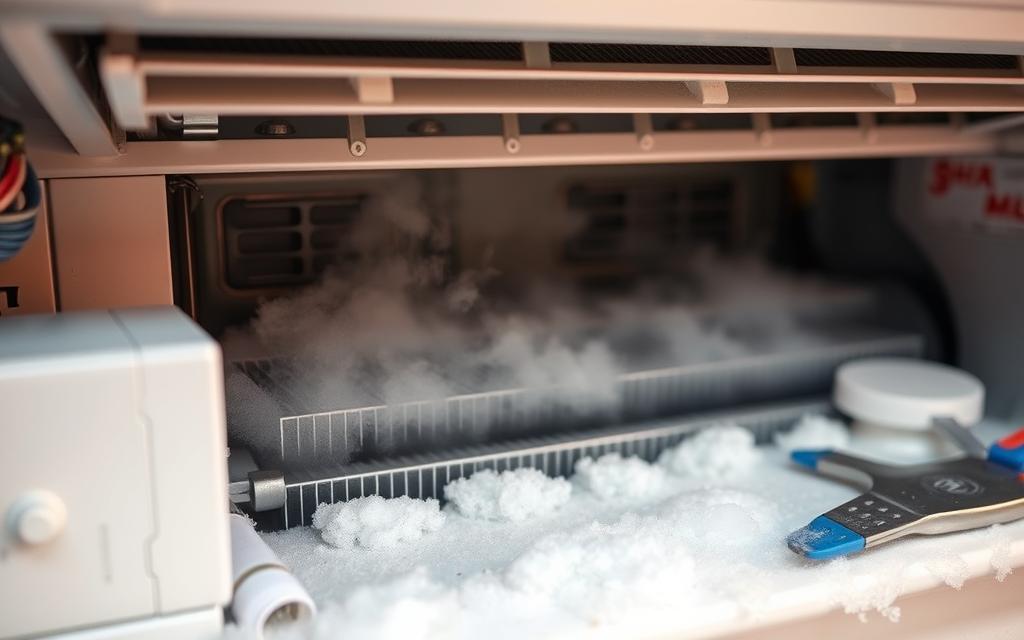
Turn off the power. Then, set the fan to ON so air at room temperature can flow over the coil. This slow method is very reliable for defrosting.
Open any panels you can, as the maker’s guide says, to let air at the ice. Let the ice melt on its own into the drain pan, which might take a few hours.
Make sure the condensate drain is clear as the ice starts melting. A blocked drain can lead to more troubles.
Pointing a household fan towards the coil helps thaw it faster without harm. A fan moves warm air gently and keeps the system safe.
Use a space heater a bit away, or a hair dryer on a low setting for tough spots. Keep heaters far from any plastics and wires to avoid damage or the risk of a fire.
Never use open flames, high-heat tools, or boiling water on the coil. Keeping away from direct heat protects the coil’s parts and lines.
Don’t use sharp tools to remove ice. They can harm the tubing. If ice forms again quickly, turn the unit off and call a pro for help.
After defrosting, either put in a new air filter or clean the old one before you start the unit again. Keep an eye on it to prevent new ice and check the condensate drain works right.
| Technique | How to Use | Safety Notes |
|---|---|---|
| Fan on with system off | Turn thermostat off, set fan to ON to blow room air across coil | Low risk, slow thaw, preserves components |
| Space heater at distance | Place heater several feet away to warm room air around coil | Keep clear of plastics and wiring; never leave unattended |
| Hair dryer on low/medium | Hold about six inches from coil for localized melting | Avoid prolonged heat on one spot; keep steady motion |
| Manual ice removal | Remove covers per manual, let ice melt naturally; do not chip | Chipping risks punctures; follow manufacturer guidance |
| Drain clearing | Inspect and clear condensate line to allow meltwater exit | Prevents water backup and secondary damage |
Simple habits and regular service are key to keeping your evaporator coil from freezing. Follow these tips to reduce ice buildup and keep your AC running well.
It’s a good idea to have your HVAC checked every year or in the spring. Choose a licensed technician from a reliable company, like Trane or Carrier. They’ll clean the coils, check the refrigerant, test blower function, and inspect the system for any minor problems. This keeps small issues from turning into big ones.
Changing air filters every 30-90 days is important. This depends on the filter’s type, your home’s dust level, and if you have pets. HEPA and MERV-rated filters catch more dust but might need checking more often. Fresh filters mean better airflow and less chance of your evaporator freezing.
Seal and insulate your ducts to avoid losing temperature and getting condensation. Make sure nothing blocks the return vents, like furniture or drapes, so air can flow freely. This balanced setup prevents freezing by maintaining steady temperatures.
Use dehumidifiers or adjust your thermostat to control indoor moisture. Too much humidity can make the coil wetter and more likely to freeze. Keep an eye on parts like the blower motor and fan blades for wear. Change out filter driers if the pressure seems off.
Don’t turn your thermostat down too low. Keep the area around return vents clear. Fix any leaks and address odd sounds quickly. Combined with professional maintenance and regular filter changes, these tips form a solid defense against a frozen coil.
| Preventive Step | Action | Benefit |
|---|---|---|
| Routine maintenance | Annual HVAC inspection, coil cleaning, refrigerant check | Early detection of issues that can lead to freezing |
| Regular filter changes | Replace filters every 30–90 days based on use and filter type | Improved airflow, lower risk of evaporator coil freeze |
| Proper insulation | Seal ducts, insulate cold lines, keep vents clear | Stable airflow and temperatures, reduced condensation |
| Humidity control | Use dehumidifiers, adjust thermostat setpoints | Less moisture on coils, slower ice formation |
| Mechanical monitoring | Inspect blower, fan blades, belts; replace worn parts | Consistent airflow and pressure, prevents freeze events |
If your evaporator freezes even after thawing correctly, or you spot oil leaks, hear hissing sounds, or notice extreme pressure or temperature changes, it’s time to seek professional assistance. Using a frozen system can harm the compressor and lower safety indoors during hot spells. It’s smart to get a professional for AC evaporator issues before they turn into major repairs.
Signs that require expert help
HVAC technician expectations
Fixing frozen AC evaporator
Taking good care of your AC’s evaporator can save money and make your home more comfy. Doing regular checks helps stop small problems from getting big. It also helps in keeping your AC from freezing up.
Changing your filter often, getting yearly check-ups, and cleaning coils can prevent freezes. If you notice less air flow, weird noises, or your bills going up, act fast. Spotting these signs early can help you avoid bigger issues.
For the long haul, make sure your system has the right amount of refrigerant and fix leaks right away. Replacing old motors or blocked parts, making sure your AC is the right size, and sealing ducts are key. Having good thermostats and humidity controls also helps.
There are easy things you can do too. Change your filters as needed, keep vents open, don’t set your thermostat too high or low, and get your HVAC checked every year. If you have problems with refrigerant or the machine itself, it’s better to call an expert. This can keep your warranty safe and might save you money in the long run. Doing these things will help prevent your AC from freezing and make it last longer.