Our Location
1250 Beacon Street
Brookline, MA 02446
Discover how energy efficient kitchen appliances can slash your utility bills and promote sustainability in our comprehensive guide to greener living.
About 30% of a home’s kitchen energy in the U.S. comes from refrigerators and cooking. Many people still use old, inefficient appliances that increase bills without them knowing.
This guide will show you how choosing energy-efficient kitchen appliances can help. Options like Energy Star rated appliances, induction cooktops, and smart ovens can lower your electricity bills each month. They also help the planet. The guide includes refrigerators, dishwashers, cooktops, ovens, smart kitchen devices, and small gadgets.
By reading this, you’ll learn how to reduce your monthly electricity and cut energy costs every year. You’ll also make your carbon footprint smaller and extend your appliances’ lives. People living where electricity costs more will save even more money, making energy-saving appliances a wise money and eco-friendly choice.
This guide focuses on Energy Star rated and green kitchen appliances as key for shoppers wanting tips on buying and using efficient models. Smart features and regular care can turn efficient appliances into even bigger savings.
Learning how appliances use energy helps people choose the best ones for their kitchens. This part explains important terms, rating systems, and clears up myths. This lets readers confidently compare energy-saving kitchen appliances.
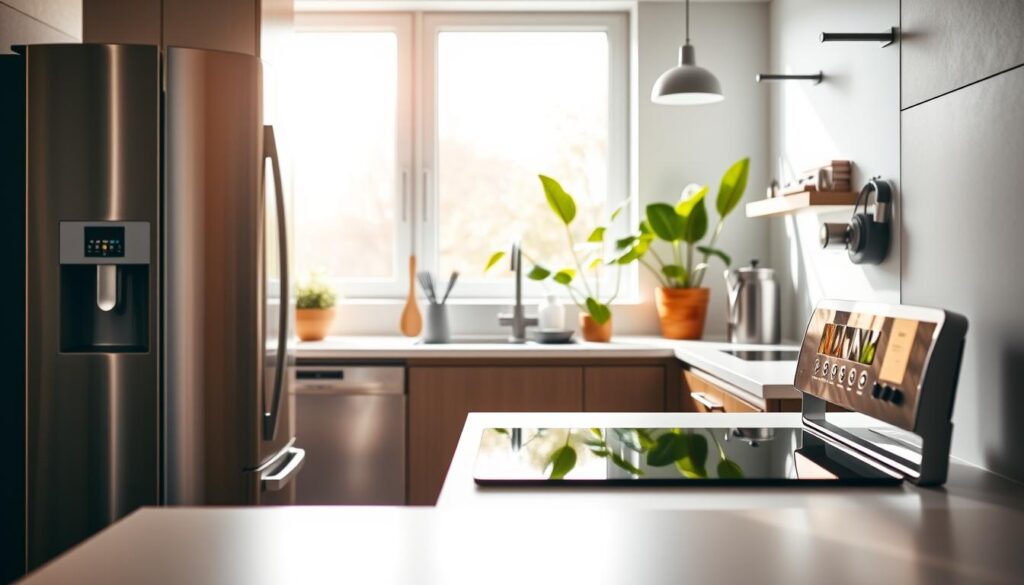
Energy efficiency means an appliance works well—like cooling, washing or cooking—with less electricity. Usage is measured in kilowatt-hours (kWh). The Energy Guide label shows yearly kWh use and cost so you can compare different models easily.
An appliance’s size or high performance doesn’t mean it’s not energy-efficient. A big fridge can be efficient if it uses less energy per cubic foot. Likewise, a machine can perform well and still use little energy.
The ENERGY STAR label shows top-notch efficiency and is backed by the U.S. Environmental Protection Agency. Appliances like refrigerators, dishwashers, and some ovens with this label meet high energy-saving standards.
There are other important labels too. The Department of Energy sets the least efficiency standards. The yellow EnergyGuide label shows how much energy an appliance uses yearly. Using both labels helps buyers compare ENERGY STAR and standard models to choose ones that save energy and money.
Some people think energy-efficient appliances always cost more to buy. Though they can be pricier upfront, savings on bills and special offers often make up the difference over time.
Others believe bigger appliances use more energy. Thanks to better design and insulation, bigger models can be efficient too. Also, some overlook the energy small devices use when not active, but it can add up.
It’s also untrue that features and efficiency can’t mix. Brands like Samsung, Whirlpool, and Bosch have models that are both high-tech and energy-saving. This shows that you don’t have to give up performance for efficiency.
Switching to modern appliances offers big wins for homes. These appliances use less electricity, work better, and help our planet in the long run. Making small changes in the kitchen can lead to big savings and reduce our carbon footprint.
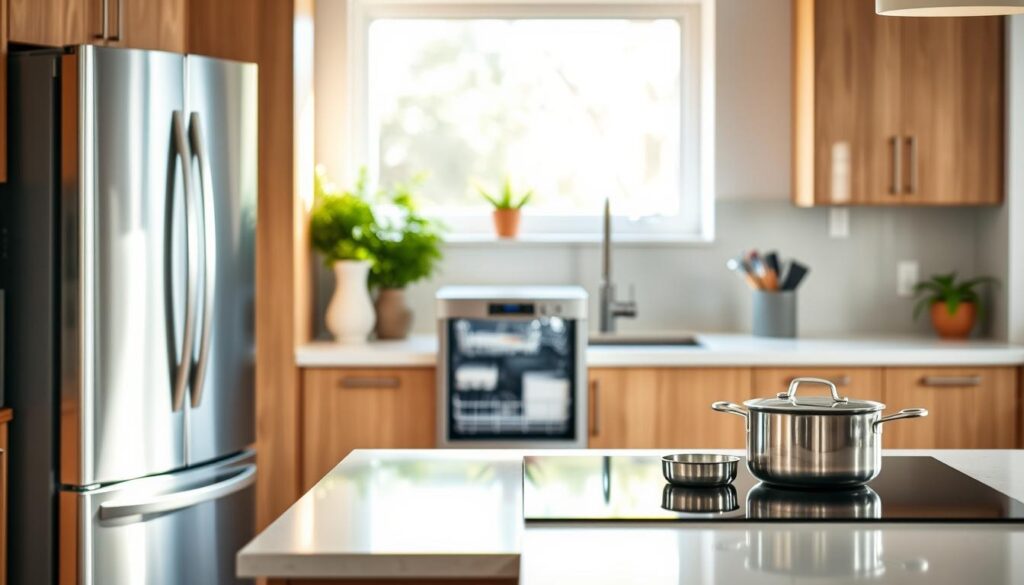
New ENERGY STAR fridges and efficient dishwashers need much less power than old ones. A new fridge can save hundreds of kWh every year. Changing an old dishwasher can save even more power. When you upgrade several appliances, you’ll see savings on your energy bills.
Energy-saving appliances also use less power at peak times. Simple actions, like washing full loads and choosing eco cycles, can save more money. And it’s easy to do.
Using less electricity means less greenhouse gas emissions. Choosing eco-friendly kitchen gear helps reduce your carbon footprint. It also eases the strain on our power grid during busy times.
These appliances are better for the planet over their lifetime. The energy they save can be like planting many trees or cutting down tons of CO2 for each home.
New models come with better insulation, advanced motors, and smart sensors. These upgrades keep food fresh in fridges and make dishwashers clean better.
Induction cooktops and smart ovens offer more accurate temperature control. This saves energy and time. They’re made with better parts and often come with longer warranties. These benefits make them last longer and perform better for the environment.
| Appliance | Typical Annual Savings vs. Older Model | Performance Benefit | Environmental Effect |
|---|---|---|---|
| ENERGY STAR Refrigerator | 300–500 kWh | Better insulation, steadier temps | Lower CO2 emissions, reduced spoilage |
| Efficient Dishwasher | 30–80 kWh | Improved spray systems, eco cycles | Less water use, fewer detergent residues |
| Induction Cooktop | 10–30% energy cut vs. electric coil | Faster heat, precise control | Lower cooking-time emissions |
| Smart Oven | 5–20% energy cut through sensors | Consistent results, preheat reduction | Reduced wasted energy from overcooking |
| High-Efficiency Range Hood | 5–15 kWh (fan savings) | Quieter operation, better ventilation | Improves indoor air quality, lowers HVAC load |
Smart appliances reduce energy use and make your kitchen work better. This guide shows you key options that save energy, lower costs, and match modern home styles. We’ll cover features, savings, and brands to help you pick the best models.
Energy Star fridges have better insulation and compressors, plus smart features like adaptive defrost. This cuts down how often they run. They also have better door seals and shelves, keeping the cold in. ENERGY STAR fridges can be 20–50% more efficient than older ones, making it important to compare EnergyGuide kWh numbers.
Look for brands like Samsung, GE, Whirlpool, and Bosch in ENERGY STAR listings. Inverter compressors, smart sensors, and adaptable storage in these models make them more efficient over time.
Modern dishwashers have sensors to check dirt levels, sprays that target dishes, and filters for low-temp washing. Using eco modes, they use less water and energy than washing dishes by hand. This happens when they’re full.
Bosch and Whirlpool offer dishwashers with top filtration and water-efficient rinses. To find the best savings, look at the EnergyGuide for kWh per cycle and water use.
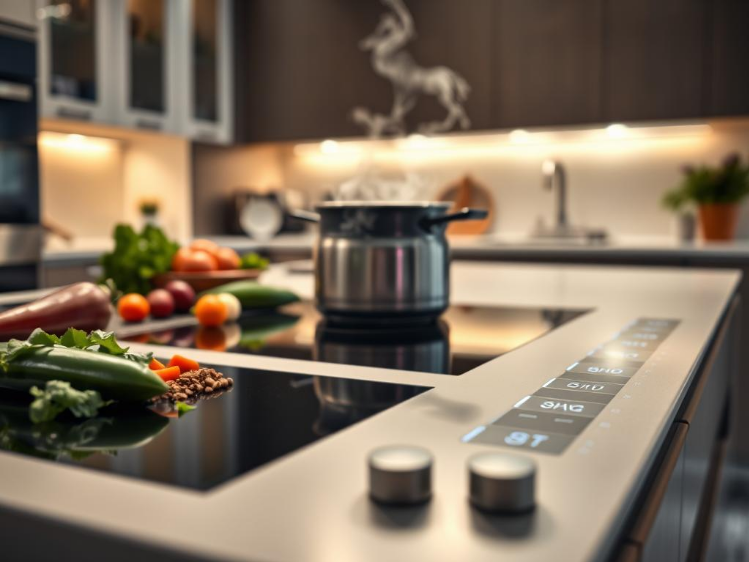
Induction cooktops are more efficient than gas or electric ones because they use magnets to heat pots directly. This means quick heating and precise temperatures, saving energy. They also keep the kitchen cooler and are easier to clean.
You’ll need magnetic pots for induction cooktops. Brands like GE, Samsung, and Bosch have great options with features for fast boiling. If you want to cook more efficiently, induction is a great choice.
Smart ovens and ranges use convection baking, exact temperatures, and don’t need much preheating. With remote control, you don’t have to open the door to check on food. This saves heat and time. Some also use induction cooking to use even less energy.
Brands like Whirlpool, GE, and Samsung add features for better cooking and energy tracking. You can preheat from afar and pick settings that fit your meal, saving energy and getting better results.
Start by making a quick check of your kitchen needs. This guide shows how to match an appliance’s size and features with how you’ll use it. Learn to compare energy ratings and figure out the savings before buying.
Think about how big your family is and your cooking habits. A family of four will need a bigger fridge than someone living solo. Frequent bakers might want an oven that heats evenly, while others may focus on a cooktop that saves energy.
Don’t forget to measure your kitchen space. Check for enough room to open appliance doors. Small, well-designed appliances can save energy if they fit your cooking style.
Focus on appliances that use the most energy. Replacing your fridge or dishwasher first can lead to big savings with energy-efficient models.
The EnergyGuide label tells you the appliance’s annual energy use and cost. These numbers help compare different models easily.
Appliances with Energy Star ratings are often the best for saving electricity. They use less power, which means lower costs for you.
But, don’t just look at labels. Check out reviews and energy use reports from users. This helps make sure the energy-saving claims are true.
Figure out if the energy-saving model is worth its higher price. Use your local electric rates to get a more accurate number. Divide the extra cost by how much you’ll save each year to find out when you’ll start saving money.
Think about repair costs and how long the appliance will last. Look for deals, tax breaks, and utility company offers to reduce the total price.
Use online tools and company data to predict savings over time. Consider the total cost of owning the appliance, not just the purchase price.
| Decision Step | What to Check | Why It Matters |
|---|---|---|
| Household Assessment | Family size, cooking frequency, kitchen layout | Matches appliance capacity and features to real use |
| Energy Labels | Estimated annual kWh, yearly cost, ENERGY STAR badge | Provides objective efficiency comparison among models |
| Real-World Performance | User reviews, measured energy use, brand reliability | Validates manufacturer claims for sustainable kitchen products |
| Cost Analysis | Upfront price, estimated annual savings, local rates | Calculates payback period and total cost of ownership |
| Incentives & Lifespan | Rebates, tax credits, expected service life, warranty | Reduces net cost and improves long-term value of energy star rated appliances |
Small changes in what we do each day can greatly reduce energy use and lower bills. Pairing the right products with smart habits allows efficient appliances to work at their best. These tips will help homeowners use less energy with appliances and cooking tools while keeping the kitchen functional.
Keep the fridge between 37–40°F and freezer at 0°F. This keeps food safe and avoids wasting power. Only run the dishwasher when it’s full. Use air-dry or energy-saving settings to use less heat.
Put lids on pots to cook faster and lose less heat. Don’t preheat the oven for foods that don’t need specific temperatures. Use a microwave or toaster oven for small meals. Choose energy-efficient cooking tools, like induction cooktops, to get fast, direct heat.
Clean fridge coils yearly, or as the maker suggests, to keep things working well. Change dishwasher filters as needed. Check for clogs in the spray arms to make sure dishes get clean while using less energy.
Remove scale from kettles and coffee makers to keep them working efficiently. If oven temperatures start to change, recalibrate the thermostat. Check for tight seals on oven and fridge doors. For repairs, use approved service providers to ensure warranties and efficiency stay intact.
Try batch cooking to make the most of the oven’s heat, cutting down on usage. Use residual heat by turning off cooktops early. This allows dishes to continue cooking without extra energy. Match the size of your cookware to the burners to prevent wasting energy.
Use pressure cookers or slow cookers when you can; they often use less energy than ovens. Plan your meals to avoid having many appliances on during peak energy times. These practices help appliances last longer and make the most of energy-efficient and eco-friendly kitchen tools.
Many shoppers look for brands known for mixing good performance with lower running costs. This guide focuses on four companies recognized for dependable, energy-saving kitchen gadgets. These help families lower bills and be more eco-friendly.
GE Appliances has a wide range of energy star rated products. This includes fridges, smart stoves, and dishwashers. They have efficient compressors, smart checks, and Wi-Fi controls to watch and cut down on use. GE also joins in rebate programs and is sold in major U.S. stores.
Samsung uses advanced compressors and energy management in its products. With app-based plans and power-saving modes, users can lower waste when not using them. These items are also smart home friendly, fitting for those looking for eco-smart kitchen tools.
Whirlpool focuses on products that save water and energy efficiently. It has dishwashers and fridges with smart wash tech and cycles that need less water without losing cleaning strength. Its good warranties and solid reputation make it a top pick for eco-conscious buyers.
Bosch is celebrated for its super-efficient dishwashers and induction tops that are quiet and low on water and power use. ENERGY STAR certifications support Bosch’s eco claims, with high marks in cleaning performance and low energy use. This makes Bosch a go-to for those valuing both efficiency and quality.
Smart devices help people understand and reduce kitchen energy use. They gather information from appliances, lights, and meters to find usage patterns. This helps decide when to use devices and which ones are the most energy saving.
Systems like Sense and Emporia work with smart thermostats to give detailed reports. They track energy spikes, highlight unusual energy use, and display consumption over time. This data lets users schedule big appliances for cheaper, off-peak hours to save money.
If the system detects ongoing energy waste, it suggests items to repair or replace. This method helps families pick efficient appliances based on actual savings, not guesses.
New refrigerators from Samsung, LG, and GE come with features that adjust cooling and show energy use. Remote checks help fix problems quickly and avoid more service calls. Modes for vacations and eco-friendly settings reduce power waste when you’re away or when doors are accidentally left open.
They provide details like how often the compressor runs and the temperature trends. This information guides decisions on whether to fix or replace them for better energy savings when buying new kitchen appliances or gadgets that need efficient cooling.
LED lights, motion sensors, and setups like Philips Hue and Lutron cut down on wasted light. Motion sensors turn off lights in empty spaces. They adjust lighting at night and use natural daylight during the day.
These lighting systems work with smart energy monitors to adjust light based on your cooking activities. Evening settings, for example, only light up areas being used. This not only makes things more convenient but also helps save energy throughout the kitchen.
Here’s a brief overview of smart features and how they benefit energy use for better decision-making.
| Smart Feature | Typical Brands | Energy Benefit |
|---|---|---|
| Appliance-level Monitoring | Sense, Emporia, Whirlpool platform | Identifies high-load devices and schedules usage to off-peak times |
| Adaptive Refrigerator Cooling | Samsung, LG, GE Appliances | Reduces compressor runtime and lowers standby consumption |
| Remote Diagnostics | LG, Samsung, Bosch | Speeds repairs, prevents inefficient operation, extends appliance life |
| Vacation/Eco Modes | GE Appliances, Whirlpool | Lowers energy use during long absences without manual adjustments |
| Smart Lighting & Motion Sensors | Philips Hue, Lutron | Eliminates wasted lighting, complements cooking schedules |
| Integration with Voice/Hub | Amazon Alexa, Google Home | Makes routine control simple, encourages energy-saving habits |
Upgrading to energy-efficient kitchen appliances can cut bills and make your home more comfortable. Before purchasing, it’s important for homeowners to look into available incentives and financing options. This way, choosing Energy Star rated appliances and other eco-friendly kitchen items becomes easier and budget-friendly.
The federal government and state energy offices usually have rebates or tax credits for buying green products. The IRS sometimes has credits for certain efficiency upgrades. Also, programs and rebates from states and local utilities change often, so it’s good to stay updated.
Online databases like DSIRE are useful to find current rebates and incentives. Promotions from ENERGY STAR partners such as Whirlpool and Bosch offer discounts on green appliances right when you buy them. Always check with local utilities to not miss out on any deals for sustainable kitchen products.
Retailers and appliance makers often have special financing deals for expensive items. These include no-interest for a certain period or low-interest payment plans focused on energy-efficient purchases.
Other options like home improvement or green loans from banks, or PACE financing, allow for the spreading out of payments. PACE, for example, adds payments to your property tax bill, which works well for big projects that include many green appliances.
Doing a detailed cost versus savings analysis can help pick what to buy first. Begin by noting the energy use of current appliances using EnergyGuide labels or old bills. Then, guess how much less energy a new model will use each year and multiply by your local electricity rate to find savings.
Afterward, deduct any rebates you’ll get and include the costs of financing to see your actual yearly savings. Finally, divide the total upgrade cost by these savings to figure out how long it will take for the upgrades to pay for themselves. This helps compare different options.
| Step | Action | Why It Matters |
|---|---|---|
| 1 | Record current appliance energy use | Provides a baseline for real savings estimates |
| 2 | Compare EnergyGuide kWh and ENERGY STAR ratings | Shows efficiency gap between old and new models |
| 3 | Apply local electricity rate to kWh difference | Converts energy savings into dollars per year |
| 4 | Subtract rebates and include financing fees | Reveals true upfront and ongoing costs |
| 5 | Compute payback period and ROI | Helps prioritize upgrades with shorter payback |
| 6 | Prioritize based on payback and household needs | Focuses spending on the most cost-effective energy saving appliances |
These case studies highlight the benefits of upgrading to energy-efficient kitchen appliances. They detail changes in bills, daily use, and their effect on the environment. They help set realistic expectations for upgrading your own kitchen.
A family in the suburbs got new ENERGY STAR-rated refrigerator and dishwasher models. They noticed their electricity bill went down every month. The appliances were quieter and kept food fresh longer. They kept their daily habits the same, showing the savings were from the appliances’ efficiency.
In Portland, someone renting their home switched to an induction cooktop from GE from an electric coil range. The cooktop heated up faster and used less energy. Precise control and faster cooking times also helped save energy compared to the old unit.
To check utility bills before and after upgrades, factor in season changes and if more people were in the house. Start with the average electricity use. Look at the electricity used for six months before and after the upgrades. Try to only include kitchen electricity use.
Here is how to figure out the reduction:
Before, the fridge, dishwasher, and range used 120 kWh/month total. After, the new appliances used only 73 kWh/month in total. That’s a 39.2% decrease in energy use in the kitchen.
Even small upgrades can lead to big savings. Changing one major appliance and adjusting how you use it can lead to more savings, especially when you add in other efficient appliances.
Using less kWh means less CO2 emissions. Cutting 564 kWh a year means preventing about 518 pounds of CO2 from getting into the air. That’s around 0.23 metric tons a year.
If 200 homes in a neighborhood get energy-efficient kitchen appliances, they could stop about 46 metric tons of CO2 a year from getting into the air. Having more efficient appliances helps the local power grid and makes it easier to use renewable energy during busy times.
When communities choose energy-saving appliances, it lowers overall emissions. It can also help delay the need for new power plants. Case studies show how combining appliance upgrades with small habit changes can make a real difference over time.
| Scenario | Annual Kitchen kWh Before | Annual Kitchen kWh After | Annual kWh Saved | CO2 Avoided (metric tons) |
|---|---|---|---|---|
| Suburban family (fridge + dishwasher) | 1,440 | 876 | 564 | 0.23 |
| Renter (coil range → induction) | 480 | 300 | 180 | 0.08 |
| Combined small upgrades (neighborhood of 200) | 288,000 | 176,400 | 111,600 | 50.0 |
Soon, kitchen appliances will be smarter and save more power. People will see more induction cooktops, efficient ovens, and better-fridge insulation. Brands are trying out new tech like hybrid ovens and smarter compressors to use less energy.
New tech is adding AI to manage energy better in the kitchen. This tech lets appliances adjust their use to save power. They use improved parts and sensors to work well while using less energy.
Appliances will be designed to be fixed easily and last longer, which cuts down on waste. We’ll see more do-it-all appliances, like ovens that can steam and bake. This will lower how much energy homes use. More connected appliances will help make homes more energy-efficient and give users helpful info.
Companies are using more eco-friendly materials and recycled plastics in their products. They’re offering programs for recycling old appliances and giving longer warranties. They aim to use less packaging and cleaner production methods to reduce carbon footprints.