Our Location
1250 Beacon Street
Brookline, MA 02446
Uncover Electric Kettle Dangers: Learn how limescale affects your appliance's safety and performance, and get tips for proper maintenance.
Limescale might just seem like a white crust, but it’s a big problem. It creates issues for homeowners, renters, and small offices. This article shows why caring about electric kettle safety is crucial, beyond just how things look.
Readers will understand that limescale messes with safety, how well things work, health, and even the planet. It talks about what limescale is made of, why hard water makes it worse, and the bad stuff that could end up in your water. It also touches on how it can make heating slower, cost more in energy, and the risks of boiling water with limescale in your kettle.
We’re all about giving you the know-how to spot, stop, and get rid of limescale. Plus, there are tips on how to clean, descale, and know when it’s time for a new kettle. We keep it friendly and clear, for folks in the U.S. who need easy ways to keep their electric kettles safe, working longer, and less risky to use.
Limescale happens when water minerals become concentrated and form white, chalky layers. These minerals are mainly calcium carbonate and magnesium carbonate. They stick to surfaces in kettles, heating elements, and spouts as crusty rings or powdery coatings.
Limescale is the flaky white film, rough patches, or hard crusts left behind when water dries up or boils away. If not cleaned, these deposits can slow down water flow and collect in hard-to-reach spots.
Heating water causes dissolved minerals to solidify. This happens as the heat makes carbon dioxide escape, turning calcium and magnesium into solid flakes. With each cycle of boiling, more minerals pile up, forming layers of scale.
Electric kettles with exposed heating coils get thick crusts of scale. Meanwhile, those with flat heating elements have scale in thin layers on the bottom. This affects how often you need to clean and the wear on the kettle.
Hard water is packed with calcium and magnesium. It’s common in many U.S. areas, coming from wells or old city water systems. The higher the mineral content, the quicker limescale forms.
You can test your water’s hardness with a kit or check reports from your local utility. Knowing your water hardness can help you keep your electric kettle safe and working well.
Using acidic solutions helps remove limescale. This is because acids react with the carbonate in scale to dissolve it. Vinegar and citric acid can safely clean kettles through this reaction.
| Aspect | Effect on Kettle | Practical Tip |
|---|---|---|
| Mineral Type | Calcium and magnesium create hard, adherent deposits | Descale monthly if using hard water |
| Heating Element Type | Exposed coils attract thick crusts; flat plates get thin layers | Choose concealed plates for easier cleaning |
| Water Hardness Level | Higher ppm or grains accelerate buildup | Test water and adjust cleaning frequency |
| Descaling Chemistry | Acid + carbonate → salt + CO2 + water | Use food-grade acids like vinegar or citric acid |
| Safety Considerations | Heavy scale raises the risks of using an electric kettle by blocking sensors or causing overheating | Follow electric kettle maintenance for safety and inspect seals regularly |
Limescale in electric kettles does more than make them look bad. It changes how water looks, tastes, and acts when heated. This part talks about what might grow in scale and how it can make water worse. It also suggests ways to keep your kettle safer.
Limescale is mostly made of minerals like calcium and magnesium. These aren’t very toxic by themselves. But scale can trap other, harmful things. A slimy layer can form where water sits and the kettle is wet. Pieces of metal might come from damaged heating elements, adding nickel or chromium from stainless steel. Even dirt or stuff from cups and hands can end up in there.
Health experts say mineral deposits might hide bacteria if kettles aren’t cleaned properly. This is a safety issue kettle users need to watch out for. Cleaning often means less chance for scale to hold harmful germs.
Scale messes with how water feels to your senses. You might notice a bad taste, strange smells, or water that looks cloudy. Tiny bits and flakes can end up in drinks, making coffee or tea gritty and weird-tasting.
Drinking water like this often can be bad for people who need to avoid certain minerals. People with kidney issues or those who’ve been warned by doctors should be careful. They might want to talk to a doctor about the minerals in their water.
Scale flakes can also make boiling water splash or spray, risking burns. Deposits near heating elements cause hot spots. This speeds up wear and increases the chance of metals getting into the water. These issues are key risks of electric kettles and show why being careful matters.
To lower risks, clean the kettle regularly, use water that’s been filtered, and don’t drink water that looks cloudy. Following these tips can address safety worries and keep your kettle clean and safe.
Limescale buildup affects how an electric kettle works. Even a small layer can insulate. This makes boiling take longer and reduces efficiency.
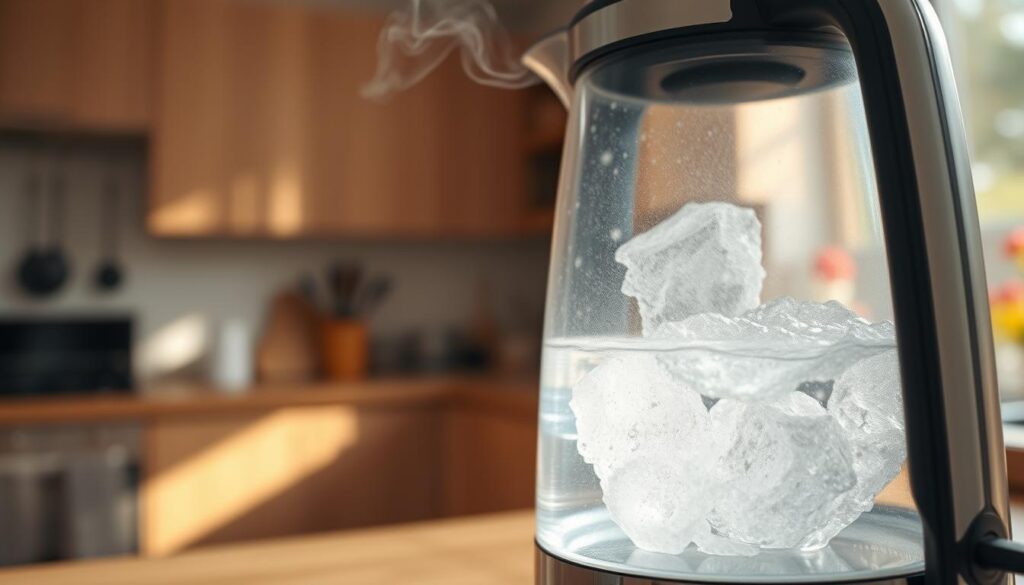
In kettles with exposed coils, scale sticks to metal and prevents water contact. With flat-plate designs, limescale grows under the plate, stopping heat transfer. Both types need more time to boil.
Impaired heat transfer makes kettles slow to boil. This puts stress on thermostats and automatic shutoffs. The appliance runs hotter, shortening its life.
Descaling makes kettles efficient again and keeps heat-up quick. Using filtered water slows mineral build-up. This makes kettles safer and extends their life.
Limescale demands more energy. Research shows that even a little scale ups power use. More buildup increases usage over time.
This means higher energy costs and longer boil times. It also harms the environment more.
| Kettle Type | Typical Effect of Thin Scale | Effect of Heavy Scale | Practical Impact |
|---|---|---|---|
| Exposed Coil | 3–6% extra energy use | 10–20% extra energy use | Longer boil, faster wear on element and thermostat |
| Concealed Flat Plate | 4–8% extra energy use | 12–25% extra energy use | Insulating barrier under plate, increased cycle time |
| Stainless Steel Body | 2–5% extra energy use | 8–15% extra energy use | Slower heating, potential for uneven temperature sensing |
Maintaining your electric kettle ensures safety and efficiency. It cuts energy costs and overheating risks. Descaling and filtered water keep your kettle working well longer.
Small signs can tell you when it’s time to clean your kettle. Spotting them early can save your kettle from damage and keep your water taste good. Look for visual signs, weird noises, and changes in how it works. Following simple safety measures can keep your electric kettle safe and in good condition.
Check the inside for a white or slightly off-white crust on the walls. You might see flaky bits near the spout. Or chalky stuff at the bottom after boiling. If water looks cloudy or if there’s discoloration near the heater, that’s scale. Scale can also appear at seams or leave bits in your water, even in kettles with hidden plates.
Listen for any rumbling, popping, or pinging sounds as it heats up. These sounds mean steam is forming under the scale and then collapsing. This causes uneven heating and trapped water, which puts stress on the kettle. Over time, this could even crack the heating element.
If it takes longer to boil or shuts off too often, it might not be working well. Seeing steam or water near the spout increases the chance of getting burned. Loose scale could block the spout and splash hot water. If you notice these problems, unplug and clean your kettle before you use it again.
Regular checks can prevent unexpected problems. Cleaning your kettle every month or every few months is a good plan. This depends on your water type and how much you use the kettle. These steps can help you follow safety advice and reduce risks when using your kettle every day.
Keeping an electric kettle safe and efficient is easy. Small changes can reduce mineral buildup. They also save energy and lower health risks. The next steps will focus on choosing the right water and cleaning well.
Choosing water with fewer minerals helps slow down limescale. Filters that attach directly to your water supply cut down calcium and magnesium. Pitcher filters, like Brita, are affordable and reduce some water hardness. Whole-house systems are the most effective for reducing scale throughout your home.
Water softeners swap hardness for sodium. Those on low-sodium diets should be careful or consult a healthcare provider. Using bottled or distilled water prevents scale but can be expensive and increase plastic waste.
Good habits can protect your kettle’s heating element. Always rinse and let the kettle dry after use. Empty it if you won’t use it the next day. For frequent users, a quick rinse once a week is a good idea.
How often you descale depends on your water’s hardness. For light hardness, descale every three months. For moderate to hard water, descale more often, about every month or two. Always cool the kettle and use a soft cloth for cleaning. Hard scrubbers can damage the surface and make scale stick more easily.
Regular descaling keeps your warranty valid. Many brands, like Cuisinart, Breville, and Hamilton Beach, provide descaling instructions. Following them helps maintain your kettle’s safety and extends its life.
Look for kettles with removable filters at the spout to catch deposits. Kettles with concealed elements are easier to keep clean. Always unplug your kettle before cleaning and use the recommended cleaners.
Regularly taking care of your kettle lowers risks to your health and safety. Simple, everyday actions focused on limescale prevention and maintenance are key. They help your kettle work better and last longer.
| Measure | Benefit | Consideration |
|---|---|---|
| In-line water filter | Reduces calcium and magnesium at point of use | Installation cost, periodic cartridge replacement |
| Pitcher filter (Brita) | Low cost, easy to use, lowers scale rate | Limited capacity, frequent refills for heavy use |
| Whole-house softener | Protects all appliances, strong scale reduction | Higher upfront cost, adds sodium via ion exchange |
| Bottled or distilled water | Very low mineral content, minimal scale | Higher cost, environmental impact from bottles |
| Weekly rinse + air dry | Prevents standing water, reduces deposit buildup | Requires small daily effort |
| Scheduled descaling (1–3 months) | Restores heating efficiency, reduces safety risks | Frequency depends on water hardness and usage |
Many people believe things about electric kettles that seem true. Some myths about electric kettles can be dangerous if believed blindly. Knowing the truth makes using them safer and the water tastes better.
There’s a myth that boiling water makes it always safe. Boiling kills lots of bacteria, but not all. Limescale can hide bacteria and harmful stuff even in a clean-looking kettle.
The idea that scale is good for the kettle is wrong. Scale makes the kettle work harder, leading to damage over time. Cleaning your kettle often and using filtered water keeps it safe.
Some think changes in water taste are just in our heads. But, minerals in water really do change how it tastes and feels. Using filtered water gets rid of those minerals, making water taste better and reducing limescale.
Boiling the same water over and over isn’t good. Doing this concentrates minerals and impurities. Replace water often and filter it before boiling to keep it clean and tasting fresh.
To stay safe, use a filter, clean your kettle monthly, and look for hidden gunk. Clean doesn’t always mean safe. These tips help bust myths and keep electric kettles safe to use.
It’s easy to remove limescale from an electric kettle if you pick the right method. The options we’ll discuss are safe for your kettle and effective. Before you start, unplug the kettle, keep the base dry, and check the manual.
Mix white distilled vinegar and water equally for a strong mix. If you prefer something gentler, use more water than vinegar.
Fill the kettle with this solution, then boil it. After boiling, let it sit for 15 to 60 minutes, depending on the limescale. Then, empty and rinse the kettle well to get rid of the vinegar smell.
Boil clean water in it a couple of times before you drink from it again. Don’t use vinegar in kettles with aluminum inside or special finishes. Always see what the manufacturer says first.
Some brands like De’Longhi and Kaer make fast-acting descalers. These usually have ingredients like citric acid that break down limescale quick.
Just follow the instructions: mix as told, heat or soak, then rinse well. When using strong acids, wear gloves and keep the room airy. Keep these products away from kids and dispose of them as advised.
You can also use citric acid powder for a nice smell and effective cleaning. Baking soda is good for slight buildup but not strong enough for thick limescale. Only use soft tools for flakes to avoid scratches inside.
Never use harsh scourers, bleach, or oven cleaners. They can damage the kettle and be unsafe. Make sure there’s no leftover residue before using the kettle again.
Descale your kettle regularly to make it last longer and work better. If you’re not sure, try a small amount first. Always focus on safe cleaning to keep your kettle and yourself safe.
Limescale builds up in electric kettles, changing how they heat. It acts as an insulator, making the heating element work harder. This extra effort shortens the lifespan of parts and increases safety risks at home.
Underneath scale deposits, metal starts to corrode. This damages thermostats and auto shutoff sensors, making them unreliable. The result? Burned elements, leaks, and faulty switches. These issues often cause a kettle to fail earlier than expected.
How limescale shortens appliance life
Scale insulation makes elements overheat, leading to burnout. Corrosion from scale damages the kettle’s casing and seals. Trapped sensors fail to cut power, posing risks. These factors decrease lifespan and increase the odds of malfunction, possibly voiding warranties.
Cost of replacement vs. maintenance
In the US, electric kettle prices vary greatly. Simple models are around $25, while fancy ones can be over $100. Spending $20 to $50 annually on descaling and care can add years to a kettle’s life and boost its efficiency.
It’s crucial to keep receipts and warranty info. Brands like Cuisinart and Breville need proof of proper maintenance for warranty claims. A maintenance log is helpful for deciding between repair and replacement.
| Item | Typical U.S. Cost | Effect on Kettle Lifespan |
|---|---|---|
| Basic electric kettle | $25–$40 | 2–4 years without care; 5+ years with regular descaling |
| Mid-range kettle (stainless, decent elements) | $40–$100 | 3–6 years without care; 7–10 years with maintenance |
| High-end kettle (temperature control, durable parts) | $100+ | 4–8 years without care; 8–12+ years with proper upkeep |
| Annual descaling and filters | $20–$50 | Reduces failures, improves efficiency, extends lifespan |
| Common failure repairs (element, switch) | $15–$60 | May be cost-effective for mid/high-range kettles; less so for $25 models |
When considering maintenance vs replacement, look at the years of life added by care. If upkeep adds years, it’s worth it. But, if an older kettle keeps failing, getting a new one might be best.
Buyers should choose kettles that are easy to descale and repair. Selecting durable materials and designs can save money. This also reduces safety risks and ensures the kettle lasts long, keeping costs low.
When kettles are full of scale, they take longer to boil. This might lead to boiling the water again to get rid of weird tastes. As a result, they use more water and energy. Think about how big this problem gets when millions of homes do this.
To use less, just fill the kettle with the water you need. An insulated thermos or a kettle that keeps water hot helps avoid boiling water again. Doing this saves energy, helps the planet, and cuts costs over time.
Limescale makes kettles work harder and take longer to boil. This increases the energy used and the water wasted. The impact of this can be huge when we look at whole communities or the nation.
Picking a kettle that’s efficient and has clear marks for water levels can help. Regular upkeep ensures it works well and avoids boiling water more than needed.
Citric acid is safe for the environment and great for cleaning kettles. It’s biodegradable, removing buildup without leaving harsh chemicals behind. Vinegar is also good and natural, even though it might smell for a little.
For physical cleaning, a gentle brush and rinsing does the job. Try to stay away from strong chemical cleaners. If you must, choose ones that are biodegradable and follow local rules for disposal.
Using eco-friendly methods to clean kettles is better for the earth. It also keeps the kettle running safely by preventing damage from overheating.
| Action | Environmental Benefit | User Benefit |
|---|---|---|
| Boil only needed water | Reduces water waste electric kettle usage | Lower energy bills, faster boils |
| Use citric acid or vinegar | Supports eco-friendly descaling, biodegradable | Effective scale removal, food-safe |
| Regular maintenance checks | Limits environmental impact of kettles by extending life | Improves safety and performance |
| Recycle or use e-waste programs | Reduces landfill waste and recovers metals/plastics | Responsible disposal, potential material reuse |
| Choose repairable, efficient models | Lowers lifetime environmental footprint | Longer appliance life, fewer replacements |
Knowing when to get a new kettle involves safety and costs. Fixes can sometimes make a kettle last longer. Yet, some issues are too dangerous to ignore. Here’s how to know when it’s time for a new one.
Watch out for thermostat problems or a faulty auto shutoff. These can lead to burns from overheating.
If the inside metal shows signs of pitting or corrosion, it’s bad news. Also, cracks exposing metal or plastic are dangerous.
Bad smells that stick around after cleaning could mean hidden dirt. Also, exposed wires or leaks are a big no-go. Stop using it if there’s any risk of shock or burns.
Fixing small parts like filters or lids can be cheap. These repairs can save a good kettle from being thrown out too soon.
But, serious electrical or body damage means it’s probably time for a new kettle. Always check the warranty. Brands like Cuisinart, Breville, and Keurig might help with defects.
Think about everything when buying a new kettle. Look at energy use, warranty, parts availability, and reviews for sturdiness. Pick ones that are safer, easy to clean, and last longer.
Be safe with your kettle, both new and old. Recycling old ones properly helps the planet and keeps dangerous materials away from the trash.
Small habits can greatly improve safety with electric kettles. Avoid filling it too much as hot water might spill or expose electrical parts. Always fill to the needed level but stay under the max line. Pour carefully and ensure the kettle is on a stable, heat-proof spot away from edges.
Keep the kettle steady when filling it and watch the water level markers. Don’t refill it while it’s still hot to avoid burns. Ensure it’s placed far from sinks and edges where it can’t be easily knocked over.
If your kettle has settings for different drinks, use them. This can prevent too much reheating and cuts down on steam risks.
Checking your kettle often reduces risks and keeps it working longer. Look at the power cord and base for any damage. Also, check the lid and spout to keep them clear and clean off any buildup with descaling or filtered water. Always unplug before inspecting, and don’t let water touch the electrical parts.
Try the auto shutoff feature to see if it works properly by boiling a small amount of water. If you notice odd noises or smells, or see damage that won’t fix, it’s time for a new kettle. Sticking to these tips, like using filtered water and descaling, will keep your home safe, save energy, and keep the kettle in good shape.