Our Location
1250 Beacon Street
Brookline, MA 02446
Learn to diagnose and fix a cooktop yellow flame with our step-by-step guide on cleaning and adjusting your gas stove's injectors for optimal performance.
More than half of gas cooktops face burner flame problems at some point. A yellow flame on your cooktop signals incomplete combustion, which is unsafe. Understanding what different flame colors mean is critical. It not only helps with efficient cooking but also keeps the air quality in your home safe. Knowing how to correct a yellow flame is vital for cooktop safety. Proper care, such as cleaning and adjusting injectors, ensures a clean and safe flame. This reduces risks like carbon monoxide poisoning.
Knowing the color of your gas cooktop flame is key to cooking safely and efficiently. Seeing the normal flame color helps avoid dangers. Spotting a yellow flame tells you something’s not right, making cooking better.
The flame on a gas stove should be mostly blue with a little yellow at the top. Blue flames show that the gas is burning well, giving you good cooking heat. If your flame stays blue, your stove is working right. See a change? It’s time to check and maybe fix your stove’s flame.
If your stove’s flame is yellow, it’s not burning the gas right. The problem could be not enough air getting to the burner. This may happen if the burner is blocked or set wrong. A yellow flame means there’s trouble like soot or dangerous gases. Fixing yellow flames quickly keeps your kitchen safe.
A yellow flame on your cooktop often means there’s a problem. It’s important to know why this happens to keep cooking safe and efficient. Knowing why your propane stove has a yellow flame can help fix it.
It’s important to set your burner right for the best cooking. If it’s not aligned, it won’t get enough air, causing a yellow flame. Make sure to check your burner regularly to keep it working right.
Spills and food can block burner ports, leading to a yellow flame. This means the gas isn’t burning cleanly. Cleaning your burners often can help you get a blue flame instead.
If your gas pressure is low, your flame won’t burn right. This could be because of a bad regulator or issues in the gas line. Checking your gas pressure helps make sure your flame is blue and strong.
| Cause | Description | Recommended Action |
|---|---|---|
| Incorrect Burner Configuration | Misalignment causing improper airflow. | Check burner placement and fit. |
| Dirty or Clogged Burners | Residue blocking ports, creating inefficient combustion. | Regularly clean burners and ports. |
| Low Gas Pressure | Weak flame due to insufficient gas supply. | Inspect gas pressure and regulator. |
When you see a yellow flame on your propane stove, pay attention. The color of the flame tells us how the stove is working. A yellow flame can mean there’s not enough oxygen for the gas to burn completely. This can make dangerous carbon monoxide.
Carbon monoxide is dangerous because we can’t see or smell it. A yellow flame on your cooktop may mean it’s not burning the fuel right. This could lead to too much carbon monoxide, especially if the room doesn’t have good air flow or a working carbon monoxide detector. To stay safe, put a carbon monoxide detector in your kitchen. It will help you feel safe when using gas appliances.
A yellow flame might also mean a fire risk. If the flame flickers a lot or moves outside the pot, it could be too hot. Since a yellow flame means the stove isn’t burning properly, things near it could catch fire. Keep an eye on how the flame acts and fix any problems with a yellow flame right away.
When you’re fixing your cooktop issues like low or yellow flames, having the right tools is key. A proper cleaning and adjustment can make your gas stove safer and work better. Here, we’ll talk about what you need to troubleshoot gas stove flames effectively.
To clean your burners well, start with some simple supplies. Use a soft cloth for wiping and a toothbrush for getting rid of debris in tight spots. For a safe cleaner, mix soap and water. This will help you handle a yellow flame without hurting your cooktop. Choosing non-abrasive items keeps your burners scratch-free and working right.
Having the right tools is important for adjusting your gas cooktop’s flame. You’ll need a screwdriver to get to burner parts and make changes. A gas pressure gauge is also important. It measures the gas pressure so you can make accurate adjustments. Keeping a close watch on this ensures your cooking is safe and fixes problems like low flames.
| Tools | Purpose |
|---|---|
| Soft Cloth | Wipes surfaces clean without scratching |
| Toothbrush | Removes debris from hard-to-reach areas |
| Soap and Water Mix | Gentle cleanser for burners and surfaces |
| Screwdriver | Adjusts and accesses burner components |
| Gas Pressure Gauge | Measures gas pressure for adjustments |
Cleaning your cooktop right can fix a propane stove yellow flame. Following the correct steps keeps cooking safe and efficient. This cleaning guide will help avoid gas stove flame problems and keep the flame right.
Before cleaning, it’s key to turn off the gas at the shut-off valve. This prevents any chance of gas leaks or fires. Wait a few minutes after turning off the gas to ensure it’s safe to proceed.
With the gas off, take off the burner caps and crowns. Soak them in soapy water to loosen the dirt, making cleaning easier. Scrub them with a toothbrush to remove any grime.
Make sure all burner ports are clear of dirt or blockages. A clean burner ensures the gas flame is adjusted properly and fixes a yellow flame issue.
After cleaning and drying, put all parts back carefully. Make sure the burner caps are placed right to avoid blocking the air flow. Then, light the stove to check the flame color. If the flame stays yellow, you might need more troubleshooting to fix it.
Adjusting gas injectors well is key to getting the best flame on your cooktop. Start by finding where the injectors are. Since each model is different, check the manufacturer’s manual to locate them easily. Knowing where the injectors are helps you adjust the gas cooktop flame right.
To find the gas injector spots, look in your cooktop’s manual. They’re usually near the burner area. Spotting them is crucial for fixing issues like a yellow flame from propane stoves or problems from low oxygen.
Getting the perfect blue flame means tweaking the air-to-gas mix. This is done by adjusting injector screws, improving how well your stove burns. Always follow the maker’s advice to avoid too much gas or blockages, which can cause a yellow flame.
After tweaking, turn on the burners to see the flame color. The right setting shows a steady blue flame, a sign of good combustion. If you still see yellow, you might need more adjustments. This yellow can mean combustion isn’t complete, possibly because of low oxygen. Knowing what different flame colors mean is crucial for keeping your stove running well.
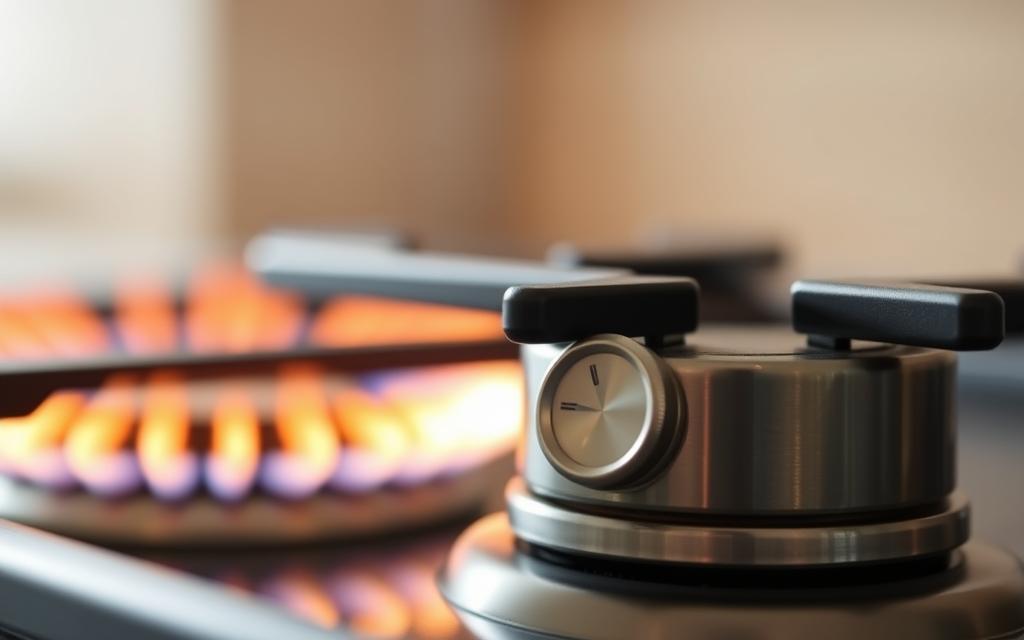
Keeping your gas cooktop in good shape is key for it to work well and safely. Checking it often lets you spot problems quickly, like when the flame turns yellow. A good maintenance routine can make your appliance last longer and run better.
Checking your cooktop and burners every month is a smart move. This way, you can find any buildup or problems early. Solving these issues quickly helps avoid bigger problems later. Regular checks can find things that might cause yellow flames.
Cleaning your gas stove regularly is very important. You should clean the burners every week to keep them free from grease and food bits. Doing a deep clean every month keeps your stove working its best. These steps keep the flame the right color and lower the chance of getting yellow flames.
| Inspection Schedule | Tasks | Benefits |
|---|---|---|
| Weekly | Clean burners and check for debris | Prevents yellow flame and maintains performance |
| Monthly | Deep clean all components | Enhances efficiency and reduces hazards |
Sometimes, you might need more than DIY fixes, especially with ongoing yellow flames. Knowing when to call in an expert can protect your appliance and home.
Be on the lookout for signs that you need a pro. A yellow flame on your gas stove is a big red flag. Even after trying to fix it, other issues might still be there.
If there’s a strange gas smell or the flames look odd, don’t wait. These signs are serious and you should get a technician’s help right away.
It’s key to find the right person to fix gas flames or a yellow flame on a propane stove. Start by looking up experts in gas appliances near you. Ask people you trust for recommendations to create a list of techs.
Then, read online reviews to pick someone skilled and trustworthy for the job.
For a gas cooktop to work right, the gas flow must be consistent. The color of the stove flame tells us how well gas and air are mixing. A blue flame means everything is working perfectly. If the flame turns yellow, it’s a sign you need to check and possibly adjust your cooktop’s gas flow or deal with low oxygen levels.
The flame’s color shows the balance between gas flow and air. With the right mix, the flame will be a bright blue. But, if there’s too much gas and not enough oxygen, you’ll see a yellow or orange flame. This is a warning sign that your cooktop needs an adjustment to keep cooking safe.
Good ventilation is key while cooking. It helps get rid of combustion leftovers, including harmful gases. It’s important to keep your kitchen’s exhaust system working well and to open windows for better air flow. This ensures a safe cooking environment and the best flame color, avoiding low oxygen problems.
It’s annoying when yellow flames stay on your cooktop, even after cleaning and tweaking. This often suggests bigger problems need looking into. By figuring out why you have a yellow flame on gas stove, you can fix it and cook safely.
Still seeing a yellow flame? It might be time to check the gas line pressure or regulator. Low pressure can cause bad combustion, which gives you those yellow flames. The manufacturer’s guidelines might have more tips specifically for your model.
If adjusting the flame didn’t fix the issue, it’s time for expert help. A skilled tech can find out what’s wrong with the gas supply or which parts need replacing. Don’t ignore yellow flames as they can be unsafe. Getting help quickly is key to keeping your cooktop working right.
Understanding flame colors is very important for cooking, especially the yellow flame on a stove. Knowing what different flame colors mean helps spot problems, like a yellow flame from not enough oxygen. Fixing these issues makes sure your stove works well.
It’s crucial to check your gas stove often. Regular checks and cleaning keep it working right and safe. Good airflow is also important to avoid gas buildup.
Being aware of how gas flames should look and keeping up with stove care leads to safer, better cooking. Adding these steps to your cooking habits brings better results and safety in the kitchen.