Our Location
1250 Beacon Street
Brookline, MA 02446
Discover The Truth About Cleaning your coffee maker with vinegar and learn when it's a smart choice or when you should opt for alternatives.
Cleaing your coffee maker is crucial, more than most think. This friendly guide reveals the truth about cleaning. It discusses if distilled white vinegar is a smart, effective choice for your home machines.
At its core, we’re asking: is vinegar safe to clean and sanitize coffee makers without damage or warranty issues? The answer is usually yes, but not always. Some exceptions include limescale, mineral deposits, bacteria, odd tastes, and certain warranty rules from brands like Keurig and Mr. Coffee.
This article combines cleaning facts, maker advice, and expert tips to give clear cleaning advice. It covers maintenance basics, common myths, how vinegar works, how to use it for cleaning, when to skip vinegar, and other options. There’s advice on dealing with hard water, comparing tastes, preventative care, and eco-friendly choices.
This guide offers evidence-based cleaning wisdom and practical tips from reliable sources and cleaning science. It reminds readers to check manufacturer manuals for special instructions to keep warranties safe.
Keeping your coffee maker clean means it’s safe, works well, and makes good coffee. Small steps stop dirt and limescale from gathering. Here are easy cleaning tips to keep your coffee maker in top shape.
Cleaning gets rid of bacteria, mold, and mineral buildup. These can hold germs and mess with the water flow. By removing these residues, your health isn’t at risk, and the water for your coffee is cleaner.
Regular cleaning boosts how well your coffee maker performs. It ensures smooth water flow through filters and valves. This avoids blockages and lets your machine brew coffee more reliably.
Cleaning also betters the taste by removing old oils, coffee leftovers, and limescale. This can spoil the flavor and smell. A clean machine brings back the real, fresh taste of coffee.
Also, cleaning regularly means your appliance lasts longer and saves you money. Less strain on the heating elements and pumps means fewer repairs. Brands like Keurig, Cuisinart, and Mr. Coffee suggest descaling to keep parts working well.
Wash removable parts every day to avoid residue. After each use, empty and rinse the carafe and filter basket.
Weekly cleaning of parts you can remove stops visible dirt. Use warm, soapy water to clean the carafe, brew basket, and any parts you can take off.
Most U.S. homes should descale their machines monthly. If you have hard water, do it more often, every 1–3 months, to prevent limescale in heaters and pipes.
Change the cleaning schedule based on how much you use the machine, water hardness, and how you use it. Look out for slow brewing or limescale. Smelling for bad odors can also tell you if it’s time to clean.
| Task | Frequency | Why It Matters |
|---|---|---|
| Rinse removable parts | Daily | Prevents oil and grounds build-up that affect taste |
| Wash carafe and filter basket | Weekly | Removes residue and reduces bacteria growth |
| Descale machine | Monthly (1–3 months in hard water) | Protects heating elements, restores water flow |
| Visual and smell checks | Weekly | Early detection of mold, stale odors, or scale |
Follow these cleaning tips and practices for a household guide. Simple steps ensure your coffee maker stays healthy, reliable, and makes delicious coffee for years.
Many home baristas think quick fixes work well but often overlook key cleaning details. This intro helps tell fact from fiction in cleaning advice. It focuses on setting straight common cleaning misunderstandings while thinking about real cleaning facts.
People often believe distilled white vinegar can clean any coffee machine part. But, it’s not that simple. Vinegar does break down mineral build-up, helping to unclog parts like reservoirs and tubes.
Yet, frequent vinegar use is cautioned by some brands. Keurig suggests being careful with certain models. High-end brands like Breville and DeLonghi suggest using specific descalers. Vinegar smells may stay if not rinsed well. Also, it could damage rubber parts or finishes over time.
Myth: It’s okay to leave dish soap in the reservoir. Reality: Soap can change the taste and affect espresso’s crema.
Myth: Boiling water gets rid of all scale. Reality: Boiling helps but doesn’t fully clear mineral build-up like descalers do.
Myth: Bleach is perfect for sanitizing. Reality: Bleach can eat away at metals and leave unsafe residues. Only use diluted bleach on certain plastic parts if allowed by the maker.
Tests and advice from brands show specific cleaning steps work best: Use the right descaler, rinse well after using vinegar, and stay away from soaps or bleach in brewing areas. By following these tips, you can avoid common cleaning myths and focus on what really works.
| Claim | Why It Sounds Plausible | Evidence-Based Reality |
|---|---|---|
| Vinegar cleans everything | Acetic acid dissolves mineral scale | Works on scale but may harm seals and leave odors; follow Breville, DeLonghi, Keurig guidance |
| Dish soap is fine in reservoir | Soap cuts grease and seems harmless | Soap residue alters taste and crema; rinse thoroughly or avoid inside brewing circuit |
| Boiling water removes all scale | High heat loosens debris | Heat helps but does not chemically dissolve minerals; use acid-based descaler for heavy buildup |
| Bleach is a good sanitizer | Powerful disinfectant | Can corrode metal and leave toxic residues; only use if manufacturer permits and with proper dilution |
Understanding why vinegar is good for cleaning scale and coffee stains can improve your choices. This overview talks about how vinegar’s acidity breaks down mineral build-ups. It also mentions when it’s better to use commercial descalers or other special products.
Household distilled white vinegar contains about 5% acetic acid. This acidity is strong enough to dissolve calcium carbonate and mineral scale. When heated or in contact with limescale, it turns into soluble salts and carbon dioxide gas that are easy to rinse off.
Vinegar also tackles coffee oils and organic residue on carafes and brew baskets. Adding a flush or a gentle scrub helps even more. While vinegar helps with buildup, it’s not as strong as bleach or EPA-registered sanitizers for sterilizing.
Descalers with citric acid, like those from Urnex, Dezcal, and Keurig, work faster and smell better. They’re also safer for machine parts that are easy to damage.
Vinegar is cheap, easy to find, and removes scale well in many home appliances. However, using commercial descalers may keep your machine’s warranty valid. For machines with aluminum or delicate parts, using citric acid or the maker’s recommended cleaner is often best.
For effective cleaning, always follow the maker’s advice. Use plenty of fresh water for rinsing after descaling. Combine chemical and physical cleaning methods. These tips minimize damage and keep your machine brewing perfectly.
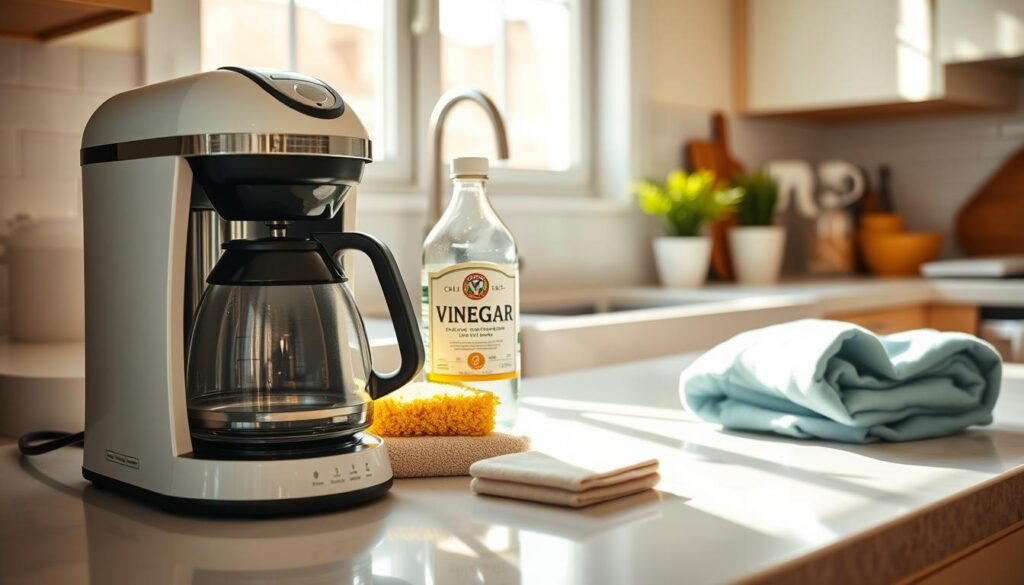
This guide shows how to clean your coffee maker with vinegar safely. It combines easy steps with advice for the best cleaning. This protects the taste and extends your coffee maker’s life.
First, unplug the coffee maker and get rid of the used grounds and filter. Take apart the carafe, filter basket, and any parts you can remove. Clean these parts with warm, soapy water and rinse them thoroughly.
Next, mix equal parts of distilled white vinegar and water. This mix works for most coffee makers. If there is a lot of scale build-up, use more vinegar if the maker’s instructions say it’s okay. Fill the water reservoir with this mixture.
Then, run a full brew cycle without adding coffee. If your machine has a special cleaning cycle or is a single-serve type, follow its specific cleaning instructions. When done, let the machine sit for 15 to 30 minutes. This helps the vinegar dissolve the mineral build-up.
If you still see scale afterward, do another vinegar cycle. After descaling is done, run 2 to 4 water cycles to get rid of the vinegar smell. For espresso machines with boilers or steaming functions, check the maker’s advice on cleaning.
Wash the removable parts one more time with soapy water. Pay extra attention to the carafe, filter basket, and any lids. Rinse them, dry them, and then put everything back together.
Use distilled white vinegar instead of apple cider vinegar to keep smells and residue away. Always check your coffee maker’s manual first. Some may not allow vinegar because it could affect the warranty.
Open windows while cleaning to help any vinegar smell leave your kitchen. Put a paper filter in for the first coffee run after cleaning. It catches any leftovers and keeps your coffee clear.
If scale still gives you trouble, try a store-bought descaler or citric acid. Follow what the label says. These products can also be good choices, just like the tips in our vinegar cleaning guide, especially when scale won’t budge.
| Step | Action | Why It Matters |
|---|---|---|
| Prep | Unplug, empty grounds, wash removable parts | Prevents damage and removes loose residue before descaling |
| Vinegar Mix | Use distilled white vinegar and water (1:1); increase if allowed | Balanсes effectiveness and safety for most machines |
| Run Cycle | Complete a full brew cycle with the solution | Circulates vinegar to dissolve mineral buildup |
| Soak & Repeat | Let sit 15–30 minutes; repeat if heavy scale | Improves scale breakdown without aggressive tools |
| Rinse | Run 2–4 clear water cycles to remove residue | Ensures coffee flavor is not affected by vinegar |
| Final Clean | Wash carafe and parts; dry and reassemble | Restores hygiene and readies the machine for use |
We link these practical steps with The Truth About Cleaning to assist readers. By following these tips, you’ll keep your coffee tasting great and help your equipment last longer.
Vinegar cleans many kitchen items, but it’s not best for every coffee maker. This guide highlights cleaning warnings. It explains when not to use vinegar to avoid damage and keep your machine running well.
High-end espresso machines like Breville, Rancilio, and La Marzocco have special parts. They often suggest citric acid or approved cleaners instead of vinegar.
Older Keurig manuals might warn against using vinegar. If the manual mentions a descaling solution, follow that advice to avoid problems.
Devices with delicate parts can be damaged by acid. Manual devices, like Chemex, usually just need warm water and soap.
Be alert for weird noises, reduced water flow, or longer brewing times. These issues might mean your machine needs cleaning.
If you smell vinegar even after rinsing, there could be harmful residue. Corroded or discolored metal shows cleaner damage.
Cracks in the plastic, damaged rubber, and leaks mean trouble. See these signs? Then stop using vinegar and ask for professional help.
| Problem Observed | Likely Cause | Recommended Action |
|---|---|---|
| Unusual grinding or whining noises | Clogged pump or strained motor | Pause use, run manufacturer-recommended descaler, consult service |
| Persistent odor after rinsing | Residual acid or cleaner trapped in lines | Perform extra rinse cycles with fresh water; if persists, stop vinegar use |
| Visible corrosion or pitting | Metal damage from acidic cleaners | Avoid acids, contact manufacturer for repair options |
| Leaking around seals or base | Degraded gaskets or seals | Replace seals per manual and use gentler cleaners |
| Slow or uneven brew | Clogged lines, sensor fault, or flow meter damage | Run approved descaler, test, seek professional help if unresolved |
If vinegar isn’t your go-to, there are still safe ways to keep your flavors and machines safe. Whether you prefer everyday items or specific cleaning products, there are options. These choices are good for both the environment and your kitchen.
Baking soda acts as a soft scrub and a great smell remover. It tackles tough coffee spots on glass pots and cleans surfaces well. Plus, it does so without any bad smells.
To clean glass pots, make a paste with baking soda and a bit of water, then gently scrub. For parts that come off, like plastic or rubber, dissolve a tablespoon of baking soda in warm water and rinse well. Baking soda is perfect for getting rid of stains and bad smells.
But, remember baking soda can’t break down mineral buildup. It’s best for carafes, filter baskets, and stains on the outside. Not so much for deep cleaning inside.
For deeper cleans, there’s a range of commercial descalers. These include citric acid blends and brands like Urnex Dezcal and Keurig’s own solution. They’re made to be safe for your machine’s insides and keep your warranty safe, too.
These products are made to clean without leaving a harsh smell and are safe for metal parts and seals. Always follow the instructions for how much to use, how long to leave it, and rinsing it out. And for espresso machines, Cafiza is the choice for cleaning and backflushing.
Look for eco-friendly products when you can. Some descalers are easier on the planet than bleach or strong acids. Using home remedies and approved products keeps your coffee tasting good and your machines running smoothly.
Hard water does more than just change the taste. It increases the hardness levels in tanks and tubes. This causes limescale to build up on elements that heat, spray heads, and reservoirs. This article shares useful cleaning tips. It also gives maintenance advice to ensure machines work well, even in areas with different water quality in the U.S.
Hard Water and Maintenance Needs
Hard water has lots of calcium and magnesium. This leads to quick scale buildup which can make heating less efficient. It can also clog spray heads and overwork pumps. When scale builds up, coffee might taste weak or like metal. So, people often notice a change in taste before the machine breaks down.
If you live in an area with very hard water, your machine might need descaling every 1–3 months. But, if your water is softer, doing it every 3–6 months is okay. Checking your local water report or using a test kit at home can help. This way, you can adjust your maintenance schedule based on how hard your water actually is.
Solutions for Hard Water Issues
Always use the descaler your maker recommends if you can. If not, vinegar is an okay second choice. But, many companies suggest using commercial descalers. They work faster and are gentler on your machine. In places with hard water, increase your descaling frequency. This prevents mineral buildup that can harm your coffee maker.
Installing filters where you use water, under-sink softeners, or using pitcher filters like Brita or PUR helps too. They lower minerals before they get to your coffee maker. For really expensive machines in hard-water areas, using bottled or filtered water is best. This protects the machine and keeps your coffee tasting great.
Remember to replace water filters as needed, clean spray heads regularly, and listen for pump noises or slow flow. These steps form a simple cleaning guide for homes. They help catch scale buildup early and can make your coffee maker last longer.
| Issue | Cause | Recommended Action |
|---|---|---|
| Reduced heating efficiency | Scale on heating elements from hard water | Descale every 1–3 months; use manufacturer-approved descaler |
| Clogged spray heads | Mineral deposits in tubing and nozzles | Soak heads in descaler; clean or replace periodically |
| Shortened pump life | Abrasive scale and increased motor load | Use point-of-use filtration; schedule frequent maintenance |
| Off flavors in coffee | Mineral buildup altering extraction | Use filtered or bottled water for premium machines |
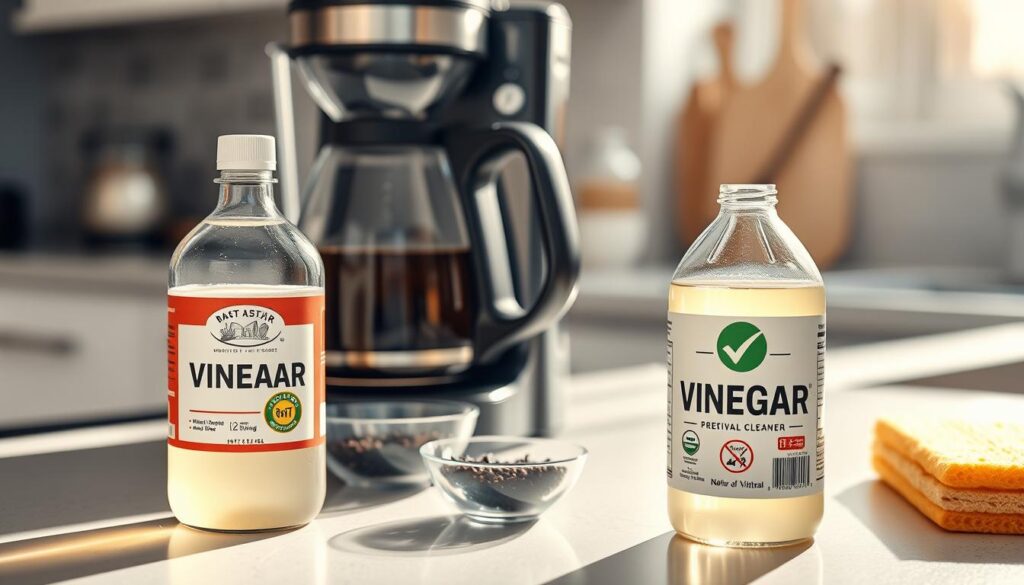
Many people ask: Is vinegar safe for cleaning coffee makers regularly? The answer is yes, for many machines, but it’s crucial to know the risks. Understanding these risks and following specific steps can protect your appliance. This lets you clean with peace of mind.
Vinegar contains acetic acid which can damage some metals. If your machine has aluminum parts or alloy boilers, they could corrode with too much vinegar.
It can also weaken rubber and silicone parts over time. This can cause leaks and make your coffee maker work poorly.
The smell of vinegar might stay in your machine if not rinsed well. This can make your coffee taste sour.
Companies like Keurig and Breville say not to use vinegar on some models. Not following these warnings could void your warranty.
Vinegar isn’t a recognized disinfectant by the EPA. So, it shouldn’t be your only cleaner for parts that touch your drink or steam.
Always follow the cleaning instructions from your machine’s maker. Companies like DeLonghi and Breville offer specific guidance that helps avoid damage.
When using vinegar, dilute it and don’t let it sit too long. A mix of one part vinegar to one or two parts water is typical. Rinse your machine several times with water afterward.
For expensive machines or those with aluminum boilers, use descalers made by the manufacturer. These are designed to clean without harming your machine.
Changing rubber gaskets and water filters as recommended is important. New seals and filters keep your machine running smoothly and cleanly.
Keeping a cleaning log or setting reminders can make maintenance easier. Regular, gentle cleanings prevent the buildup that requires harsh treatments.
By being careful and cleaning regularly, you can make your coffee maker last longer. This approach minimizes risks and ensures your coffee tastes great for years.
Readers often wonder how different cleaners change the taste of their coffee. This guide delves into vinegar, citric acid, and commercial descalers. It discusses taste, practicality, and advice from users and brands.
After using vinegar and rinsing well, coffee tastes clearer and smells better. A good rinse gets rid of the vinegar taste, making coffee taste fresher.
If you don’t rinse enough, your coffee might taste sour. This is because of the vinegar. Remember, cleaning only solves taste issues from oils and scale, not from the coffee or water itself.
Products like Urnex or Dezcal leave little smell and help coffee taste normal faster. Home coffee lovers and brands say citric acid is also good, with less vinegar smell.
Some people prefer vinegar because it’s cheap and easy to find. But others go for commercial cleaners. They do this for less smell, ease of use, and to keep their machine’s warranty valid.
It’s smart to taste your coffee before and after cleaning it. Use the same coffee beans and water. Rinse well and make at least one throwaway brew to remove any leftover tastes.
| Cleaner | Typical Residual Odor | Speed of Flavor Recovery | Cost | Best For |
|---|---|---|---|---|
| White vinegar | Moderate if not rinsed | Slower; needs extra flushes | Low | Budget users, general descaling |
| Citric acid | Low | Quick; minimal rinse | Moderate | Users who fear vinegar odor |
| Branded descaler (Urnex, Dezcal) | Very low | Fast; factory-recommended | High | Warranty-conscious owners, cafes |
| Baking soda (spot use) | None | Variable; mostly surface cleaning | Low | Surface stains, odor neutralizing |
When choosing a cleaner, think about cost, how easy it is to use, and your machine. Follow the maker’s advice, especially for brands like Keurig and Breville.
For the best results, clean regularly, rinse well, and do a taste test. This will help you decide if you need to switch cleaners.
Doing little things regularly can make your coffee maker last longer and keep your coffee tasting great. These steps stop dirt build-up and can cut down on repairs. They’re simple to do and are what experts recommend for keeping things clean.
Doing a bit every day matters more than doing a lot all at once. Daily care means less work later and keeps everything running smoothly.
After using your coffee maker, rinse the carafe and filter basket. Throw out the grounds. Then, wipe down the shower head and outside to stop residue from forming.
Each day, either use a new paper filter or clean the permanent one to avoid oil buildup. Empty and dry the water reservoir if you won’t use the machine for a few days. This helps prevent mold.
Put the machine in a spot with good air flow. This helps keep away moisture and bad smells. These steps are key for maintaining your machine day by day.
Depending on your water type and how much you use the machine, descale it every month to three months. In places with hard water, deep clean more often to keep the heating elements safe.
When doing a deep clean, check the seals, gaskets, and tubes. Change the water filter every two to three months, or as suggested by the maker, to keep water flowing nicely and tasting good.
If you have an espresso machine, backflush with a cleaner like Cafiza sometimes. Also, clean the steam wand and portafilter gasket as needed. Keeping track of when you clean helps you see patterns and plan ahead for maintenance.
| Task | Frequency | Why It Matters |
|---|---|---|
| Rinse removable parts | After each use | Prevents oil and grounds buildup; supports flavor clarity |
| Empty and dry reservoir | When unused for days | Reduces mold and bacterial growth |
| Descale machine | Monthly–quarterly | Removes mineral scale that impairs heating and flow |
| Replace water filter | Every 2–3 months | Maintains water quality and protects internal parts |
| Backflush and deep service (espresso) | Monthly or quarterly | Cleans group head, gaskets, and improves extraction |
| Record keeping | Ongoing | Tracks maintenance and reveals patterns before failures |
Care for your coffee maker with gentle methods. This article shows easy swaps and habits for a big impact. Learn about natural cleaners and green habits that keep your machine in good shape and cut down waste.
Natural solutions beyond vinegar
Citric acid comes from plants and is preferred for its subtle smell and effectiveness. It removes mineral buildup better and with less smell than vinegar. Always follow the instructions for safe use on materials like glass, steel, and plastic.
Baking soda is great for cleaning stains and getting rid of odors in carafes. It’s safe for most surfaces. But, don’t mix it with vinegar to descale; the reaction is intense but not helpful for removing limescale.
Steam cleaning is perfect for espresso machine steam wands. Clean regularly with a moist cloth to avoid chemicals. This method also keeps your machine’s parts clean and working well.
Sustainable practices for coffee maker care
Use filtered tap water to lessen mineral buildup. A filter can make descaling less needed and lower the use of bottled water.
When you need a strong cleaner, pick descalers that are biodegradable and low in toxins. Urnex is a brand with eco-friendly options. Always read the labels for eco-certifications and to understand what’s in them.
Keep your coffee maker working longer with regular upkeep. Doing small maintenance jobs can help avoid early replacement and keeps parts working well. Recycle or dispose of old carafes, plastic pieces, and disposable filters responsibly.
When possible, use reusable filters to cut down on disposable waste. Only replace parts when truly needed and choose those from companies that care about the environment.
| Option | Best Use | Environmental Benefit | Notes |
|---|---|---|---|
| Citric Acid | Descaling coffee makers | Biodegradable, low odor | Mix per label; safe for most materials |
| Baking Soda | Stain removal and deodorizing | Non-toxic, widely available | Use as paste for scrubbing; avoid for full descaling |
| Steam Cleaning | Steam wands and removable parts | Reduces chemical use | Combine with regular purging and wiping |
| Biodegradable Descalers (e.g., Urnex) | Strong descaling when needed | Lower toxicity, clear labeling | Check for eco-certifications on label |
| Filtered Tap Water | Daily brewing | Less frequent descaling; less bottled water | Pitcher or under-sink filters recommended |
| Reusable Filters | Drip machines compatible with metal filters | Reduces single-use waste | Wash and dry between uses |
The tips shared here help you take care of your coffee gear while being kind to the planet. Simple, everyday actions can improve your coffee and reduce our impact on the Earth.
The Truth About Cleaning is that simple, consistent care prevents most problems. Using distilled white vinegar can be effective for many coffee machines. It’s affordable and cleans well if you use it right and rinse it well. But, it’s not perfect for every machine. Some need special descalers or citric acid instead.
It’s important to know vinegar’s benefits and limits. There’s also the risk of damage, bad smells, and warranty issues. Keep your cleaning routine steady. For delicate machines, use products the maker suggests. Also, using a water filter helps reduce scale buildup.
When picking a cleaning method, think about cost, ease, your machine type, and warranty. Focus on preventing issues with daily rinses and regular light cleaning. For emergencies, opt for deeper cleans less often. Always check your machine’s manual, like those from Keurig, Mr. Coffee, Breville, DeLonghi, or Cuisinart, for advice. Use their recommended products to keep your coffee tasting good and your machine in top shape.