Our Location
1250 Beacon Street
Brookline, MA 02446
Discover the top essential kitchen appliances every beginner needs to streamline cooking and enhance efficiency in the kitchen. Get started with confidence!
Nearly 40% of first-time renters cook less at home. They don’t have the basic tools they need. This makes it super important to pick the right kitchen appliances when starting out.
This guide is for renters, college kids, newlyweds, and anyone with a basic kitchen setup. It gives you a checklist of essential kitchen items. It also talks about must-have gadgets that are good for your budget, don’t take up too much space, and work well.
You’ll find a list of what to buy first, how to pick from brands like KitchenAid, Cuisinart, Instant Pot, Vitamix, Ninja, Philips, Breville, and Lodge. There’s advice on saving energy and staying safe too. The goal is to cut down on food waste, make your meals more varied, and save both time and money by choosing the best appliances.
The article is laid out to guide you from the basics and decision-making to small and big appliances. It covers refrigeration, food-prep tools, gadgets for healthy cooking, the latest innovations, and how to keep your gadgets working for a long time. It’s set up to be easy to follow as you build a kitchen that’s both functional and efficient.
The right kitchen appliances can make your kitchen work better for you. They help beginners by giving a balance of usefulness, size, and cost. This section will show you what you need most and how those appliances change the way you cook every day.
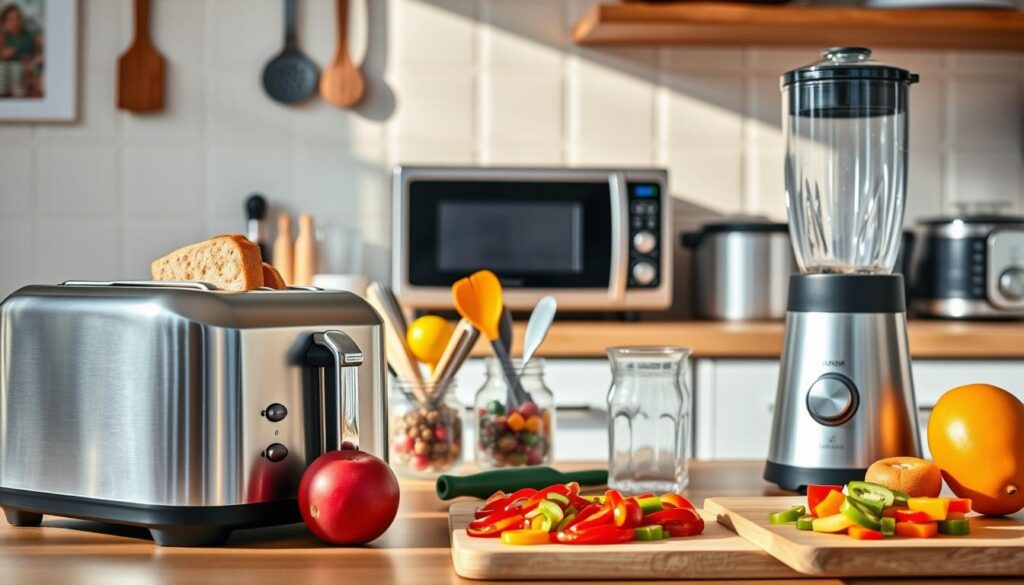
Essential items are ones you use a lot, do many things, save time in meal prep, don’t take up much room, use energy wisely, and last a long time. A fridge, a cooking surface like a stovetop or induction unit, and a microwave are key for everyday use.
Blenders and food processors are great because they let you create more dishes without filling your counter. Items like combi-ovens or an Instant Pot are handy because they can do the job of many tools, saving you space.
Kitchen appliances affect how you cook and the outcome. Ovens give off a steady, dry heat which is different from stovetop cooking. Microwaves are great for reheating and easy cooking.
Blenders and food processors are perfect for smooth purees, sauces, and batters. Steamers and air fryers make veggies tasty and keep their nutrients. Slow cookers and multi-cookers cut down on active cooking time and make cleaning up easier. Picking the right tools means more recipe choices, less time, and less effort.
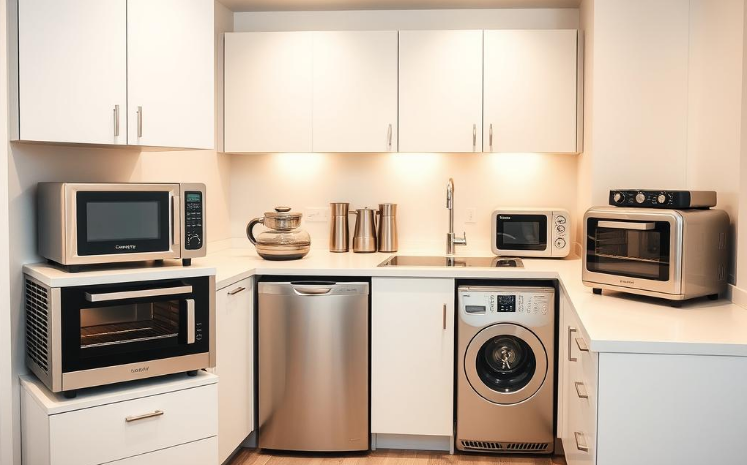
In many U.S. apartments and small homes, there’s not much room. Measure your kitchen first to make sure everything will fit. Begin with the basics: something for refrigeration, cooking, and simple prep.
Your budget should focus on long-lasting and efficient models. Look for refrigerators and appliances that are ENERGY STAR-rated and have clear energy use information. Some high-power items may need their own electric circuit; an electrician can help with this.
Safety and good customer service are important. Choose appliances that are certified by UL or ETL, come with a strong warranty, and have easily reachable support. For simpler use and cleaning, go for designs with parts you can wash in the dishwasher and easy-to-use controls.
| Consideration | Why It Matters | Example Appliance |
|---|---|---|
| Frequency of Use | Predicts value over time and justifies cost | Refrigerator |
| Versatility | Reduces the number of separate units needed | Food processor |
| Footprint & Storage | Determines fit in small kitchens and counter space | Toaster oven |
| Energy Consumption | Impacts operating cost and circuit needs | Induction cooktop |
| Durability & Warranty | Minimizes replacement cost and downtime | Stainless-steel range |
| Ease of Cleaning | Saves time and keeps kitchen sanitary | Blender with dishwasher-safe jar |
| Cost vs. Benefit | Helps prioritize essentials versus nice-to-have gadgets | Instant Pot (multi-function) |
Small appliances help make cooking quicker and less of a hassle. They can change how we prepare meals, save us time, and lessen cleaning efforts. Here, we’ll discuss vital small kitchen gadgets that are great for busy homes.
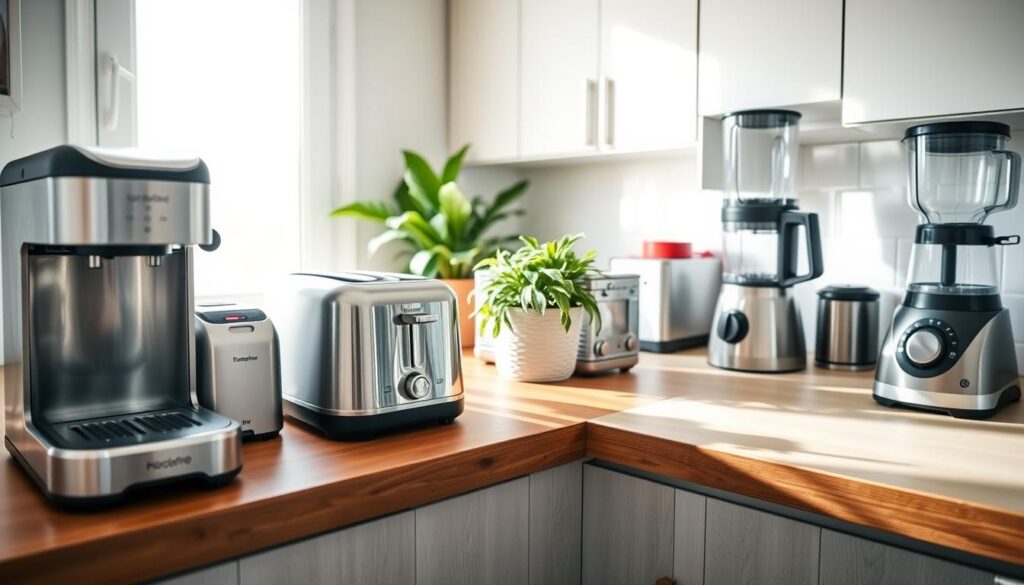
Microwaves are super at warming up leftovers, thawing frozen goods, and quickly cooking veggies. Countertop models are good for renters. Over-the-range types save space, while microwave drawers give a seamless look.
Pick a microwave with the right power for your needs, usually between 700 and 1200 watts. This balances cooking speed with energy efficiency. Features to look for include sensor cooking, stainless interiors that are easy to clean, child safety locks, and your choice of turntable or flatbed. Some microwaves also combine with convection ovens for more cooking options. Top picks come from brands like Panasonic, Toshiba, and Sharp for dependable performance.
Toasters quickly brown your bread and bagels, and toaster ovens can handle small bake and broil jobs. Choose between two-slice and four-slice toasters based on your household size. Toaster ovens are great for warming up pizza, roasting veggies, and making leftovers crispy again.
Look for toasters with adjustable settings, easy-to-clean crumb trays, and flexible temperature controls. If you’re short on space, go for compact models that fit common baking sheets well. Breville, Cuisinart, and Black+Decker have durable options. Their convection settings help bake better and save power. A convection toaster oven is a key item for your kitchen.
Food processors make chopping, slicing, shredding, and pureeing faster. They’re perfect for repetitive tasks and cranking out sauces, doughs, and dips evenly. Small versions are great for little jobs; larger models, from 7 to 14 cups, handle big meals.
Seek out food processors with at least 400 watts for tough tasks. Useful extras include S-blades, shredding and slicing discs, and dough blades. Features like removable bowls and dishwasher-friendly parts make cleanup easier. Look to brands like Cuisinart, KitchenAid, and Braun for strong construction and good warranties. Make sure the processor’s bowl and lid lock securely for safety; models with safety interlocks are safer and offer more peace of mind.
The right set of appliances turns simple recipes into reliable results. This part covers stovetops, ovens, and slow cookers so a beginner can pick the essential cooking equipment that fits their kitchen, budget, and cooking style.
Stovetops offer several fuel choices. Gas gives instant heat control and is favored by many cooks who value a visible flame. Gas requires a professional hookup and good ventilation. Electric radiant or coil models cost less up front and are common in rentals. Smooth-top electric surfaces are easier to clean.
Induction cooktops heat fastest and provide precise control while using less energy. They keep the surface cooler for safety but need induction-compatible cookware with magnetic bottoms, such as stainless steel or cast iron. Many households will need a 240V circuit for induction or certain electric ranges. Brands to consider include GE, Whirlpool, Bosch, Samsung, and specialty makers like NuWave.
Ovens come in conventional and convection styles. Conventional ovens heat from top and bottom elements and deliver predictable results for many classic baking recipes. Convection ovens use a fan to circulate hot air so food cooks more evenly and in less time, which helps with roasting and multi-rack baking.
There are combination options like convection-conventional modes and convection microwave combos. Decide between wall ovens and range ovens. Wall ovens free up counter space. Ranges combine stovetop and oven in one unit. Many modern ovens add self-cleaning features such as high-heat pyrolytic cycles or steam clean. Door gaskets checks keep performance consistent.
Slow cookers excel at hands-off meals. They are ideal for stews, braises, soups, and pulled meats. A 4–6 quart pot suits singles and small families. Larger households may prefer 6–8 quarts. Look for programmable timers, keep-warm settings, and removable stoneware that goes in the oven and cleans easily.
Popular slow cooker brands include Crock-Pot, Hamilton Beach, and Instant Pot in its multicooker mode. For best results, brown meats before placing them in the cooker, avoid lifting the lid during cooking, and follow safe internal temperature guidelines. These appliances rank high among the best kitchen appliances and must-have kitchen gadgets for busy cooks.
Choosing appliances means balancing needs, space, and cost. For many kitchens, combining a reliable range or separate stovetop with a convection oven and a mid-size slow cooker delivers flexible, efficient options. These picks form a core of essential cooking equipment that helps beginners build confidence and expand skills over time.
Refrigeration is vital for a useful kitchen. It keeps food fresh, cuts down waste, and ensures meals are safe. Picking the right fridge is important when you’re setting up a new kitchen.
Choose a fridge that matches your kitchen space and cooking style. Models with freezers at the top or bottom are cheaper. Side-by-side and French door fridges help with organization and hold more food. Use compact or under-counter types if you’re short on space.
Check the space you have, remembering the door needs room to open. Think about how big your family is when choosing size. Small households need 4–6 cubic feet per person, big ones 18–25 or more. Look for energy-saving models from brands like Whirlpool and Samsung.
Look at features like ice makers, adjustable shelves, and smart controls. Pick a finish, like stainless steel, that fits your kitchen’s look. These decisions are key for a good kitchen appliance.
Keep raw meat on the bottom shelf in sealed containers to stop germs. The back of the middle shelf is very cold; it’s good for dairy and leftovers. Organize dairy, deli, and veggies in clear bins with labels to make cooking quicker and prevent food from going bad.
Adjust humidity in drawers for different veggies and fruit. Store sauces in the door to save space on shelves. Don’t pack the fridge too full. Leave room for air to keep it working well.
Clean up spills right away and do a thorough clean every three months. Change the water filter as the maker suggests. These tips help you keep your fridge working well and food safe.
If you cook meals ahead, buy lots of food, or freeze a lot of meat, think about getting a freezer. Chest freezers save more energy and money. Upright freezers help keep things organized with their shelves and bins.
Choose the size you need, from small 3–5 cu ft to big 15+ cu ft freezers. Place chest freezers in a cool, aired place close to an outlet. Think about if you want manual or auto-defrost. Keep the freezer at 0°F or colder and label food with dates.
Brands like Frigidaire and GE are known for their reliable freezers. A good freezer and fridge combo is essential for an efficient kitchen.
A well-equipped prep station makes cooking faster and safer. We will cover the top kitchen tools to have. You’ll learn why each one is a must-have for daily meals.
Choose boards by material and use. Wood boards, like maple and walnut, are soft on blades. They also fight bacteria when you oil and clean them.
Bamboo is a durable, eco-friendly choice. Plastic boards are easy to clean in the dishwasher. Remember to get a new plastic board if it shows deep cuts. This helps avoid harmful germs.
Having at least two boards is smart. Use one for raw meat and another for veggies. Brands like John Boos, OXO, and Joseph Joseph make great boards for any kitchen.
Begin with a chef’s knife, a paring knife, and a serrated bread knife. You might add a utility or boning knife later. These knives are key for everyday cooking.
The material of the blade is important. High-carbon stainless steel is easy to sharpen. Forged blades are usually stronger than stamped blades.
Keep your knives sharp with regular honing and sharpening. Store them safely to avoid accidents. Wüsthof, Henckels, and Victorinox are good brands for beginners.
Accurate measurements make recipes turn out better. Use dry cups for ingredients like flour and liquid cups for wet ones. Look for clear markings.
Measure dry ingredients with a spoon, then level off. When measuring liquids, look at the level at eye height to be precise. Spoons that show exact small amounts are helpful for spices.
A digital scale gives you exact weight. This makes your cooking even more precise. Look for scales from OXO, Escali, and KitchenAid to complete your kitchen toolset.
| Item | Why It Matters | Recommended Brands |
|---|---|---|
| Wood Cutting Board | Knife-friendly surface; antimicrobial when maintained | John Boos |
| Plastic Cutting Board | Dishwasher-safe; color-coding reduces cross-contamination | OXO, Joseph Joseph |
| Chef’s Knife | Versatile for slicing, chopping, and dicing | Wüsthof, Henckels, Victorinox |
| Paring Knife | Precision work: peeling and small cuts | Wüsthof, Victorinox |
| Serrated Knife | Clean cuts on bread and soft fruits | Bread knife options from Henckels |
| Measuring Cup & Spoon Set | Consistent dry and wet measurements | OXO, KitchenAid |
| Digital Kitchen Scale | Precision for baking and portioning | Escali, OXO |
Picking appliances for healthy cooking lets home cooks make meals that save nutrients and cut extra fat. This section points out useful choices among key kitchen appliances. They help make better meals without losing taste.
Air fryers use hot air to create a crispy outside with little to no oil. They are great for fries, wings, and veggies. This gives you a fried feel with fewer calories.
These come in sizes from 2–3 quarts for singles to bigger 4–6 quart ones for families. Basket-style and oven-style air fryers are common. Brands like Philips and Ninja are trusted for their quality.
To achieve even crispiness, don’t pack the basket too full. Shake or flip the food halfway through. Remember, the right portion sizes and balanced meals are important, even with air-fried foods.
Steaming is a soft cooking method that saves veggies’, fish’s, and poultry’s vitamins and minerals. It’s a top choice for health-minded cooks because it adds no fat.
You can choose from bamboo steamers to electric ones for your counter. OXO and Cuisinart make reliable electric steamers.
For best results, steam greens for 2–4 minutes and root veggies longer. Enhance taste with herbs or citrus without adding calories.
Blenders are perfect for smoothies, purées, sauces, soups, and nut butters. Powerful ones can even crush ice and make creamy nut milks. They are crucial in any kitchen.
Nutribullet works well for single servings. For heavy use, Vitamix and Blendtec perform best. Use immersion blenders for soups directly in the pot. Get a blender with 500–1,200 watts for flexibility and a pulse feature for better control.
Always clean blenders quickly to avoid a mess and prevent overheating. Change gaskets when needed to maintain good performance. Explore beyond drinks by trying green smoothies, blended soups, or pancake batters.
| Appliance | Primary Benefit | Typical Size/Power | Notable Brands | Quick Tip |
|---|---|---|---|---|
| Air Fryer | Low-oil crisping for fried favorites | 2–6 quarts | Philips, Ninja, Cosori, Instant Pot Air Fryer | Do not overcrowd the basket; shake mid-cook |
| Steamer | Nutrient-preserving gentle cooking | Bamboo to electric countertop models | OXO, Cuisinart | Steam greens 2–4 minutes; season after cooking |
| Blender | Versatile blending for drinks and meals | 500–1,200+ watts | Nutribullet, Vitamix, Blendtec | Use pulse for texture control; clean immediately |
Beginners will appreciate some new kitchen gadgets for quicker, better results. These tools make prep faster, lessen guesswork, and let small kitchens do more. They are essential for daily cooking needs.
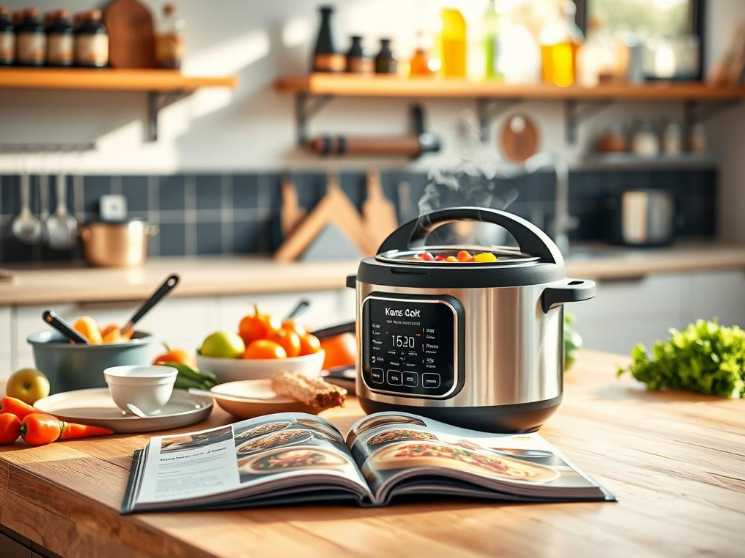
The Instant Pot is an all-in-one electric pot. It does pressure cooking, slow cooking, and much more. It makes cooking beans, stews, and grains faster. You can set it and forget it. It comes in sizes for single people to families. The Instant Pot brand is a top choice. Look for ones with stainless steel pots and safety features. Be sure to follow instructions to use it right.
They’re great for quick dinners, big batches, and simple meals. New cooks will like the easy timing and temperature settings. Models differ in preset options and smart features.
Electric griddles are perfect for pancakes, eggs, and more. They cook evenly and are good for feeding a crowd. Pick the right size for your kitchen. Features to watch for include easy-clean trays, thermostats, and nonstick surfaces. Brands like Presto and Cuisinart are good choices. Cleaning is easy, and they save space.
Sous vide cooking uses water at a steady temperature. It cooks food evenly, keeping in moisture and flavor. You can start with simple zip-lock bags. Brands like Anova are among the top picks. For steaks, cook at 129–135°F to get medium-rare in 1–3 hours. It takes longer but you’ll get perfect results. Always follow safe cooking charts.
| Gadget | Primary Benefits | Recommended Brands | Best For |
|---|---|---|---|
| Instant Pot (Multicooker) | Fast cooking, multiple functions, programmable | Instant Pot | One-pot dinners, grains, beans, yogurt |
| Electric Griddle | Large cooking surface, even heat, easy group cooking | Presto, Hamilton Beach, Cuisinart | Breakfast spreads, sandwiches, stir-fry |
| Sous Vide Immersion Circulator | Precision temperature control, consistent doneness | Anova, Joule (ChefSteps) | Steaks, chicken, eggs, delicate proteins |
Adding a couple of these gadgets can change a beginner’s kitchen game. They join the ranks of essential appliances. Choosing trusted brands and using them properly turns them into must-haves for any home cook growing their skills.
Keeping your kitchen appliances in good shape means they’ll last longer and save you money. This guide tells you how to clean, stay safe, and fix basic problems for common appliances. Anyone can manage these easy steps, making their kitchen work better.
Cleaning Tips for Longevity
Always start by looking at the manufacturer’s instructions. Before cleaning, unplug the appliance and take off any parts that come off easily. Remember to clean trays, lids, and filters in the dishwasher if you can.
To care for your refrigerator, clean the coils once a year and gently clean the door seals with a mild cleaner. Follow the brand’s advice on changing water filters. Clean up any spills in your oven or on the stovetop quickly to avoid hard-to-clean spots.
Small appliances are easy to keep clean. For blenders, mix some warm, soapy water inside and rinse well. Take out the crumb trays from toaster ovens, and clean air fryer baskets as the manual suggests. Wash knives by hand and dry them right away to keep them from rusting.
You should also look after your chopping boards. Oil wooden ones each month with a safe oil to keep them in good shape and stop them from bending out of shape. If your board gets deep cuts, get a new one to keep germs away.
Safety Practices to Follow
Big appliances like microwaves and electric ovens should have their own circuits. Put GFCI outlets near sinks to lessen the chance of electric shock. Don’t let cords touch hot areas or go through doorways.
Keep things that can catch fire away from the stove. Never leave cooking pots without watching them. Have a fire extinguisher nearby in case of kitchen fires. Using child locks and keeping knives out of reach can keep kids and pets safe.
Be sure to handle food safely. Check that chicken is cooked to 165°F with a thermometer. Cool down food that can spoil quickly and avoid mixing utensils for raw meat and veggies to stop germs from spreading.
Common Issues and Troubleshooting
If your fridge isn’t cold, check the settings and look at the coils for dust. Make sure the seals are tight and look up any error messages. For compressor issues, it’s best to call a pro.
If your microwave won’t heat, try plugging it into another socket and make sure the turntable works. Often, a broken magnetron means it’s better to get a new microwave than to fix it. For problems with stovetops, unclog the burner holes and adjust the igniters.
Too many appliances on one circuit can cause power outages. You might need to plug them into different circuits or get an electrician to install new lines. When repairs are too expensive, it’s often smarter to just buy a new appliance.
| Appliance | Routine Care | Common Problem | First Action |
|---|---|---|---|
| Refrigerator | Clean coils yearly; wipe seals; replace filter | Not cooling | Check coils and door seal; verify temp setting |
| Oven / Stovetop | Wipe spills immediately; use suitable cleaners | Ignition fails or burners clog | Clean burner ports; test igniter alignment |
| Microwave | Wipe interior after use; check turntable | Not heating | Try different outlet; inspect fuse; consult manual |
| Blender | Blend warm soapy water; wash removable parts | Leaks or blade dullness | Replace gasket; sharpen or replace blade assembly |
| Toaster oven / Air fryer | Empty crumb trays; wash removable racks | Smoke or uneven cooking | Clean heating elements and trays thoroughly |
| Cutting boards & knives | Hand-wash knives; oil wooden boards monthly | Staining or dull blades | Sand and re-oil boards; sharpen knives professionally |
Creating a kitchen that works well begins with smart choices. Think about daily routines when you set it up. A good layout has the sink, fridge, and stove forming a work triangle. This makes cooking and cleaning faster. Beside main appliances, have space for placing items. Include lights over areas where you prepare food. Use clever storage like pull-out shelves to keep things tidy and give you more room.
Put countertops near the stove and microwave for easy food prep and serving. Hidden spots for small items keep them handy but out of sight. A good ventilation system is key, especially with a gas stove. Also, organize cleaning supplies under the sink for easy access, without filling up drawers.
Focus your budget on key appliances: a good fridge, a reliable stove, and basic tools like blenders and knives. Knowing the usual prices helps plan your spending. For example, a simple microwave may cost between $60 and $150. A fridge usually costs $800 to $1,500. Induction cooktops can range from $500 to over $3,000. To save money, look for sales, think about refurbished items, and consider financing options or warranties.
Grow your kitchen gear in steps. Start with the basics: fridge, oven, microwave, knives, and a cutting board. Next, add useful small tools like a blender and toaster oven. Later, think about specialty gadgets like an air fryer or espresso machine, depending on what you like. Always aim for energy-efficient choices, recycle old appliances properly, and pick long-lasting warranties for big items.