Our Location
1250 Beacon Street
Brookline, MA 02446
Solve the mystery of your blender's burnt smell with our guide on motor and carbon brush maintenance for a fresh start.
Did you know about 40% of blenders get a burnt smell during use? This smell can make users worry about safety and the blender’s condition. Often, a burnt smell points to problems with the motor or carbon brushes. Knowing how to fix this is key to keeping your blender working well.
We’ll look at why blenders give off a burnt smell. You will learn how to handle this issue quickly and effectively. Let’s find out why your blender might smell bad and how to fix it before it gets worse.
A burnt smell from your blender is worrying but can be fixed. Knowing why can prevent bigger issues. Many reasons, like motor problems, cause this smell. Here are key things to look out for.
The main cause is often overheating. This makes the motor release a burnt odor. This usually happens when:
There are signs besides the burnt smell to look for. Watch out for these:
Smelling a burnt odor from your blender is worrying. You must act fast to protect yourself and keep the blender working well. If you ignore the smell, your blender might get damaged or even start a fire. Below are the steps you should take right away.
If you smell something burning, stop using the blender right away. Follow these important steps:
Knowing when to unplug the blender is key. Unplug it if the burnt smell stays or if the blender makes odd sounds. This lowers the dangers of electrical issues. If smoke comes from the blender, unplug it immediately for your safety.
The motor is key to how well your blender works. It makes the blades spin fast, letting you blend, chop, and puree easily. Knowing about the motor helps when your blender smells burnt. This knowledge helps avoid damage and keeps your blender working longer.
Notice any blender performance changes. Signs of motor issues are:
These symptoms suggest the motor might be struggling or breaking down. Checking regularly helps catch problems early. This makes fixing a burnt smell easier.
Figuring out motor issues starts with simple steps. Always unplug the blender first to stay safe. Look at the motor for signs of damage, like:
Then, plug in the blender and listen. Watch how fast it blends. If you still have issues, the user manual may have tips on fixing that burnt smell.
Carbon brushes are small but vital for your blender. They help conduct electricity within the motor. If they work well, your blender runs smoothly. Faulty ones, however, can make your blender smell burnt. This often means there’s a problem.
Carbon brushes transfer electrical current to the motor. They touch the rotating commutator for efficient operation. But, they wear down over time due to friction. Keeping them in good shape is crucial.
Spotting worn-out carbon brushes early can prevent bigger issues. Check for these signs:
It’s easy to replace carbon brushes. Just follow these steps:
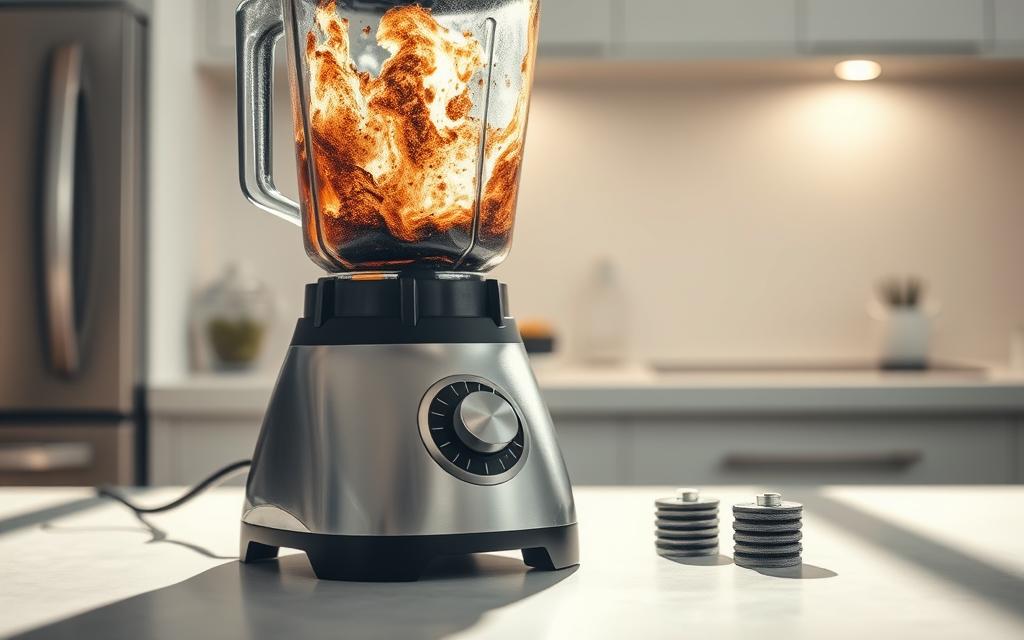
Keeping your blender in good shape is key for its best performance and long life. Regular care stops bad odors, including that burnt smell that signals trouble. The right cleaning methods and how you use it are big factors.
To avoid a burnt smell, keep your blender clean. Leftover food can heat up and make the motor work too hard. Here’s how to clean it well:
Correct use of your blender helps avoid overheating and bad smells. Follow these tips for good results:
Knowing how to check your blender is key for keeping it running well and safely. When you smell something burnt from your blender, it’s important to act quickly. Testing it regularly can help you find problems early, making sure everything electrical is working right.
If your blender smells odd, check the electrical connections first. A loose or damaged wire could be why your blender smells burnt. Here’s how to check the electrical parts:
A good look at your blender can show problems that might cause a burnt smell. Focus on these areas:
By checking electrical parts and looking over your blender, you can help stop burnt smells. This way, your blender stays safe and works great.
| Inspection Item | What to Look For | Action Needed |
|---|---|---|
| Power Cord | Signs of wear or fraying | Replace if damaged |
| Electrical Connections | Loose or corroded wires | Reconnect or repair |
| Blades | Dullness or damage | Sharpen or replace |
| Motor Housing | Discoloration or scorch marks | Inspect further for internal damage |
It’s common to worry when your blender makes odd noises or gets too hot. Understanding these issues helps explain why it might smell burnt. Knowing what the noises mean lets you act fast. This prevents more damage to your blender.
Unexpected sounds like grinding, rattling, or buzzing from your blender need checking. These sounds could be because of:
Notice these sounds? Check your blender. They might explain a burnt smell. This smell often means the blender is overheating.
Overheating is a big problem. It often leads to a burnt smell, making one wonder, “why does my blender smell burnt?” Overheating signs are:
Checking your blender often can reduce overheating. It helps avoid the burnt smell linked to these problems.
| Noise Type | Possible Cause | Solution |
|---|---|---|
| Grinding | Worn-out blades | Replace blades |
| Rattling | Loose components | Tighten connections |
| Buzzing | Motor strain | Check motor and reduce load |
Choosing to repair or buy a new blender can be hard, especially with a burnt smell. The blender’s age, repair costs, and your usage affect your choice. Knowing these can help you decide on fixing the burnt smell or getting a new blender.
Think about these when considering a repair:
At times, you’ll need a new blender. Look out for:
Your choice to repair or replace depends on these factors. The burnt smell in your blender is a key indicator.
| Consideration | Repair | Replace |
|---|---|---|
| Age of Blender | New or high-quality brands | Older models |
| Cost of Repair | Less than 50% of new cost | More than 50% of new cost |
| Severity of Damage | Minor issues or components | Significant motor problems |
| Persistent Burnt Smell | Temporary fix possible | Ongoing issue, likely to recur |
| Efficiency and Technology | Sufficient for needs | Outdated feature set |
Knowing when to get help from a pro can save you both time and cash. Some issues with your blender are minor and you can fix them yourself. But for bigger problems, you need someone with experience.
If you can’t figure out the problem, or if the smell doesn’t go away, it’s time to call an expert. This step is crucial for your blender to work right and be safe.
Look around for shops that fix kitchen tools. Reading reviews and getting suggestions from people you know can help. This way, you’ll find someone good at fixing blenders.
It’s important to pick a service that knows a lot about blenders. Their experience means they can find and fix the problem fast.
At the repair shop, they’ll check your blender carefully. The technician will do tests to find what’s wrong. They’ll also talk about the cost and what needs to be done.
Being open with you means you’ll know exactly what’s happening. With the help of a pro, your blender will be like new again.