Our Location
1250 Beacon Street
Brookline, MA 02446
Experience a faster brew with our guide on fixing a coffee maker that drips slowly, including descaling tips and filter replacement steps.
Did you know scale buildup can cut down your coffee maker’s water flow by up to 40%? This shows a big problem many coffee lovers have: a slow drip coffee maker. When you’re in a hurry, a slow coffee maker can be a real pain.
In this guide, we’ll tell you how to clean your machine and change filters. These steps are key to fix a slow coffee maker. For best performance, clean your coffee maker every few months.
A slow-dripping coffee maker can be a real headache in the morning. Knowing why this happens can make fixing it easier. Usually, it’s a few things adding up that slow down your coffee maker. Let’s look at what causes this issue.
Several things can make your coffee maker drip slowly:
Getting the water temperature right is key for good coffee. The best temperature for brewing coffee is between 195°F and 205°F. If your machine doesn’t hit these temperatures, your coffee will be less flavorful. Always check this to keep your machine working well.
Keeping your coffee maker clean is key to its best performance and longer life. Descaling it regularly helps keep it working well. Watch for signs that it’s time to descale, like your coffee maker running slow. This stops problems like slow dripping from getting worse.
Your coffee maker might show you it’s time to clean it. Keep an eye out for these clues:
To keep your coffee maker running smoothly, clean it every three months. In places with hard water, you might need to clean it more often. This stops problems like slow coffee flow and keeps your machine efficient.
| Water Hardness Level | Descaling Frequency |
|---|---|
| Soft Water | Every 4-6 months |
| Moderate Water | Every 3-4 months |
| Hard Water | Every 1-2 months |
Coffee filters are key in how fast your coffee brews. Knowing about different types can make your coffee better. Some filters make the water flow slowly, while others speed it up. The right filter gives you efficient brewing and great taste.
There are many coffee filters, each changing brewing speed in its way:
| Filter Type | Material | Brewing Speed Impact |
|---|---|---|
| Paper Filters | Wood pulp or bleached paper | Typically slower brewing due to absorption of water |
| Metal Filters | Stainless steel or gold | Faster flow, allowing oils and finer particles to pass through |
| Built-in Water Filters | Carbon or other filtration materials | Can slow down water flow if clogged but improve taste |
A clogged filter will slow down your coffee maker. It happens when particles block the water flow, making brewing take longer. You’ll notice longer brewing times, uneven dripping, and worse coffee taste.
To keep your coffee maker working well, take care of your filters. Clean or swap them out when needed. Good maintenance means better coffee, as it ensures fast and effective brewing.
Keeping your coffee maker in top shape requires regular descaling, especially if it brews slowly. This step not just makes your appliance last longer but also makes your coffee taste better. Here’s a quick guide on how to descale your machine.
To keep your slow drip coffee maker in good condition, choose safe descaling solutions. Many go for commercial options like Urnex. But, a mixture of vinegar and water works well too. Both choices effectively clear out mineral deposits.
Always check your coffee maker’s manual before descaling. This ensures optimal water flow and preserves the full taste of your coffee.
Switching out coffee filters is key to keeping your coffee’s taste and performance top-notch. The type of filter you pick can really change how your coffee brews, especially with a slow extraction coffee maker. Knowing the options helps you find the best filter for you.
Different coffee filters offer unique pros and cons. Here’s a brief look:
| Filter Type | Material | Pros | Cons |
|---|---|---|---|
| Paper Filters | Disposable | Easy to use, great at catching fine coffee grounds | Generates waste, can impart a paper taste if not rinsed |
| Metal Filters | Reusable | Durable, environmentally friendly, allows oils for a fuller flavor | May let sediments through, requires more cleaning |
| Cloth Filters | Reusable | Soft, enhances flavor without impurities | Can retain odors if not cared for properly |
Putting in a new filter the right way ensures great brewing. It also helps you dodge issues with slow extraction coffee makers. Just follow these steps:
To keep your coffee maker in top shape, it’s important to have good maintenance habits. Cleaning often and following best practices for coffee makers is key. This helps avoid problems like slow dripping and makes sure your coffee is always great.
Regular cleaning keeps your coffee maker running well. Wash removable parts after each use to stop oil and coffee build-up. Do a deep clean every week or two to descale and clean thoroughly. This stops slow drips and ensures your coffee tastes good.
Using the correct coffee grind and filter type boosts your coffee maker’s performance. Make sure to measure your coffee and water right for the best brew. Don’t let coffee sit too long after brewing. Move it to a thermal carafe to keep its temperature without burning. Also, keep the area around your coffee maker clean and place it on a steady surface.
| Maintenance Task | Frequency | Notes |
|---|---|---|
| Rinse removable parts | After each use | Prevents oil and residue buildup |
| Deep clean and descale | Weekly/Biweekly | Recommended solutions include vinegar or commercial descalers |
| Change coffee grind/filter type | With each brew | Influences brewing speed and flavor |
| Transfer brewed coffee | After brewing | Avoids burnt flavors and keeps coffee fresh |
Sometimes, coffee makers drip slowly because of mechanical problems. It’s not always about descaling or cleaning filters. Knowing how to deal with these issues helps you fix your coffee maker. By checking the inner parts, you might find blockages or faults causing delays.
Check these parts if your coffee maker drips slowly:
To fix mechanical issues, you need to be careful. Follow these steps:
Keeping your slow brewing coffee machine in top shape is key for great coffee. Regular descaling is crucial for maintaining a slow drip coffee maker. Here are some top products and natural options to keep your machine clean.
For commercial descaling solutions, these options have great reviews:
| Product Name | Type | Compatibility | Effectiveness |
|---|---|---|---|
| DeLonghi EcoDecalk | Citation | Many brands | Highly effective |
| cleaningvinegar | Liquid | Universal | Good effectiveness |
| Urnex Dezcal | Powder | Compatible with most | Excellent |
| JavaPresse | Liquid | Universal | Good |
If you like using natural methods, try white vinegar or citric acid. They’re effective at removing mineral deposits. This keeps your coffee machine running smoothly. To use:
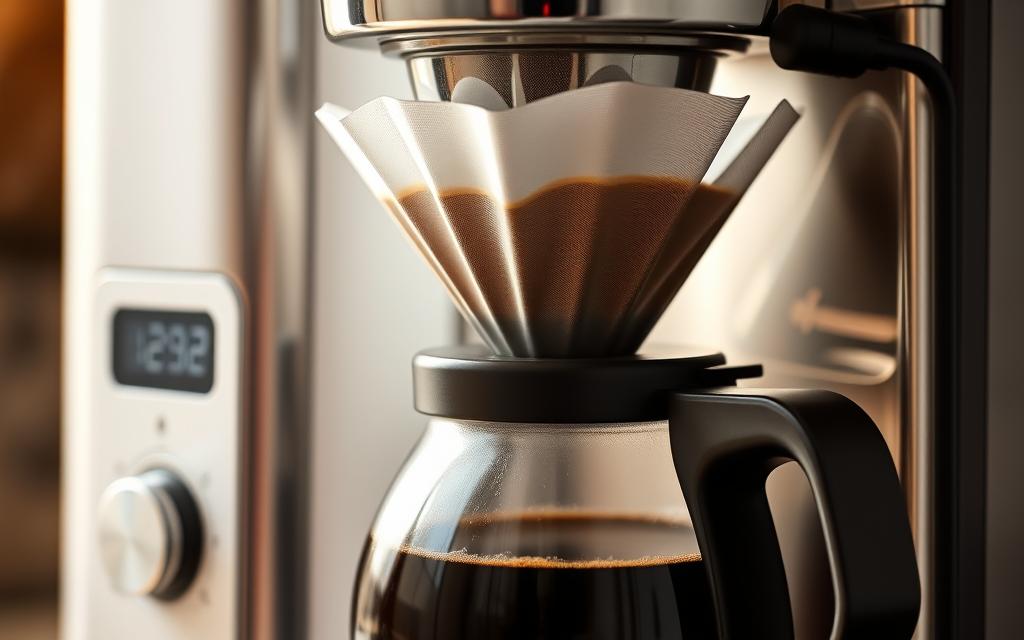
If you love coffee but your machine drips slowly, even after cleaning, think about getting a new one. When your coffee maker can’t make a good cup or looks old, it’s probably time for an upgrade. A slow brewing coffee maker can make mornings less enjoyable.
You should get a new coffee maker if yours often breaks, leaks, or can’t get hot enough. If it still drips slowly after trying to fix it, a new model could make your life easier.
Looking for a new coffee maker? Brands like Breville and Cuisinart are known for being fast and easy to use. Think about what you like, such as single-serve like Keurig or traditional brewers. These tips can make your coffee experience better and each cup more enjoyable.