Our Location
1250 Beacon Street
Brookline, MA 02446
Struggling with laundry woes? Learn how to fix dryer issues when your dryer clothes take too long to dry for more efficient laundry days.
Did you know nearly 90% of dryer problems come from clogged vents? This fact shows how not paying attention to small details can lead to longer drying times and higher energy bills. If your clothes take too long to dry, you’re not the only one. Many people struggle with this due to not cleaning their dryer vents.
This guide will explain why cleaning your dryer vents is key. Keeping them clean helps your clothes dry faster and more efficiently. We’ll share tips on how to fix dryer problems too. This way, you can save on your energy bill and enjoy dry clothes sooner.
Many folks find that their clothes don’t dry as fast as they should. Figuring out what’s wrong can make laundry day better. Several things cause drying to take too long, wasting both time and energy.
Using the wrong dryer settings is a big problem. It’s important to choose the right cycle for your clothes. Another issue is putting too many clothes in the dryer at once. This stops hot air from moving around well.
Not cleaning the lint filter can also cause trouble. It’s a simple step that many skip.
Good airflow is key to drying clothes fast. If your dryer’s vent is blocked, it won’t work well. Keeping the vent clear lets hot air escape, making everything dry quicker.
Knowing when your dryer isn’t working right can help avoid bigger issues. If your dryer gets too hot on the outside, something might be wrong. Clothes taking longer to dry or a burning smell also mean it’s time for a check-up.
Dryer vents are key to the drying process. They send warm, moist air outside. This keeps humidity from building up in the dryer. Well-maintained dryer vents make drying clothes faster and more efficient.
A dryer heats up and spins wet clothes, creating moisture. The vents push this moist air outside through ducts. This process works best when vents are clear, leading to quicker drying and less energy use.
Clogged vents lead to trouble. They slow down airflow, making drying take longer. This can mess up your schedule and boost your energy costs. Plus, lint buildup is a fire risk. It can make the dryer overheat, threatening your home’s safety. It’s important to keep dryer vents clean to avoid these risks.
Air moves around in clothes dryers, helping get rid of moisture from fabrics. If the air moves well, it dries clothes faster. But if something blocks the air, drying takes longer. Knowing how air movement affects drying can point out problems and ways to fix them.
If you don’t pay attention to airflow, your dryer may overwork. Blocked airflow keeps moisture in clothes, needing more drying cycles. This uses more energy and takes more time. A good dryer needs clear air paths to work best.
Here’s how to make air move better and dry your clothes faster:
By following these steps, you’ll see better airflow and your dryer will work faster and more efficiently.
Cleaning your dryer vent is crucial for good performance and preventing fires. This guide will show you the proper way to clean your dryer vent system. By following these steps, you can clean thoroughly.
It’s important to be safe when cleaning your dryer. Always unplug it first. Make sure the area is airy, especially when using cleaners. Wear goggles and gloves to avoid getting dust and lint in your eyes or on your skin. These safety steps can help avoid accidents and injuries.
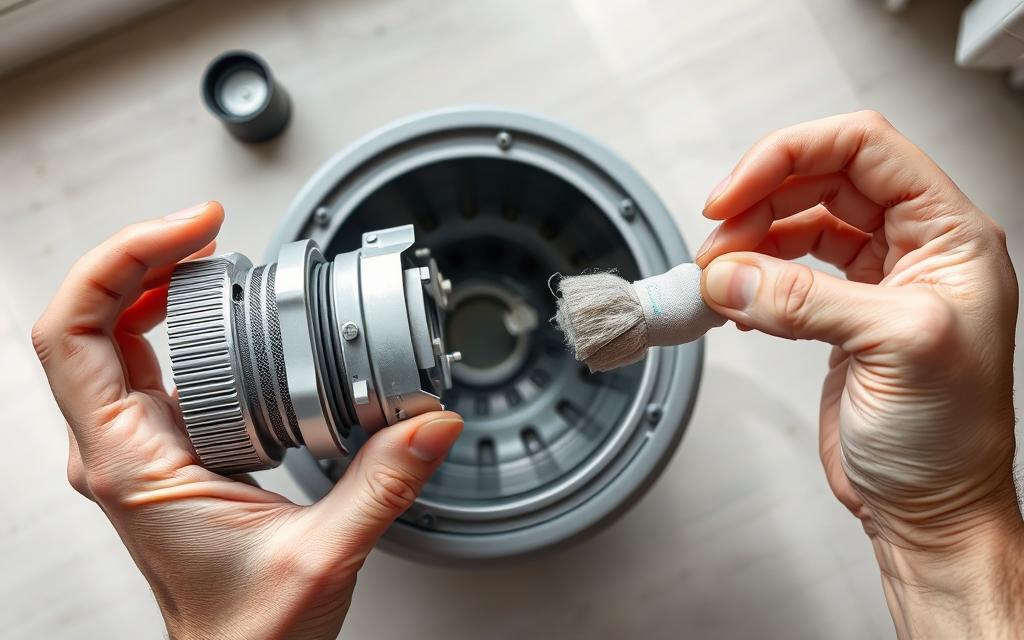
It’s key to spot signs of a clogged dryer vent to keep your appliance running well. Common signs include your clothes taking longer to dry, your dryer getting very hot, and seeing lots of lint near the vent openings. Not paying attention to these signs might increase your bills and even pose a fire risk. Knowing how to look for blockages can help solve these problems quickly.
There are several signs to watch for if you think your dryer vent might be blocked:
Keeping your dryer working its best means checking for and fixing blockages. Follow these steps to troubleshoot effectively:
Looking after your dryer helps it work better. Doing regular upkeep not only makes it last longer but also gets your clothes dry faster and better. By following easy cleaning tips often, you can keep future problems at bay.
Simple, everyday actions can greatly improve how your dryer works. Here are some cleaning steps to consider:
Even with regular cleaning, it’s important to get a pro to check your dryer yearly. They do a deep clean and inspection. This keeps your dryer in top shape. Professional care helps by:
Knowing when to switch out your dryer is a smart move. It saves time, energy, and money. Watching for signs dryer needs replacement is key. If your dryer often breaks down or is over ten years old, think about getting a new one. Let’s look at the clear signs your dryer’s done and think about what a new dryer might cost.
Think about the costs of a replace your dryer before getting a new one. Newer models are pricier at first, but save money over time because they use less energy. Here’s what the costs look like:
| Type of Dryer | Average Purchase Price | Estimated Annual Energy Cost | Average Lifespan |
|---|---|---|---|
| Standard Electric Dryer | $600 | $150 | 10-15 years |
| Gas Dryer | $700 | $100 | 10-15 years |
| Energy-Efficient Dryer | $900 | $80 | 15-20 years |
Understanding these cost considerations new dryers is crucial for making the right choice. Yes, a new dryer might seem pricey at first. But, the benefits in the long run are worth it.
Buying an energy-efficient dryer is key for managing your drying time and costs. These dryers dry clothes faster and use less power. Choosing a dryer with good energy ratings can lower your bills and make laundry day quicker.
Modern dryers save power with the latest technology. They have sensors to figure out how wet your clothes are. This means they don’t use more energy than needed, which saves money over time.
It’s important to look at energy ratings when picking a dryer. Dryers with the ENERGY STAR label are very efficient. Knowing how much energy a dryer uses can help you understand its cost over time. Here’s a table to compare different dryers:
| Dryer Model | Energy Rating | Annual Energy Cost | Key Features |
|---|---|---|---|
| LG DLEX4000W | ENERGY STAR | $45 | Sensor Drying, SmartThinQ Technology |
| Samsung DVE45R6100C | ENERGY STAR | $50 | VRT Plus Technology, Vent Sensor |
| Whirlpool WED5000DW | Standard | $75 | AutoDry Drying System |
By looking at energy ratings, you can make a smart choice on dryers. This choice not only improves your laundry routine but is also better for our planet.
Let’s wrap this up by stressing the importance of knowing your dryer and its parts. To make your drying process easier, start by getting the basics right. This includes optimizing how much you load, using the correct settings, and doing regular check-ups. These steps not only save time but also extend your dryer’s life. A dryer that’s looked after well makes laundry day a breeze.
Seeing issues that won’t go away? Then, it might be time to get a pro to look at your dryer. Experts can spot problems that stop your dryer from running smoothly. Fixing problems early means avoiding big repair bills later. Plus, it keeps your home safe and your laundry routine smooth.
To sum it up, paying attention to a few important details can make drying clothes less of a chore. The right methods lead to faster drying times and a system you can rely on. This means your laundry is done quicker, making your household run more smoothly.