Our Location
1250 Beacon Street
Brookline, MA 02446
Struggling with your dryer not heating? Learn to test the thermal fuse, heating element, and thermostat to fix the issue efficiently at home.
Did you know nearly 90% of dryer problems come from just three parts? This fact shows how important it is to know about your dryer, especially when it won’t heat. A dryer that’s not working right can mess up your whole laundry process. It’s crucial to figure out the problem quickly.
In this guide, we’ll look at the main parts to check—the thermal fuse, heating element, and thermostat. These could be why your dryer isn’t heating. Learning to test these components can save you from having to call in costly expert help. Whether you want to fix a non-heating dryer yourself or are just beginning to troubleshoot, this guide will help you feel more confident and clear.
Having a dryer that doesn’t heat up can cause a lot of frustration. It’s important to know why this happens. This knowledge can save you both time and effort. The cause may be anything from simple to complex electrical issues. Understanding these can help you fix the problem more efficiently.
Several reasons might be why your dryer isn’t heating as it should:
Sometimes, if the dryer’s temperature setting is off, it might seem like it’s not working right. Make sure you set your dryer to the right temperature for your clothes. If not, your clothes may stay wet. This could make you think the dryer isn’t heating up enough.
Keeping your dryer in good condition is crucial. Regularly cleaning lint filters and ducts ensures good airflow. This prevents overheating and other problems. A dryer that’s well-cared for is less likely to have issues. This makes it easier to deal with any heating problems that might come up.
Knowing when a dryer isn’t heating right can save time and stop further issues. Many signs show your dryer might not work correctly. It’s key to act fast to fix these problems, so clothes aren’t still wet after drying.
Are your clothes still damp after a full dryer cycle? This could mean your dryer has problems. Normally, a dryer should get clothes dry within the set time. If clothes are often damp, it might not be heating up as it should.
Pay attention to any strange sounds from your dryer. Odd noises could point to mechanical problems affecting its heating. Grinding, squeaking, or thumping noises might mean your dryer needs a check-up, especially if it’s not heating well.
Look over your dryer for any clear damage, like around the heating element and lint trap. Scorch marks or melted parts suggest a bigger issue. A dryer that’s not heating correctly could be a safety risk, so fix any damage right away.
A thermal fuse stops your dryer from getting too hot, helping to avoid fires. If your dryer isn’t warming up, this fuse might be why. Learn to test the thermal fuse to fix heating problems easily.
A thermal fuse is a key safety feature in many dryers. It shuts off power if it gets too hot inside. This prevents the dryer from overheating, which is crucial for safety and keeping your dryer working right.
Finding the thermal fuse depends on your dryer’s design. It’s usually near the exhaust duct or inside the dryer. Check your manual to find it, or look online for your dryer’s model.
To test the thermal fuse, do the following:
Make sure you test the thermal fuse often. It keeps your dryer safe and working well. Remember, blocked exhaust ducts can break the fuse, so clean them to avoid problems.
Understanding how your dryer’s heating element works is key to fix heating problems. This element generates the needed heat to dry clothes. If it breaks, your dryer won’t heat up right, leaving clothes damp.
The heating element is vital for drying clothes. It turns electrical energy into heat, warming the air in the dryer. A malfunction means the dryer won’t reach the right temperatures to dry clothes well.
There are signs that your heating element might be broken. These include:
Spotting these signs early is crucial. It helps you repair your dryer fast, so it works right.
To figure out if your heating element is broken, you can do a simple test with a multimeter. Follow these steps:
Knowing how to check your dryer helps save on repairs. Always maintain your dryer to keep the heating element working well.
If your dryer isn’t heating right, it’s smart to check the thermostat. Dryers use different thermostats, like cycling and high-limit ones, to control the heat. If there’s a problem with the thermostat, the dryer might not heat properly.
It helps to know the different thermostats your dryer has. Common types are:
Spotting a bad thermostat early can save you trouble. Look out for these signs:
To test the thermostat, follow these steps carefully:
Making sure your dryer has good ventilation is key for it to work right and safely. If vents get blocked, your dryer might not heat up enough to dry your clothes well. Knowing how air flow affects your dryer helps you keep it up and avoid dangers.
Blocked vents make it hard for your dryer to get hot enough. This means clothes take longer to dry and use more energy. If you don’t fix blocked vents, your dryer could overheat and start a fire. It’s important to regularly check and keep the vent system clear.
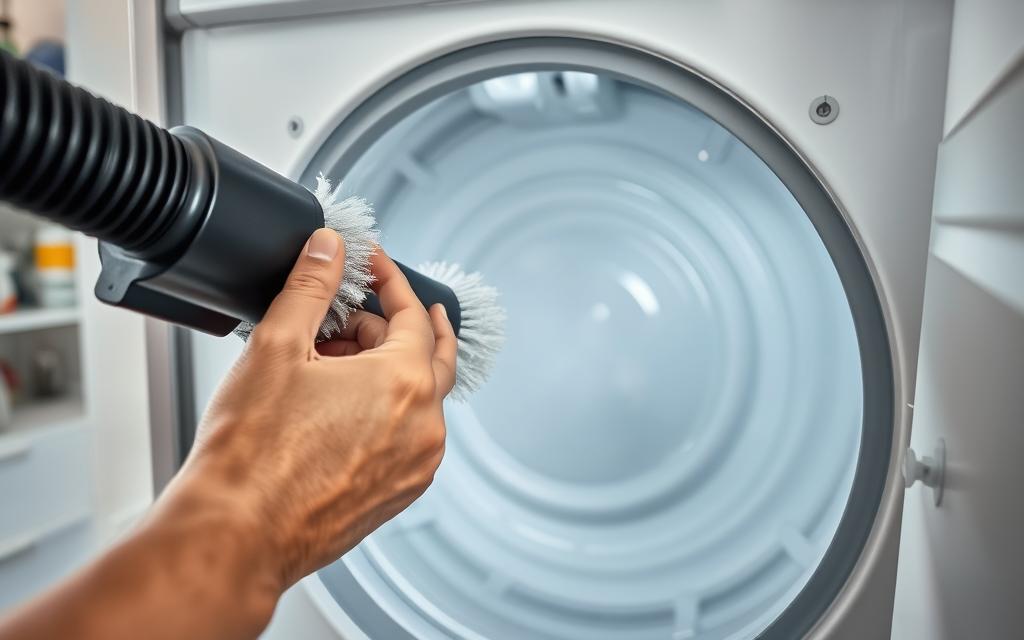
A vent system free of blockages lets hot air move easily, which is key for drying clothes well. Accumulated dust and lint can really cut down a dryer’s ability to work well. Cleaning your dryer vents often ensures it dries fast and lowers your energy costs.
It’s smart to clean your dryer vents yearly for the best performance. If you often dry heavy things like towels and blankets, you might need to clean them more. Setting reminders can keep your vents clear, which helps your dryer run safely and well.
When your dryer doesn’t heat up, electrical problems might be the reason. It’s crucial for dryers to have a steady flow of electricity to work right. Looking into power supply, circuit breakers, and wiring is key to fixing these issues.
Electric dryers need a stable 240 volts to run well. If power lacks, parts won’t work correctly, and the dryer won’t heat. It’s important to make sure your dryer is on its own circuit that can handle it.
Sometimes, a circuit breaker may trip and cut power to your dryer. This might happen without you noticing until the dryer stops heating. You should check the circuit breaker panel first if there’s a heating problem. Also, look at fuses for damage or issues.
Bad wiring can cause big electrical problems and are hard to pinpoint. Loose connections might make power come and go, making the dryer cold. You need to check wires for damage or loose ends. This helps avoid overheating or fire dangers.
| Electrical Component | Signs of Issues | Required Action |
|---|---|---|
| Power Supply | Dryer not producing heat | Check circuit voltage |
| Circuit Breaker/Fuses | Tripped breakers or blown fuses | Reset breakers or replace fuses |
| Wiring | Burnt smell or scorch marks | Inspect and repair faulty wiring |
If your dryer isn’t heating up, it might be time to see a professional. You should especially do this if you notice strange sounds or if it’s still not working after you’ve tried fixing it. These signs mean the problem could be more serious and require expert help.
Knowing when to stop trying to fix things yourself can save you effort and cash. Watch out for these signs:
When experts take over, they will do a full check-up. They look over everything, from parts to wires, and find problems you might not see. This way, they fix all the issues, so your dryer’s problems don’t come back.
Finding a skilled technician is crucial for a good repair job. Make sure to do some homework on local technicians. Here’s what to think about:
To prevent future problems, it’s crucial to perform regular maintenance on your dryer. Focusing on essential parts will keep it running smoothly and efficiently. This way, you can enhance its drying efficiency and avoid issues.
Inspecting your dryer’s parts often is essential. You should:
It’s vital to clean the lint trap after every use. A full lint trap can block airflow. This not only drops efficiency but also can lead to fires. So, make cleaning it a habit to keep your dryer working well.
To make your dryer last longer, follow some key practices. Keep in mind:
If your dryer isn’t heating, try some easy fixes first before calling a pro. Simple steps can often fix the issue without making things worse.
Start with the basics to get your dryer working again. Make sure it’s plugged in. Check that the circuit breaker hasn’t tripped. Look at the lint trap too; if it’s full, your dryer might not heat well.
Your dryer’s manual is packed with useful tips. It guides you through troubleshooting steps. This helps you understand your dryer better before you call for help.
Sometimes, trying to fix the dryer can get too complicated. If you’re stuck or unsure, it’s best to stop and call a professional. They can prevent accidents and get your dryer fixed the right way.
When you buy a dryer, you need to know what the warranty covers. This info can help save time and money if there’s a problem. Most warranties cover issues like defects in materials and how it’s made. It’s important to know what’s in your warranty for making claims. If you use the dryer wrong or fix it without permission, you may lose your warranty.
Dryer warranties usually cover certain parts and problems. They often include:
Check your warranty papers to know exactly what’s covered. This helps you make sure you follow the rules.
If you need to file a warranty claim, here are the steps:
Having the right documents and contacting the company quickly are key to a smooth claim process.
It’s important to keep your warranty valid. To do this, follow these tips:
Following these steps will help keep your warranty safe. Then, it can help you when you need it.
It’s important to fix dryer problems quickly to avoid bigger damage and the chance of it breaking down. If you don’t pay attention to warning signs, you could end up paying a lot for repairs. Acting fast can save you time and money, making sure your dryer works well and avoids more issues.
To keep your dryer running well, regular maintenance is crucial. Check things like the thermal fuse, heating element, and thermostat often. This prevents small problems from getting worse. Also, making sure vents are clear and unblocked is key to consistent drying and efficiency.
Knowing how your dryer works makes you a smarter homeowner. Learning to fix small problems on your own can quickly deal with certain issues. By taking good care of your dryer and learning about it, you make it last longer and ensure smoother laundry days.