Did you know over 38% of Americans choose gas ovens for their speed and trustworthiness? However, a gas oven that turns off by itself can be annoying. This issue interrupts cooking and may hint at safety valve problems. This article covers how to handle such issues for an improved cooking experience.
Understanding Why Your Gas Oven Shuts Off Unexpectedly
Why does my gas oven turn off unexpectedly? If you find yourself asking this, it’s vital to recognize the signs. Knowing the symptoms can lead us to find the cause. A suddenly turning off oven has many warning signs.
Common Symptoms of a Shutting Off Gas Oven
Your gas oven might show several warnings if there’s a problem. Look out for symptoms like:
- The oven flame keeps going out.
- Inconsistent heating during cooking.
- Unusual odors or sounds while in operation.
- Delayed ignition or burner failure.
Possible Causes of the Issue
Figuring out why your gas oven keeps shutting off can make fixing it easier. Many factors could be the cause:
- Gas supply issues: Low gas pressure or disruptions could extinguish the flame.
- Faulty ignition systems: A broken ignition might not keep the oven lit, turning it off suddenly.
- Defective thermocouples: A bad thermocouple could make the gas flow uneven, leading to a shutdown.
Thermocouple: What It Is and How It Works
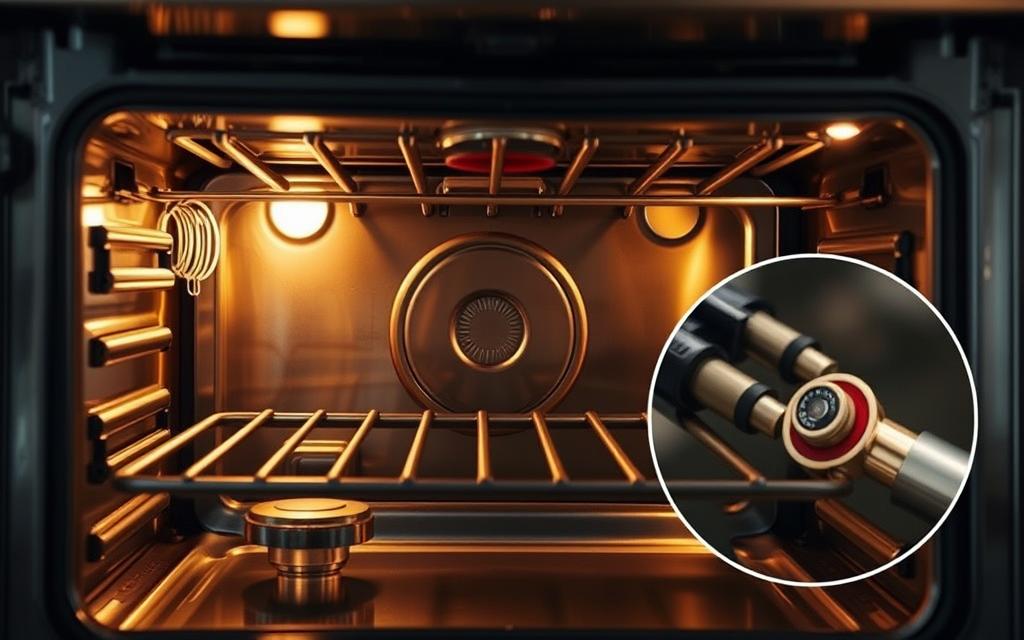
A thermocouple is key in gas ovens, watching for flames to keep things safe. It makes a tiny voltage tied to temperature, vital for gas appliance work. When it works right, it lets gas flow and keeps the oven on. If it breaks, you might face gas oven issues. This could make the oven shut off without warning.
How a Thermocouple Detects Flame
The thermocouple sits close to the burner. It gets hot when the burner lights up. This heat makes a voltage that tells the gas valve to stay open. So, gas keeps flowing. If the flame goes out, the thermocouple cools. Then, the voltage drops and the gas valve shuts. This stops gas leaks and keeps things safe.
Signs Your Thermocouple May Need Adjustment
Seeing weird flame colors or your oven turning off might mean the thermocouple is off. Other signs include:
- Flame color: A yellow or flickering flame instead of blue can show a problem.
- Intermittent operation: If the oven stops and starts or turns off while using, it may need a fix.
- Physical damage: A bent or broken thermocouple won’t work right.
Adjusting the Thermocouple: Step-by-Step Guide
Adjusting your gas oven’s thermocouple can make it work better and last longer. When you learn to adjust the thermocouple, you improve your oven. Let’s learn how to enhance your cooking by doing so.
Tools Required for Adjustment
First, you need to collect some tools for a smooth adjustment. Consider this list:
- Screwdrivers (both flathead and Phillips)
- Wrenches
- Cleaning supplies (brush and cloth)
- Digital multimeter for testing
How to Properly Position the Thermocouple
Positioning the thermocouple correctly is key. Here are the steps to ensure it works well:
- Turn off the gas supply and unplug the oven.
- Find the thermocouple, usually near the burner assembly.
- Remove any fasteners holding the thermocouple.
- Clean the area of any debris or grease.
- Put the thermocouple close to the flame for efficient heat detection.
- Before securing it back, test the thermocouple’s output with a multimeter.
Cleaning the Gas Oven Burners
Keeping your gas oven burners clean is crucial for them to work well and safely. Ignoring this can cause problems like uneven heating or the oven turning off on its own. By cleaning the burners regularly, you help avoid various issues. These can affect both how well you can cook and how long your oven lasts.
Importance of Keeping Burners Clean
When burners are clean, they burn gas properly, making the oven work better. If food particles block the burners, the flame won’t be as strong. A weak flame can be dangerous because it might not burn the gas completely. This can cause dangerous gas to build up. Thus, cleaning your burners is key for good cooking and also keeps your oven in good shape for a long time.
Signs of Clogged Burners
Knowing when your burners are clogged can help you avoid bigger problems. These are the signs:
- Uneven heating during cooking shows that flames might not be reaching everywhere.
- If the flame is yellow or orange instead of blue, there might be a problem.
- Having trouble lighting the burner could mean there’s a blockage.
- If the gas oven turns off unexpectedly, it could be due to bad gas flow.
Steps for Cleaning Burners Safely
Cleaning your gas oven burners helps keep them working well. It stops problems like an oven that won’t light. Follow these steps to clean burners safely. This makes troubleshooting your gas oven easier.
Gather the Necessary Supplies
- Soapy water
- Soft cloths or sponges
- Small brush (like an old toothbrush)
- Paper towels
- Rubber gloves (for protection)
Step-by-Step Cleaning Instructions
- Ensure the oven is completely off and cool to the touch.
- Remove the burner grates and caps gently to avoid damage.
- Clean the burner caps and grates with soapy water and a soft cloth.
- Use a small brush to scrub off any stubborn grease or food residue.
- Wipe down the entire burner area to clear away any loosened debris.
- Rinse and dry all parts thoroughly before reassembling.
- Reassemble the burner caps and grates, ensuring everything is securely in place.
Checking Gas Supply Issues
It’s crucial to have a steady gas supply for your gas oven to work right. If your gas oven turns off on its own, it might mean there are gas supply problems. Knowing the signs of weak gas supply helps you fix issues quickly.
Signs of Insufficient Gas Supply
Spotting gas supply problems early keeps your oven running well. Watch out for these signs:
- Weak or flickering burner flames
- Delayed ignition when lighting the burners
- Uneven cooking performance
- Burner flames that are yellow or orange instead of blue
How to Ensure Your Gas Line Is Clear
Follow these steps to fix gas supply issues:
- Turn off the gas supply to the oven at the shut-off valve.
- Check for any visible leaks or kinks in the gas line.
- Inspect the connections between the gas line and the oven for tightness.
- Use soapy water to test for leaks; if bubbles form, there is a leak that needs repair.
- If everything appears in order, turn the gas supply back on and test the oven again.
Ignition System Problems: Troubleshooting Guide
Knowing how the ignition system in a gas oven works is key. It’s what lights the gas, making the oven heat correctly. Problems with the gas oven igniter can make your oven turn off on its own. Catching these issues early helps save time and cuts down on stress.
How Ignition Systems Work
The ignition system might include a spark or a hot surface igniter. A spark igniter creates a high-voltage spark to light the gas. Meanwhile, a hot surface igniter heats up because of electrical resistance. When you turn the oven on, the ignition system kicks in. This lets gas flow to the burners and light up safely.
Common Issues with Gas Oven Ignition
Several problems can mess up the ignition system, causing failures. This often makes the gas oven shut off by accident. Here are some usual issues with the ignition:
- Faulty Igniter: A weak or burned-out igniter might not light the gas well.
- Electrical Malfunctions: Loose wires or broken connections can stop the igniter from working right.
- Gas Supply Issues: Not enough gas flow can make starting hard and cause the oven to turn off.
- Calibration Problems: An igniter that’s not lined up right can work poorly or not at all.
Knowing these signs means you can check and fix your oven timely. This ensures it works smoothly.
Ventilation and Airflow Considerations
Having the right ventilation is key to your gas oven’s best performance. If your gas oven keeps turning off, poor airflow might be the problem. This can cause bad combustion and make the oven shut off unexpectedly.
Importance of Proper Ventilation
Airflow keeps gases balanced when your oven is on. A kitchen with good ventilation works better and is safer. Without it, your gas oven might stop working correctly and turn off on its own.
How to Check and Improve Airflow
Follow these steps for better oven performance:
- Inspect vents for any obstructions. Dust, grease, or debris can block airflow.
- Ensure that fans or exhaust hoods are operating efficiently.
- Check for gas leaks or ventilation issues around the oven that may affect airflow.
- Consider using an air purifier to enhance overall kitchen air quality.
Preventive Maintenance Tips for Gas Ovens
Maintaining your gas oven is key for its long life and good work. To fix issues before they start, you should set up a good care plan. This includes regular actions that keep your oven in top shape.
Regular Cleaning Schedules
Setting up a cleaning routine can make your gas oven work better. Cleaning stops food bits and grease from causing problems. You should clean inside and outside your oven every month. Here’s what to do:
- Get rid of spills and bits from inside the oven.
- Clean the oven door and buttons often.
- Make sure the burner is clean for good gas flow.
Importance of Professional Inspections
Other than cleaning, it’s important to have your oven checked by a pro. A yearly check-up can catch and fix issues early. A skilled person will look at the ignition, thermocouple, and gas lines. This can stop your oven from breaking down and save money on repairs. Here’s why you should get your oven inspected:
- It checks for gas leaks and bad parts to keep you safe.
- Makes your oven work better and cook food well.
- Helps your oven last longer.
By recognizing the need for upkeep and good cleaning habits, your gas oven will work well for a long time.
When to Call a Professional Technician
Knowing when to call in a pro for your gas oven is key. Many try to fix it themselves. But, there are signs that show you need a pro to avoid more issues.
Signs that Indicate Professional Help Is Needed
- Frequent shutdowns: If your oven keeps turning off, you should call a pro.
- Unusual noises: Sounds like banging or clicking could mean big problems that need a pro.
- Temperature inconsistencies: An oven not keeping the right heat needs fixing.
- Gas smell: Smelling gas means it’s time to call a technician right away.
How to Choose the Right Technician
Choosing the right technician is crucial for good repairs. Keep these in mind:
- Experience: Find someone known for fixing gas appliances well.
- Certification: Make sure they are certified for gas oven fixes.
- Reviews: Check what others say about their work to know if they’re good.
- Estimate: Ask how much it will cost before you agree to anything.
By understanding when you need a pro and choosing the right one, you can keep your gas oven working great.
Conclusion: Keeping Your Gas Oven Running Smoothly
Knowing why your gas oven turns off by itself is key for a smooth cooking experience. Spotting signs and finding reasons, like thermocouple issues or gas flow problems, helps solve them quickly. Regular care is essential to keep your oven running well and safely.
To avoid surprise shutdowns, maintain your oven regularly. This means cleaning burners and checking the gas line. Also, ensure good ventilation to help your oven work better. With these steps, your gas oven will last longer and perform better.
Start taking care of your oven now, don’t wait for trouble to show up. Simple maintenance steps can keep your cooking enjoyable without interruptions. This way, you’ll make the most out of your kitchen appliance.
FAQ
Why does my gas oven turn off unexpectedly?
A gas oven might turn off by itself for various reasons. It could be the thermocouple, gas supply issues, faulty ignitions, or clogged burners. Finding the root problem requires detailed troubleshooting.
What are some common symptoms of a gas oven that shuts off by itself?
Common signs include flames that act weirdly, burners stopping, weak flames, or ignition taking too long. These symptoms suggest there might be deeper issues to fix.
How does a thermocouple work in a gas oven?
A thermocouple is a device that keeps you safe, sensing the flame in your oven. It makes a tiny voltage from heat, keeping the gas valve open while the flame is on. If it doesn’t work right, the oven might turn off.
How can I tell if my thermocouple needs adjustment or replacement?
If your thermocouple might be off, you’ll see unusual flame colors, like yellow or orange. Also, if your oven keeps stopping while in use, it might need a check.
What steps should I take to clean my gas oven burners?
For cleaning gas oven burners, you’ll need soapy water and cloths. First, get rid of food bits and scrub the burners well. This stops clogs that can shut the oven down.
What should I check if my gas oven won’t stay lit?
If your gas oven keeps going out, look at the ignition, gas supply, and thermocouple. Issues like weak flames or starting delays need looking into.
How do I know if I have an insufficient gas supply?
A weak burner flame and uneven heating can point to not enough gas. Seeing these signs, you should check for blockages in the gas line or talk to your gas provider.
Why is proper ventilation important for my gas oven?
Good airflow is key for your gas oven’s safe and effective working. Bad combustion, frequent stops, and danger can happen without enough air. Make sure nothing’s blocking the vents for the best working conditions.
When should I consider calling a professional for gas oven issues?
If problems with your gas oven keep happening, even after you’ve tried fixing them, get professional help. Make sure to choose a technician skilled in gas appliances.